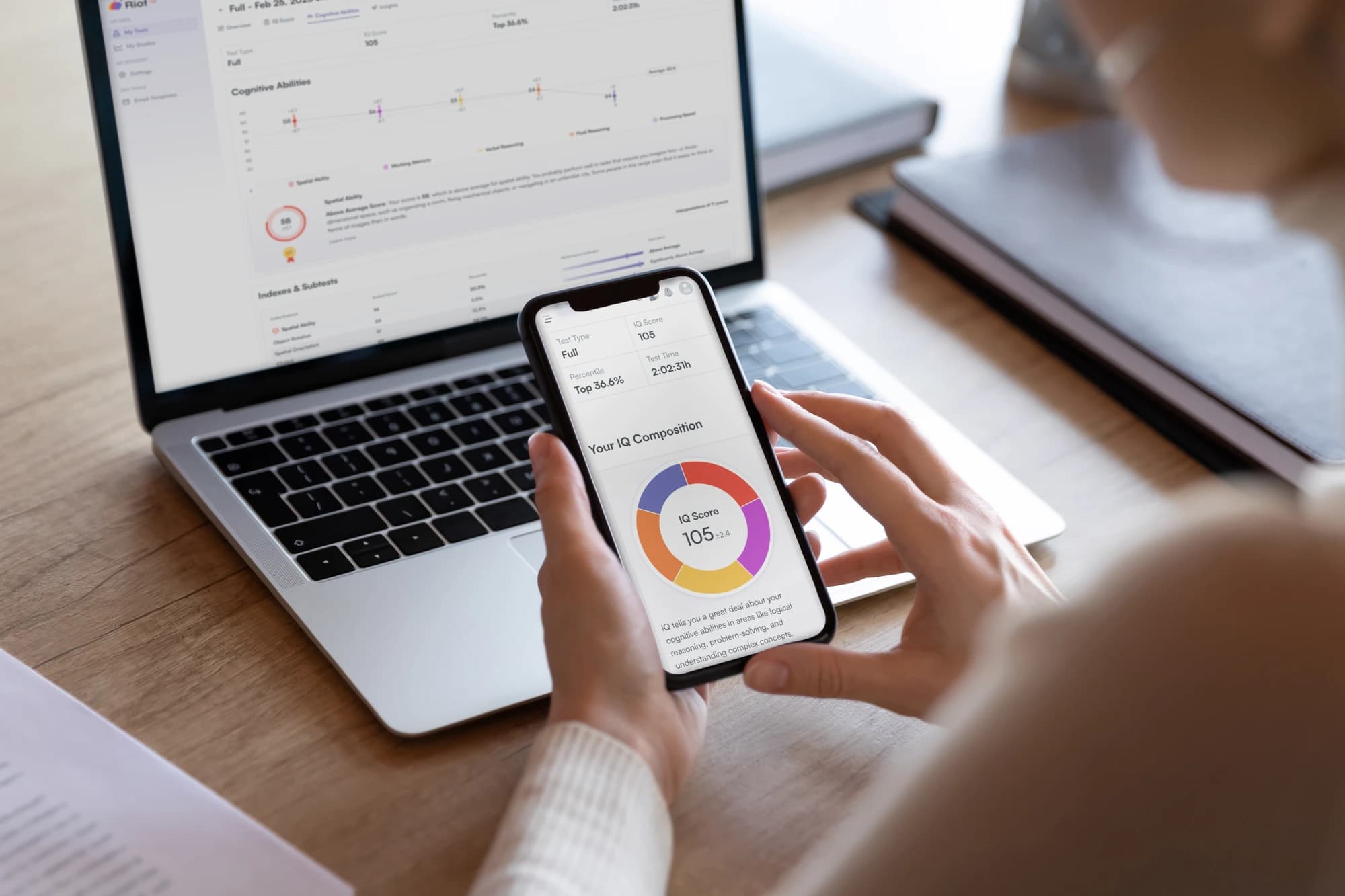
 Test on any device and take breaks at any time
Take the
first professional
online skills assessment.
Our skills assessment is a professionally developed, online skills assessment built for clinicians, researchers, psychologists, employers, and curious individuals seeking a reliable and scientifically valid skills assessment.
- Meets educational and psychological testing standards from APA, AERA, & NCME
- Based on the Cattell-Horn-Carroll (CHC) model of intelligence
- Developed by intelligence researcher Dr. Russell T. Warne
- Reviewed by a diverse expert panel to ensure fairness

Skills Assessments and Pricing
Explore All Skills Assessments
Our skills assessment is normed on US-born, native English speakers. Explore every skills assessment option below, from our Basic assessment to the robust, Full skills assessment.
Full Skills Assessment
15 subtests + all cognitive abilities
The full RIOT skills assessment with all subtests and the highest accuracy. You can take breaks and resume your test at any time.
Features
- ~52 Minutes
- IQ score
- Cognitive abilities breakdown
- ±3.7 IQ margin of error
15/15 Subtests
Learn moreFull Skills Assessment
15 subtests + all cognitive abilities
The full RIOT skills assessment with all subtests and the highest accuracy. You can take breaks and resume your test at any time.
Features
- ~52 Minutes
- IQ score
- Cognitive abilities breakdown
- ±3.7 IQ margin of error
15/15 Subtests
Learn moreBasic Skills Assessment
5 subtests + 5 cognitive abilities
A partial version of the full RIOT designed for a quicker assessment. You can take breaks and resume your test at any time.
Features
- ~13 Minutes
- IQ score
- Cognitive abilities breakdown
- ±5.6 IQ margin of error
5/15 Subtests
Learn moreCustom Skills Assessment
Custom subtests
Choose individual RIOT subtests to target specific abilities.
Features
- Up to 52 Minutes
- T Score
- Cognitive abilities breakdown
- Up to ±3.7 IQ margin of error
Custom Subtests
Mix and match from all 15 subtests
Team
Developed by Experts
Meet Dr. Russell T. Warne - The Chief Scientist and cognitive researcher who created the RIOT assessment.
About Dr. Russell T. Warne
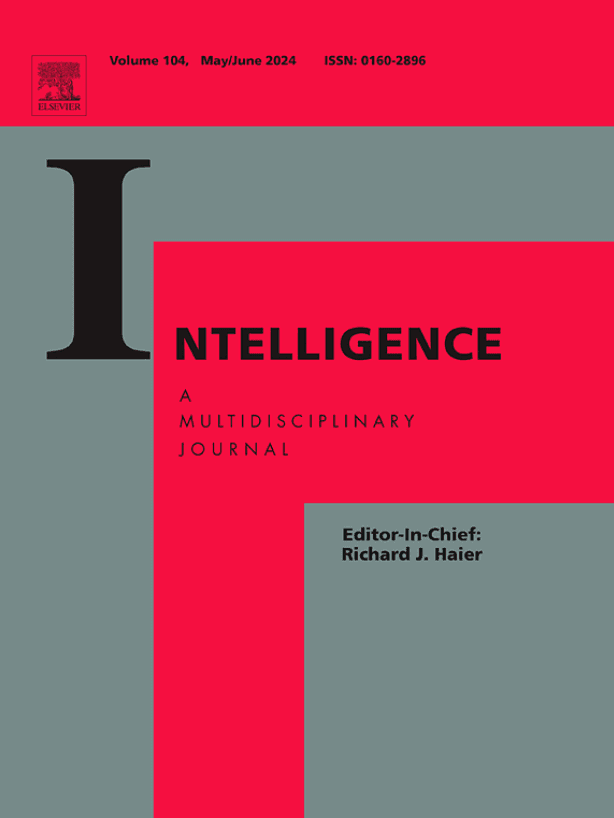
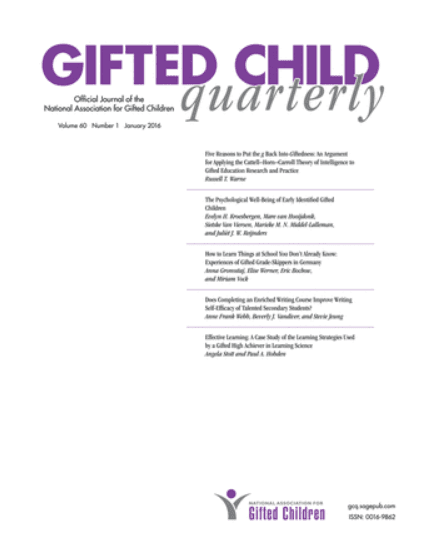
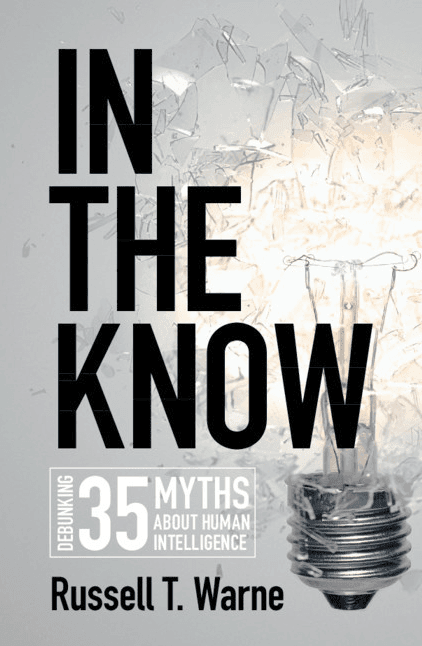
Dr. Russell T. Warne is a distinguished educational psychology scholar specializing in research, measurement, and statistics. He earned his Ph.D. from Texas A&M University and spent over a decade as a faculty member at Utah Valley University.Dr. Warne's research on human intelligence and giftedness is widely recognized. He has published numerous articles in esteemed journals such as Psychological Bulletin and Intelligence. He is also the author of In the Know: Debunking 35 Myths About Human Intelligence, published by Cambridge University Press in 2020.As a member of the International Society for Intelligence Research and the editorial board of Intelligence and Cognitive Abilities, Dr. Warne actively contributes to advancing the field. He has received awards from prestigious organizations, including the MENSA Foundation and the National Association for Gifted Children.With his expertise and dedication to scholarship, Dr. Warne continues to shape the discourse and understanding of intelligence research, making significant contributions to the field.
Russell's articles & journals
Russell's books
Sensitivity Panel
Reviewed by a Diverse Expert Panel to Ensure Fairness

At RIOT, we ensure every skills assessment is fair, inclusive, and free from bias.
Every question in this skills assessment undergoes a strict sensitivity review by an independent panel. These experts check each item to remove potentially biased or inappropriate skills assessment content.
If a concern is flagged, that specific item is revised or cut to ensure skills assessment accuracy. This rigorous process guarantees an equitable skills assessment for every test-taker.
Sensitivity Panel Participants

Dr. Craig L. Frisby
 University of Missouri
“The RIOT test is a new comprehensive multi-subtest intelligence battery that includes innovative item types, some of which are not found in a wide variety of contemporary general mental ability tests. The RIOT battery includes a wide variety of both verbal and nonverbal content that test users would undoubtedly find interesting, fun, challenging, and imaginative.”
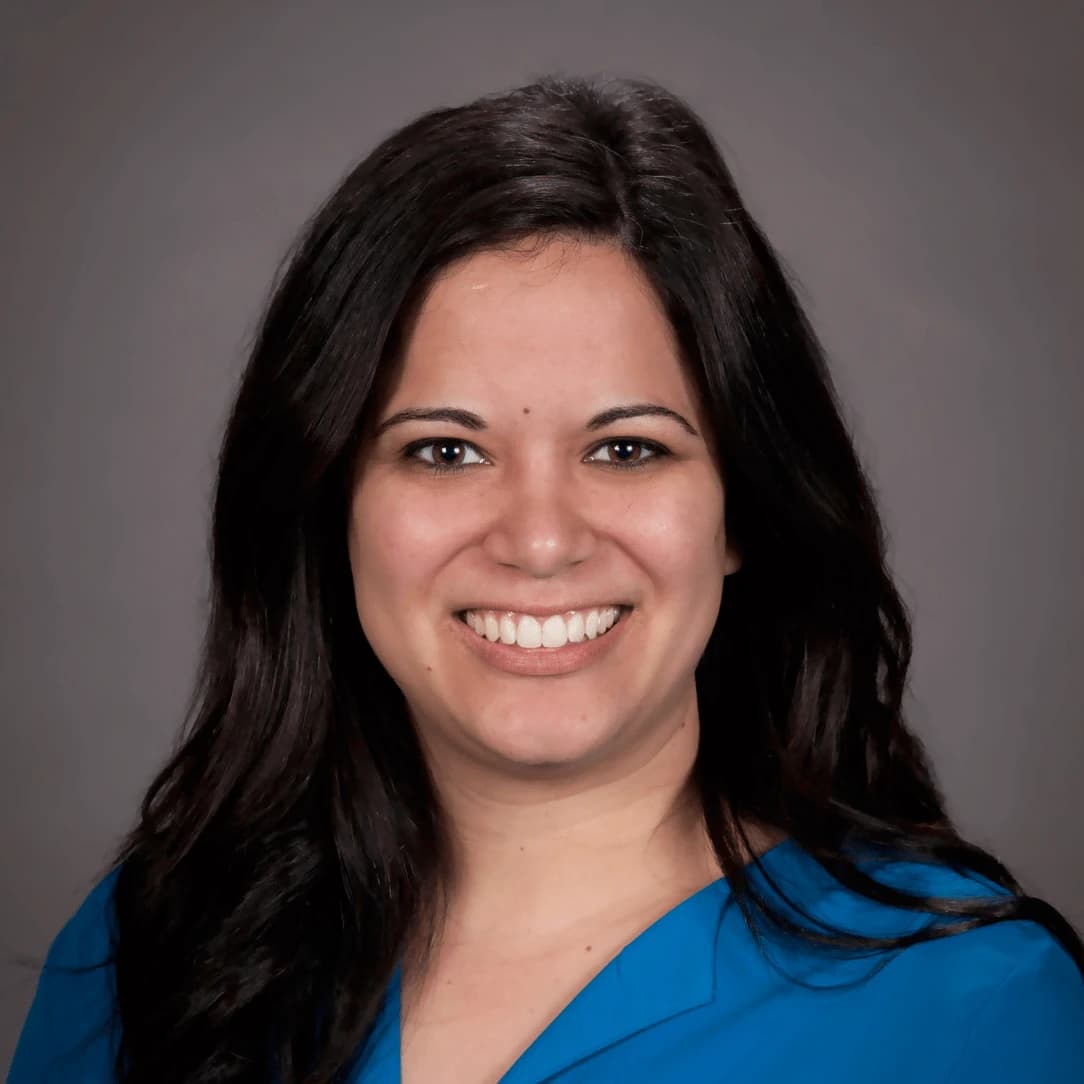
Dr. Maria Lazo
 Southwestern University
“The testing of this instrument was rigorous and included a transparent development process that points to the expertise involved in all stages. The thoughtfully constructed test items reflect careful attention to detail, making this a robust tool for measuring intelligence with precision and fairness.”

Joyce Juntune
 Texas A&M University
“The Reasoning and Intelligence Online Test (RIOT) is built on a solid understanding of intelligence. By integrating diverse verbal and nonverbal tasks, it accurately assesses an individual's reasoning, problem-solving, abstract thinking, and advanced cognitive abilities. Its online accessibility makes it a valuable tool for professionals who require this information for informed decision-making.”
Dr. Dante Dixson
 Michigan State University
Dr. Jessica C. Hill
 Worcester Polytechnic Institute
Dr. Jonathan Wai
 University of Arkansas
Dr. Frank C. Worrell
 University of California
Beyond a Simple Skills Assessment
Features of Each Skills Assessment
Your report varies by version, but every full skills assessment includes all the features listed below.
Compare to Others
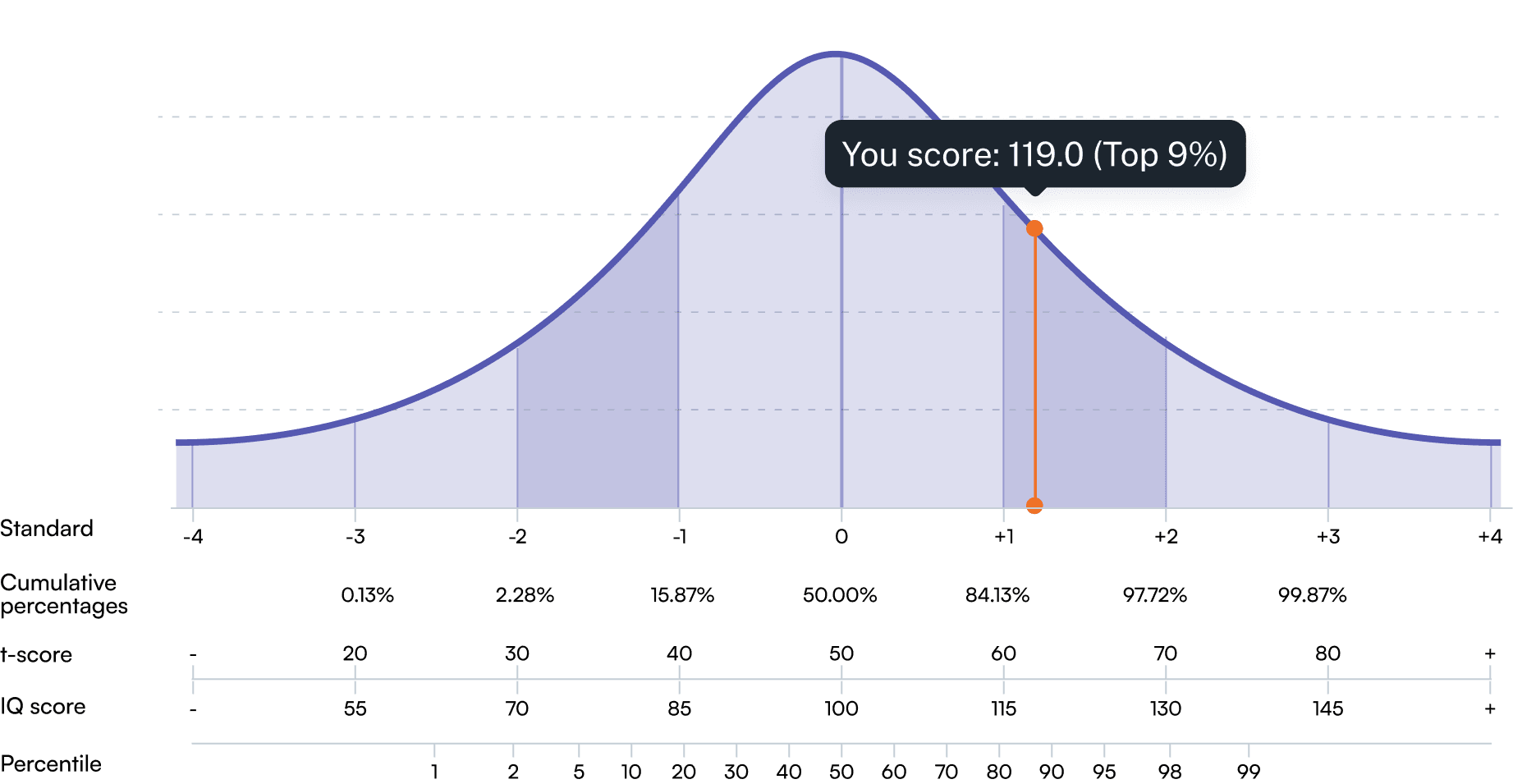
Skills assessment score & comparisons
Once you finish the skills assessment, you receive a composite score and an analysis comparing your performance to other assessment takers and a representative demographic sample.
Understand how cognitive potential is determined in this skills assessment article: How To Calculate IQ.
Cognitive Abilities
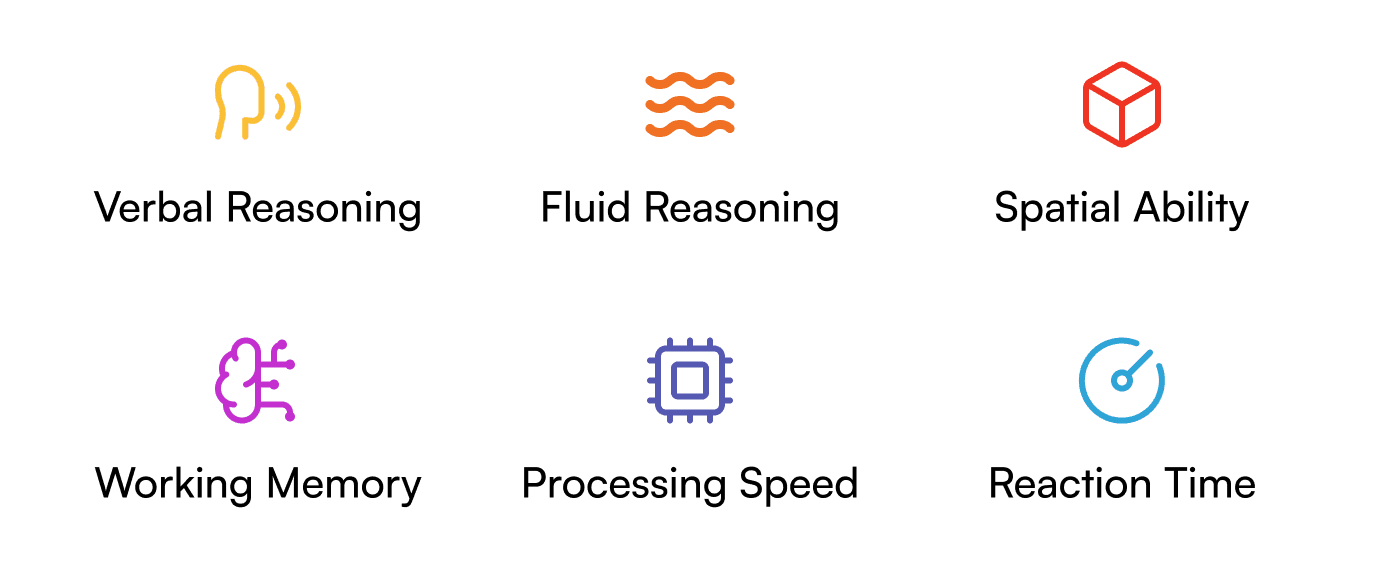
Breakdown of 6 Cognitive Skills
Your results provide a detailed breakdown of 6 cognitive skills. In a professional skills assessment, these are often called "factors" or "indexes" by researchers. This specific skills assessment measures: Verbal Reasoning, Fluid Reasoning, Spatial Ability, Working Memory, Processing Speed, and Reaction Time. Gain more knowledge on the 6 cognitive skills.
Subtests
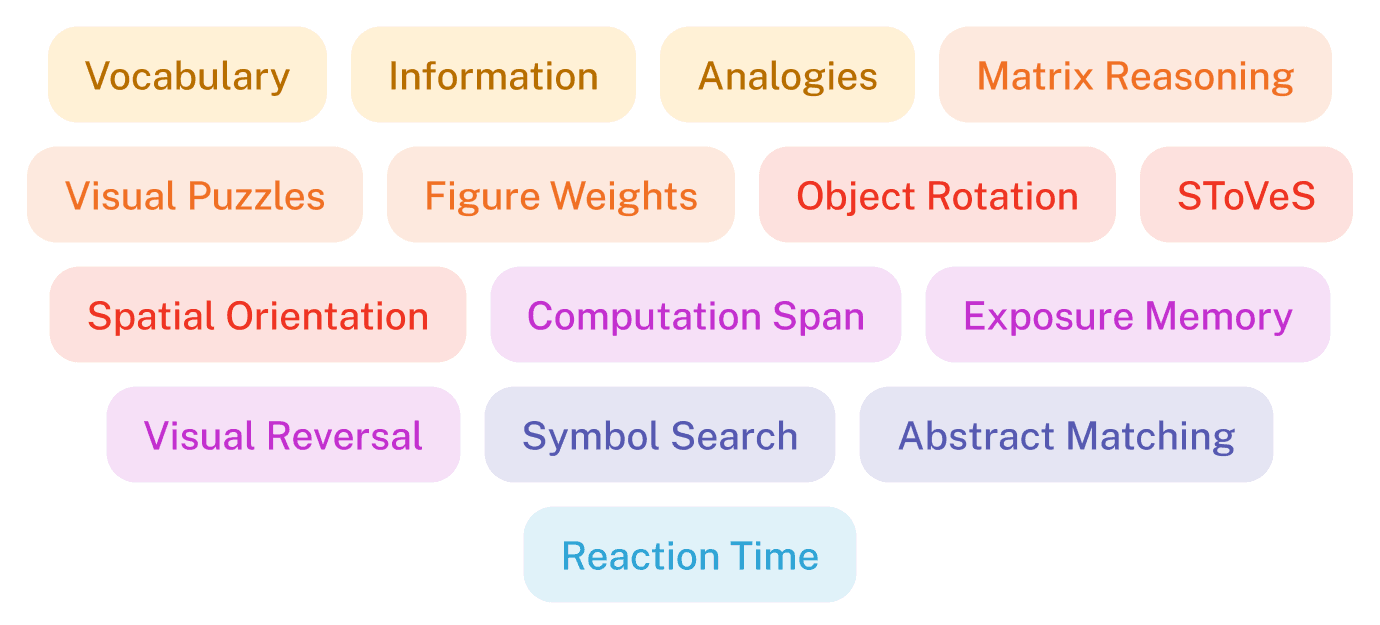
15 subtests, 16 T-scores
Beside a composite score, this skills assessment lets you analyze T-scores for 15 subtests. In the skills assessment world, each subtest result is a "T-score". This evaluation captures 16 T-scores across 15 subtests, including two specific Reaction Time scores. Explore the 15 subtests.
FAQ
Still have questions?
Explore insights regarding cognitive research and our professional skills assessment.
Community
Intelligence Journals & Organizations
News & Press
Our Articles
Our Articles
Our Articles
Our Articles
Our Articles