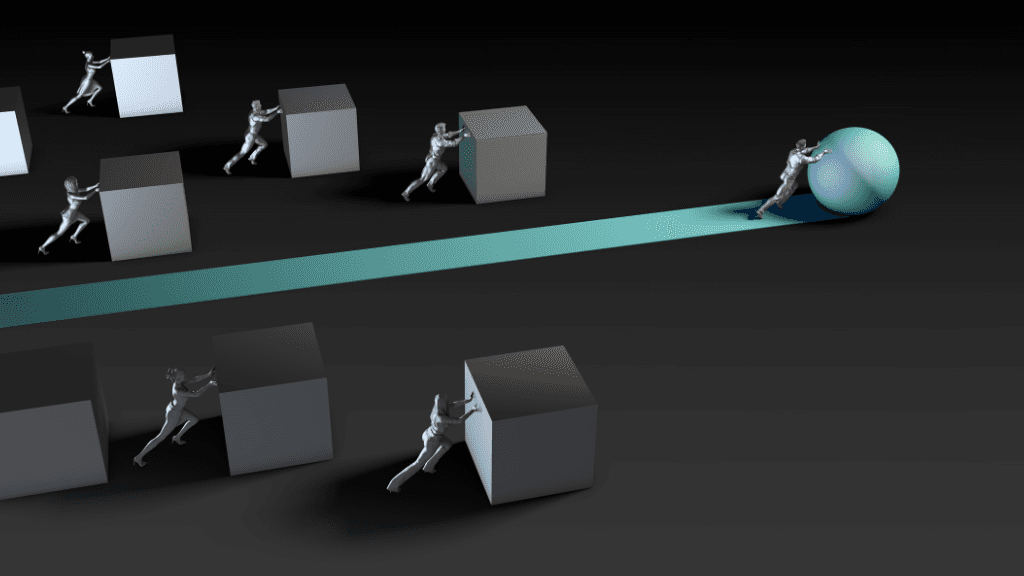
Free career aptitude tests are common, but are they valid? We explain why most free quizzes lack the psychometrics and norm samples needed for accurate results.
Dr. Russell T. WarneChief Scientist
Share
Free career aptitude tests are widely available online, but the vast majority lack the scientific foundation necessary to provide meaningful results. Understanding the difference between legitimate assessments and amateur quizzes is essential for anyone making important career decisions.
What Are Career Aptitude Tests For?
Career aptitude tests assess abilities and characteristics relevant to occupational success. Depending on their design, these tests may measure specific skills (numerical ability, verbal comprehension, spatial reasoning), interests (preferences for different types of work activities), personality traits (conscientiousness, extraversion, openness to experience), or some combination of these factors.
The most useful career guidance considers multiple dimensions because someone might have strong interest in a field but lack the abilities required to excel in it, or possess relevant skills but find the work unfulfilling. Effective career planning requires understanding both what someone can do well and what they want to do.
Why Are Most Free Career Aptitude Tests Unreliable?
The fundamental problem with most free career aptitude tests is that they are not developed by professionals with expertise in psychological measurement. Creating a valid, reliable assessment requires specialized training in psychometrics, which is a discipline that takes years of graduate study to master.Entire books have been written about specific aspects of test development, from writing effective items to establishing appropriate norms to documenting validity evidence.
Amateur test creators typically lack this expertise. They may write questions that seem relevant on the surface but fail to measure what they claim to measure, and they rarely conduct the statistical analyses necessary to identify poorly functioning items.
What Happens Without Proper Norms?
Most critically, amateur tests do not establish proper norm samples—the representative groups of test-takers whose performance provides the standard against which future examinees are compared. Without a norm sample, there is no way to determine whether a score is high, low, or average. Saying someone scored 35 on a mechanical reasoning section means nothing unless that performance can be compared to a representative group.
Most free online tests lack proper norms entirely. Some compare users only to others who happened to take the same free test or a self-selected group that does not represent the general population. This approach produces distorted results because people who seek out free online tests differ systematically from the broader population in education, motivation, and other characteristics. Professional test developers invest considerable resources in collecting norm data from carefully selected samples that match the demographic composition of the intended population. This process is expensive, which is one reason professional-quality tests typically require payment.
Why Does Validity Evidence Matter?
A test score's validity refers to whether it actually measures what it claims to measure and whether its scores predict real-world outcomes. For a career aptitude test, validity evidence might include studies showing that scores predict job performance, training success, or career satisfaction. Professional test developers document this evidence in technical manuals and peer-reviewed publications, following guidelines outlined in theStandards for Educational and Psychological Testing.
Most free online tests offer no validity evidence whatsoever. They may produce official-looking reports with confident recommendations, but without research demonstrating that scores relate to actual career outcomes, these recommendations rest on nothing but the test creator's assumptions.
Why Does Anonymous Authorship Matter?
Legitimate test creators identify themselves and their credentials, staking their professional reputation on their work's quality. Many free online tests, by contrast, are created by anonymous individuals or organizations with no disclosed expertise in psychological measurement. This anonymity prevents accountability. If a test provides inaccurate results that lead someone to make poor career decisions, an anonymous creator faces no consequences. The lack of transparency should be treated as a warning sign.
What Makes a Career Aptitude Test Trustworthy?
Trustworthy career aptitude tests share several characteristics that distinguish them from amateur offerings:
• Professional development by individuals with documented expertise in psychometrics, whose credentials are publicly available
• Theoretical foundation in established scientific frameworks, with documentation explaining how test content aligns with the underlying theory
• Representative norm sample with documented size, recruitment methods, and demographic characteristics
• Reliability evidence demonstrating that scores are consistent across time and items
• Validity evidence showing documented relationships with relevant outcomes like job performance or training success
• Standardized administration ensuring comparable conditions for all examinees
Are Any Free Career Aptitude Tests Worth Taking?
Genuinely professional-quality free career aptitude tests are rare. Some professionally developed tests offer free abbreviated versions that provide a preview of the full assessment, but these shorter versions necessarily sacrifice measurement precision and comprehensive coverage.
When evaluating any free test, the same criteria apply: Is the creator identified and credentialed? Is there a theoretical foundation? Does documentation describe a proper norm sample? Is validity evidence available? If the answer to these questions is no, the test results should not inform important decisions, regardless of how polished the interface appears.
What Role Does Cognitive Ability Play in Career Success?
One dimension that many career aptitude tests overlook is cognitive ability, or the capacity for reasoning, problem-solving, and learning.Research consistently demonstrates that cognitive ability is one of the strongest predictors of job performance across virtually all occupations, particularly for complex roles requiring adaptation and judgment.
Different careers place different demands on specific cognitive abilities. Verbal reasoning matters more for careers emphasizing communication and language-based work, while spatial ability predicts success in fields like engineering and architecture.Understanding one's cognitive profile (strengths and weaknesses across different mental abilities) provides valuable information for career planning that interest inventories and personality assessments do not capture.
TheReasoning and Intelligence Online Test (RIOT) offers a professionally developed assessment of cognitive abilities relevant to career success. Created by Dr. Russell T. Warne, who has over 15 years of experience in intelligence research, the RIOT meets professional standards established by the American Educational Research Association, American Psychological Association, and the National Council on Measurement in Education. It measures verbal reasoning, fluid reasoning, spatial ability, working memory, processing speed, and reaction time, producing a detailed profile that can meaningfully inform career decisions.
Watch “What Does an IQ Test Measure?” with Dr. Russell T. Warne on the Riot IQ YouTube channel to understand what free aptitude and intelligence tests can and cannot actually measure.
Take our professional IQ test
Want to know your IQ? Try the first ever professional online IQ test.