Dec 1, 2025·History & Origins Of IQ TestingDo Schools Test For IQ?
Do schools test IQ? Yes—but only when needed for special education, learning disabilities, or gifted programs. Discover how schools use IQ tests and why they’re never routine for every student.
Dr. Russell T. WarneChief Scientist

Yes, schools do administer IQ tests, but not universally or routinely for all students. IQ testing in schools typically occurs when there's a specific educational need, such as evaluating a student for special education services, gifted program placement, or diagnosing learning disabilities. These tests are administered by school psychologists or other qualified professionals as part of a comprehensive assessment process.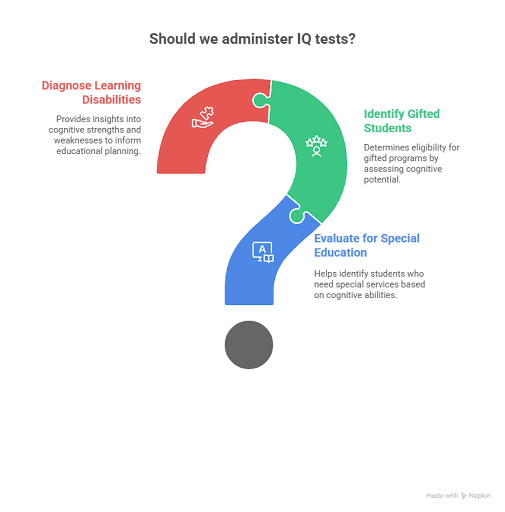
When schools use IQ tests
Schools most commonly use IQ tests in three situations. First, when a teacher or parent suspects a child has a learning disability, an IQ test helps determine whether the student's academic struggles stem from cognitive limitations or other factors. The IQ test provides crucial information about the child's cognitive strengths and weaknesses that can inform educational planning.
Second, schools use IQ tests to identify students for gifted and talented programs. Many districts require an IQ score above a certain threshold (often 130, but it may be lower or higher in some districts) for admission to these programs. The tests help schools identify students who might benefit from an accelerated or enriched curriculum.
Third, federal law in the United States requires schools to conduct comprehensive evaluations, which often include IQ testing, before placing students in special education programs. The IQ scores help determine whether a student qualifies for services and what type of support they need.
Types of IQ tests used in schools
Schools typically use professionally developed IQ tests that meet educational and psychological standards. The most common individually administered tests include the Wechsler Intelligence Scale for Children (WISC), the Stanford-Binet Intelligence Scales, and the Woodcock-Johnson Tests of Cognitive Abilities. These tests must be administered one-on-one by a trained psychologist. For screening larger groups of students, schools sometimes use group-administered tests like the Cognitive Abilities Test (CogAT) or the Naglieri Nonverbal Ability Test. These can be given to entire classrooms simultaneously, often on computers. While more efficient, group tests generally provide less detailed information than individual assessments. Additionally, the individual observations of behavior during the testing situation are usually not possible with these group-administered tests.
Some schools are beginning to explore online IQ testing options for appropriate situations. Professional online tests like the Reasoning and Intelligence Online Test (RIOT) offer a cost-effective alternative to traditional testing for adults. However, there are no reputable fully-online tests administered outside of schools to children.
Legal and ethical considerations
Schools must follow strict guidelines when conducting IQ tests. In the United States, the Individuals with Disabilities Education Act (IDEA) requires parental consent before any psychological testing. Schools cannot test a child's IQ without written permission from parents or guardians. There are also important restrictions on how schools can use IQ test results. The scores are confidential and can only be shared with parents and school personnel who have a legitimate educational need to know. Schools cannot use IQ scores as the sole criterion for educational placement decisions; they must consider multiple sources of information.
The role of school psychologists
School psychologists are the primary professionals who administer IQ tests in educational settings. They must have specialized training in test administration, scoring, and interpretation. A typical evaluation involves hours of testing, observation, and interviews with teachers and parents.
The psychologist doesn't just administer the test and report a number. They interpret the results within the context of the child's educational history, classroom performance, and behavioral observations. They look for patterns in the subtest scores that might explain academic difficulties or identify specific learning disabilities.
After testing, the school psychologist writes a comprehensive report explaining the results and their educational implications. They participate in meetings with parents and teachers to discuss findings and develop appropriate educational plans based on the test results and other assessment data. They should also answer any questions that parents have and ensure that the parents fully understand the results of the tests and any other assessments.
Limitations and controversies
While IQ tests provide valuable information, schools must recognize their limitations. Research shows that IQ scores are good predictors of academic achievement, but they don't measure everything important for school success. Motivation, creativity, emotional regulation, and family support are other influences on educational outcomes. Another limitation is that IQ scores represent a snapshot of performance at one point in time. Factors like test anxiety, illness, or lack of sleep can affect scores. That's why professional guidelines recommend that IQ tests should never be the only tool used to make important educational decisions about a student.
Conclusion
Schools do test for IQ, but only in specific circumstances and with proper authorization. These tests serve important purposes in identifying students who need special services or enrichment opportunities. When administered and interpreted properly by qualified professionals, IQ tests provide valuable information that helps schools better serve their students' educational needs.
The key is that IQ testing in schools is always part of a larger evaluation process. Schools combine IQ test results with academic assessments, classroom observations, and other data to make informed decisions about student placement and services. This comprehensive approach ensures that educational decisions are based on a complete picture of the student's abilities and needs, not just a single test score.
Take our professional IQ test
Want to know your IQ? Try the first ever professional online IQ test.
AuthorDr. Russell T. WarneChief Scientist
