May 28, 2026·IQ Test Basics & Fundamentals5 Reasons to Take a Professional IQ Test
Discover how an accurate IQ score predicts career success, longevity, and wealth. Uncover your true cognitive profile. Read the article and try the RIOT test!
Dr. Russell T. WarneChief Scientist
Most people have heard of IQ tests. Fewer have actually taken a professional one that has been developed by trained psychometrists, validated against a representative norm sample, and built to meet established standards for psychological testing. That gap matters, because a professionally developed IQ test is a fundamentally different instrument from the free quizzes that dominate the internet.
This article lays out five evidence-based reasons to take a professional IQ test. Each reason is grounded in decades of research, and each connects to something concrete: what an IQ score can actually tell someone about themselves and their cognitive functioning.
Reason 1: A professional IQ test reveals a detailed cognitive profile, not just a number
The most common misconception about IQ tests is that they produce a single number that tells the whole story. That is not how modern professional IQ tests work. Tests built on the Cattell-Horn-Carroll (CHC) theory (the current consensus framework in psychometrics) produce a full profile of cognitive abilities. An overall IQ captures general intelligence (g), but the subscores reveal where a person's cognitive strengths and relative weaknesses actually lie.
These subscores typically cover domains such as verbal reasoning, fluid reasoning, spatial ability, working memory, and processing speed. A person with a high overall IQ might find that their verbal reasoning is especially strong but their processing speed is closer to average. A person with a modest overall IQ might find that their fluid reasoning and working memory are actually strengths. That information is far more actionable than a single number.
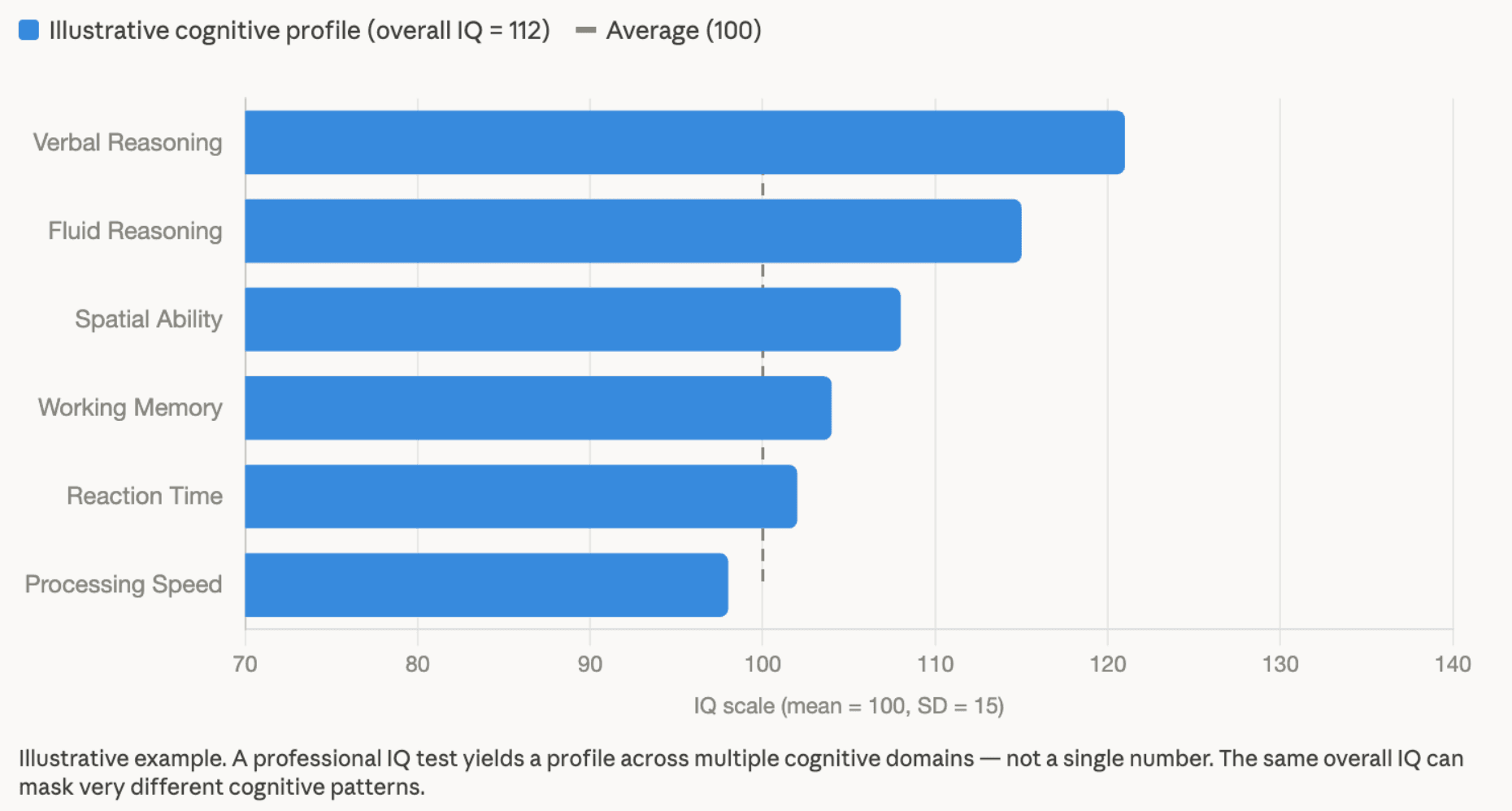 That profile can clarify how a person learns most effectively, where they are likely to excel with relatively less effort, and where they may need to invest more. That is useful information for adults navigating careers, educational decisions, or simply trying to understand themselves better.
Reason 2: IQ is one of the strongest known predictors of job performance
The evidence for IQ's practical value is probably strongest in the workplace. The meta-analytic literature on this is large, consistent, and spans decades.
The foundational work in this area comes from Frank Schmidt and John Hunter, whose 1998 meta-analysis in Psychological Bulletin synthesized results from hundreds of personnel selection studies and found that general mental ability was the single best predictor of job performance, with a corrected validity coefficient of approximately r = .51 across all occupations. For complex, cognitively demanding jobs, the coefficients were considerably higher, sometimes exceeding r = .70.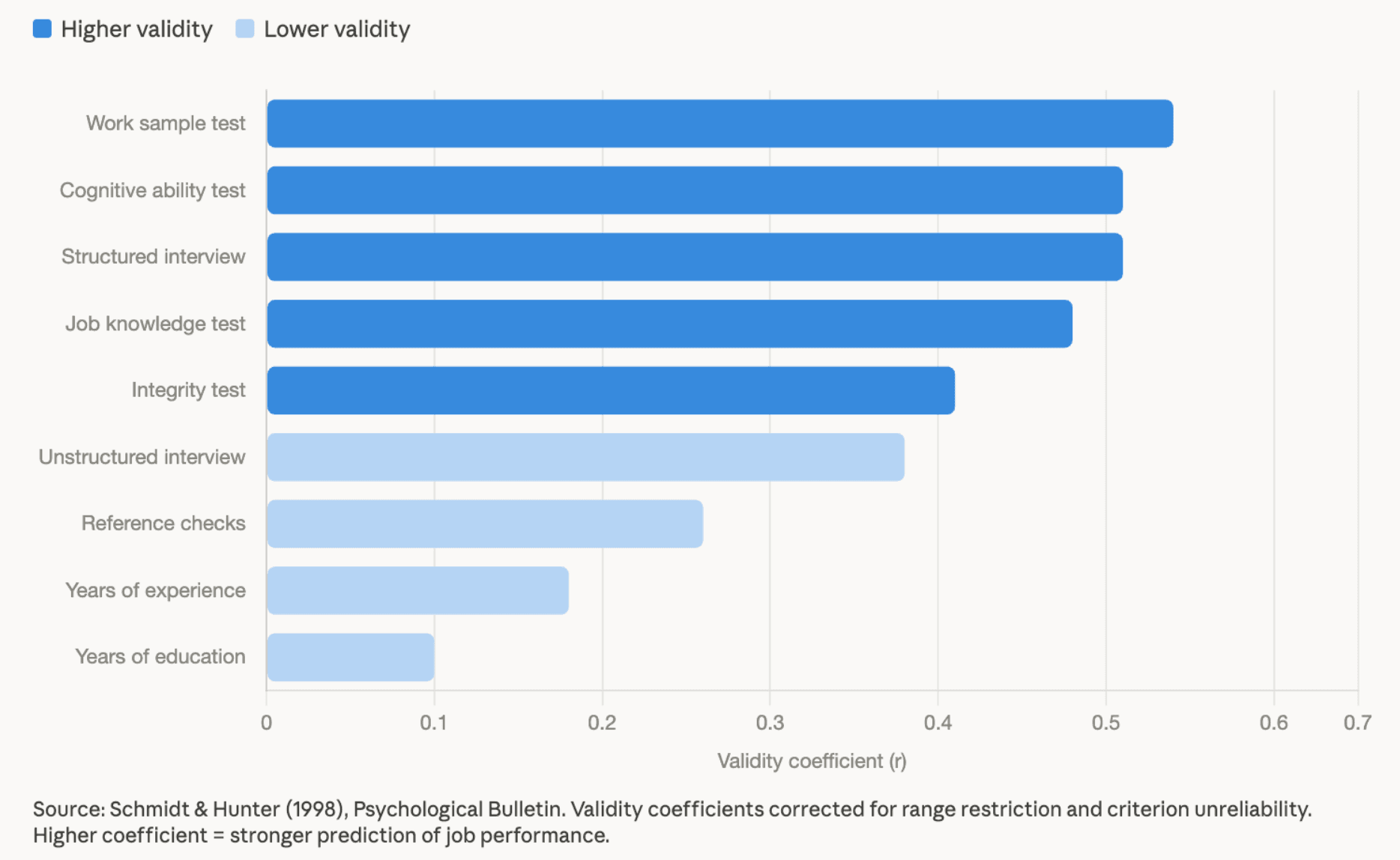 Cognitive ability predicts how quickly people acquire job-relevant knowledge during training and how well they perform on the job after training is complete. This relationship holds across a wide range of occupations, though it is stronger in jobs with greater cognitive demands.
 Understanding one's cognitive profile can inform career planning in practical ways. Someone with an exceptionally strong verbal reasoning score and moderate spatial scores is likely to find work in language-heavy fields more naturally rewarding and easier to master than work requiring intensive spatial problem-solving.
Reason 3: IQ predicts health outcomes and longevity
This is the finding that consistently surprises people the most. IQ is not just relevant to school or work — it is a meaningful predictor of physical health outcomes, including survival.
The field of cognitive epidemiology has spent the last three decades documenting this relationship. The foundational study came from Ian Deary and Lawrence Whalley, who tracked individuals from the 1932 Scottish Mental Survey. Their analysis found that a one standard deviation advantage in IQ at age 11 — just 15 IQ points — translated into a 21% greater probability of surviving to age 76. That finding has since been replicated in more than 20 longitudinal studies across multiple countries. A particularly striking follow-up study examined over 65,000 Scottish men and women born in 1936, tracking them across 68 years of mortality data. The results showed that higher childhood IQ was associated with reduced risk of death from cardiovascular disease, respiratory disease, stroke, and several other major causes — suggesting that the IQ-longevity relationship is broad rather than limited to any single mechanism.
Why does this relationship exist? Researchers have proposed several mechanisms. Intelligence may help people navigate the cognitive demands of healthcare — reading and following complex instructions, making sound medical decisions, understanding risk information, and adhering to treatment regimens. There is also evidence that higher-IQ individuals are more likely to quit smoking, avoid risky behaviors, and live in safer environments. Some of the relationship also appears to be partly genetic, meaning that the same genes that influence intelligence also influence health through shared biological pathways.
None of this means that a low IQ results in a destiny of poor health. But it does means that cognitive functioning is one factor among many in health outcomes.
Reason 4: IQ scores are strongly linked to educational and economic outcomes
The predictive value of IQ extends well beyond the workplace. The research on IQ's relationship to educational attainment, income, and economic security is among the most replicated in all of social science.
On education: Deary and colleagues found that IQ measured at age 11 predicted educational attainment at age 25 with considerable accuracy. The correlation between IQ and academic achievement consistently falls in the range of r = .50–.70 across levels of schooling. This does not mean that IQ guarantees academic success. Motivation, discipline, and access to quality instruction all matter. But beyond these influences, IQ is still a strong predictor. On economics: intelligence correlates positively with income. Research using the National Longitudinal Survey of Youth found that IQ was significantly associated with earnings, and that part of this relationship appeared to be causal — smarter people tend to enter higher-complexity occupations with steeper earning trajectories. A meta-analysis by Strenze found that the corrected correlation between IQ and socioeconomic success averaged around r = .37–.45, depending on the outcome measured.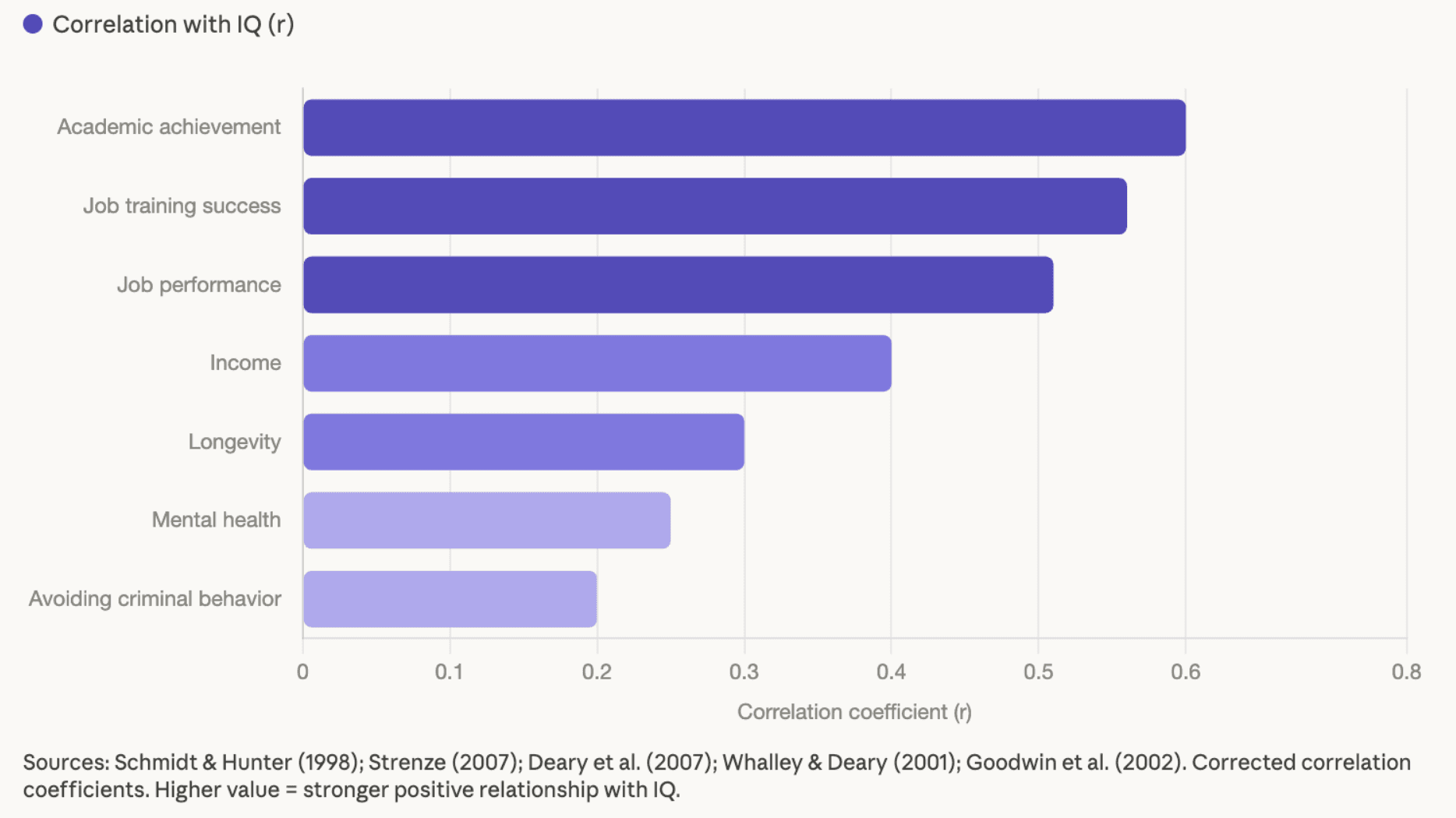 Knowing that one's verbal reasoning is in the high average range but fluid reasoning is slightly below average can help someone choose fields of study, structure how they approach learning, or identify where additional effort is likely to pay off most. That is not fatalism; it is information.
Reason 5: A professional IQ test produces accurate, interpretable, and trustworthy scores
The fifth reason is perhaps the most practical: a professional IQ test produces a score that actually means something.
The internet is full of tests that call themselves "IQ tests." The overwhelming majority are not psychometric instruments in any meaningful sense. They are not built by trained test developers, they have no representative norm samples, their reliability has not been documented, and their scores reflect no coherent theoretical framework for human intelligence. A score from one of these tests cannot provide any useful information.
A professional IQ test is different in every one of these respects. It is developed through a structured process that includes item piloting, statistical analysis, expert review, and administration to a representative norm sample. Its reliability is documented and typically high. (Well-constructed IQ tests regularly achieve internal consistency coefficients of .90 or above, on a 0 to 1 scale). Its scoring is referenced to a clear norm group so that "above average" actually means above the average of a specific, documented population.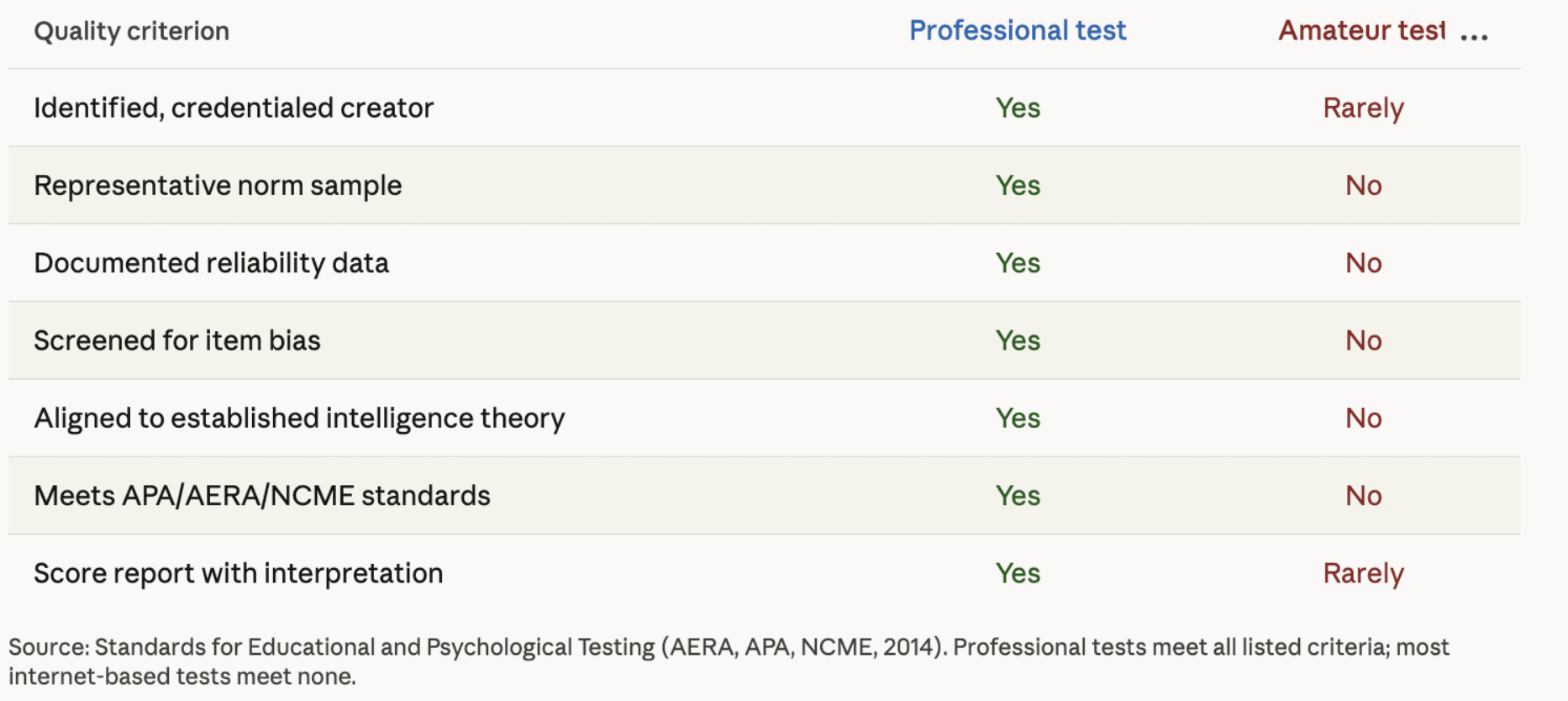 The practical consequence of this quality gap is significant. An inaccurate IQ score is not merely uninformative. It can actively mislead. Someone who receives an inflated score from an amateur test may have unrealistic expectations about their cognitive abilities. Someone who receives a deflated score from a poorly normed test may unnecessarily doubt their abilities. Neither outcome serves the person taking the test.
 The entire point of psychological assessment is to produce data that is accurate enough to be genuinely useful. That requires professional development standards, and most free online tests simply do not meet them.
What these five reasons add up to
Each of the five reasons above reflects a different dimension of what an IQ score from a professional test can provide: a detailed cognitive profile (Reason 1), practical insight into occupational fit and potential (Reason 2), a baseline understanding of one of the predictors of health outcomes (Reason 3), a calibrated sense of educational and economic trajectory (Reason 4), and scores that are actually trustworthy because they were produced by a properly developed instrument (Reason 5).
None of the research summarized here treats IQ as a deterministic ceiling on what people can do. The evidence is probabilistic: higher cognitive ability is associated with better average outcomes across populations, while any individual is shaped by many factors beyond their IQ score. The goal of taking a professional test is not to be labeled or limited. It is to have accurate, scientifically grounded information about one cognitive dimension of who you are. This information can inform realistic planning, self-understanding, and decision-making.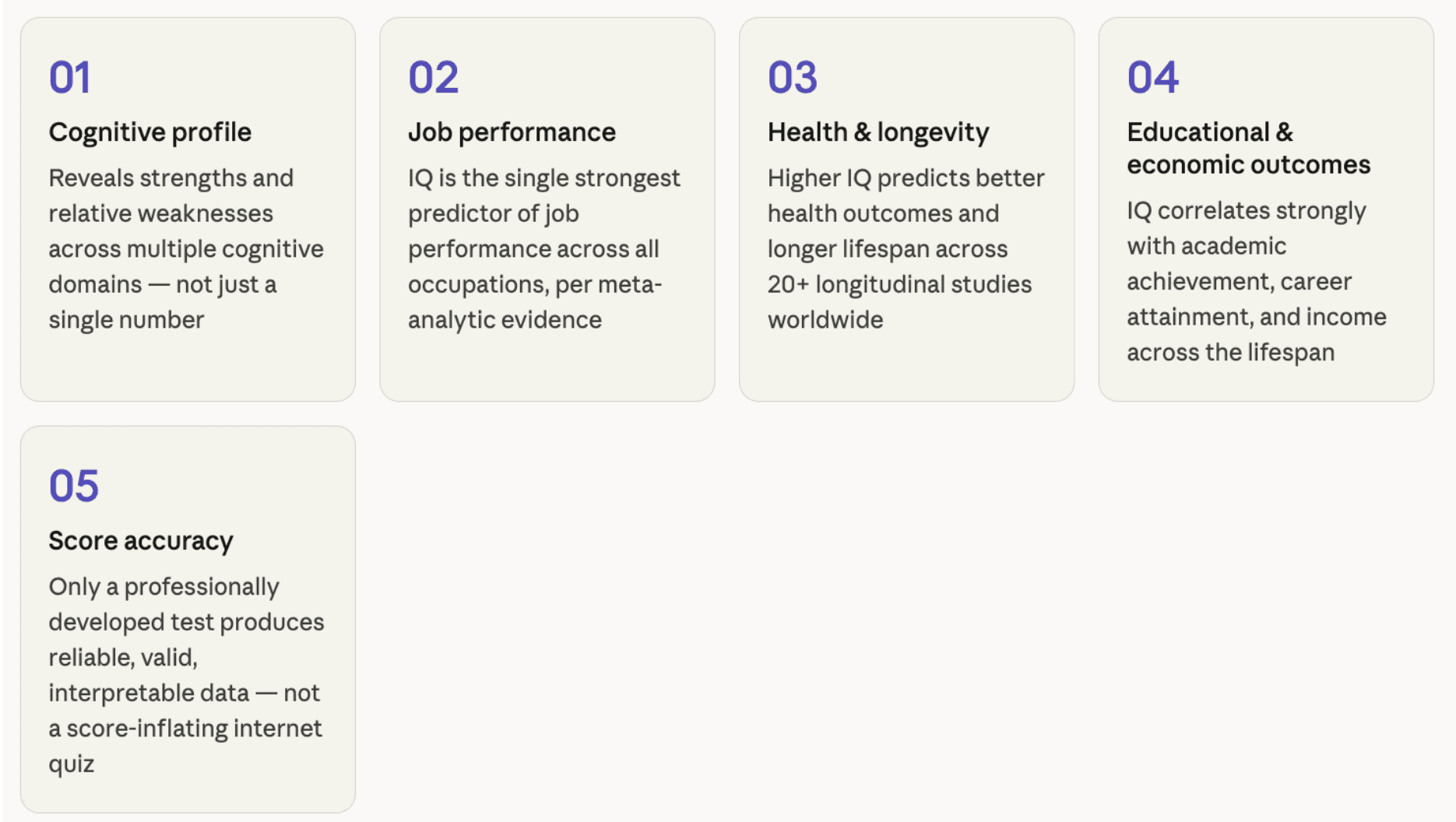
The first professional online IQ test
I developed the Reasoning and Intelligence Online Test (RIOT) to make professional-grade cognitive assessment genuinely accessible, something that did not exist in online testing before it. The RIOT is the first online IQ test built to meet the professional and ethical standards established by the American Educational Research Association, the American Psychological Association, and the National Council on Measurement in Education. Its development followed the same rigorous process as any professionally validated psychological test: pilot testing, statistical item analysis, expert review from psychologists across cognitive, developmental, and educational psychology, and norming on a representative U.S. sample. It is grounded in the Cattell-Horn-Carroll theory of intelligence and produces an overall IQ as well as index scores for Verbal Reasoning, Fluid Reasoning, Spatial Ability, Working Memory, Processing Speed, and Reaction Time — the cognitive profile described in Reason 1.
The RIOT produces a score report designed to help examinees understand what their results mean in context. It is not a quiz. It is a professional scientific instrument, and the distinction matters for every reason outlined in this article.
References
Schmidt, F. L., & Hunter, J. E. (1998). The validity and utility of selection methods in personnel psychology. Psychological Bulletin, 124(2), 262–274. Salgado, J. F., et al. (2003). A meta-analytic study of general mental ability validity for different occupations. International Journal of Selection and Assessment, 11(4), 272–286. Gottfredson, L. S., & Deary, I. J. (2004). Intelligence predicts health and longevity, but why? Current Directions in Psychological Science, 13(1), 1–4. Deary, I. J., et al. (2007). Intelligence and educational achievement. Intelligence, 35(1), 13–21. Murray, C. (2002). IQ and income inequality in a sample of sibling pairs. American Economic Review, 92(2), 339–343. Gottfredson, L. S. (1997). Why g matters: The complexity of everyday life. Intelligence, 24(1), 79–132. Deary, I. J., & Batty, G. D. (2007). Cognitive epidemiology. Journal of Epidemiology & Community Health, 61(5), 378–384. Batty, G. D., Deary, I. J., & Gottfredson, L. S. (2007). Premorbid (early life) IQ and later mortality risk. Social Science & Medicine. Schmidt, F. L., & Hunter, J. (2004). General mental ability in the world of work. Journal of Personality and Social Psychology, 86(1), 162–173. Ritchie, S. J., & Tucker-Drob, E. M. (2018). How much does education improve intelligence? A meta-analysis. Psychological Science, 29(8), 1358–1369. Carroll, J. B. (1993). Human Cognitive Abilities: A Survey of Factor-Analytic Studies. Cambridge University Press.
Schneider, W. J., & McGrew, K. S. (2018). The Cattell-Horn-Carroll theory of cognitive abilities. In D. P. Flanagan & E. M. McDonough (Eds.), Contemporary Intellectual Assessment (4th ed.). Guilford.
American Educational Research Association, APA, & NCME. (2014). Standards for Educational and Psychological Testing. Goodwin, R. D., & Friedman, H. S. (2006). Health status and the five-factor personality traits. Journal of Psychosomatic Research, 60(5), 395–401. Jensen, A. R. (1998). The g Factor: The Science of Mental Ability. Praeger.
Spearman, C. (1904). "General intelligence" objectively determined and measured. American Journal of Psychology, 15(2), 201–292. Warne, R. T. (2025). Technical Manual for the Reasoning and Intelligence Online Test, Version 1.0. RIOT IQ. https://riotiq.com
Take our professional IQ test
Want to know your IQ? Try the first ever professional online IQ test.
AuthorDr. Russell T. WarneChief Scientist
