Cognitive function tests assess mental abilities like reasoning and memory. We explain the 5 key domains of CHC theory and how they relate to general intelligence.
Dr. Russell T. WarneChief Scientist
Share
The Stanford-Binet Intelligence Scales are one of the oldest and most respected IQ tests in existence. First published in 1916, it has been revised multiple times and remains widely used by psychologists for cognitive assessment across a broad age range, from early childhood through adulthood.
Where Did the Stanford-Binet Originate?
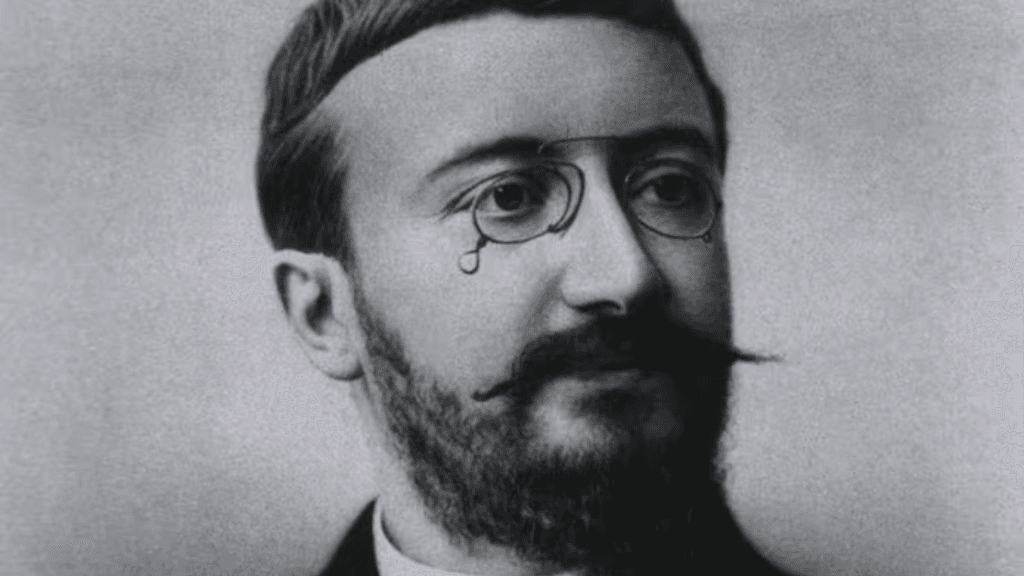
The test traces its origins to French psychologist Alfred Binet. In 1905, Binet and his colleague Theodore Simon published the first successful intelligence test, designed to identify children who might struggle in regular classrooms and benefit from special educational support. The Binet-Simon test demonstrated that intelligence could be measured systematically and that the resulting scores had practical value.
The test quickly attracted international attention and was translated into several languages. In the United States, Stanford University psychologist Lewis Terman saw potential for expanding the original. He adapted it for American children, added new items to cover a wider range of ability, and extended its use to older examinees. Terman published this revision in 1916 as the Stanford-Binet Intelligence Scale.
Terman's version introduced the "intelligence quotient" to American audiences. Using a formula proposed by German psychologist Wilhelm Stern, scores were expressed as mental age divided by chronological age, multiplied by 100. A child performing at exactly the expected level for their age would receive an IQ of 100, while those performing above or below expectations would score higher or lower accordingly. This scoring method has since been replaced by the deviation IQ, but the term "IQ" persists.
The Stanford-Binet established IQ testing as a mainstream practice in American education and psychology. Terman published a revision in 1937, and after his death, other psychologists continued development. The current version, the Stanford-Binet Intelligence Scales, Fifth Edition (SB5), was published in 2003.
What Theoretical Foundation Does the Stanford-Binet Use?
The SB5 is grounded in the Cattell-Horn-Carroll (CHC) theory of cognitive abilities, which organizes intelligence into a hierarchy: general intelligence (g) sits at the top, broader cognitive abilities occupy the middle level, and narrow specific abilities form the base. This structure shapes both the test's content and its scoring system.
Based on this framework, the SB5 measures five cognitive factors:
• Fluid Reasoning: Solving novel problems without relying on previously learned knowledge, such as identifying patterns or drawing logical conclusions.
• Knowledge: Accumulated information and the ability to use it, including vocabulary and verbal reasoning with learned content.
• Quantitative Reasoning: Understanding and working with numerical concepts and relationships.
• Visual-Spatial Processing: Perceiving, analyzing, and mentally manipulating visual patterns and spatial relationships.
• Working Memory: Holding information in mind temporarily while using it to complete a task.
What Scores Does the Stanford-Binet Provide?
At the broadest level, the Full Scale IQ (FSIQ) summarizes overall cognitive ability. The SB5 uses a deviation IQ with a mean of 100 and a standard deviation of 15, meaning about 68% of examinees score between 85 and 115, and approximately 95% score between 70 and 130.
Below the Full Scale IQ, Nonverbal IQ and Verbal IQ composite scores allow comparison between these two domains. Factor index scores for each of the five cognitive abilities offer more granular information about specific strengths and weaknesses. Subtest scores provide the most detailed level of analysis. A comprehensive interpretation considers all levels rather than focusing solely on the overall IQ.
Who Takes the Stanford-Binet and Why?
The Stanford-Binet is designed for examinees aged 2 through 85 and older, making it one of the broadest-ranging IQ tests available. A trained psychologist or clinician administers the test one-on-one with the examinee, a process that typically takes 45 to 90 minutes.
Common applications include:
• Educational placement: Identifying children who qualify for gifted programs or who may need special education services.
• Clinical diagnosis: Assessing cognitive functioning as part of evaluations for intellectual disability, learning disabilities, developmental delays, or neurological conditions.
• Forensic evaluation: Determining cognitive capacity in legal contexts, such as competency to stand trial.
• Research: Studying intelligence, cognitive development, or the effectiveness of interventions.
How Does the Stanford-Binet Compare to Other Major IQ Tests?
All of these tests produce IQ scores on the same scale, so a score of 115 on the Stanford-Binet means essentially the same thing as 115 on a Wechsler test.Research consistently shows that professionally developed IQ tests correlate strongly with one another because they measure the same underlying ability. The tests differ in their specific subtests, theoretical emphases, and administrative procedures, but these differences are less significant than their similarities.
The choice between tests often depends on the examiner's training, the assessment context, and examinee characteristics. Some clinicians prefer the Stanford-Binet for very young children or for examinees at the extremes of the ability range, where its extended norms may provide more precise measurement.
What Are the Strengths and Limitations of the Stanford-Binet?
Over more than a century, each revision has incorporated advances in intelligence theory and psychometric methods. The current edition's grounding in CHC theory aligns it with scientific consensus on the structure of intelligence, and the inclusion of both verbal and nonverbal components for each cognitive factor provides flexibility for diverse examinees.
These strengths come with practical constraints. The test requires a professional with graduate-level training in psychological assessment to administer and interpret results, making it expensive and limiting accessibility. The Stanford-Binet test is available only through controlled distribution to qualified professionals; members of the general public cannot purchase or take the test independently. For individuals seeking a general estimate of intellectual ability without a clinical need, this level of comprehensiveness may exceed what is necessary.
Are There Accessible Alternatives?
For individuals who want to measure cognitive ability without the cost and complexity of a clinical assessment, professionally developed online options now exist. TheReasoning and Intelligence Online Test (RIOT) was created by Dr. Russell T. Warne, who has over 15 years of experience in intelligence research. Like the Stanford-Binet, the RIOT is grounded in CHC theory and provides both an overall IQ and specific cognitive scores.
Unlike traditional tests, the RIOT can be taken online without scheduling an appointment with a clinician. It is the first online IQ test designed to meet the professional standards for psychological assessment established by the American Educational Research Association, American Psychological Association, and the National Council on Measurement in Education. This makes professional-quality cognitive assessment accessible to a much broader audience while maintaining the scientific rigor that distinguishes legitimate IQ tests from amateur online quizzes.
Watch “IQ Explained in 8 Minutes: The Truth About IQ (And Why It Matters)” on the Riot IQ YouTube channel to understand how the Stanford-Binet fits into the broader framework of IQ testing.
Take our professional IQ test
Want to know your IQ? Try the first ever professional online IQ test.