Sep 9, 2025·General IQ & IntelligenceMultiple Intelligences
Explore Howard Gardner’s multiple intelligences theory, its types from linguistic to naturalistic, and why research challenges its claims despite popularity in education.
Dr. Russell T. WarneChief Scientist
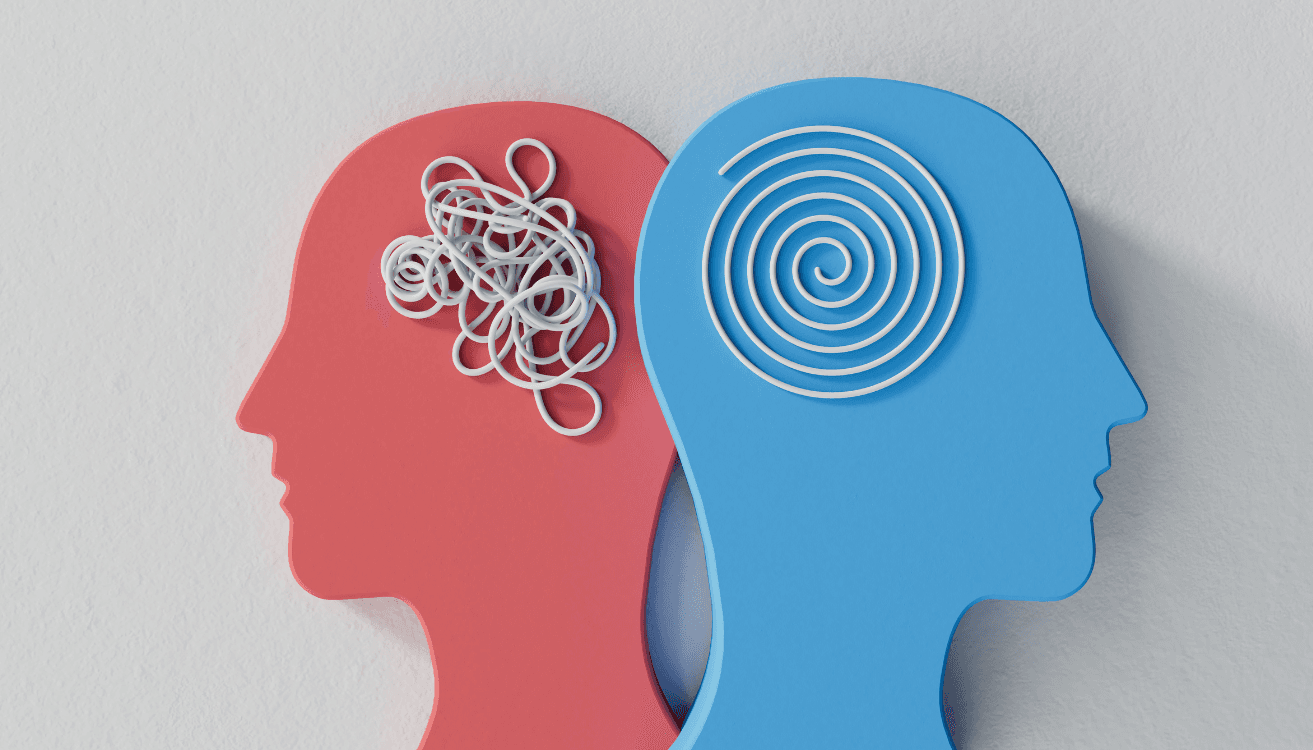
The theory of multiple intelligences was proposed by Harvard psychologist Howard Garnder. He proposed that general intelligence does not exist and that instead the mind consisted of multiple independent intelligences that evolved separately in the brain. Gardner believed that different areas of life required different intelligences and that some required a combination of his intelligences. Gardner proposed 7 intelligences originally. They are described here.
Linguistic Intelligence
Gardner believed that the ability to handle verbal content and words required “linguistic intelligence.” Alexander Pope, Virginia Woolf, and many other accomplished poets and writers would be excellent examples of people with high linguistic intelligence.
Musical Intelligence
Composing and performing music are manifestations of Gardner’s second intelligence, “musical intelligence.” Igor Stravinsky, Itzhak Perlman, and Clara Schumann are examples of people who would be high in musical intelligence.
Logical-Mathematical Intelligence
According to Gardner, people with high “logical-mathematical intelligence” excel at understanding systems build upon logical rules. This includes mathematics but also science, philosophy, and even law. Marie Curie and John von Neumann likely had high logical-mathematical intelligence.
Spatial Intelligence
In the theory of multiple intelligences, “spatial intelligence” is the ability to comprehend two- and three-dimensional space and how objects relate physically to one another. This is a useful ability in fields like geography, physics, and chemistry. Albert Einstein and Linus Pauling would have very high spatial intelligence.
Bodily-Kinesthetic Intelligence
Gardner also proposed a “bodily-kinesthetic intelligence,” which is the capacity to use the body in useful ways -- most prominently athletics or the arts. LeBron James and Martha Graham would have high bodily-kinesthetic intelligence, according to this theory.
Personal Intelligence
“Personal intelligence” is the ability to engage in self-reflection and to handle interpersonal relationships with others. Originally, Gardner proposed an “interpersonal intelligence” and an “intrapersonal intelligence,” but he later combined both of these into one intelligence. Sigmund Freud and Angela Merkel would be examples of people with high personal intelligence.
Naturalistic Intelligence
The “naturalistic intelligence” is the ability to comprehend nature and to have an appreciation and value for the natural world. Jane Goodall and Carl Linnaeus would have high naturalistic intelligence.
Existential Intelligence
Gardner has suggested -- but not confirmed -- that an “existential intelligence” could exist in the mind. This intelligence would help people understand important aspects of human existence and consciousness.
Evidence for Multiple Intelligences
When Gardner proposed his theory of multiple intelligences, he used data from developmental psychology, neuroscience, and cognitive psychology to determine what was (and what was not) an intelligence. However, the real test of a theory is whether the predictions it makes are supported by new data or by studies designed to test the theory. Unfortunately for Gardner, the theory of multiple intelligences has consistently failed to find support in the research on the topic since the 1980s.
The biggest problem for Gardner’s theory is that the intelligences are supposed to be independent. But the cognitive intelligences (linguistic, logical-mathematical, and spatial) always intercorrelate with one another. That means they are not independent, and this contradicts the most basic claim of multiple intelligences theory. Additionally, much of the research in neuroscience shows that the different tasks Gardner thought were independent are solved using the same or overlapping networks in the brain. Other researchers have listed problems with Gardner’s use of case studies of exceptional people, his expansion of the word “intelligence,” the incoherence and vagueness of the theory, and the difficulties in measuring many of the intelligences. Scientists have published scholarly articles attacking the theory, calling it a “neuromyth” and “an invalid concept.” Gardner’s theory is popular in education, but among researchers actually working in intelligence, have found it to be lacking. Anyone looking for an accurate understanding of the cognitive abilities that help humans think and solve problems should not rely on multiple intelligences theory.
Take our professional IQ test
Want to know your IQ? Try the first ever professional online IQ test.
AuthorDr. Russell T. WarneChief Scientist
