May 27, 2026·Improving IQ / PreparationThe Ultimate Guide to Online IQ Tests: What You Need to Know
Are online IQ tests accurate? Learn how to spot fake quizzes, understand your score, and find legitimate assessments. Read our complete guide today!
Dr. Russell T. WarneChief Scientist
Interest in IQ testing has never been higher — and neither has the confusion surrounding it. A quick Google search for "online IQ test" returns hundreds of results, ranging from legitimate professional assessments to quizzes clearly designed to flatter test-takers into paying for a detailed "report." Most people looking for a genuine measure of their cognitive abilities have no reliable way to tell the difference.
This guide exists to change that. Over my 15 years studying human intelligence and developing professional cognitive assessments, I have watched the online IQ testing landscape grow in ways that are both promising and deeply problematic. The technology exists today to administer a genuinely rigorous, professionally developed IQ test to anyone with an internet connection. But the same technology allows anyone — regardless of training — to slap together a few questions, call it an "IQ test," and sell the results to unsuspecting examinees.
What follows is a comprehensive, research-grounded guide to everything that matters about online IQ testing: what IQ actually measures, how good tests are built, what separates legitimate assessments from junk, and how to interpret whatever scores are obtained. Every major claim here is backed by peer-reviewed research.
What is IQ, and what does an IQ test actually measure?
The term "IQ" — which was originally an abbreviation for “intelligence quotient” — has been in use since the early 20th century, but it no longer means what the name implies. When Wilhelm Stern introduced the term in the 1910s, IQ was literally a quotient: mental age divided by chronological age, multiplied by 100. That formula has been obsolete for decades. Every modern IQ test produces what is called a deviation IQ, which compares an examinee's performance to a representative sample of people in the same age group.
The underlying construct that IQ tests measure is intelligence, defined by a consensus statement signed by 52 leading researchers as "a very general mental capability that, among other things, involves the ability to reason, plan, solve problems, think abstractly, comprehend complex ideas, learn quickly, and learn from experience." That definition aligns well with most people's intuitions about what intelligence is — and it is importantly different from academic knowledge, creativity, or specific learned skills. IQ and intelligence are related but not identical. Intelligence is the underlying ability; IQ is the number a test produces when attempting to measure it. The relationship is exactly like that between heat and temperature: the thermometer does not create the heat, it measures it. This distinction matters because it is possible to artificially inflate IQ scores without raising intelligence. This is a phenomenon researchers call "hollow gains," discussed further in the section on raising IQ.
Most IQ tests today are structured around the Cattell-Horn-Carroll (CHC) theory, a hierarchical model that places a general intelligence factor (g) at the top, with broad cognitive abilities — fluid reasoning, crystallized knowledge, working memory, processing speed, spatial ability, and others — in the middle tier, and narrow task-specific abilities at the bottom. A good IQ test samples broadly across these domains rather than focusing on any single task type. As Charles Spearman observed over a century ago, any cognitive task that requires reasoning or judgment will measure intelligence to some degree — but a battery of diverse tasks produces a more accurate and complete picture than any single task alone.
How IQ scores are scaled and what the numbers mean
IQ scores are normally distributed — when graphed, they produce a bell curve with the average anchored at 100 and one standard deviation equal to 15 points. Roughly 68% of the population scores between 85 and 115, and 95% scores between 70 and 130.
Score ranges have traditionally been accompanied by labels — "superior," "average," "borderline" — that have changed over time across different test publishers. The table below reflects the current labeling used by the Wechsler tests. 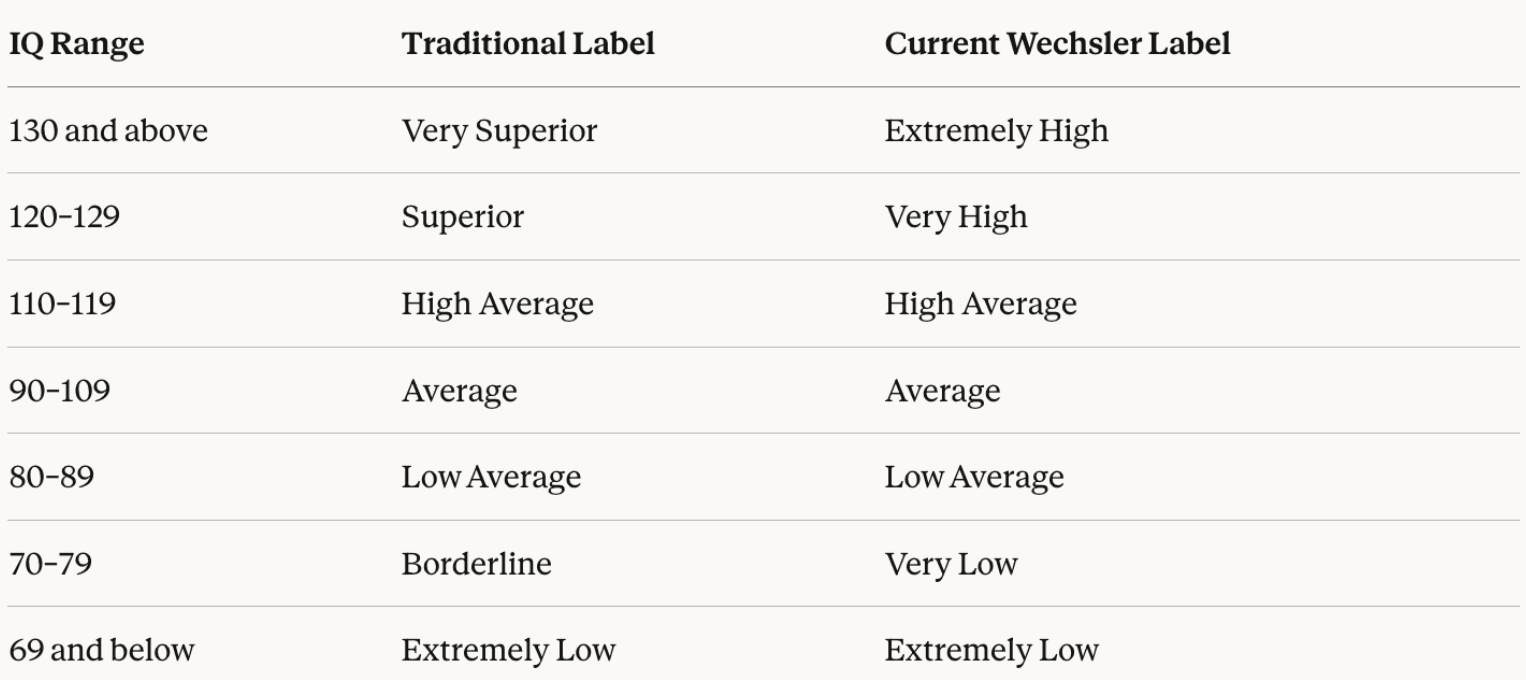
The labels themselves are arbitrary conventions, and so are the cutoffs between ranges. The underlying score is what matters, and it matters only relative to other examinees in the same age group. An IQ of 115 means the same thing at 25 or at 45: better performance than approximately 84% of adults that age on the test in question.
One practical point worth stating clearly: IQ scores always carry measurement error. Professional tests report confidence intervals quantifying this uncertainty — typically ±3 to 7 points for most well-developed tests. Any test that reports a score to the decimal place is misrepresenting the precision of the measurement.
How IQ predicts outcomes across life domains
One reason IQ testing has endured for over 120 years is that scores genuinely predict important outcomes across nearly every domain researchers have examined. The consensus statement above documented this comprehensively, and the evidence has grown substantially since. IQ correlates with academic performance, job performance, income, physical health, and longevity.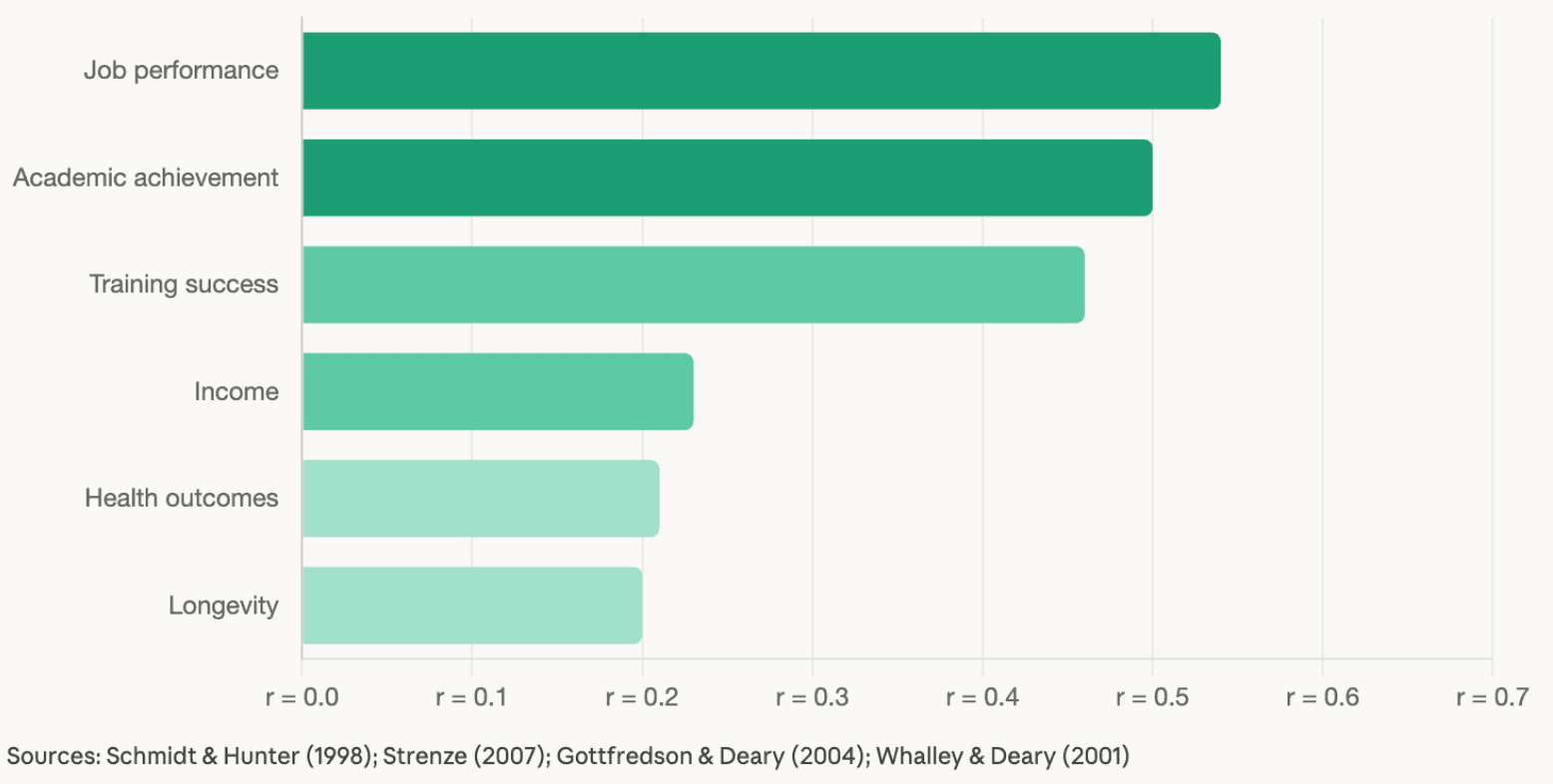
In personnel selection research, IQ is one of the strongest predictors of job performance available to employers, holding across a wide range of occupations and countries. In health research, IQ measured in childhood predicts mortality decades later — a finding from the Scottish Mental Surveys that has been replicated multiple times. These relationships are probabilistic, not deterministic. A high IQ opens certain doors; it does not guarantee any particular outcome. The patterns hold in the aggregate, and individual exceptions are common.
The landscape of online IQ tests
The number of online IQ tests available today is staggering. Some of the most prominent web sites have administered their tests to millions of people. These numbers say nothing about quality — only about popularity.
The online IQ testing landscape can be roughly divided into four categories: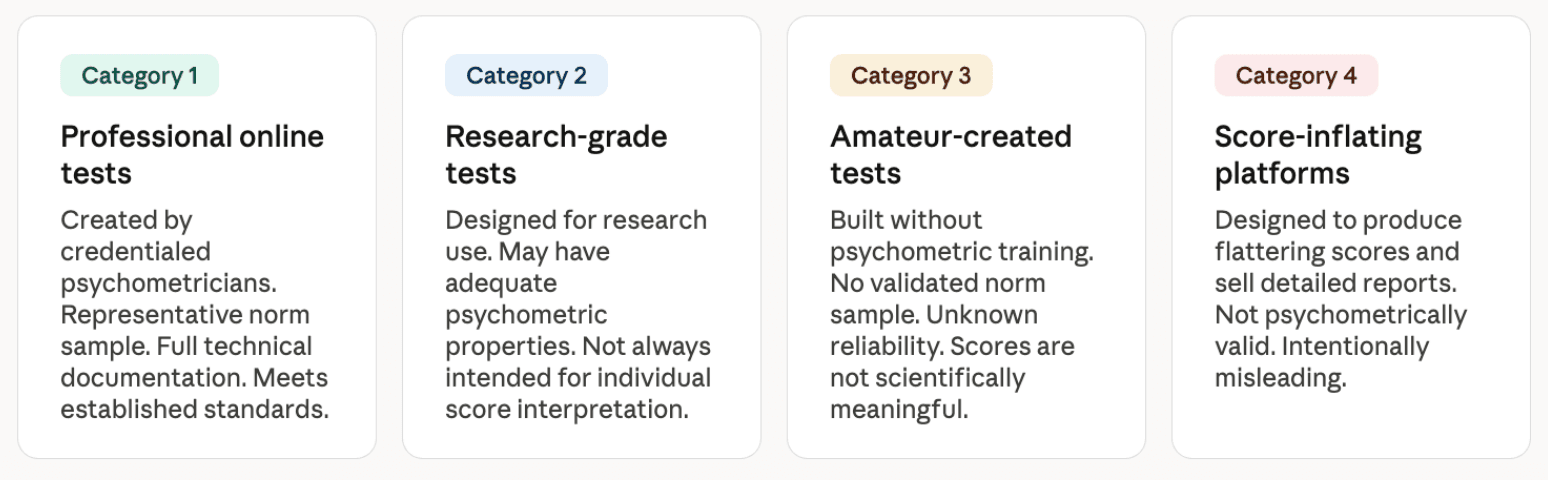
The vast majority of online IQ tests fall into categories 3 and 4. That is not a judgment about intentions — some are well-meaning amateurs who believe they are providing a useful service. But good intentions do not produce valid tests. Psychometric test development is a specialized discipline requiring graduate-level training in statistics, measurement theory, cognitive psychology, and research methodology. Someone without that training cannot create a test that reliably measures what it claims to measure, regardless of effort.
The format of online testing is not, by itself, the problem. A 2024 study found that adults completing the WAIS-IV online scored virtually the same as those tested in person, with full-scale IQ correlations above .90. What determines whether an online test is valid is not the medium — it is the rigor of the development process.
What makes a professional IQ test professional
The word "professional" gets used loosely in online marketing, so it is worth being specific. A professionally developed IQ test meets the following criteria, grounded in the Standards for Educational and Psychological Testing published by the American Educational Research Association, American Psychological Association, and National Council on Measurement in Education.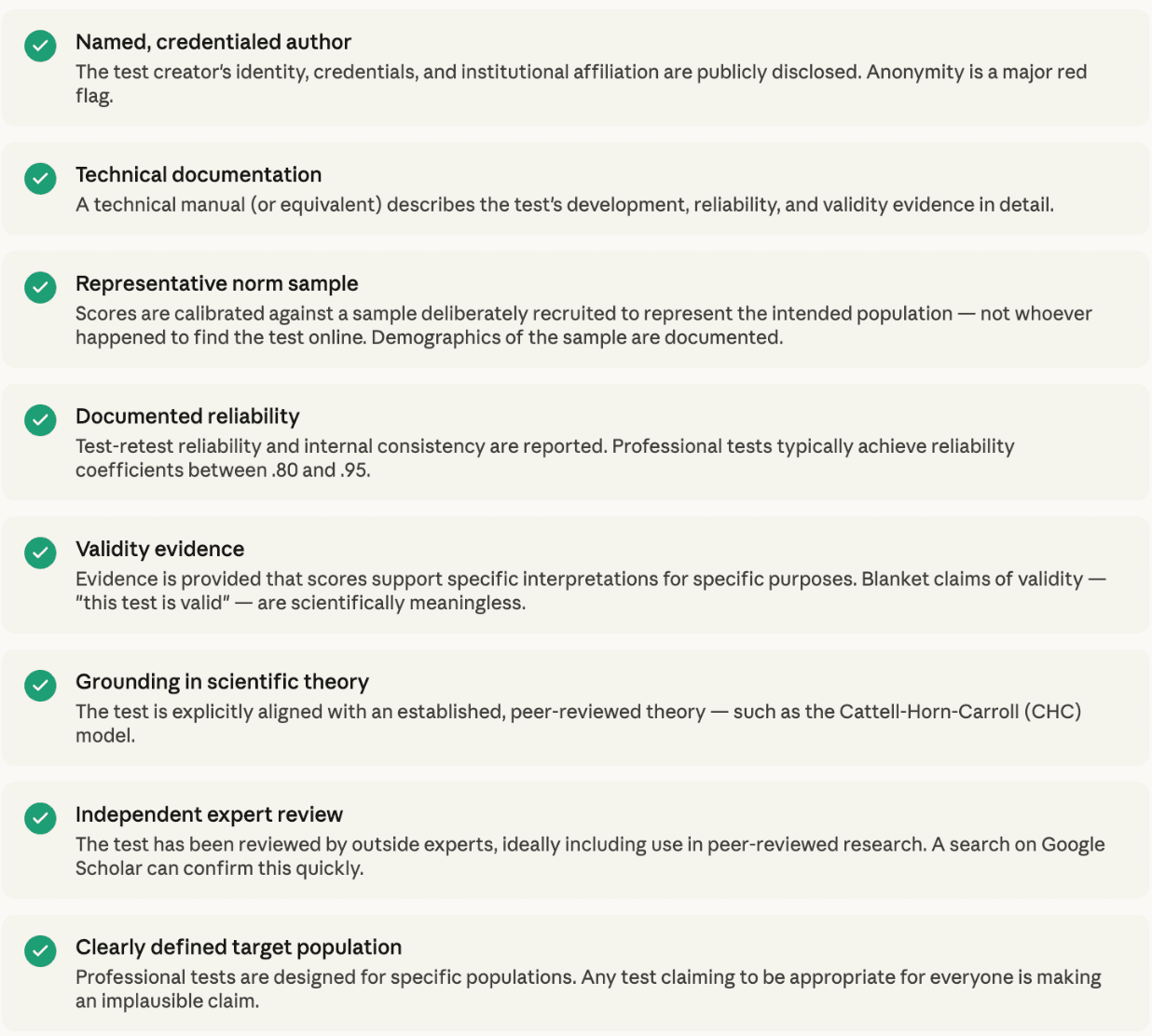
Reliability: why it matters and what the numbers mean
Reliability is the consistency of scores across repeated administrations under similar conditions. In classical test theory, any observed score is composed of a true score plus measurement error. Reliability is the proportion of score variance attributable to true score variance. A reliability of .90 means 90% of score differences between people reflect genuine differences in ability, with 10% attributable to error.
Most professionally developed IQ tests achieve test-retest reliability between .75 and .90 with several weeks between testings. A recent meta-analysis by Breit et al. (2024) in Psychological Bulletin confirmed that cognitive abilities are among the most stable psychological traits measured — childhood IQ from the Scottish Mental Surveys correlated .67 with IQ at age 70, across nearly six decades. Overall IQ scores on the RIOT correlate .923 when the test is administered eight weeks apart. Amateur-created online tests cannot report these statistics because they were never gathered. Without documented reliability data, a test cannot be trusted for any purpose beyond entertainment.
Types of IQ tests and what they measure
IQ tests vary considerably in format and administration method. Understanding these distinctions helps in evaluating what any given test is actually capable of measuring.
Individually administered batteries — the Wechsler scales, Stanford-Binet, and Woodcock-Johnson — are administered one-on-one by a trained clinician. They take 60–90 minutes and cover multiple cognitive domains. These are the gold standard for clinical and forensic settings. Their main limitation is cost and accessibility: a full evaluation can run hundreds to thousands of dollars and requires a professional administrator.
Group-administered tests trade some precision for scalability. The Armed Services Vocational Aptitude Battery (ASVAB), administered to hundreds of thousands of recruits annually, is among the most widely used. Group tests cannot accommodate the individualized observation and adaptive questioning that makes individual tests so accurate.
Single-format tests, such as the Raven's Progressive Matrices, consist of one type of question repeated across many items, measure just one portion of a person’s cognitive abilities (e.g., fluid reasoning). Their limitation is breadth: a single cognitive domain produces a narrower picture of general intelligence than a multi-subtest battery.
Professional online batteries can, when built to rigorous standards, combine broad cognitive coverage with the accessibility of online administration.
Spearman's principle of the "indifference of the indicator" holds that any cognitive task requiring reasoning and judgment will measure intelligence, regardless of its specific format or delivery medium. This is why the online format is not inherently a limitation. What determines validity is the rigor of development, not whether the test is administered through a screen or across a desk.
The norm sample problem: why most online IQ scores are not comparable
A genuinely representative norm sample requires deliberate, structured recruitment in which the test creator selects participants across age, sex, education, geography, and socioeconomic groups to reflect the intended population. Basing a norm sample on self-selected examinees does not accomplish this.
Consider a test taken by one million people who all actively sought it out online, likely because they believe themselves to be intelligent or are curious about cognitive performance. That sample is self-selected. The average it produces is the average for a specific, motivated subset of the population, not the general population. A person could score in the "average" range on such a test while actually sitting well above average relative to real-world norms. This makes the score is uninterpretable.
Professional test developers invest significantly in structured norm sample recruitment and publish the demographic characteristics of those samples so users can evaluate whether the norms apply to them. If a test's norm sample is undocumented, or is described only as "everyone who has taken the test," the scores it produces have no interpretable meaning, regardless of how many people have taken it.
What IQ tests do not measure
IQ tests provide a lot of useful information, but they do not measure everything. IQ tests are not measures of personality. The conscientiousness and diligence that contribute to long-term career success are largely independent of IQ, and research consistently shows that personality traits add predictive value for job performance beyond what IQ alone captures.
IQ tests do not measure every cognitive ability. Human cognition encompasses an enormous range: musical composition, social intuition, long-term planning under uncertainty, and more. Most IQ tests are designed to measure the cognitive abilities most relevant to academic and occupational performance, not to map the entire terrain of human mental life. IQ is also not a static ceiling on potential. Scores are influenced by testing conditions, familiarity with the format, sleep, and anxiety. A single score is a snapshot, not a permanent fixed quantity.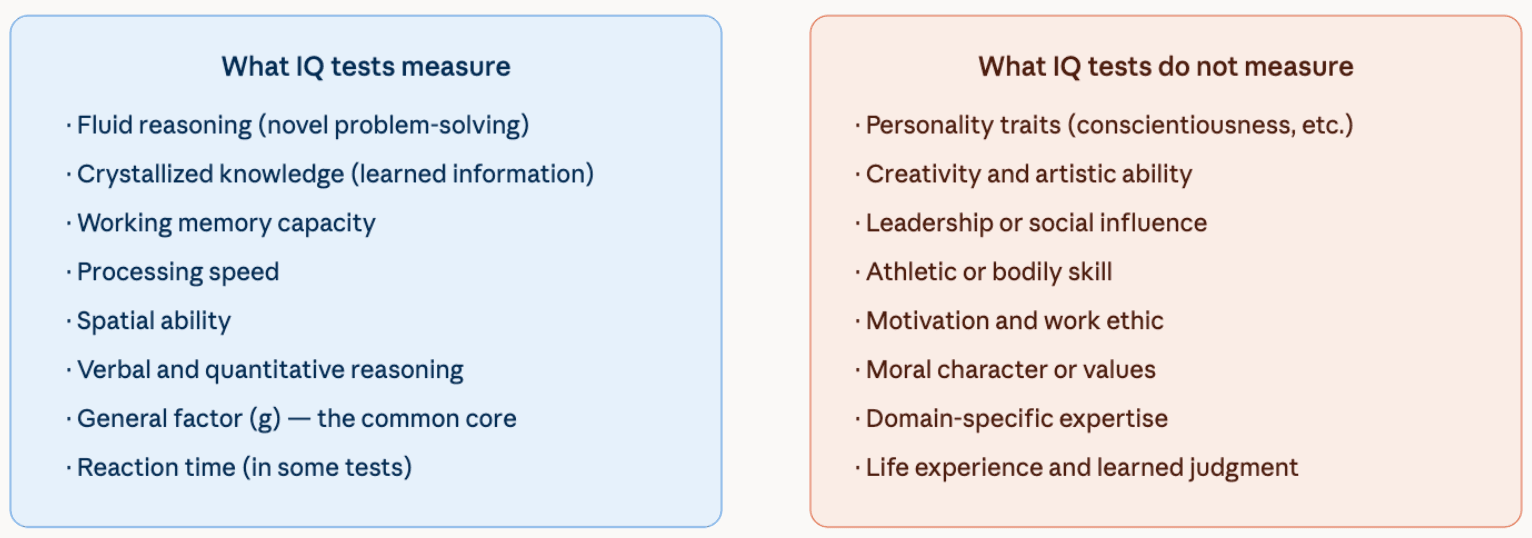
These limitations do not diminish what IQ tests actually do measure. The g factor (the common variance shared across diverse cognitive tasks) is associated with biological variables including brain volume, neural processing efficiency, and specific genetic variants. It predicts outcomes that matter. Acknowledging the scope and limitations of IQ is simply an accurate accounting of the instrument.
How IQ changes across the lifespan
IQ scores are relative measures, which means they compare performance to others in the same age group. By definition, the average in every age group is 100, and so ordinary age-related cognitive changes are controlled for in scoring. A 65-year-old who scores 115 is outperforming most people their age, even if absolute performance on certain tasks has declined from its peak.
The distinction between fluid and crystallized intelligence is important here. Fluid reasoning peaks earlier in life and declines more precipitously than crystallized knowledge, which peaks later and declines much more slowly. Processing speed and working memory follow the same trajectory as fluid reasoning.
Despite these changes in specific abilities, IQ scores are more stable over time than many people expect. The meta-analysis by Breit et al. (2024) found that cognitive ability at age 18 predicted ability at age 50 with a correlation of .95, and at age 65 with a correlation of .86. This does not mean that intelligence is fixed, though. Environmental factors, education, and health all have their influence on IQ. But it remains one of the most stable measurable psychological traits across the lifespan. Any legitimate online test must control for age when generating scores because comparing people of different ages to an undifferentiated norm group produces meaningless results for older and younger examinees alike.
Can IQ be raised?
IQ scores can be raised. Raising intelligence is much harder.
Score increases from retaking a test or learning format-specific strategies represent hollow gains: the number goes up, but the underlying cognitive ability does not. Retaking the same test produces an average increase of about 5 IQ points on the second attempt and 3 IQ points on the third. Learning the rules governing a matrix reasoning task through a short instructional video can boost performance on that specific task substantially — but the gain does not transfer to other question types, and it disappears on a different test. The most reliable way to raise actual intelligence is through education. A meta-analysis estimated that one additional year of schooling raises IQ by approximately 1–2 points. Adoption into a more cognitively enriching home environment produces gains of roughly 3 IQ points compared to expectations had the child remained with their birth family. Lead exposure, head trauma, and prenatal exposure to toxins lower IQ; avoiding these reduces risk but does not actively raise ability. Brain-training apps and cognitive games have not demonstrated meaningful transfer to general intelligence despite persistent marketing claims.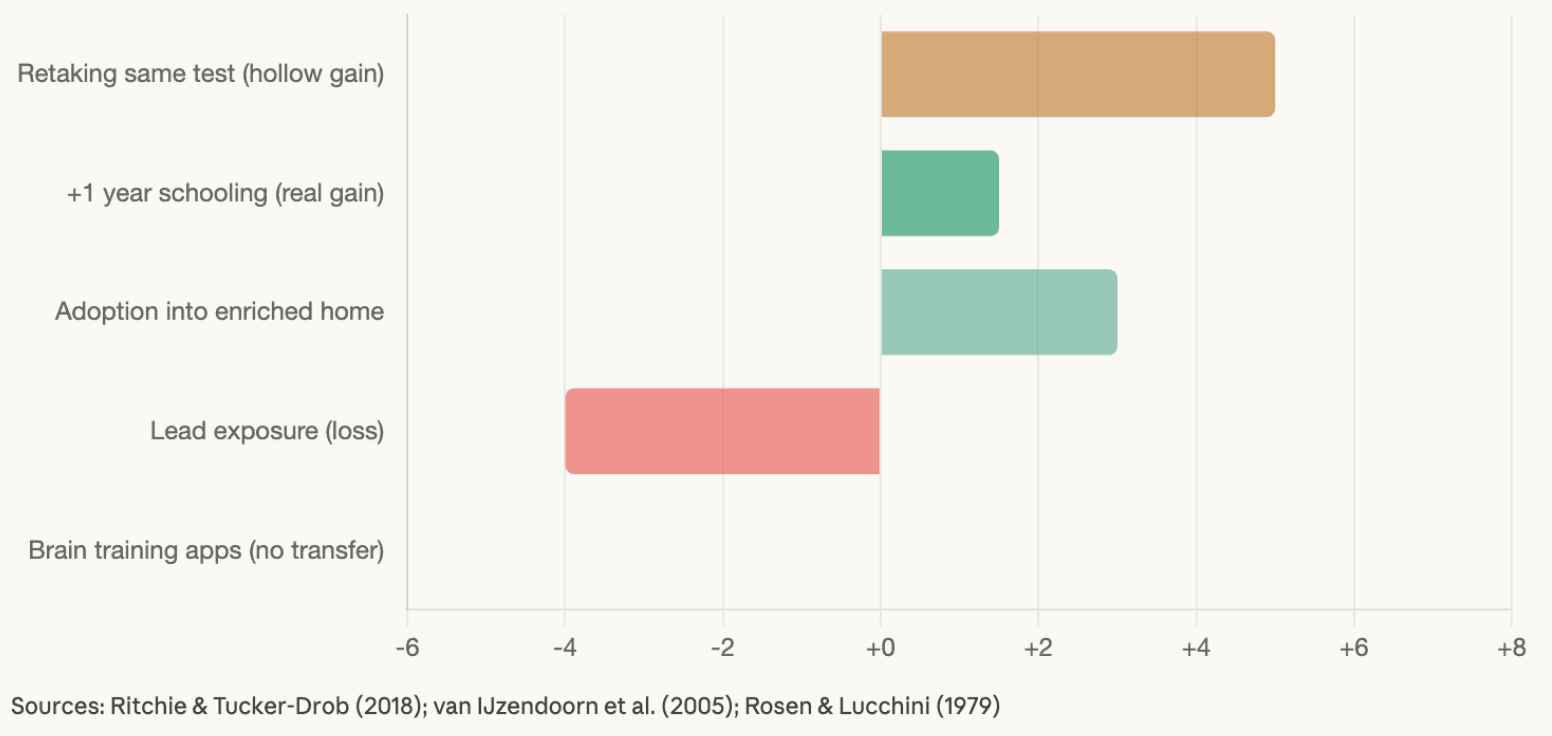
Common red flags in online IQ tests
The following patterns reliably distinguish tests designed to mislead from tests built to measure.
Scores that are nearly always "above average." A legitimately normed test returns a distribution centered at 100 — some scores below, many near the middle, some above. Tests that systematically return scores in the 120–140 range regardless of performance are calibrated to flatter, not to measure.
No author identification. Legitimate test creators are proud of their work. Anonymity protects bad actors from accountability.
No norm sample documentation. "Our test has been taken by millions of users" is not a norm sample. If the demographics and recruitment process of the normative group are not described, the scores have no interpretable meaning.
No standard error reported. Professional tests report confidence intervals. A test that produces a precise single-point score with no uncertainty range is misrepresenting the nature of psychometric measurement.
How to prepare for an IQ test
Nothing substitutes for genuine cognitive ability on a well-designed IQ test. A few practices, however, ensure that performance accurately reflects that ability rather than being dragged down by avoidable factors.
Getting adequate sleep is the single most consequential preparation step. Sleep deprivation impairs working memory, fluid reasoning, and processing speed — precisely the functions that IQ tests measure. Understanding what each subtest asks for, without studying specific questions or learning strategies in advance, also helps. Some IQ subtests use unfamiliar formats; knowing the structure allows examinees to focus mental resources on the problem itself rather than on decoding instructions.
For timed subtests, managing pace matters. On tests where each question has its own time limit there is no benefit to rushing through easy items to bank time for harder ones. Each item should receive whatever time it needs within its allotted window. Test anxiety genuinely lowers scores. Approaching the test as a problem-solving session rather than a high-stakes performance evaluation produces better results. On professionally designed online tests, examinees typically control the pace between subtests and can take breaks. This provides a meaningful advantage over the more rigid structure of a clinical evaluation.
The first professional online IQ test
For most of the history of IQ testing, obtaining a professionally developed score meant scheduling an appointment with a psychologist and paying several hundred dollars for a face-to-face evaluation. That remains the right choice for clinical purposes — diagnosis, forensic evaluation, and individualized assessment benefit from the trained clinician's observation during testing. For individuals seeking an accurate, professionally developed score for personal insight, career planning, or curiosity, that model has been inaccessible to most people.
The Reasoning and Intelligence Online Test (RIOT) changes that. The RIOT is an online IQ test designed from the ground up to meet the professional standards established by the American Educational Research Association, American Psychological Association, and National Council on Measurement in Education — the same standards that govern traditional face-to-face tests. The RIOT received the same rigorous development process as traditional professionally developed IQ tests: item writing, content review by an expert panel, pilot testing, psychometric analysis, and normative data collection from a representative US sample. The result is professional-grade cognitive assessment at a fraction of the cost of a clinical evaluation, making what has historically been an expensive, access-limited service available to anyone with an internet connection.
Conclusion
The online IQ testing landscape is large, noisy, and mostly populated by tests that cannot deliver what they promise. That is not a reason to abandon the goal of online cognitive assessment; rather, it is a reason to be a careful consumer of it.
The core evaluation questions are simple: Who created the test, and what are their qualifications? How was the norm sample recruited, and does its documented composition match the intended population? Is the reliability data published? Is the test grounded in a recognized scientific theory? A test that cannot answer these questions clearly should not be trusted with a meaningful interpretation of cognitive ability.
IQ, when measured well, is one of the most powerful and well-studied predictors in all of behavioral science. The scores produced by a rigorously developed test carry real information about how a person thinks and what they are likely to achieve in cognitively demanding environments. Getting that measurement right (online or in person) requires the same care that has always been required for good psychometric tests. The standards have not changed for only tests. Only the delivery mechanism has.
References
Gottfredson, L. S., et al. (1997). Mainstream science on intelligence. Intelligence, 24(1), 13–23. Schmidt, F. L., & Hunter, J. E. (1998). The validity and utility of selection methods in personnel psychology. Psychological Bulletin, 124(2), 262–274. Gottfredson, L. S., & Deary, I. J. (2004). Intelligence predicts health and longevity, but why? Current Directions in Psychological Science, 13(1), 1–4. Deary, I. J., et al. (2007). Intelligence and educational achievement. Intelligence, 35(1), 13–21. Breit, M., Scherrer, V., Tucker-Drob, E. M., & Preckel, F. (2024). The stability of cognitive abilities: A meta-analytic review of longitudinal studies. Psychological Bulletin. Bartholomaeus, V., et al. (2025). Equivalence of telehealth and face-to-face administration of the WAIS-IV. The Clinical Neuropsychologist, 39(5), 1073–1096. Ritchie, S. J., & Tucker-Drob, E. M. (2018). How much does education improve intelligence? A meta-analysis. Psychological Science, 29(8), 1358–1369. Horn, J. L., & Cattell, R. B. (1967). Age differences in fluid and crystallized intelligence. Acta Psychologica, 26, 107–129. Salthouse, T. A. (2010). Selective review of cognitive aging. Journal of the International Neuropsychological Society, 16(5), 754–760. Murray, C. (2002). IQ and income inequality in a sample of sibling pairs. American Economic Review, 92(2), 339–343. Spearman, C. (1904). "General intelligence" objectively determined and measured. American Journal of Psychology, 15(2), 201–292. Carroll, J. B. (1993). Human Cognitive Abilities: A Survey of Factor-Analytic Studies. Cambridge University Press.
American Educational Research Association, APA, & NCME. (2014). Standards for Educational and Psychological Testing. Warne, R. T. (2025). Technical Manual for the Reasoning and Intelligence Online Test, Version 1.0. RIOT IQ. https://riotiq.com
Take our professional IQ test
Want to know your IQ? Try the first ever professional online IQ test.
AuthorDr. Russell T. WarneChief Scientist
