Jun 8, 2026·History & Origins Of IQ TestingThe Role of IQ Tests in Education and Career Assessment
How do cognitive assessments predict academic and job performance? Learn the role of IQ tests in schools and hiring. Read the guide and take the RIOT!
Dr. Russell T. WarneChief Scientist
Intelligence testing has been woven into the fabric of educational systems and workplaces for well over a century, and for good reason. IQ tests were not developed as abstract scientific curiosities. From the very beginning, the goal was practical: to understand cognitive differences among individuals in ways that could inform consequential decisions. Whether a child needs specialized instruction, whether a student is ready for advanced academic work, or whether a job applicant has the cognitive capacity to succeed in a role — these are real questions with real stakes, and IQ tests offer meaningful, empirically grounded answers. That said, IQ tests are tools, not verdicts. They produce useful and reliable data, but that data must be interpreted with care, in context, and in combination with other relevant information. Understanding what IQ tests actually measure, how they are used across educational and career settings, and what the research says about their predictive power makes it possible to appreciate both the genuine value and the proper limits of these assessments.
What does it mean for intelligence to be "measurable"?
Before discussing the role of IQ tests in education and work, it helps to clarify what an IQ score actually represents. According to a 1997 consensus statement signed by over 50 leading intelligence researchers, intelligence is "a very general mental capability that involves the ability to reason, plan, solve problems, think abstractly, comprehend complex ideas, learn quickly, and learn from experience." An IQ score is a numerical measure of that general capability, calibrated so that 100 represents average performance for a person's age group, and each 15-point interval represents one standard deviation above or below that average. The key word in that definition is "general." Intelligence, as measured by IQ tests, is not a narrow academic skill. It reflects a broad capacity for learning and problem solving that predicts outcomes across a wide range of domains — including many that have nothing to do with a classroom. This generality is precisely what makes IQ tests useful in both educational and occupational settings.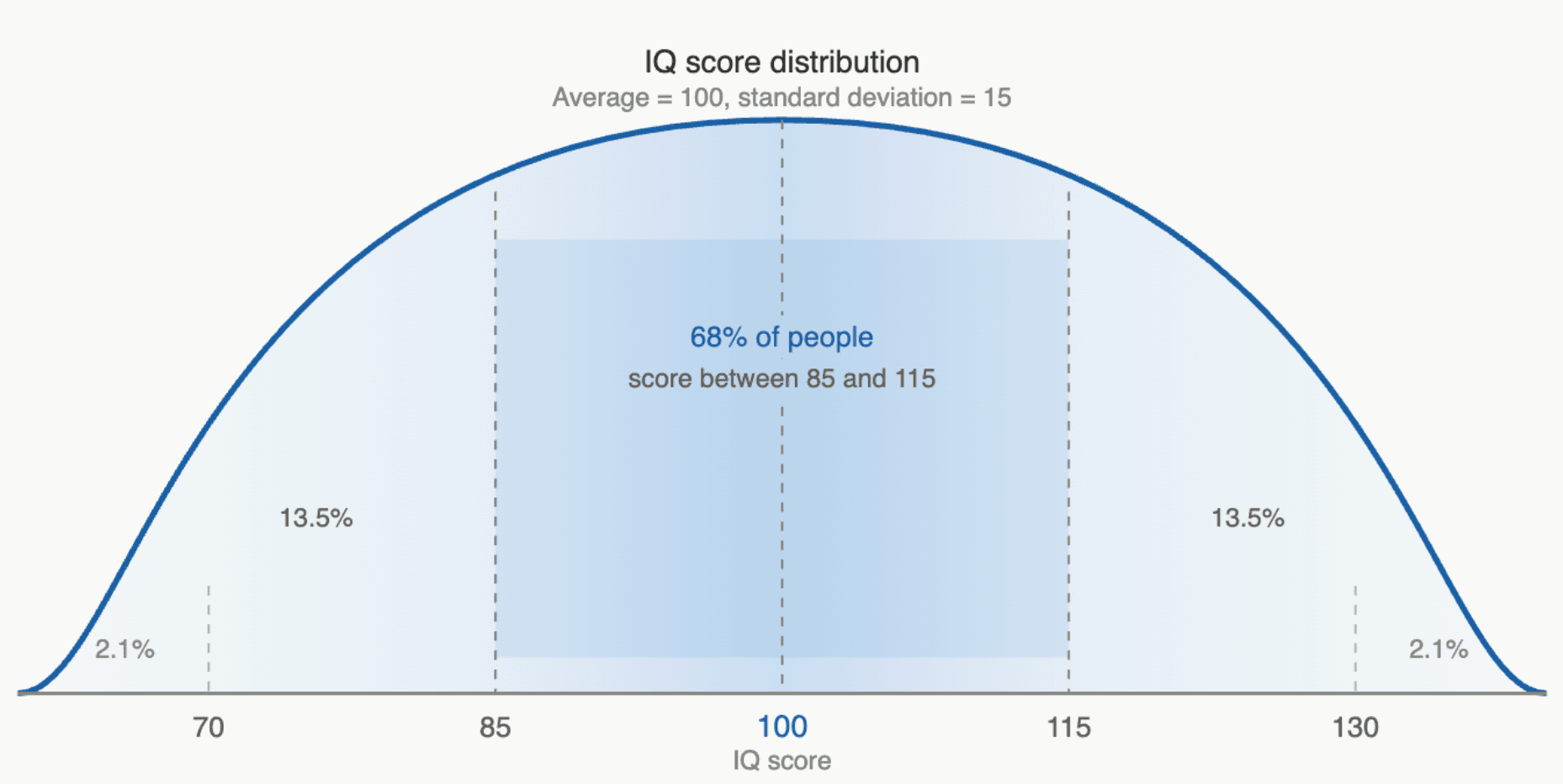 The distribution above is the starting point for interpreting any IQ score. Most people — roughly 68% — fall between 85 and 115. Scores above 130 and below 70 are each found in about 2% of the population. These statistical properties matter not just for score interpretation, but for how tests are designed, normed, and applied in real-world settings.
IQ tests in education: identification and placement
The first IQ test, developed by Alfred Binet and Theodore Simon in 1905, was explicitly designed for an educational purpose: to identify children who might struggle in regular classrooms so that they could receive targeted instruction. That foundational purpose has not changed. Today, IQ tests remain central to educational assessment in the United States and internationally, though the specific applications have grown considerably more sophisticated.
Identifying intellectual disability and diagnosing cognitive differences
Under the Individuals with Disabilities Education Act (IDEA), IQ scores play a central role in identifying intellectual disability and other conditions that qualify a student for special education services. Under current federal guidelines, intellectual disability is defined in part by significantly below-average intellectual functioning, typically indicated by an IQ score at or below approximately 70 — combined with concurrent deficits in adaptive behavior. An IQ test alone cannot establish a diagnosis; adaptive functioning, onset before age 18, and clinical judgment are also required. But the IQ score is an essential component of the assessment. For specific learning disabilities, the picture is more complicated. For several decades, school psychologists used an "IQ-achievement discrepancy model," which identified a learning disability when a student's academic achievement fell significantly below what their IQ would predict. This approach has since been largely replaced or supplemented by other methods following 2004 amendments to IDEA, reflecting ongoing scholarly debate about how well IQ scores predict the presence of specific learning disabilities like dyslexia. Regardless, the IQ test remains a standard component of comprehensive psychoeducational evaluations, even as its specific interpretive role has evolved. Identifying giftedness and selecting students for advanced programs
At the other end of the ability spectrum, IQ tests have long served as the primary basis for identifying intellectually gifted students and placing them in advanced or enrichment programs. Most gifted education programs in the United States use some form of cognitive ability assessment as part of the identification process, with thresholds typically set at the 95th to 98th percentile.
Research on the consequences of gifted identification is informative. A large study of a Florida school district found that disadvantaged boys who qualified for gifted services based on an IQ threshold of 116 showed dramatically higher college enrollment rates — 74% versus 46% for similarly situated boys who narrowly missed the cutoff. The same effect was far weaker for girls, a finding that raises important questions about how gifted programs interact with existing gender dynamics in school engagement. What this research makes clear is that accurate identification — including accurate IQ assessment — has lasting consequences for students' educational trajectories. One significant concern in gifted education has been under-representation of low-income and minority students in gifted programs. An NBER study found that when a school district switched from teacher and parent referrals to universal cognitive screening, the proportion of students identified as gifted rose from 3.3% to 5.5%, with large increases among Black, Hispanic, and low-income students. Those newly identified students performed as well on subsequent IQ assessments as students identified under the previous system. This finding suggests that the problem is not with IQ tests themselves, but with the informal, referral-based systems that preceded them — systems that systematically failed to recognize cognitive ability in students who did not fit a particular cultural template.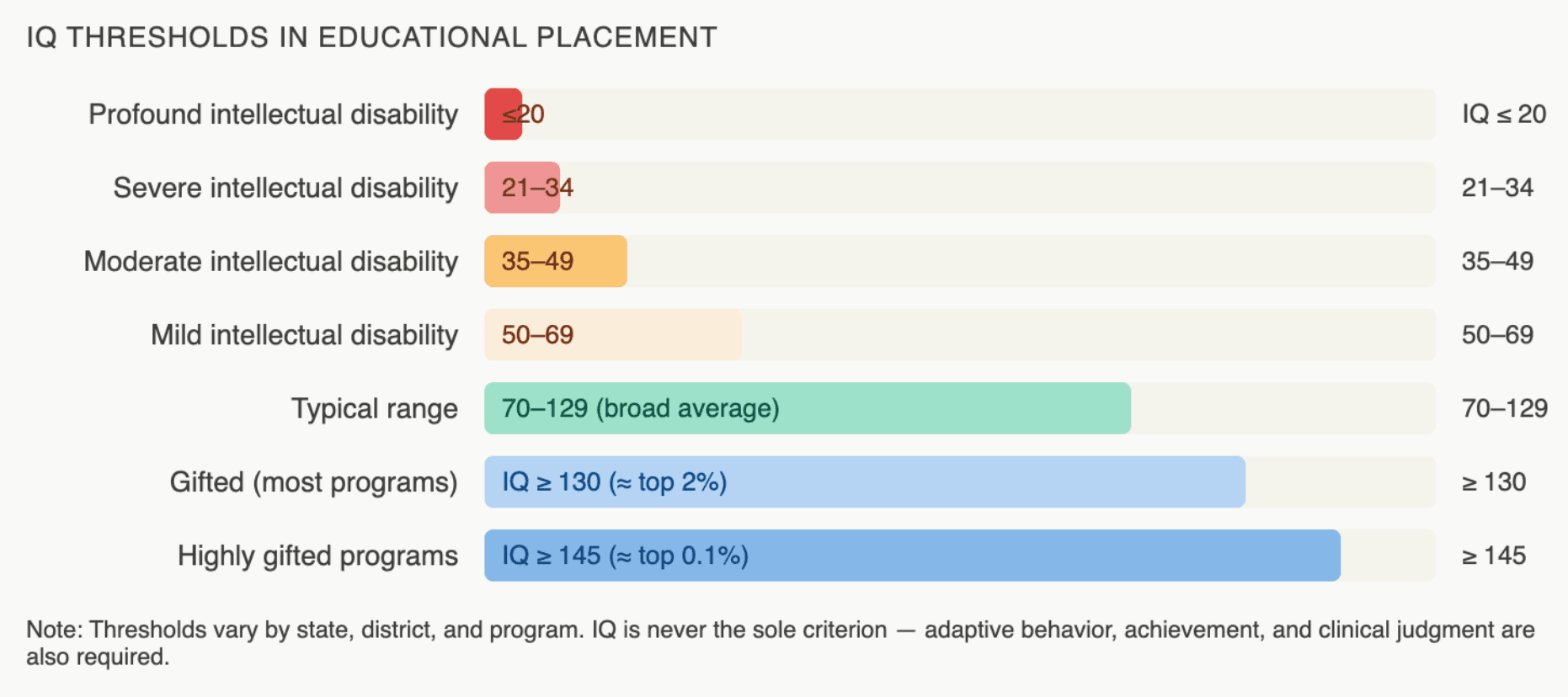
College admissions and standardized testing
At the post-secondary level, most universities do not administer IQ tests directly. What they do use are admissions tests — the SAT and ACT — which function as close proxies. Research has consistently demonstrated that these tests correlate very strongly with measures of general cognitive ability. A landmark study by Frey and Detterman (2004) found that SAT scores correlated up to .82 with measures of fluid reasoning and g, placing their validity on par with that of traditional IQ tests. A subsequent study by Koenig, Frey, and Detterman (2008) replicated this result for the ACT, finding a correlation of .77 with g derived from the ASVAB. These tests are not called "IQ tests," but for practical purposes, they function as group-administered intelligence assessments that happen to include academic content. This does not mean that SAT or ACT scores are interchangeable with individually administered IQ tests. The academic content adds sources of variance that are partly independent of general intelligence, including exposure to schooling, test preparation, and familiarity with specific subjects. Still, when using these scores to predict who will succeed in a cognitively demanding academic environment, they are measuring largely the same underlying capacity as IQ tests.
Why IQ is such a powerful predictor in education
The relationship between IQ and academic outcomes is one of the most robust findings in all of psychology. Meta-analyses consistently report correlations between IQ and grade point average in the range of .50 to .70 across academic levels — from elementary school through university. A longitudinal study tracking students in the United Kingdom found that IQ measured at age 11 predicted educational attainment at age 25 with remarkable accuracy. The predictive reach of a single cognitive assessment extends across decades of a person's educational life. This predictive power has a straightforward explanation. Academic work — at all levels — requires the ability to learn new material, apply abstract principles, and solve problems in unfamiliar contexts. These are precisely the capabilities that IQ tests are designed to measure. Grades also reflect other factors: effort, conscientiousness, study habits, and motivation. This is why combining IQ data with high school grades, as admissions offices typically do, produces better predictions of college success than either measure alone.
IQ tests in career and employment settings
The use of cognitive ability assessments in employment is not new. During World War I, the Army Alpha and Army Beta tests were administered to over two million recruits, demonstrating that intelligence could be efficiently assessed in large groups and that the resulting scores had real predictive value for military performance. Today, this tradition continues across civilian and military occupations.
What decades of research show about job performance
The most comprehensive examination of cognitive ability in personnel selection is a landmark meta-analysis by Schmidt and Hunter (1998), which synthesized 85 years of research across hundreds of thousands of participants. Their central finding was straightforward: general mental ability (GMA) is the single best predictor of job performance for applicants without prior experience in the role, with an operational validity coefficient of approximately r = .51 for medium-complexity jobs. By comparison, years of experience correlated at .18 and education level at .10 with job performance — both well below the threshold typically considered useful for selection. The predictive validity of cognitive ability increases with job complexity. For high-complexity positions — professional, managerial, and technical roles — validity coefficients range from .50 to .70 or higher. For lower-complexity jobs involving repetitive tasks, the relationship is more modest. This makes intuitive sense: the more a job requires on-the-fly problem solving, rapid learning of new procedures, and the integration of complex information, the more general intelligence matters.
A further finding from Schmidt and Hunter deserves attention: combining cognitive ability assessment with other selection methods — particularly structured interviews or integrity tests — produces incremental validity beyond either method alone. A cognitive ability assessment paired with a structured interview yields composite validity above .60, making it one of the most evidence-based approaches to hiring available.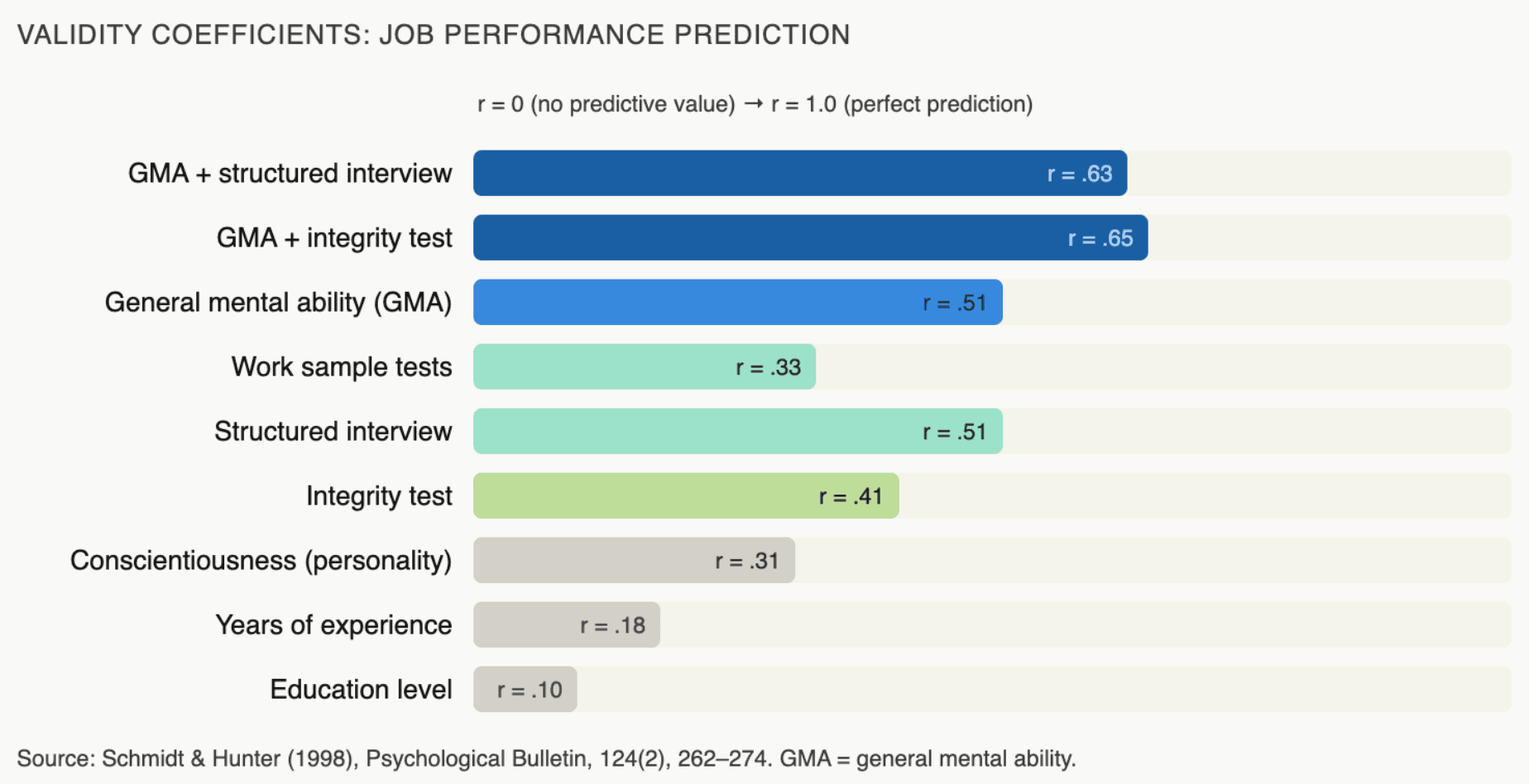 It is worth noting that the traditional signals employers often rely on — résumé screening, years of experience, educational credentials — show considerably weaker relationships with job performance than most hiring managers assume. Résumé signals are easy to inflate, and experience in one context does not always transfer to another. Cognitive ability assessments, by contrast, measure the underlying capacity to learn and adapt, which matters regardless of specific task experience.
 The military and large-scale institutional use
The largest single employer in the United States to use cognitive ability testing is the military, which administers the Armed Services Vocational Aptitude Battery (ASVAB) to all recruits. Though not marketed as an "IQ test," the ASVAB functions as an intelligence battery and produces a score — the Armed Forces Qualification Test (AFQT) — that is used to determine basic eligibility for military service, as well as qualification for specific occupational specialties. The relationship between ASVAB scores and training success is strong and well-documented. The ASVAB also correlates highly with civilian IQ tests, and the SAT's strong correlation with g was first established using ASVAB-derived measures of general intelligence in the National Longitudinal Survey of Youth. IQ and training success
One of the most consistent findings in industrial-organizational psychology is that cognitive ability predicts how quickly people can be trained on new tasks. Organizations invest enormous resources in onboarding, training, and skill development. An employee who learns faster and requires less corrective instruction adds more value sooner. For jobs that involve rapid procedural learning, complex knowledge acquisition, or frequent adaptation to new requirements, the speed and depth of learning — which are strongly correlated with IQ — are directly relevant to performance.
A meta-analysis examining validity across five performance criteria found that training success (instructor ratings and grades) showed the largest validity estimates for cognitive ability across all outcome types. This makes sense: cognitive ability predicts learning capacity, and training performance is a direct measure of learning. IQ does not work in isolation
IQ is the most powerful single predictor available in many contexts, but that still leaves substantial variance unexplained. In academic settings, students with identical IQ scores can have vastly different outcomes depending on their motivation, self-regulation, and access to quality instruction. In the workplace, personality traits — particularly conscientiousness — contribute meaningfully to performance beyond what IQ alone predicts.
This is why the Mensa Foundation, in discussing best practices for psychological assessment, has argued for combining cognitive ability data with other relevant measures to gain a complete picture of a person's functioning. A child referred for a learning evaluation should receive a full battery that includes cognitive ability, academic achievement, and behavioral data. A candidate being considered for a cognitively demanding job role benefits from an assessment that pairs cognitive ability data with structured interview results and, where appropriate, measures of conscientiousness and role-relevant knowledge.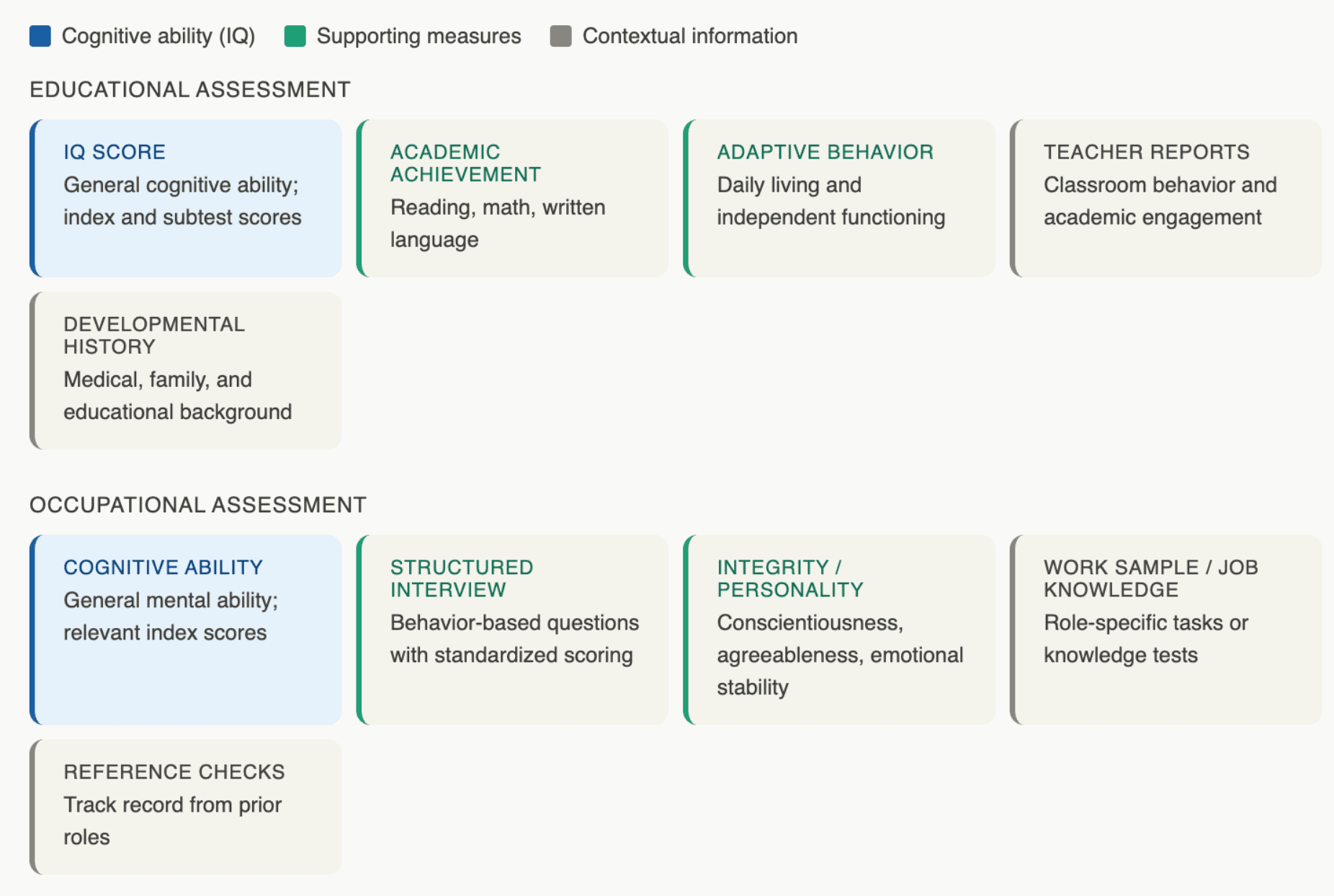
IQ and outcomes across the lifespan
An important perspective that educational and employment applications share is that IQ is not merely relevant in a single moment of assessment. Intelligence is a stable trait, and its predictive power extends across long stretches of time. Longitudinal research on this question is extensive.
A substantial body of evidence shows that IQ measured in childhood and adolescence predicts academic performance, employment, and income decades later. The relationship between IQ and job prestige, for instance, strengthens over time as people advance through careers that increasingly sort by cognitive demand. The correlation between IQ and income also tends to grow with age, peaking around middle adulthood when careers are most established. This does not mean that IQ determines a person's life path — other factors, including personality, effort, family background, and circumstance, matter enormously. It does mean that cognitive ability is a persistent force in life outcomes, not a snapshot that loses relevance after childhood. This longitudinal perspective has implications for how IQ data should be used. A single assessment tells a professional something meaningful, but it is most useful when interpreted in the context of everything else known about a person — their developmental trajectory, their academic and occupational history, and their current circumstances.
What "predictive validity" means in practice
There is an important conceptual distinction that is sometimes lost in discussions of IQ and education or career outcomes: the difference between predictive validity and individual prediction. When researchers report that IQ correlates at .50 with academic performance, or .51 with job performance, they are describing a statistical relationship at the population level. That relationship is meaningful, but it does not mean that any individual's outcome can be predicted precisely from their IQ score alone.
A correlation of .50 means that approximately 25% of the variance in academic performance is accounted for by IQ differences. That is a substantial portion — certainly more than most other single predictors can account for. But 75% of the variance reflects other factors. At the level of any specific person, IQ scores inform the picture; they do not complete it. This is why responsible use of IQ data in educational and employment settings always involves placing the score in context, combining it with other sources of information, and maintaining appropriate uncertainty about individual predictions.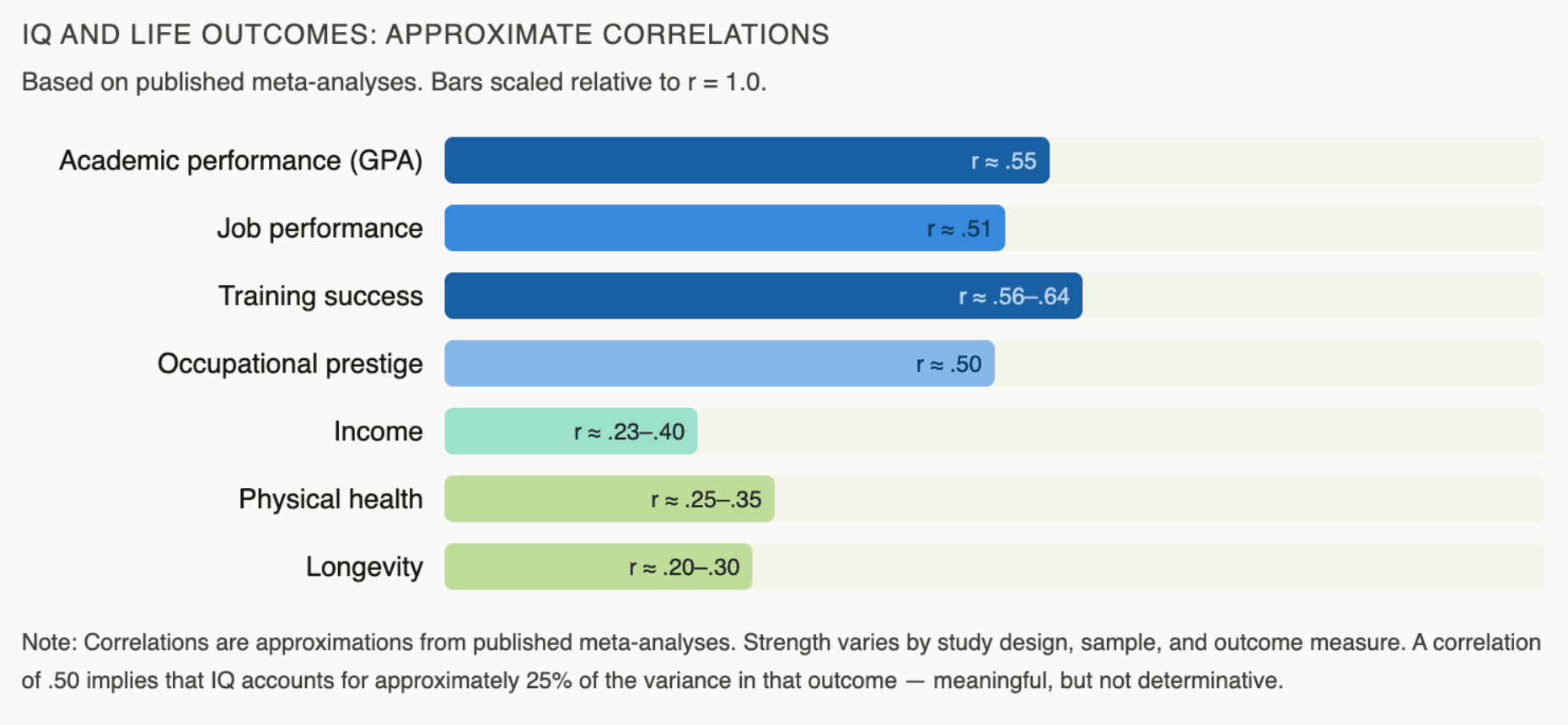
The importance of using professionally developed tests
One issue that cannot go unaddressed is the quality of the assessments used in educational and occupational contexts. In both settings, the integrity of the data depends entirely on the quality of the instrument that produced it. A score from a poorly designed test is not merely uninformative — it can actively mislead.
Professionally developed IQ tests are scientific instruments created by experts with training in psychometrics. They have documented norm samples that are representative of the intended test population, reliability data, evidence for the validity of their score interpretations, and alignment with established theories of intelligence. Anonymous tests, tests without documented norm samples, and tests created by individuals without formal psychometric training do not meet these requirements — and their scores should not be used for consequential decisions in education or employment. This standard applies online as much as it applies to paper-and-pencil or individually administered tests. The delivery format is not what determines quality. What determines quality is the rigor of the development process, the representativeness of the norm sample, and the transparency of the technical documentation.
The Reasoning and Intelligence Online Test (RIOT) was created to meet this standard in the online context. I developed the RIOT after more than 15 years of intelligence research, including the publication of dozens of peer-reviewed articles and a book on intelligence and psychological testing. The RIOT underwent expert panel review, a development process aligned with CHC theory, and the construction of the first properly representative U.S. norm sample for a professional online IQ test. It meets the Standards for Educational and Psychological Testing published by the American Educational Research Association, the American Psychological Association, and the National Council on Measurement in Education — the same standards that govern the development of traditional in-person assessments. For individuals, clinicians, or researchers interested in the insights that a professional cognitive assessment can provide in an accessible online format, it represents a meaningful option built on the same scientific foundations as the instruments described throughout this article.
Parting thoughts
IQ tests have been central to educational and occupational assessment for over a century because they measure something real and consequential: the general capacity to learn, reason, and solve problems. That capacity is relevant everywhere that learning and problem solving are required — which is to say, almost everywhere.
Understanding what IQ tests actually measure, how they are developed, and what the research says about their predictive validity makes it possible to use them appropriately. They are not perfect instruments, and they are not the only instruments worth using. But the evidence that cognitive ability assessments provide useful, reliable, and valid information for educational and career decisions is among the strongest in all of applied psychology. Used by qualified professionals in the context of a comprehensive evaluation, they remain among the most powerful tools available for understanding individual differences in human cognition.
References
Gottfredson, L. S., et al. (1997). Mainstream science on intelligence. Intelligence, 24(1), 13–23. https://doi.org/10.1016/S0160-2896(97)90011-8 Schmidt, F. L., & Hunter, J. E. (1998). The validity and utility of selection methods in personnel psychology. Psychological Bulletin, 124(2), 262–274. https://psycnet.apa.org/record/1998-10661-006 Frey, M. C., & Detterman, D. K. (2004). Scholastic assessment or g? The relationship between the Scholastic Assessment Test and general cognitive ability. Psychological Science, 15(6), 373–378. https://doi.org/10.1111/j.0956-7976.2004.00687.x Koenig, K. A., Frey, M. C., & Detterman, D. K. (2008). ACT and general cognitive ability. Intelligence, 36(2), 153–160. https://doi.org/10.1016/j.intell.2007.03.005 Strenze, T. (2007). Intelligence and socioeconomic success. Intelligence, 35(5), 401–426. https://doi.org/10.1016/j.intell.2007.02.003 Deary, I. J., Strand, S., Smith, P., & Fernandes, C. (2007). Intelligence and educational achievement. Intelligence, 35(1), 13–21. https://doi.org/10.1016/j.intell.2006.02.001 Salgado, J. F., et al. (2019). Meta-analysis of the validity of general mental ability for five performance criteria. Frontiers in Psychology. https://pmc.ncbi.nlm.nih.gov/articles/PMC6811658/ Fletcher, J. M., & Miciak, J. (2024). Assessment of specific learning disabilities and intellectual disabilities. Assessment for Effective Intervention, 49(1). https://journals.sagepub.com/doi/10.1177/10731911231194992 Card, D., & Giuliano, L. (2015). Can universal screening increase the representation of low income and minority students in gifted education? NBER Working Paper 21519. https://www.nber.org/digest/nov15/who-gets-gifted-and-talented-education-programs Chetty, R., et al. (2002). Economic implications of social mobility: Returns to education. American Economic Review, 92(4). https://doi.org/10.1257/000282802320191570 Lubinski, D., & Benbow, C. P. (2006). Study of mathematically precocious youth after 35 years. Perspectives on Psychological Science, 1(4). https://doi.org/10.1111/j.1745-6924.2006.00019.x Gottfredson, L. S. (1997). Why g matters: The complexity of everyday life. Intelligence, 24(1), 79–132. https://doi.org/10.1016/S0160-2896(97)90014-3 American Educational Research Association, American Psychological Association, & National Council on Measurement in Education. (2014). Standards for educational and psychological testing. https://www.testingstandards.net/ Ree, M. J., & Earles, J. A. (1992). Intelligence is the best predictor of job performance. Current Directions in Psychological Science, 1(3), 86–89. https://doi.org/10.1111/j.1467-8721.1992.tb00020.x Cawley, J., Heckman, J., & Vytlacil, E. (2001). Three observations on wages and measured cognitive ability. Labour Economics, 8(4), 419–442. https://doi.org/10.1016/S0927-5371(01)00039-2 Warne, R. T. (2021). In the know: Debunking 35 myths about human intelligence. Cambridge University Press. https://doi.org/10.1017/9781108593298 Deary, I. J., Weiss, A., & Batty, G. D. (2010). Intelligence and personality as predictors of illness and death. Psychological Science in the Public Interest, 11(2). https://doi.org/10.1016/j.socscimed.2004.03.016 National Center for Research on Gifted Education. (2024). Longer-term impacts of gifted education. https://ncrge.uconn.edu/longer-term-impacts-of-gifted-education/ Warne, R. T. (2025). Technical manual for the Reasoning and Intelligence Online Test, version 1.0. RIOT IQ.
Take our professional IQ test
Want to know your IQ? Try the first ever professional online IQ test.
AuthorDr. Russell T. WarneChief Scientist
