Jun 17, 2026·IQ Testing for HR & RecruitmentWhy Are IQ Tests Important for Assessing Intelligence?
Discover what IQ tests actually measure and why they predict academic, career, and health success. Read the full article and take the RIOT IQ test today!
Dr. Russell T. WarneChief Scientist
Few questions in psychology generate as much confusion as this one: why bother with IQ tests at all? Skeptics often argue that no single number can capture the full complexity of a human mind, and they are technically correct. But that argument misunderstands what IQ tests are for. A thermometer does not capture everything meaningful about a person's body, yet nobody suggests abandoning it as a diagnostic tool. IQ tests are instruments of measurement — and like all good instruments, their value is in what they reliably and validly measure, and in what that measurement tells us about real outcomes. I have spent over 15 years studying human intelligence, and I have come to appreciate IQ tests not as a mirror of a person's entire mind, but as the single most predictive psychological measurement tool ever developed. Understanding why that is true — and where its limits lie — is essential for anyone who wants to think clearly about intelligence.
What IQ tests actually measure
The first thing to understand is that IQ and intelligence are not the same thing. Intelligence is the underlying capacity: the ability to reason, plan, solve problems, comprehend complex ideas, and learn quickly. This is how over 50 leading researchers defined it in a 1997 consensus statement. IQ is the number produced by a test designed to measure that capacity — the metric for quantifying the ability, not the ability itself. What IQ tests measure well is a construct researchers call g, or the general factor of intelligence. Spearman identified g in 1904 when he noticed that people who scored well on one type of cognitive test tended to score well on all others. This positive correlation among all cognitive tasks — regardless of format — has been replicated thousands of times across a century of research. It is one of the most robust findings in the entire social sciences. Modern IQ tests, built on the Cattell-Horn-Carroll (CHC) model of intelligence, operationalize g through a battery of subtests covering fluid reasoning, verbal ability, spatial processing, working memory, and processing speed, among other domains. No single subtest is the measure of g — the overall pattern is.
This design has a practical consequence: because g predicts so many important life outcomes with remarkable consistency, an IQ test score is not just a curiosity. It is actionable information.
The breadth of what IQ predicts
The predictive reach of IQ scores is broader than most people realize.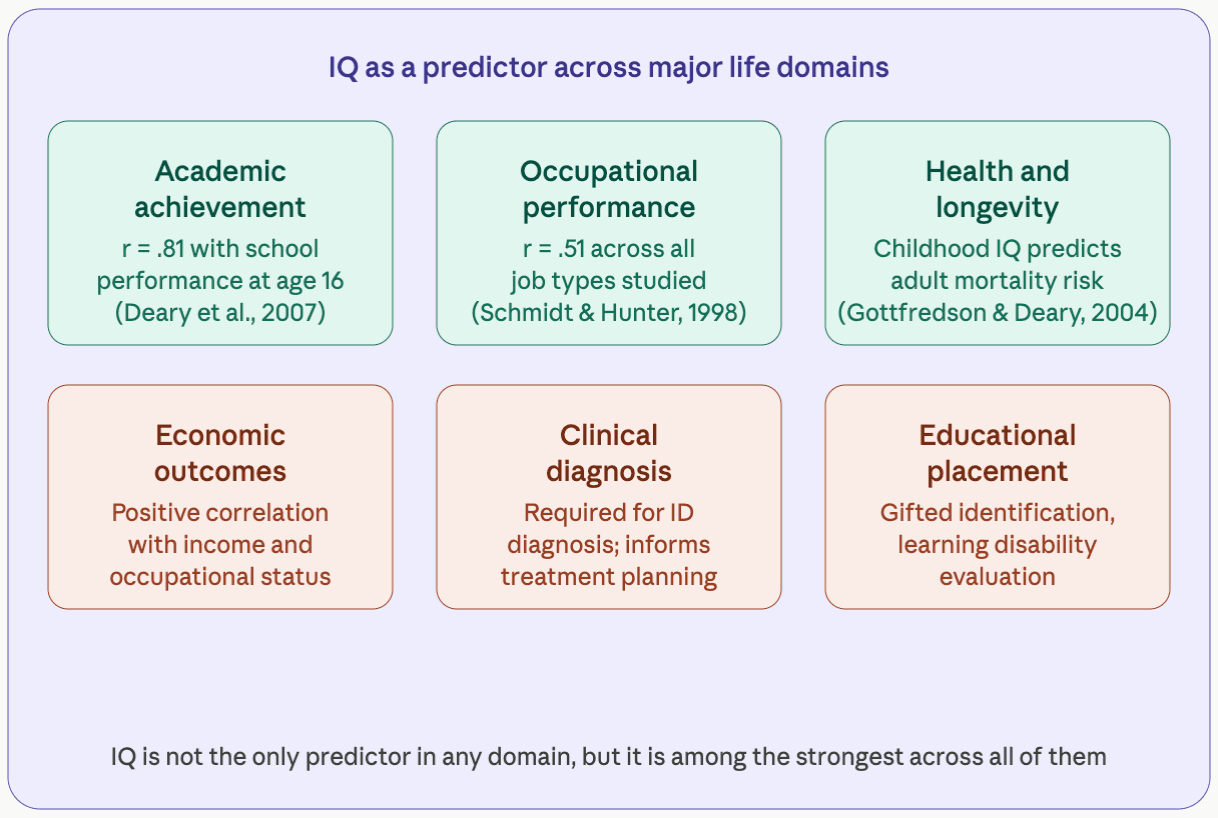 Academic performance is where the evidence is most extensive. Cognitive ability tests accurately predict student performance in the primary and secondary school years, a finding that has been replicated consistently for over a century. In a prospective study by Deary and colleagues, a latent g factor extracted from tests administered at age eleven correlated at r = .81 with a general academic achievement factor at age sixteen. Across the curriculum, correlations ranged from .77 in mathematics to .43 in art and design — a wide spread that reflects the differential cognitive demands of different subjects, but a consistently positive relationship across all of them.
 Job performance is the domain with perhaps the most commercially significant evidence. A meta-analysis by Schmidt and Hunter, covering 85 years of research in personnel selection, found that general mental ability predicts job performance with a validity coefficient of approximately r = .51 across all occupations studied — higher than any other single selection method evaluated. For high-complexity jobs such as professional, managerial, and scientific roles, validity reaches r = .58. For comparison, educational credentials — what appears on a typical résumé — correlated with job performance at only r = .10 in the same analysis. This is why organizations that rely on structured cognitive assessments for hiring make better personnel decisions than those that rely on credentials or unstructured interviews alone. Health and longevity is a less well-known but equally striking domain. Large epidemiological studies in Scotland traced children who had completed an intelligence test in 1932 and found that IQ in childhood predicted substantial differences in adult morbidity and mortality, including deaths from cancers and cardiovascular diseases. These associations remained significant after controlling for socioeconomic variables. The most plausible explanation is that intelligence enhances the reasoning and problem-solving skills that allow people to navigate health decisions, adhere to treatment regimens, and avoid accidents — but the association itself is real regardless of the mechanism. Economic outcomes follow a similar pattern. IQ correlates positively with income across populations, and research suggests that some of this relationship is causal — higher intelligence allows entry into careers with cognitive complexity requirements that carry higher pay.
The pattern across all these domains reinforces a single point: IQ tests matter for assessing intelligence because what they measure is consequential in virtually every area of organized human activity.
Clinical diagnosis: the most critical application
Of all the applications of IQ testing, clinical diagnosis carries the highest stakes. In this context, IQ tests are not used to rank-order healthy adults — they are used to determine what kind of cognitive support a person needs, what decisions they are capable of making, and what interventions are most appropriate.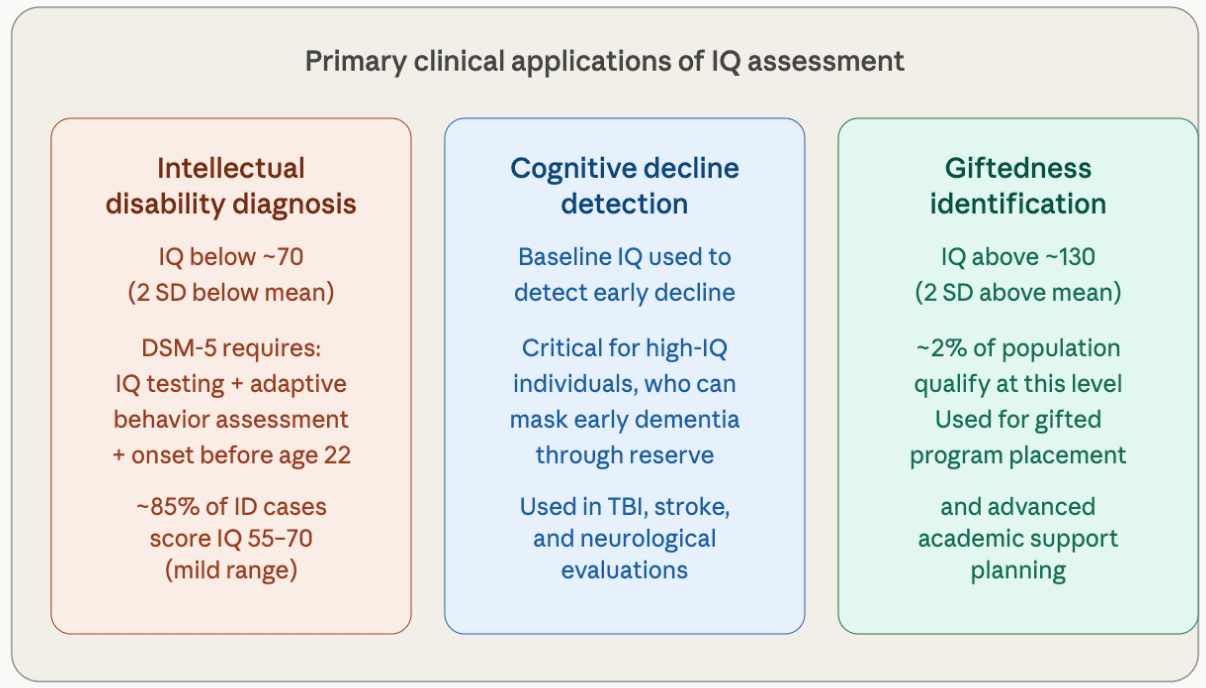 The most formalized clinical use of IQ testing is in the diagnosis of intellectual disability. Under the current DSM-5 framework, a diagnosis requires three criteria: significant deficits in intellectual functioning (typically defined as an IQ score of approximately 70 or below, which represents two standard deviations below the population mean), significant deficits in adaptive behavior, and onset during the developmental period before age 22. IQ testing is not sufficient by itself for a diagnosis, but it is a required component. Without a standardized, psychometrically sound IQ test, there is no objective basis for quantifying the intellectual functioning component. Approximately 85% of individuals diagnosed with intellectual disability score in the mild range, between IQ 55 and 70.
 At the other extreme of the distribution, IQ assessment is used to identify gifted students who may require differentiated educational programming. An IQ above approximately 130 — two standard deviations above the population mean — is approximately the threshold used in most gifted education programs, though definitions vary by state and jurisdiction.
A third clinical application, often overlooked, is the detection of cognitive decline. When an individual has a known or estimated baseline IQ, clinicians can use subsequent testing to detect deterioration. This is particularly important for high-functioning individuals, who often have sufficient cognitive reserve to mask early symptoms of neurodegenerative conditions during casual observation. The ability to compare against a meaningful baseline — rather than simply noting whether a person scores in the "average" range — can lead to earlier intervention.
In forensic settings, IQ tests inform determinations of competency to stand trial, sentencing considerations for individuals with intellectual disability, and parole evaluations. The stakes in these contexts could not be higher, which is precisely why professionally developed, standardized tests are required rather than informal assessment.
The role of IQ testing in educational settings
The educational system is the most widespread institutional context for IQ testing, and for good reason. Identifying a child's cognitive profile early has practical implications for how that child should be taught, what support they need, and whether they qualify for specialized programs.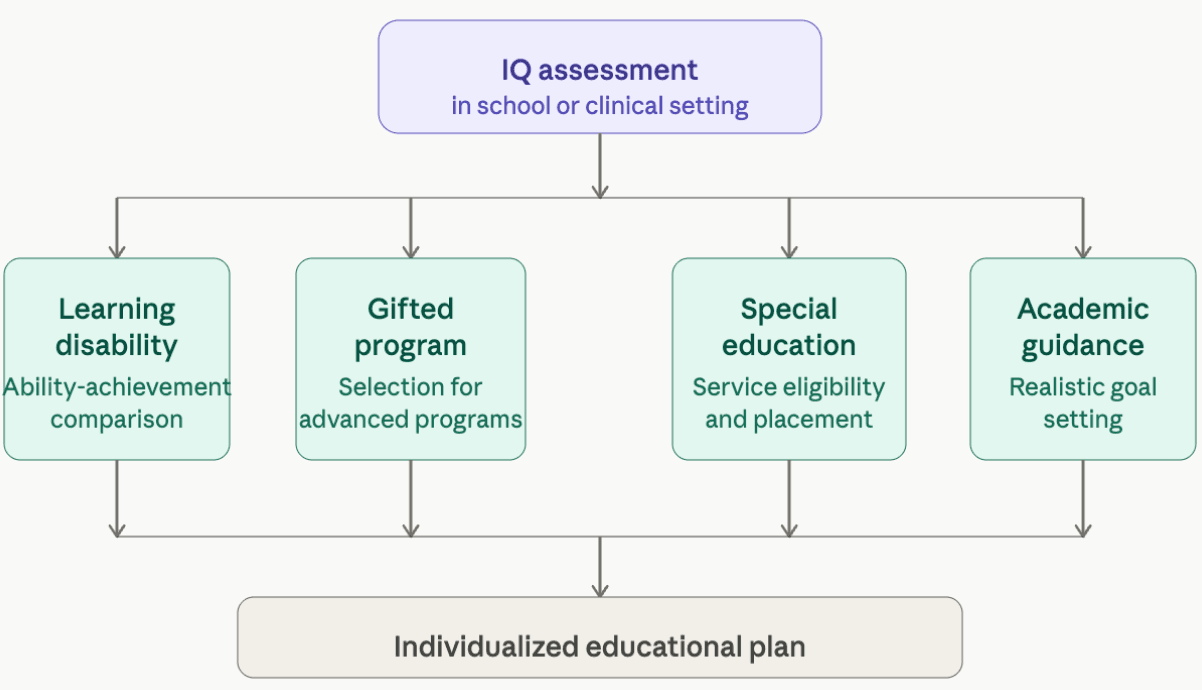 In schools, IQ tests are administered as part of multi-step processes. A school psychologist does not administer an IQ test in isolation and render a verdict — a test is part of a broader evaluation that includes observation, academic performance data, teacher reports, and sometimes additional cognitive and achievement testing. What the IQ test contributes to this picture is precision: a standardized, norm-referenced score that places a child's cognitive functioning within a known distribution.
 For learning disability evaluation, IQ testing allows examiners to compare intellectual ability against academic achievement. If a child with an estimated IQ in the high-average range is reading three grade levels below expectation, that discrepancy is diagnostically meaningful in a way that performance data alone cannot provide. The test creates the baseline against which the discrepancy can be measured.
For gifted identification, IQ testing is similarly indispensable. States and school districts define giftedness in various ways, and many now use multiple criteria. But an IQ test remains one of the most defensible and scientifically grounded components of that identification process. A child whose score places them in the top 1–2% of the distribution has a demonstrated cognitive profile that, statistically, is associated with the ability to learn at a pace and depth that standard curriculum does not typically accommodate. Matching instruction to ability is a legitimate and evidence-based use of IQ data.
Why IQ is not just a number — the profile matters
A common misconception is that IQ testing produces only a single number. A well-constructed IQ test battery does far more than generate a global score. It produces a profile of abilities that can be clinically meaningful precisely because different cognitive domains show different patterns of strength and vulnerability.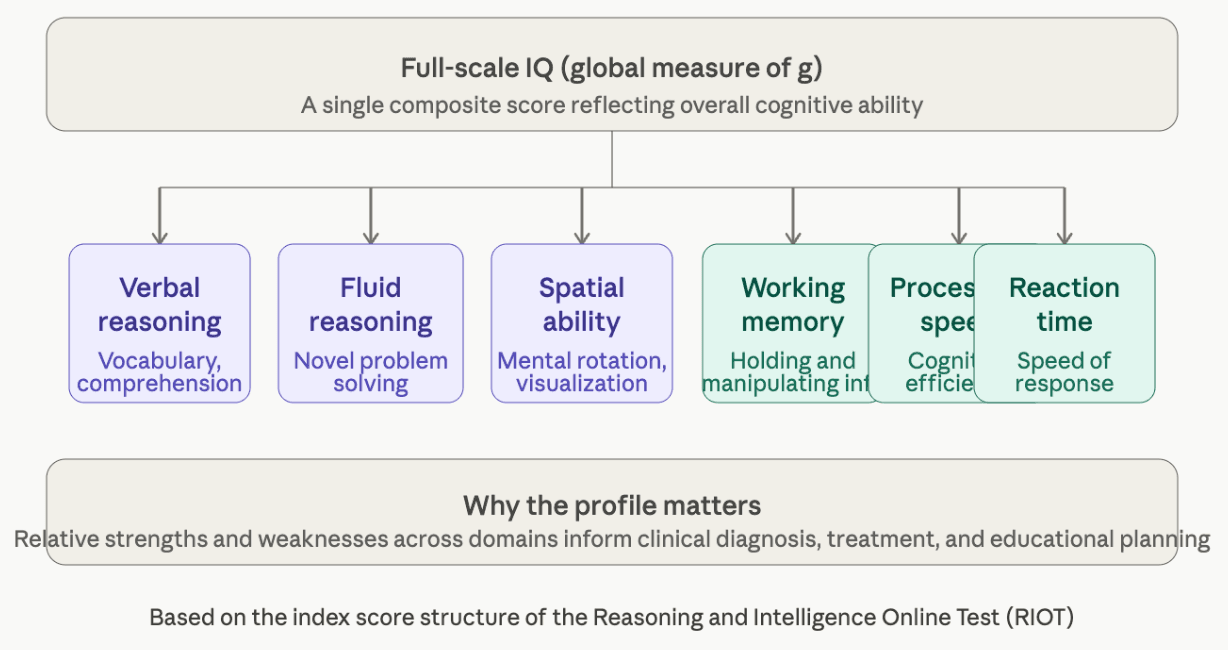
The global IQ score is genuinely useful — it is a strong predictor of g, and g is broadly predictive. But a profile of domain-specific scores is often more useful for guiding decisions about individuals. Consider a child with strong verbal reasoning and average fluid reasoning, but notably lower processing speed. That pattern is diagnostically informative in a way that a single composite score would obscure. It suggests the child's core reasoning ability is not the limiting factor in their academic performance — the limiting factor may be the efficiency with which they execute cognitive tasks under time pressure. That distinction matters for how a teacher structures assignments and what accommodations may be warranted.
Similarly, in adults undergoing neuropsychological evaluation following a brain injury or stroke, the profile of scores — which domains have declined, and how much — carries far more clinical information than a single number. Fluid reasoning and processing speed show earlier and steeper declines with aging and brain injury than crystallized knowledge does, so a profile assessment can distinguish normal aging from pathological change.
Modern IQ test batteries are designed with this profile logic built in. They measure multiple cognitive domains deliberately, and the theory that underlies the test — in the case of most modern professionally developed tests, the Cattell-Horn-Carroll model — provides a principled basis for interpreting relationships among those domains.
What IQ tests do not measure, and why that matters
One of the most important things a psychologist can do is explain the limits of any assessment tool. IQ tests are powerful instruments, but they are not omnibus measures of human capability.
IQ tests do not assess everything that matters for success in school, work, or life. Academic performance is predicted by IQ and also by traits such as conscientiousness, persistence, organizational habits, and motivational orientation. Some research has found that conscientiousness, in particular, adds incrementally to the prediction of academic performance beyond what IQ accounts for alone. IQ does not measure creativity, leadership, social judgment, or domain-specific expertise developed over years of practice. A musician who has spent 10,000 hours developing technique has something that an IQ test cannot capture.
This does not diminish the importance of IQ testing — it contextualizes it. The same logic applies to blood pressure readings or bone density scans: one measurement, however useful, never tells the whole story. A comprehensive assessment of any person should draw on multiple sources of information, and the value of gaining a complete understanding of a person is one that the psychometric community takes seriously. There is also the question of motivation. Research has shown that under low-stakes conditions, some examinees do not try as hard as possible, which can suppress scores. This does not mean IQ scores are meaningless — the research also shows that intelligence still predicts outcomes after controlling for motivation effects — but it does mean that conditions of administration matter. A score obtained when an examinee was ill, severely anxious, or unmotivated is less interpretable than a score obtained under good conditions.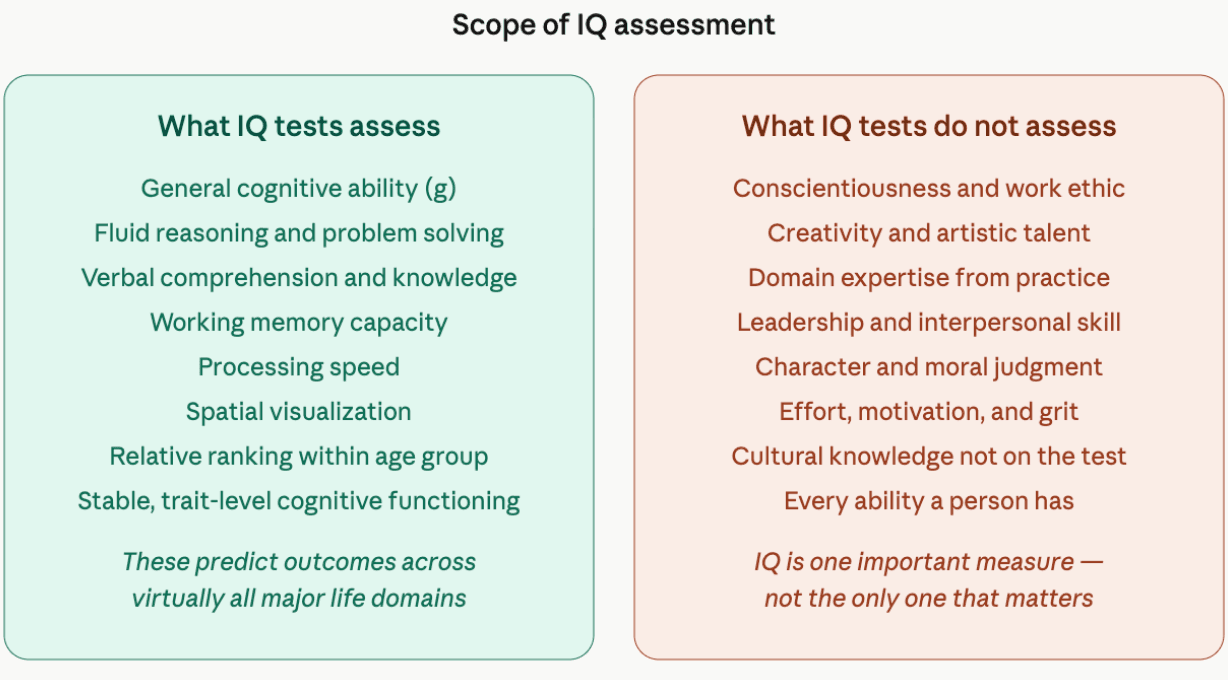 The appropriate response to the limits of IQ tests is not to abandon them. It is to use them appropriately, with clear communication about what the scores mean and what they do not mean, and to combine them with other assessment data when comprehensive understanding is required. This is exactly what professional test creators and psychologists are trained to do.
Why professional standards distinguish legitimate tests from others
The importance of IQ tests as assessment tools makes the quality of those tests critical. Not all instruments marketed as "IQ tests" are equivalent. The internet has made it trivially easy to publish a quiz and label it an intelligence test, but producing a genuine psychometric instrument requires years of training, rigorous development processes, and documented technical evidence.
Professional IQ tests meet standards established by the American Educational Research Association, American Psychological Association, and the National Council on Measurement in Education. These standards address how tests should be developed, how norm samples should be constructed, what validity and reliability evidence must be documented, and how scores should be communicated. Tests that lack this documentation — or whose creators are anonymous — cannot be trusted to produce meaningful scores, and the consequences of acting on unreliable scores in clinical, forensic, or educational contexts can be serious. One of the most critical technical requirements is a representative norm sample. IQ scores are not absolute measures — they are relative comparisons of an examinee's performance against a norm group. If the norm group is not representative of the population the test is intended for, the scores it produces are systematically distorted. A test normed exclusively on people who actively sought out and paid for an online intelligence test will produce inflated scores for most examinees, because that self-selected sample skews toward the cognitively motivated and above-average. A genuine representative norm sample requires deliberately oversampling demographic groups that might otherwise be underrepresented, and documenting the full demographic statistics of the sample.
Taking a professionally developed IQ test
For anyone who wants a reliable assessment of cognitive abilities, the standard of care is a test that meets the criteria described here: expert authorship, documented technical development, an evidence base, alignment with a mainstream theory of intelligence, and a representative norm sample.
The Reasoning and Intelligence Online Test (RIOT) is the first online IQ test built to those professional standards. Developed after 15 years of research in intelligence and psychometrics, the RIOT was normed on a representative sample of U.S. adults, evaluated by panels of experts in cognitive, educational, and developmental psychology, and built on the Cattell-Horn-Carroll theoretical framework — the same foundation used by the leading individually administered tests. It meets the APA, AERA, and NCME standards for educational and psychological testing. The RIOT reports not only a global IQ but a full profile of index scores, including Verbal Reasoning, Fluid Reasoning, Spatial Ability, Working Memory, Processing Speed, and Reaction Time — providing the kind of individualized picture that makes an assessment genuinely informative.
Conclusion
IQ tests matter for assessing intelligence because intelligence matters, and IQ tests measure it well. The evidence base — spanning education, employment, health, and clinical practice — consistently shows that IQ scores predict consequential outcomes with greater reliability than almost any other single psychological measurement. That does not mean an IQ score tells the complete story of a person's capabilities, or that other traits and assessments have nothing to add. What it means is that a well-constructed, professionally developed IQ test produces information that is scientifically trustworthy, practically useful, and genuinely illuminating.
The question is not whether to assess intelligence — it is how to do it rigorously and responsibly.
References
Gottfredson, L. S., et al. (1997). Mainstream science on intelligence. Intelligence, 24(1), 13–23. https://doi.org/10.1016/S0160-2896(97)90011-8 Schmidt, F. L., & Hunter, J. E. (1998). The validity and utility of selection methods in personnel psychology. Psychological Bulletin, 124(2), 262–274. https://doi.org/10.1037/h0033847 Deary, I. J., Strand, S., Smith, P., & Fernandes, C. (2007). Intelligence and educational achievement. Intelligence, 35(1), 13–21. https://doi.org/10.1016/j.intell.2006.02.001 Gottfredson, L. S., & Deary, I. J. (2004). Intelligence predicts health and longevity, but why? Current Directions in Psychological Science, 13(1), 1–4. https://doi.org/10.1111/j.0963-7214.2004.01301001.x American Psychiatric Association. (2013). Diagnostic and statistical manual of mental disorders (5th ed.). APA.
Strenze, T. (2007). Intelligence and socioeconomic success: A meta-analytic review. Intelligence, 35(5), 401–426. https://doi.org/10.1016/j.intell.2006.09.004 McGrew, K. S. (2009). CHC theory and the human cognitive abilities project. Intelligence, 37(1), 1–10. https://doi.org/10.1016/j.intell.2008.08.004 Spearman, C. (1904). General intelligence, objectively determined and measured. American Journal of Psychology, 15(2), 201–293. https://doi.org/10.2307/1412107 Salgado, J. F., et al. (2019). Meta-analysis of general mental ability validity for different performance criteria. Frontiers in Psychology. https://pmc.ncbi.nlm.nih.gov/articles/PMC6811658/ American Educational Research Association, American Psychological Association, & National Council on Measurement in Education. (2014). Standards for educational and psychological testing. https://www.testingstandards.net/ Warne, R. T. (2020). In the know: Debunking 35 myths about human intelligence. Cambridge University Press. https://doi.org/10.1017/9781108593298 National Institute of Child Health and Human Development. (2021). How do healthcare providers diagnose intellectual and developmental disabilities? https://www.nichd.nih.gov/health/topics/idds/conditioninfo/diagnosed Carroll, J. B. (1993). Human cognitive abilities: A survey of factor-analytic studies. Cambridge University Press.
Duckworth, A. L., et al. (2011). Role of test motivation in intelligence testing. PNAS, 108(19), 7716–7720. https://doi.org/10.1073/pnas.1018601108 Warne, R. T. (2025). Technical manual for the Reasoning and Intelligence Online Test, version 1.0. RIOT IQ.
Take our professional IQ test
Want to know your IQ? Try the first ever professional online IQ test.
AuthorDr. Russell T. WarneChief Scientist
