Jun 22, 2026·Average IQ & Demographics5 Key Environmental Influences on Cognitive Abilities
Can your environment change your IQ? Discover the 5 key factors that shape cognitive development. Read the full article and take the RIOT IQ test today!
Dr. Russell T. WarneChief Scientist
Intelligence is one of the most studied traits in all of psychology. One of the most common questions I encounter in my work as an intelligence researcher is whether the environment can change a person's cognitive abilities. The answer is yes, but with important nuances that are often lost in popular discussions of the topic.
Both genes and environment contribute to intelligence. As I have written about extensively in my book In the Know: Debunking 35 Myths about Human Intelligence (Cambridge University Press), the heritability of IQ in wealthy countries averages roughly .50 to .60 in adults, meaning that about half of the differences in IQ among people in these environments can be attributed to genetic differences. That leaves a substantial role for the environment. But knowing that the environment matters is not the same as knowing which environmental factors matter, how large their effects are, or whether those effects are permanent. This article examines five key environmental influences on cognitive abilities. Each of these has a meaningful research base behind it, and together they paint a picture of how the environments people inhabit shape their cognitive development. Importantly, none of these environmental influences operate in isolation. They interact with one another and with genetic factors in complicated ways. Still, understanding each one individually is a necessary first step.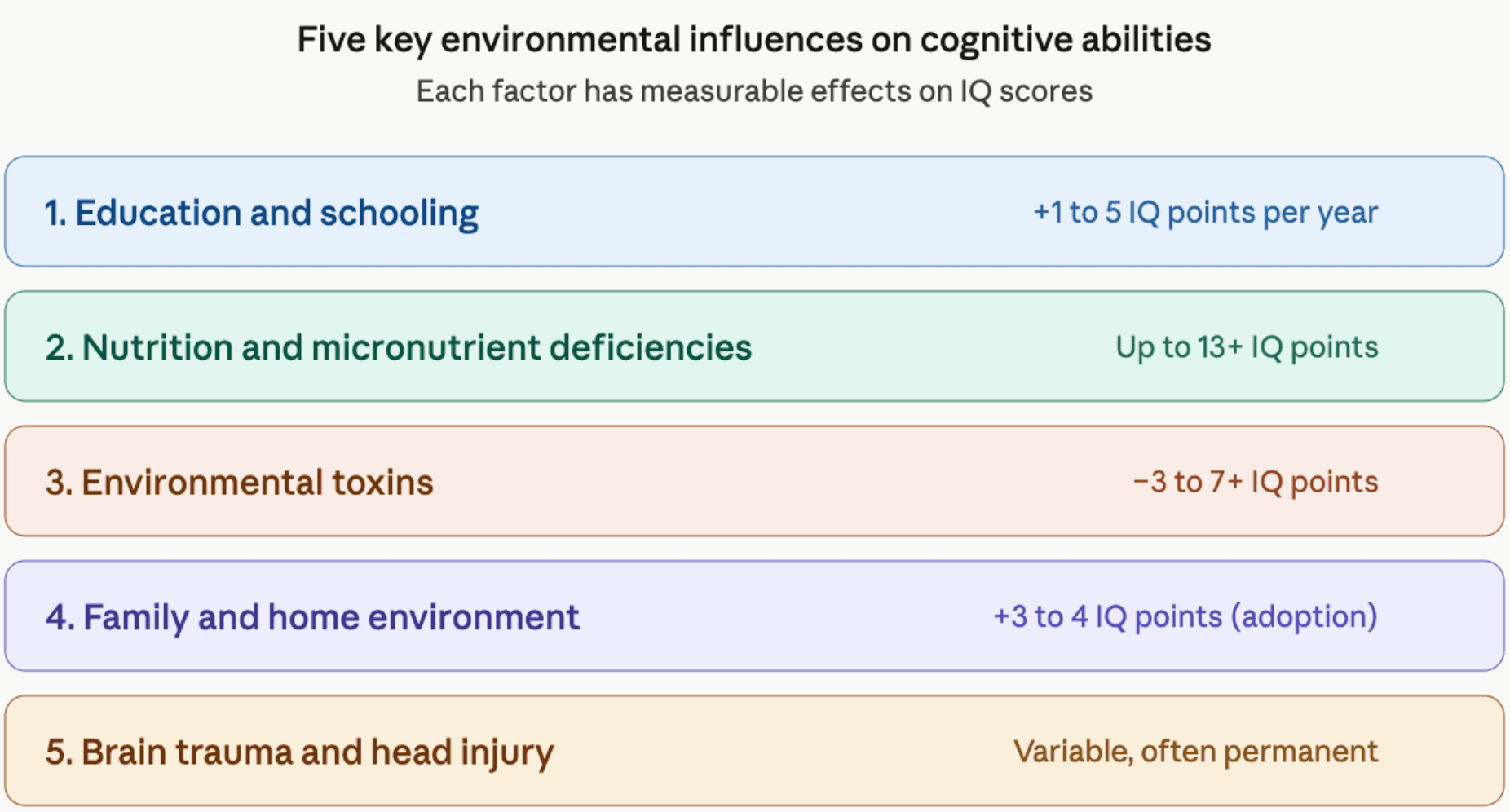
Education and Schooling
Of all the environmental influences on cognitive abilities, education has the strongest and most consistent evidence behind it. This is not surprising. Schools are environments specifically designed to develop thinking, problem solving, and knowledge, and children spend thousands of hours in them during the years when their brains are developing most rapidly.
The best evidence on this topic comes from a meta-analysis by Ritchie and Tucker-Drob (2018), published in Psychological Science. They analyzed 42 datasets involving over 600,000 participants and used three types of quasi-experimental research designs to control for the fact that smarter students tend to stay in school longer. Across all three approaches, the findings converged: an additional year of schooling is associated with a gain of approximately 1 to 5 IQ points, with the best overall estimate being about 3 IQ points per year. The effects were present across the lifespan and appeared on all broad categories of cognitive ability that were studied. These findings are important because they go beyond simple correlations. The quasi-experimental designs, which included compulsory schooling law changes and school-entry age cutoffs, help isolate the causal effect of schooling itself. Norway, for example, gradually increased its compulsory schooling by two years in the 1960s, and researchers were able to compare IQ scores of men who received different amounts of schooling due to the timing of the policy rollout. The estimated effect was approximately 3.7 IQ points per additional year.
However, there are important caveats. The research measures the effect of the last year of schooling a person receives, not necessarily the cumulative effect of many years. It seems likely that earlier years of education produce stronger cognitive gains than later years, but this is difficult to study directly in countries where nearly everyone attends school for several years. It is also unclear how much of the IQ increase from schooling is genuine intelligence growth and how much is what intelligence researchers call "hollow gains," meaning improvements in test performance that do not reflect deeper cognitive changes.
Still, the evidence is clear that schooling matters for cognitive development. At a population level, increasing access to education is one of the most reliable ways to raise average IQ scores.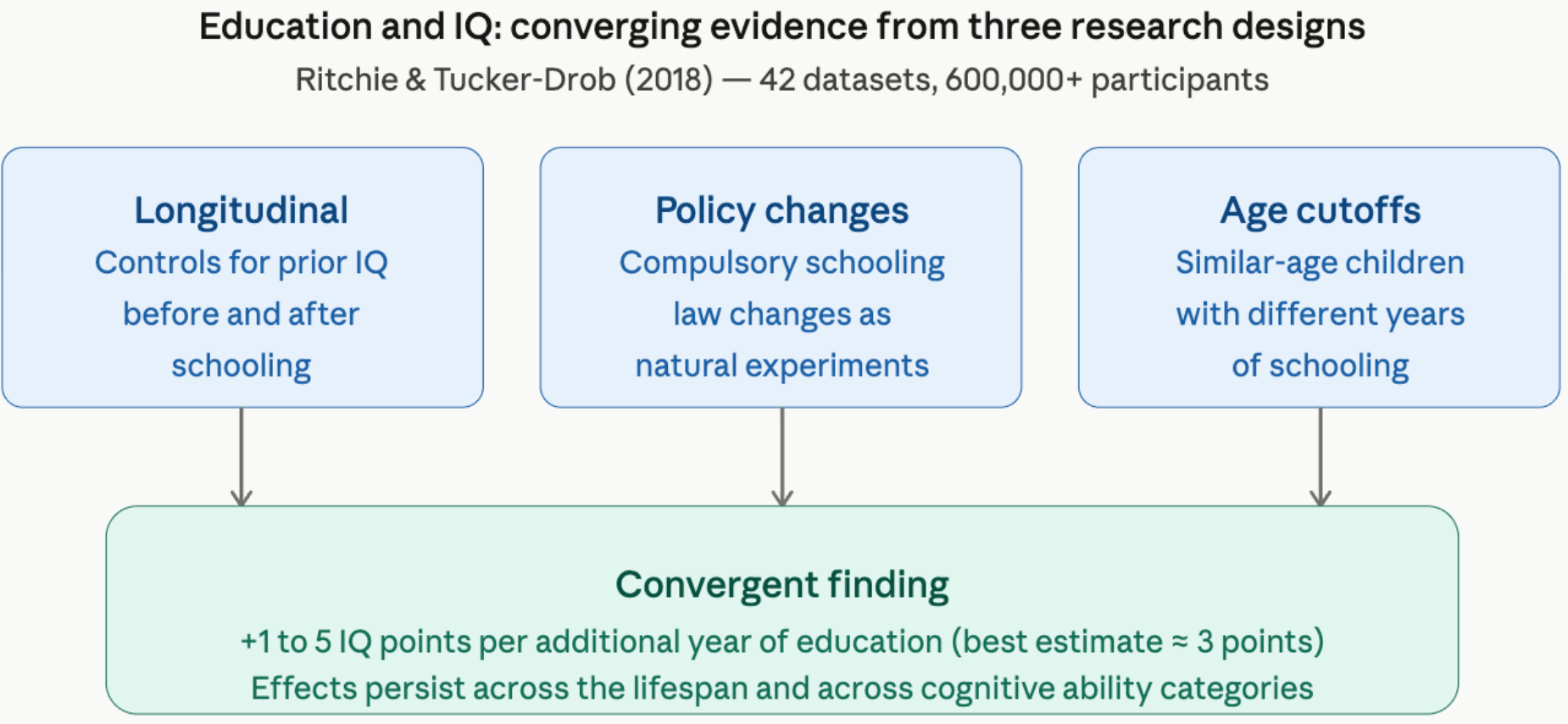
Nutrition and Micronutrient Deficiencies
The developing brain requires adequate nutrition to reach its full potential. When that nutrition is absent, particularly during critical periods of prenatal development and early childhood, the consequences for cognitive abilities can be severe and sometimes irreversible.
The single most studied micronutrient in relation to cognitive development is iodine. Iodine is essential for producing thyroid hormones, which play a central role in brain development. In regions where iodine deficiency is endemic, the cognitive consequences are dramatic. A meta-analysis by Qian and colleagues (2005) of 37 studies conducted in China found that children in severely iodine-deficient areas scored approximately 12.45 IQ points lower than children in iodine-sufficient areas. When iodine supplementation was introduced before and during pregnancy, children recovered an average of 8.7 IQ points compared to children whose mothers remained deficient. Other reviews have estimated that iodine deficiency causes an average reduction of 10 to 13.5 IQ points in affected populations. These are not small effects. A 12-point IQ difference is nearly a full standard deviation and would shift a person from the middle of the average range to the low end. Iodine fortification of salt, which began in many countries in the early-to-mid 20th century, is one of the most successful public health interventions in history precisely because of its cognitive benefits.
Breastfeeding is another nutritional factor with consistent links to cognitive development. A meta-analysis by Horta and colleagues (2015) examined 17 studies and found that breastfed children scored an average of 3.44 IQ points higher than formula-fed children. When studies controlled for maternal IQ, the advantage was smaller but still statistically significant at 2.62 points. The largest randomized trial ever conducted on breastfeeding, the PROBIT study in Belarus, found that a breastfeeding promotion intervention led to higher verbal IQ scores (a difference of about 7.5 points) at age 6.5, providing causal evidence that breastfeeding benefits cognitive development. One proposed mechanism involves long-chain polyunsaturated fatty acids, particularly DHA, which are found in breast milk and play a structural role in brain cell membranes. Severe protein-calorie malnutrition also harms cognitive development, though the precise IQ effects are harder to isolate because malnutrition is so strongly confounded with poverty, unstimulating home environments, and other risk factors. What is clear from the research is that the timing matters. Nutritional deficiencies during the first 1,000 days of life (from conception through age two) tend to produce the most lasting cognitive consequences because this is when the brain is growing most rapidly.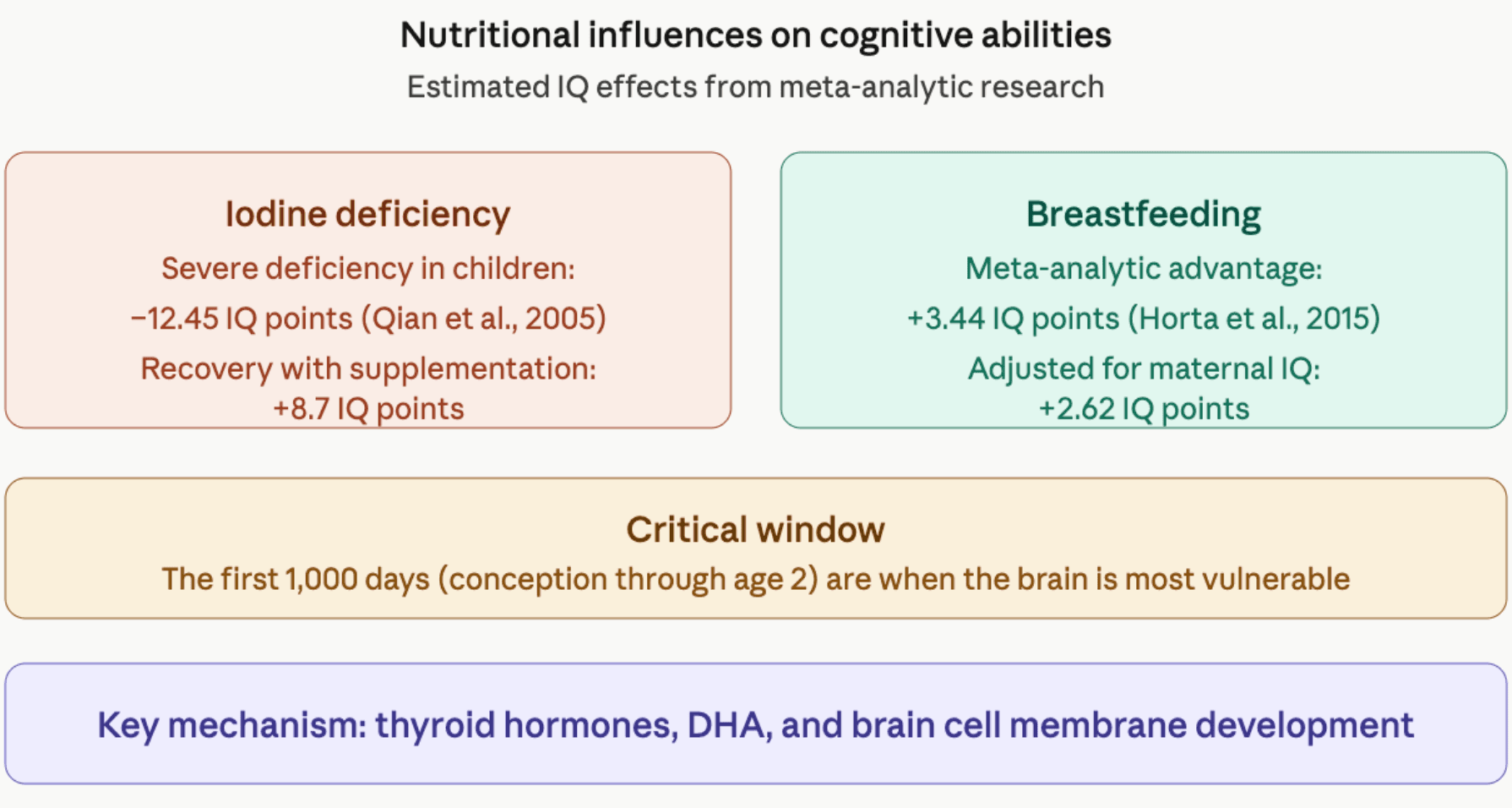
Environmental Toxins
Certain environmental toxins have well-documented harmful effects on cognitive development, with lead being the most extensively studied. The relationship between lead exposure and IQ has been investigated for decades, and the findings are unambiguous: lead is a neurotoxin that damages cognitive abilities, particularly when exposure occurs during childhood.
A landmark study published in the New England Journal of Medicine (Canfield et al., 2003) followed 172 children from infancy through age five and found that each increase of 10 micrograms per deciliter in lifetime average blood lead concentration was associated with a 4.6-point decrease in IQ. Critically, the study found no safe threshold: IQ decrements were observed even at blood lead levels below 10 micrograms per deciliter, which was the historical "level of concern" at the time. In fact, the proportional IQ loss was greater at lower lead concentrations than at higher ones, suggesting that even modest lead exposure carries cognitive risk. Longer-term research has confirmed that these effects persist into adulthood. A study by Reuben and colleagues (2017), published in JAMA, followed over 500 people born in Dunedin, New Zealand, from childhood to age 38. The participants grew up during the era of leaded gasoline, when lead exposure was widespread and considered normal. The researchers found that for every 5-microgram increase in childhood blood lead, a person lost approximately 1.5 IQ points by adulthood, along with measurable declines in occupational standing. These were not individuals with unusual lead exposure; 94% of the study participants exceeded what is now considered the reference level for public health intervention. Lead is not the only relevant toxin. Prenatal alcohol exposure is another well-established cause of cognitive impairment. Children with fetal alcohol spectrum disorder exhibit lower intelligence, with the severity depending on the timing and dose of exposure. Fetal alcohol syndrome, the most severe outcome, is associated with substantial IQ deficits and structural brain abnormalities. But even prenatal alcohol exposure that does not produce the full syndrome is linked to measurable cognitive disadvantages.
Other toxins that have been implicated in cognitive harm include mercury (particularly methylmercury from contaminated fish), arsenic in drinking water, and certain pesticides. The common thread across all of these is that the developing brain is far more vulnerable to toxic insult than the adult brain. Children absorb lead at rates four to five times higher than adults, and prenatal exposure to alcohol or mercury can disrupt neurological development at stages when the brain is forming its basic architecture.
An important practical implication is that avoiding these toxins does not raise IQ above baseline. It prevents IQ from being lowered. That distinction matters. Eliminating lead from gasoline and paint has undoubtedly prevented millions of children from suffering cognitive harm, but it has not made anyone smarter than they would otherwise have been. Prevention of damage is not the same as enhancement.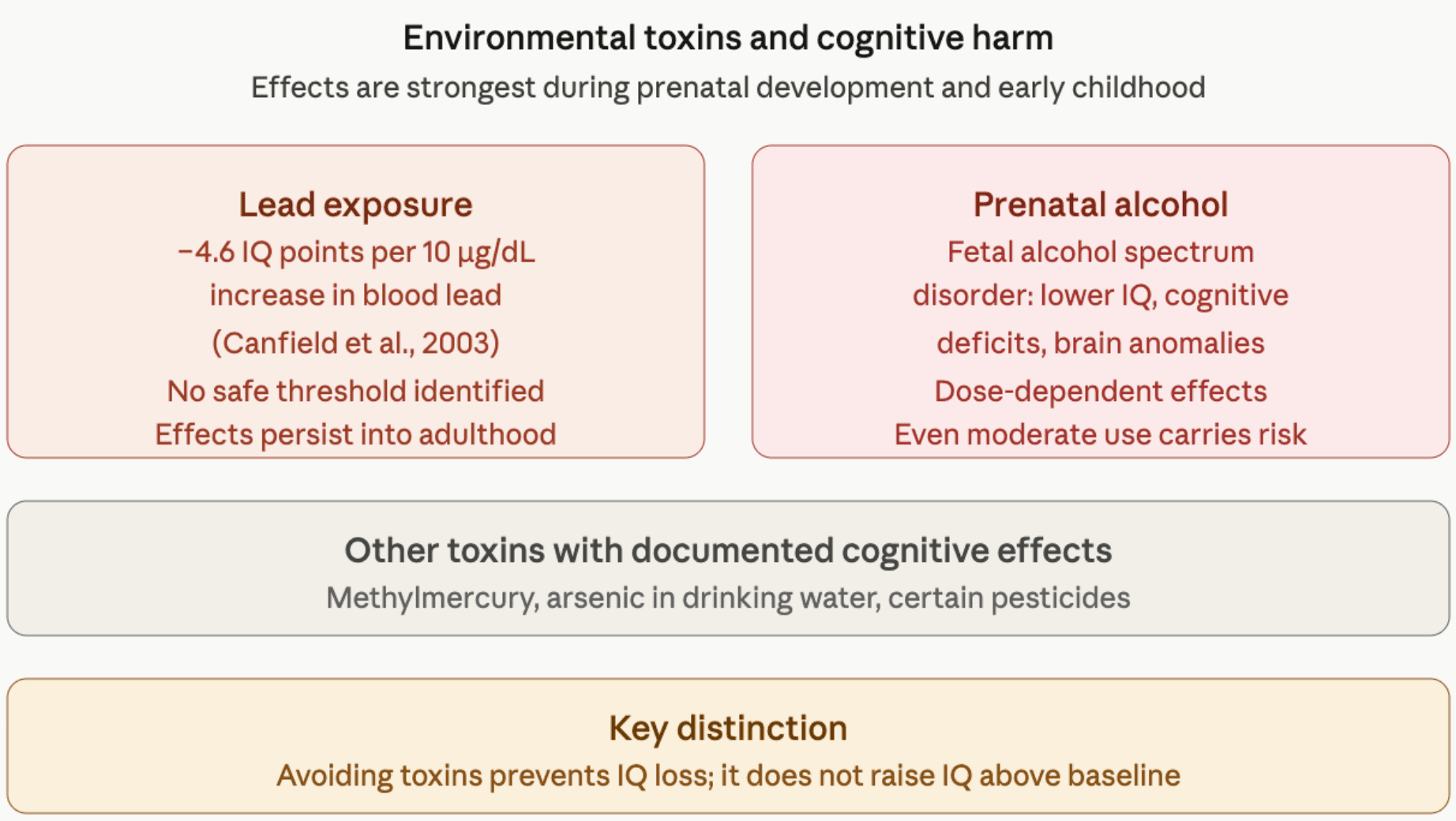
Family and Home Environment
Among the most important environmental influences on cognitive development is the quality of the home environment in which a child grows up. This encompasses many things: the socioeconomic resources available to the family, the level of cognitive stimulation in the household, parenting practices, and access to books, conversation, and enriching experiences.
The clearest evidence for the effect of the home environment comes from adoption studies. When children are adopted from disadvantaged backgrounds into more advantaged households, their IQ scores tend to increase relative to what would be expected had they remained with their birth families. A study by Kendler and colleagues (2015), published in the Proceedings of the National Academy of Sciences, used a co-sibling design comparing adopted children to their non-adopted biological siblings. The researchers found that adoption was associated with an average IQ increase of approximately 4 points. A broader meta-analysis by van IJzendoorn and Juffer (2005) of 62 studies including over 17,000 adopted children confirmed that adopted children scored substantially higher on IQ tests than their non-adopted siblings or peers who stayed behind in institutional care or birth families. These are meaningful effects. However, the research also contains an important frustration: although the overall beneficial effect of adoption is clear, no one has been able to isolate exactly what adoptive families are doing that produces the cognitive gains. As I explained in In the Know, "These families differ from low-income families in many ways . . . and it is impossible to isolate these differences and to examine them individually to determine why adopted children experience an IQ increase." This is an area where the research tells us that the environment matters but does not give clear prescriptions for what specific changes would be most effective.
Socioeconomic status, broadly defined, is also robustly associated with cognitive development. A longitudinal study using data from the Twins Early Development Study in the United Kingdom found that children from low-SES backgrounds scored an average of 6 IQ points lower at age 2 than children from high-SES backgrounds, and by age 16, this gap had nearly tripled. This widening gap over time suggests that the effects of socioeconomic disadvantage are cumulative, likely driven by the many correlated risk factors that accompany poverty.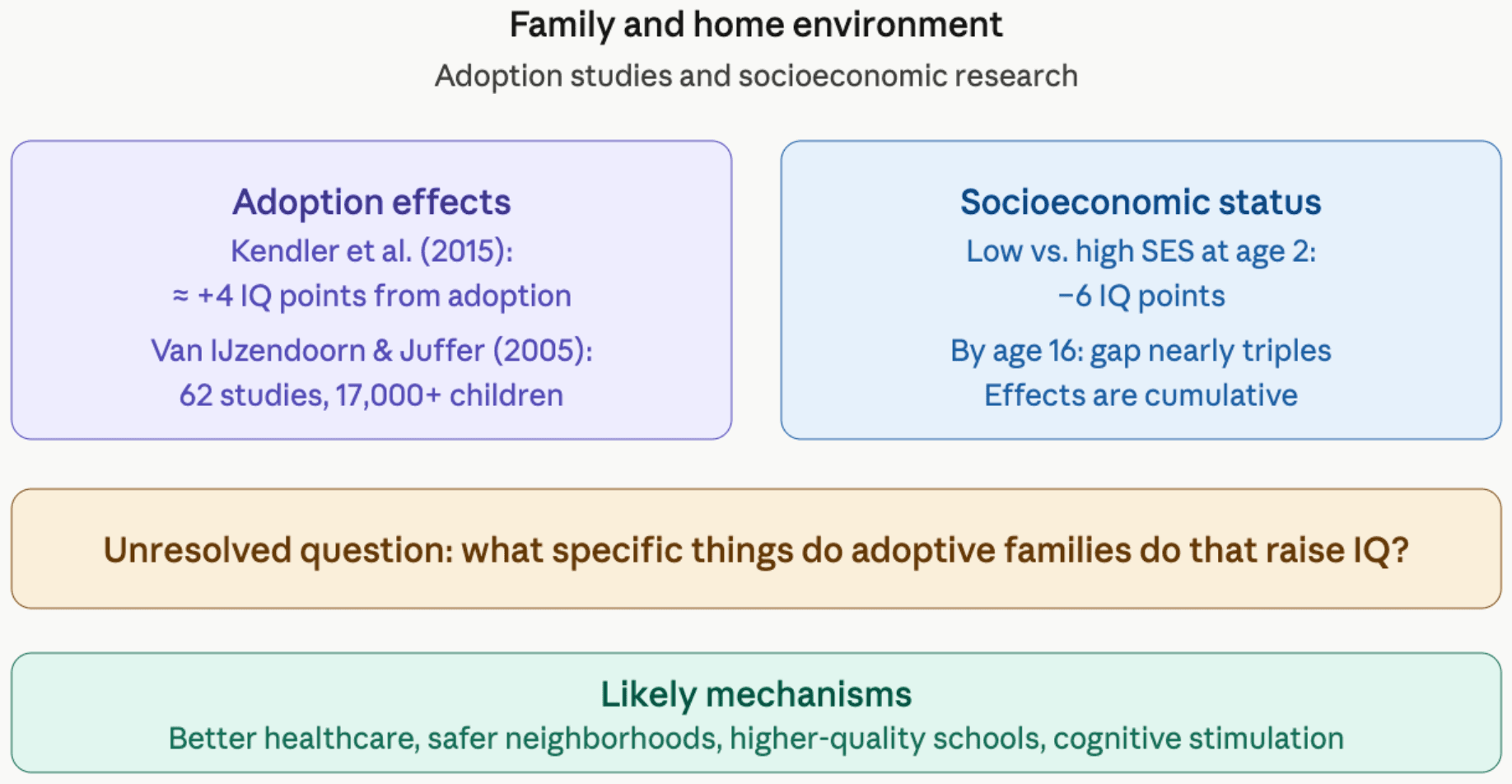
Brain Trauma and Head Injury
The final environmental influence on cognitive abilities is one that, unlike the others, tends to be sudden rather than gradual: traumatic brain injury (TBI). The brain is the organ that produces intelligence, and physical damage to it can impair cognitive functioning, sometimes permanently.
The cognitive consequences of brain trauma depend on the severity, location, and timing of the injury. Mild injuries, such as a single concussion, often produce temporary cognitive disruption that resolves within weeks or months. More severe injuries involving prolonged loss of consciousness, skull fractures, or direct damage to brain tissue can produce lasting cognitive deficits.
A study of twins conducted by researchers at Duke University found that even a single TBI was associated with worse cognitive function later in life, independent of genetic and shared environmental factors. The twin design is particularly valuable here because it controls for both genetics and childhood environment, isolating the effect of the injury itself. The study found that the cognitive consequences were more pronounced when the injury occurred after age 24 or when it involved a loss of consciousness. TBI is especially consequential in childhood, when the brain is still developing. Pediatric TBI can disrupt the normal trajectory of cognitive development, and the effects may not become fully apparent until the child reaches developmental stages that require the cognitive abilities impaired by the injury. A child who sustains frontal lobe damage at age 5, for example, may not show the full effects until adolescence, when the executive functions that rely on the frontal lobes are expected to mature.
At a population level, TBI is surprisingly common. Contact sports, motor vehicle accidents, falls, and military service all contribute to a substantial number of brain injuries each year. The cumulative effect of repeated mild injuries, as seen in certain contact sports, has received increasing attention in recent years, and there is growing evidence that repeated concussions can produce progressive cognitive decline even when each individual injury appears minor.
Unlike the other influences discussed in this article, brain trauma acts primarily through subtraction. It does not represent a failure of the environment to provide something the brain needs (as with nutrition or education) but rather a direct assault on the brain's physical integrity. For this reason, prevention is the only meaningful intervention. Once the damage is done, the cognitive consequences are often permanent.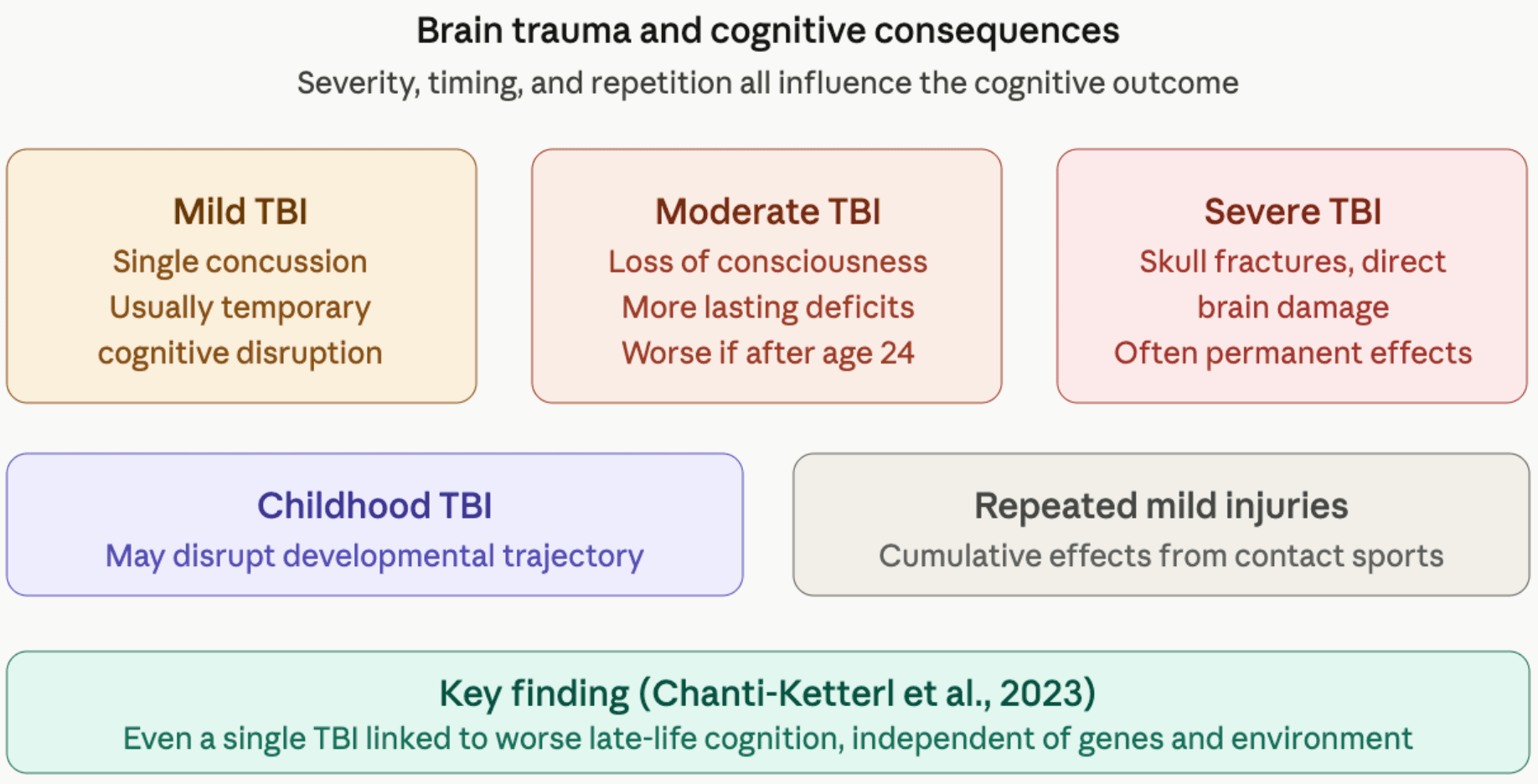
What These Findings Mean
The five environmental influences discussed in this article operate through different mechanisms, affect different populations, and vary in their permanence. Education builds cognitive abilities over time through sustained exposure to structured learning. Nutrition provides the biological raw materials the developing brain requires. Environmental toxins damage neural architecture directly. The home environment shapes cognitive stimulation and opportunity. And brain trauma destroys cognitive capacity through physical injury.
Several themes emerge from the research as a whole. First, timing matters enormously. Environmental influences exert their strongest effects during periods of rapid brain growth, which is why interventions and exposures in the prenatal period and early childhood consistently produce the largest measured effects. Second, many of these environmental factors co-occur. Socioeconomic disadvantage tends to concentrate multiple risk factors in the same households and neighborhoods, and the cumulative burden of these overlapping exposures is likely greater than any single factor in isolation. Third, there is an asymmetry in what the environment can do. Most of the well-documented environmental effects involve preventing losses rather than producing gains. Education is the notable exception, with consistent evidence of genuine cognitive benefit. Understanding this asymmetry helps set realistic expectations about the degree to which environmental interventions can shift cognitive outcomes at the population level.
For anyone interested in understanding their own cognitive abilities with precision and scientific rigor, a professionally developed IQ test can provide that understanding. These environmental influences are why accurate measurement matters: an examinee's IQ score reflects not only their genetic potential but the cumulative effect of the environments they have experienced. A valid, reliable IQ test captures this composite picture in a way that informal assessments cannot.
Take the First-Ever Professional Online IQ Test
The Reasoning and Intelligence Online Test (RIOT) is the first online IQ test that meets professional standards for psychological assessment. I created the RIOT after more than 15 years of research on intelligence and psychological testing, and the test reflects the same rigorous development process used for traditional in-person IQ tests administered by psychologists. This includes expert review by a panel of diverse specialists in cognitive, educational, and developmental psychology; the first-ever proper U.S.-based online norm sample; and alignment with the ethical and technical standards established by the American Educational Research Association, the American Psychological Association, and the National Council on Measurement in Education. Most online IQ tests are created by amateurs or anonymous individuals without training in psychometrics. The RIOT is different because it was built by a professional to professional standards, which means examinees receive accurate, meaningful data about their cognitive abilities rather than the dubious scores produced by the countless unvalidated tests available through a quick internet search.
Sources
Ritchie, S. J., & Tucker-Drob, E. M. (2018). How much does education improve intelligence? A meta-analysis. Psychological Science, 29(8), 1358–1369. https://doi.org/10.1177/0956797618774253 Qian, M., Wang, D., Watkins, W. E., Gebski, V., Yan, Y. Q., Li, M., & Chen, Z. P. (2005). The effects of iodine on intelligence in children: A meta-analysis of studies conducted in China. Asia Pacific Journal of Clinical Nutrition, 14(1), 32–42.
Horta, B. L., Loret de Mola, C., & Victora, C. G. (2015). Breastfeeding and intelligence: A systematic review and meta-analysis. Acta Paediatrica, 104(S467), 14–19. https://doi.org/10.1111/apa.13139 Canfield, R. L., Henderson, C. R., Cory-Slechta, D. A., Cox, C., Jusko, T. A., & Lanphear, B. P. (2003). Intellectual impairment in children with blood lead concentrations below 10 μg per deciliter. New England Journal of Medicine, 348(16), 1517–1526. https://doi.org/10.1056/NEJMoa022848 Reuben, A., Caspi, A., Belsky, D. W., Broadbent, J., Harrington, H., Sugden, K., . . . Moffitt, T. E. (2017). Association of childhood blood lead levels with cognitive function and socioeconomic status at age 38 years. JAMA, 317(12), 1244–1251. https://doi.org/10.1001/jama.2017.1712 Kendler, K. S., Turkheimer, E., Ohlsson, H., Sundquist, J., & Sundquist, K. (2015). Family environment and the malleability of cognitive ability: A Swedish national home-reared and adopted-away cosibling control study. Proceedings of the National Academy of Sciences, 112(15), 4612–4617. https://doi.org/10.1073/pnas.1417106112 van IJzendoorn, M. H., Juffer, F., & Poelhuis, C. W. K. (2005). Adoption and cognitive development: A meta-analytic comparison of adopted and nonadopted children's IQ and school performance. Psychological Bulletin, 131(2), 301–316.
von Stumm, S., & Plomin, R. (2015). Socioeconomic status and the growth of intelligence from infancy through adolescence. Intelligence, 48, 30–36.
Chanti-Ketterl, M., Pieper, C. F., Yaffe, K., Plassman, B. L., & Welsh-Bohmer, K. A. (2023). Traumatic brain injury and cognitive decline in older twin pairs. Neurology, 101(12), e1246–e1255.
Warne, R. T. (2020). In the know: Debunking 35 myths about human intelligence. Cambridge University Press. https://doi.org/10.1017/9781108593298 Warne, R. T. (2025). Technical manual for the Reasoning and Intelligence Online Test, version 1.0. Riot IQ.
Standards for educational and psychological testing. (2014). American Educational Research Association, American Psychological Association, & National Council on Measurement in Education. https://www.testingstandards.net/ Kramer, M. S., Aboud, F., Mironova, E., Vanilovich, I., Platt, R. W., Matush, L., . . . Shapiro, S. (2008). Breastfeeding and child cognitive development: New evidence from a large randomized trial. Archives of General Psychiatry, 65(5), 578–584.
Mattson, S. N., Riley, E. P., Gramling, L., Delis, D. C., & Jones, K. L. (1997). Heavy prenatal alcohol exposure with or without physical features of fetal alcohol syndrome leads to IQ deficits. The Journal of Pediatrics, 131(5), 718–721.
Take our professional IQ test
Want to know your IQ? Try the first ever professional online IQ test.
AuthorDr. Russell T. WarneChief Scientist
