🇺🇸The official website of Riot IQ
Log in
  • Home
  • About

Measure your
intelligence online.

Google

Assessments

  • All IQ Tests
  • Basic IQ Test
  • Full IQ Test
  • Custom IQ Test
  • Free IQ Test

Our Socials

  • X
  • YouTube
  • Facebook
  • LinkedIn

Other IQ Tests

  • WAIS-V
  • SB-5
  • Raven's 2
  • RIAS-2
  • CogAT 9
  • WISC-V

Community

  • Join Subreddit
  • Join Discord

Other Pages

  • Test Manual
  • Administer IQ Tests
  • About Us
  • Articles
  • Data
  • FAQ

Research

  • What do polygenic scores really predict?
  • Working speed and ability on the RIOT

Intelligence Journals & Organizations

  • Human Intelligence Research & Education (HIRE) Foundation
  • International Society for Intelligence Research (ISIR)
  • Intelligence & Cognitive Abilities Journal (ICA)
  • Intelligence Journal
  • Mensa Foundation

Contact

  • Email
  • Support

News & Press

  • International Society for Intelligence Research
  • American Thinker
  • Mensa Foundation (1/2)
  • Mensa Northern New Jersey
  • The University of Western Australia
  • Prolific
  • Quillette
  • Brainz

Our Articles

  • Gmatclub (1/2)
  • ApolloTechnical
  • LessWrong
  • Psychreg
  • Study in Switzerland
  • SuccessConsciousness
  • Creative Organizational Design (1/2)
  • ABNewsWire
  • Vanderbilt University

Our Articles

  • The Globe and Mail
  • Barchart
  • Journal
  • Mensa Foundation (2/2)
  • Psychologs
  • Creative Organizational Design (2/2)
  • AZBigMedia
  • Thoughts on Life and Love
  • Anxiety and Depression Association of America

Our Articles

  • Before It's News
  • Siglo XXI
  • TechBullion
  • Medium
  • Gmatclub (2/2)
  • MSN
  • National Review
  • Minding the Campus
  • Launching Next

Our Articles

  • Comparing Cronbach’s Alpha and McDonald’s Omega Reliability
  • Breaking the Intelligence & IQ Taboo
  • What is the Flynn Effect?
  • A Comprehensive History of IQ Tests
  • The 15 Subtests of the RIOT

Our Articles

  • How to Take an IQ Test
  • How to Calculate IQ
  • What is the RIOT IQ Test?
  • The Pro-Human Aspects of Intelligence Research
  • What is an IQ Test? A Beginner's Guide.

Our Articles

  • 5 Best IQ Tests in 2025
  • Cognitive Profiles on the RIOT IQ Test Results
  • 6 Cognitive Abilities of the RIOT
  • Are There Any Professional and Real Online IQ Tests?

Our Articles

  • Resources to Learn About IQ and Intelligence
  • Studying IQ Matters
  • The Search for Albert Einstein's IQ
  • Do Non-g Gains from the Flynn Effect Matter?

Riot IQ © 2026

  • Terms of Service
  • Privacy Policy
  • BAA Agreement
  • Test Administrator Terms
  • Terms of Service
  • •Privacy Policy
  • •BAA Agreement
  • •Test Administrator Terms

Table of Contents

  • Characteristics of Professional IQ Tests
  • Is the test not a professional IQ test?
Sep 10, 2025·Taking an IQ Test

Professional IQ Tests

Learn how to identify a professional IQ test through expert authorship, technical documentation, peer-reviewed research, norm samples, and adherence to testing standards.
Dr. Russell T. WarneChief Scientist
Share
Professional IQ Tests
A professional IQ test is more than a quiz with a score at the end. IQ tests were first created 120 years ago, and in that time the number of tests has proliferated. With so many tests available, it can be difficult to know which tests are professional tests. This article is designed to help non-experts determine whether the test they are going to take is a professional test.


Characteristics of Professional IQ Tests

A good professional IQ test has these characteristics:

  • A professional IQ test is created by experts with training in the science of testing (a discipline called “psychometrics”). It should be easy to identify a test’s author(s) and their professional training and education. A test created by an anonymous author should always be avoided. Legitimate test creators are proud to have their name on their test and are willing to stake their professional reputation on the quality of the test. Anonymity helps a bad actor avoid accountability

  • A professional IQ test has its technical properties documented. Often, this documentation is in the form of a test manual, which is a book-length explanation of all the technical aspects of the test’s creation and evaluation. Technical documentation may only be accessible to experts (i.e., a test creator may not make the manual available to the general public), but there should be some indication that a manual exists. Shorter technical documentation about specific issues (e.g., research bulletins, technical updates) may also exist.

  • A professional IQ test has been independently evaluated by experts. Some of this evaluation occurs while the test is in development. For example, the Reasoning and Intelligence Online Test (RIOT) had its content evaluated by a panel of diverse experts from cognitive, educational, and developmental psychology. Other evaluations can occur after publication, such as in the form of endorsements from outside experts. One of the most powerful forms of evidence that a test has been independently evaluated by experts is if the test has been used in peer-reviewed research. Searching for the name of the test in Google Scholar is a quick way to determine whether the test has been used in scholarly research.

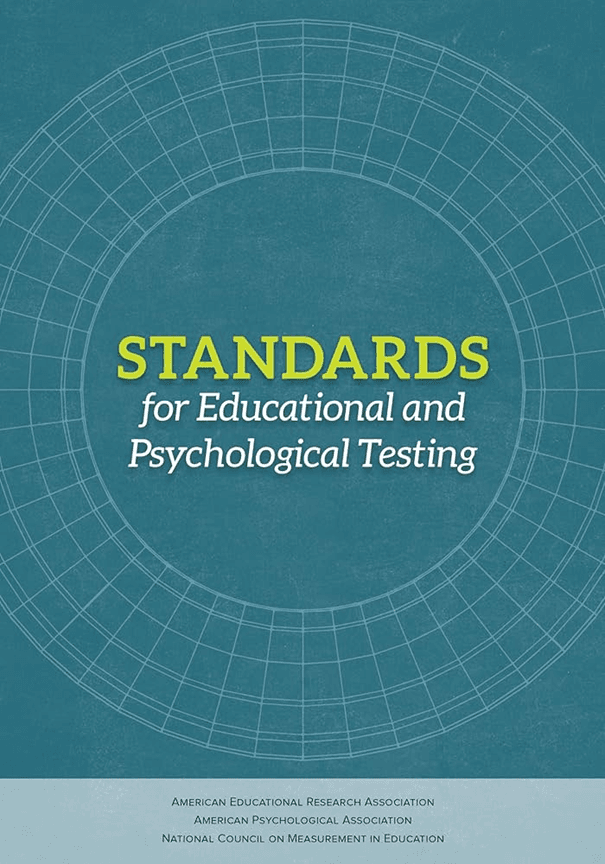
  • A professional IQ test has been created to meet relevant technical and ethical standards for psychological tests. While there is no organization that certifies psychological tests, the American Educational Research Association, American Psychological Association, and the National Council on Measurement in Education have published guidelines called the Standards for Educational and Psychological Testing. Professional test creators strive to meet these guidelines and provide information about their efforts on their web sites and in their technical documentation. The Standards are designed for an American context, but professional organizations in some other countries have published similar guidelines. The International Test Commission has also published its own guidelines for international and cross-cultural testing. Professional test creators reference relevant guidelines and publicly make efforts to adhere to them.


  • A professional IQ test is designed for a specific population. It is impossible to make a test that works for everyone. Language barriers, cultural differences, age and developmental differences, disabilities, and other characteristics make some tests inappropriate for some populations. Professional test creators are clear about who the intended test takers are for their tests. Other people may be allowed to take the test, but professional test creators will encourage users to use caution when administering the test outside of the target population(s) or to gather data that the test functions properly for people outside of the target group. It is a red flag when a test creator implies that their test is appropriate for anyone to take.

  • A professional IQ test should produce reliable scores. “Reliability” is the degree to which test scores are consistent. Because intelligence is believed to be a stable trait throughout most of the lifespan, IQ scores should also be stable. Reliability data should be reported in scholarly publications, a test manual, or publicly. (Notice that reliability is a property of test scores, not of the test itself.)

  • A professional IQ test has evidence that its scores are valid for a specific purpose or for a specific interpretation. Blanket statements that “the test is valid” are scientifically inaccurate and encourage confusion. Like reliability, validity is not a property of tests. Rather, validity is a property of test score uses or interpretations. Test scores have limits to their valid uses or interpretations. For example it is valid to use IQ test scores for hiring employees for a cognitively intense job, but using those same scores to determine who should be an organ donor is not justified. Professional test creators are clear about what applications are valid uses of their test scores, and they caution against likely misuses or bad interpretations.

  • A professional IQ test is aligned with a scientific theory. There are competing theories of intelligence, the most popular of which are the Cattell-Horn-Carroll theory and the bifactor model. There are other theories that are used to create intelligence tests, such as the PASS (Planning, Attention, Simultaneous and Successive processing) theory. Searching for the name of a theory on Google Scholar can help non-experts to determine whether a theory is legitimate. Savvy users can even read some of the theoretical articles and come to their own judgments about whether the test is aligned with the theory.

  • A professional IQ test has a norm sample that is representative of its intended population. A “norm sample” is a sample of test takers that serves as the standard to which future examinees are compared. Whether examinees are labeled as “below average” or “above average” (and how far above or below average they are) is based on how their test performance compares with the norm sample’s. A representative norm sample is important because non-representative samples give distorted results. Professional IQ test creators state, usually in their technical documentation, the number of people in the norm sample, how the norm sample’s data was collected, and the demographic statistics of the norm sample. This information is usually in their technical manual, but may be available elsewhere. If a test’s norm sample is not clearly stated, or if it is a self-selected group of test takers, then the test cannot provide accurate scores to examinees.


Is the test not a professional IQ test?

If a test does not meet all of these criteria, then you should avoid it. Some of these tests are created by well-meaning amateurs, though others are created by scammers. Doing a little bit of investigation may be inconvenient, but it is often needed. Professionally-developed IQ tests are powerful tools, and it is worth the effort to ensure that they provide trustworthy data.

Take our professional IQ test

Want to know your IQ? Try the first ever professional online IQ test.

Try our IQ test
Author
Dr. Russell T. WarneChief Scientist

Contact

Table of Contents

  • Characteristics of Professional IQ Tests
  • Is the test not a professional IQ test?
Article Categories
All ArticlesUnderstanding IQ ScoresTaking an IQ TestRIOT-Specific InformationGeneral IQ & IntelligenceAdvanced Topics & ResearchIQ Scores & InterpretationMensa & High-IQ SocietiesOnline IQ Tests IQ Test Basics & FundamentalsAverage IQ & DemographicsFamous People & IQHistory & Origins Of IQ TestingAccuracy, Reliability & CriticismSpecial Population & Related ConditionsImproving IQ / PreparationSpecific IQ Tests & FormatsIQ Testing for HR & RecruitmentSkills Assessment
Related Articles
What Is a Cognitive Test for an Adult?When Is the Right Time to Take an IQ Test?Who Should Take an IQ Test?Why Are IQ Tests Important?Where Can You Find Reliable IQ Tests?A Beginner's Guide to IQ TestingWhen Should You Consider Taking an IQ Test?How to Choose the Right IQ Test for Your NeedsTimed vs. Untimed IQ Tests: What Changes?What Should Psychological Assessment Look Like Today?Setting Time Limits for Tests: Lessons LearnedHow to Take an IQ Test: A Comprehensive Online Guide 5 Best IQ Tests in 2025Are There Any Professional and Real Online IQ Tests?How To Test Your IQHow Can I Find My IQ?Where to Take an In-Person IQ TestWho Administers IQ Tests?How to Take an IQ TestWhere Can I Take a Reliable IQ Test?IQ and EQ How to Take a Real IQ TestHow to Take an IQ Test at HomeHow Much Does an IQ Test Cost?How to Get an IQ TestWhere to take a REAL IQ TestWhere Can I Take an IQ Test?IQ Test for KidsProfessional IQ TestsIQ Test TypesIQ Test Usage
Take our IQ tests

Basic IQ Test

5 subtests + 5 cognitive abilities

Take the IQ test

Features

  • ~13 Minutes
  • IQ score
  • Cognitive abilities breakdown
  • ±5.6 IQ margin of error

5/15 Subtests

Learn more
Vocabulary
Matrix Reasoning
SToVeS
Visual Reversal
Symbol Search
Most comprehensive

Full IQ Test

15 subtests + all cognitive abilities

Take the IQ test

Features

  • ~52 Minutes
  • IQ score
  • Cognitive abilities breakdown
  • ±3.7 IQ margin of error

15/15 Subtests

Learn more
Vocabulary, Information, Analogies
Matrix Reasoning, Visual Puzzles, Figure Weights
Object Rotation, SToVeS, Spatial Orientation
Computation Span, Exposure Memory, Visual Reversal
Symbol Search, Abstract Matching
Simple Reaction Time, Choice Reaction Time
Compare all tests