Jun 22, 2026·Taking an IQ TestWhy Are IQ Tests Important?
Why do IQ scores matter? Discover how cognitive testing predicts academic, career, and health outcomes. Read the full article and try the RIOT test today!
Dr. Russell T. WarneChief Scientist
IQ tests are among the most well-validated tools in all of psychology. They are also among the most misunderstood. In the public imagination, an IQ test is something a person takes to find out "how smart" they are, and that is partly true. But the importance of IQ tests extends far beyond satisfying curiosity. Understanding why they matter requires understanding what they predict, how they are used, and why the data they provide cannot easily be replaced by other tools. I have spent over 15 years researching intelligence and psychological testing, and in that time one thing has become clear: few psychological instruments provide as much actionable, empirically supported information as a well-constructed IQ test. This article explains why.
What Do IQ Tests Actually Measure?
Before discussing why IQ tests are important, it helps to clarify what they measure. According to a consensus statement signed by over 50 leading intelligence researchers (Gottfredson, 1997, Intelligence), intelligence is "a very general mental capability that, among other things, involves the ability to reason, plan, solve problems, think abstractly, comprehend complex ideas, learn quickly, and learn from experience." IQ tests are the instruments that measure this general mental capability and express the result as a number — the IQ score. It is important to distinguish IQ from intelligence itself. IQ is a metric; intelligence is an underlying ability. A professionally developed IQ test is a calibrated scientific instrument, and the IQ score it produces is only as trustworthy as the test that generates it.
Modern IQ tests are grounded in the Cattell-Horn-Carroll (CHC) theory of cognitive abilities, which organizes intelligence into a hierarchy. At the top sits g, or general intelligence, which influences performance across all cognitive tasks. Below g are broad abilities such as fluid reasoning, verbal comprehension, working memory, processing speed, and spatial ability. A good IQ test measures several of these abilities and reports both an overall IQ score (reflecting g) and more specific index scores. This hierarchical structure is one of the best-supported frameworks in all of psychology.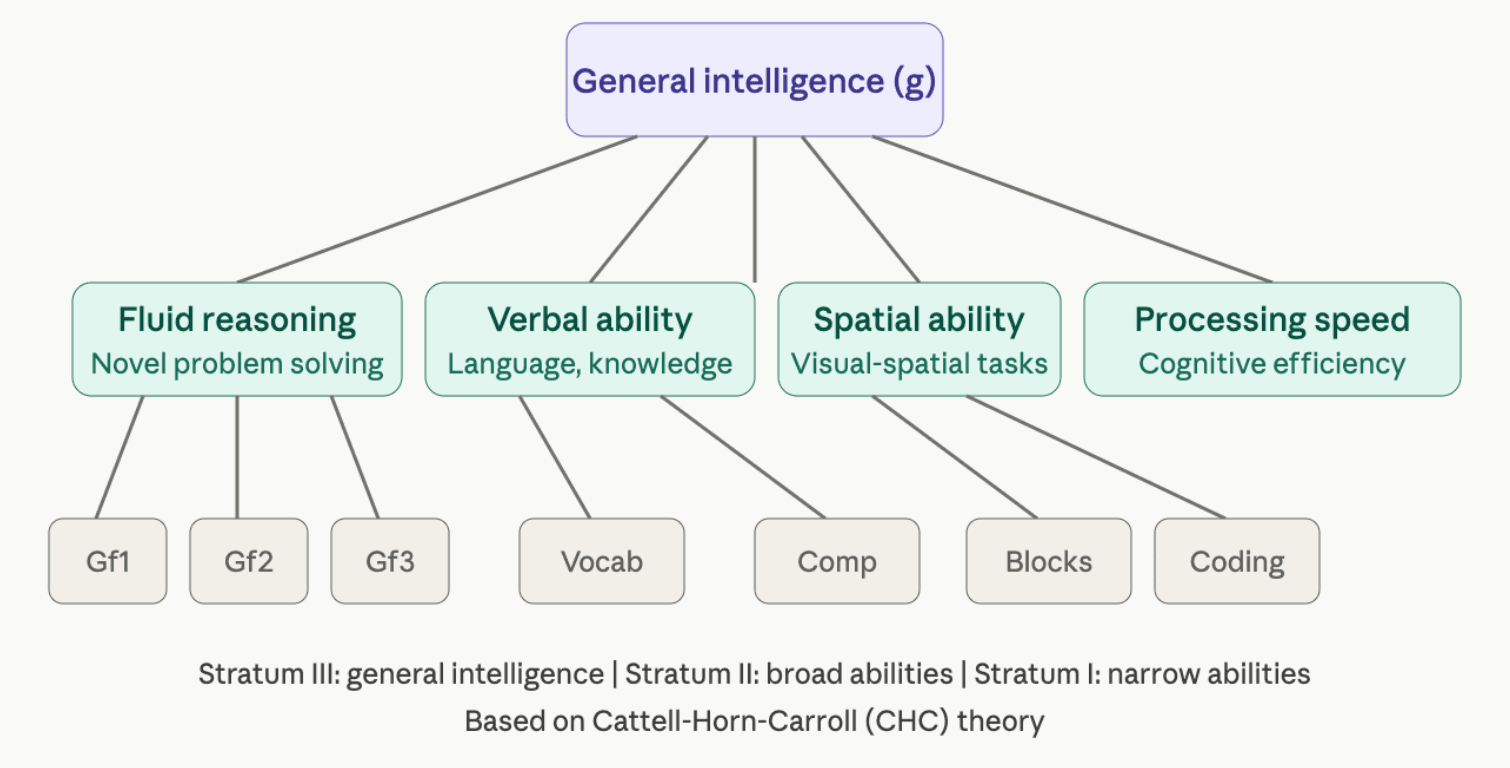
Why Does IQ Matter? The Evidence from Education
IQ is the single strongest predictor of academic achievement that psychologists have identified. A meta-analysis of 240 independent samples by Roth et al. (2015, Intelligence) found a population correlation of ρ = .54 between IQ and school grades, encompassing over 100,000 participants. That is a large effect by the standards of the social sciences. To put it in concrete terms, this correlation means that IQ explains roughly 25% of the variation in academic performance — more than any other single psychological variable, including motivation, self-concept, and personality. This does not mean that IQ is the only thing that matters in school. Motivation, effort, conscientiousness, and the quality of instruction all contribute. But intelligence provides the foundation. A child with high reasoning and comprehension abilities can learn new material more quickly, see connections between ideas more readily, and apply knowledge to unfamiliar problems. That cognitive advantage compounds over years of schooling, which is one reason why intelligence measured in childhood predicts educational attainment decades later (Zaboski et al., 2018, Journal of School Psychology). IQ tests are indispensable in educational settings for exactly this reason. When a child is struggling in school and the cause is unclear, an IQ test can help distinguish between a learning disability (where cognitive ability is intact but a specific academic skill is impaired) and a general intellectual limitation. When a school is selecting students for gifted and talented programs, IQ tests provide an objective measure that is less influenced by teacher bias, socioeconomic advantages, or parental advocacy than other selection methods.
Why Does IQ Matter? The Evidence from the Workplace
The importance of IQ tests extends well beyond the classroom. In employment settings, decades of research have demonstrated that general cognitive ability is the best single predictor of job performance across virtually all occupations. The landmark meta-analysis by Schmidt and Hunter (1998, Psychological Bulletin) found that general mental ability predicted job performance with a corrected validity of approximately r = .51. A later update by Schmidt, Oh, and Shaffer (2016) using improved statistical corrections estimated the validity even higher, at r = .65 for jobs of medium complexity (which represent about 62% of all jobs in the United States). To appreciate the magnitude of this finding, consider that years of job experience — a factor that most employers heavily weight in hiring decisions — has a validity of only about r = .16 for predicting performance. In other words, a brief cognitive ability test tells an employer roughly four times as much about a candidate's likely job performance as knowing how many years they have been doing the work.
The reason is straightforward. Intelligence is closely tied to the ability to learn new information quickly and to solve novel problems. In any job, employees face situations that training did not fully prepare them for. The ability to reason through unfamiliar problems, adapt to new technology, and integrate complex information distinguishes high performers from average ones. The U.S. military recognized this decades ago; the Armed Services Vocational Aptitude Battery (ASVAB) functions as an intelligence test and is used to match recruits to jobs that fit their cognitive capabilities.
Combining cognitive ability tests with structured interviews produces composite validity above r = .60, which is substantially better than using either method alone. But cognitive ability remains the foundation upon which other selection tools build.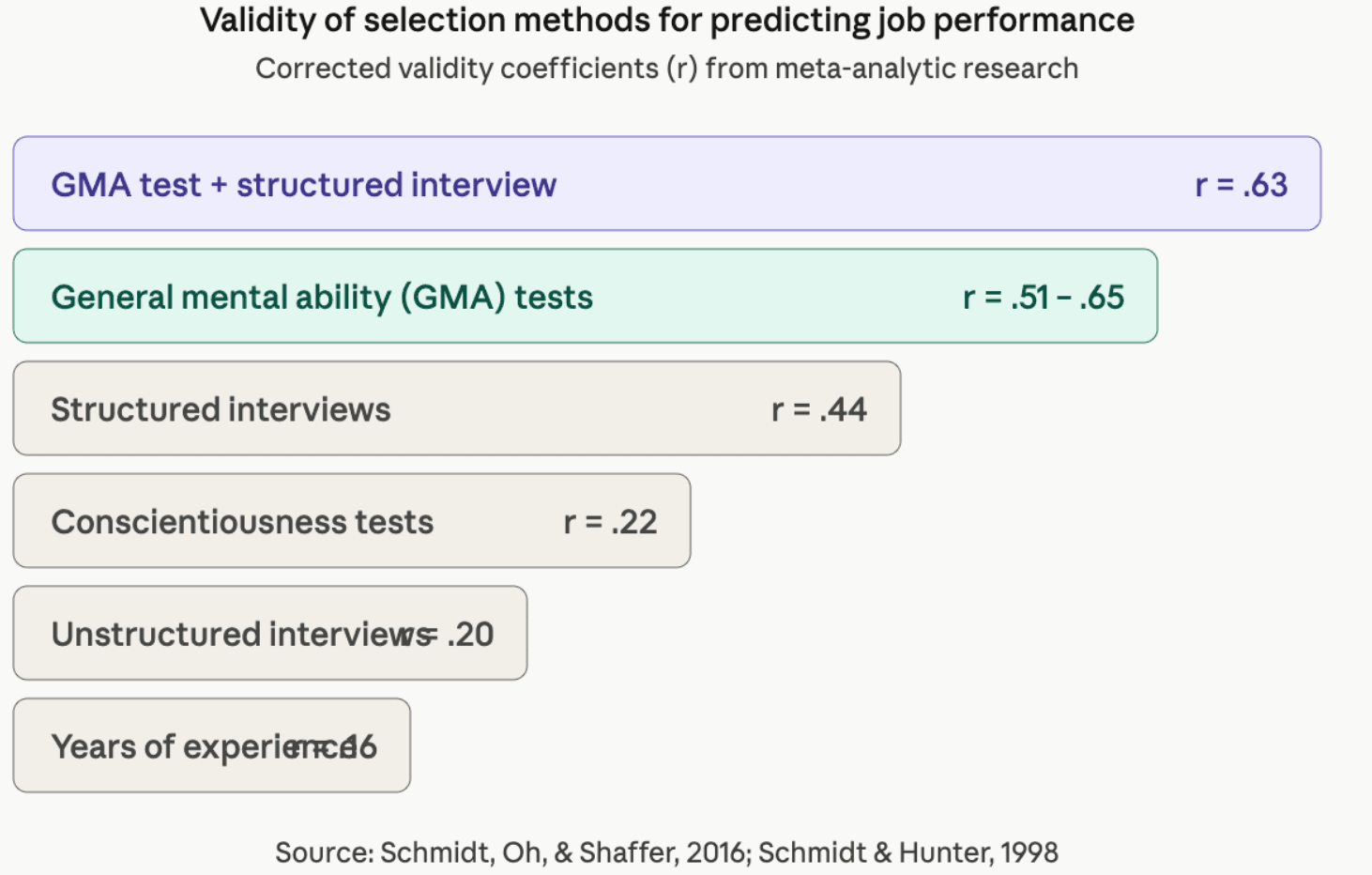
IQ Tests and Health: A Surprising Connection
One of the most striking findings in intelligence research over the past two decades is the robust connection between IQ and physical health. This relationship was first documented in large epidemiological studies from Scotland, where childhood IQ scores from the Scottish Mental Surveys of 1932 and 1947 were linked to health and mortality records decades later. The results were unambiguous: children who scored higher on IQ tests lived longer and had lower rates of cardiovascular disease, lung cancer, and other major causes of death.
A 2025 meta-analysis by Fries, Oberleiter, Bodensteiner, and colleagues at the University of Vienna brought this evidence into sharp focus. Analyzing 49 studies with a combined sample of over 2.9 million individuals, the researchers found that a 15-point IQ disadvantage in childhood or early adulthood was associated with a 22% higher risk of later physical and mental illness. The effect held across a wide range of health conditions, including cardiovascular disease, respiratory illness, depression, and anxiety disorders. Why would IQ predict health? There are several plausible mechanisms. Linda Gottfredson, a prominent researcher in this area, has argued (2004, Current Directions in Psychological Science) that health self-care is essentially a cognitive task. Managing chronic conditions, understanding medication regimens, navigating the healthcare system, evaluating health information, and making daily decisions about diet and exercise all require reasoning and problem-solving. People with higher intelligence tend to perform these tasks more effectively, just as they tend to perform other cognitively demanding tasks more effectively. Additionally, IQ is associated with the likelihood of avoiding behaviors that harm health. Higher IQ predicts lower rates of smoking, better dietary choices, and greater adherence to medical advice. These behavioral differences accumulate over a lifetime and contribute to the health advantage associated with higher intelligence.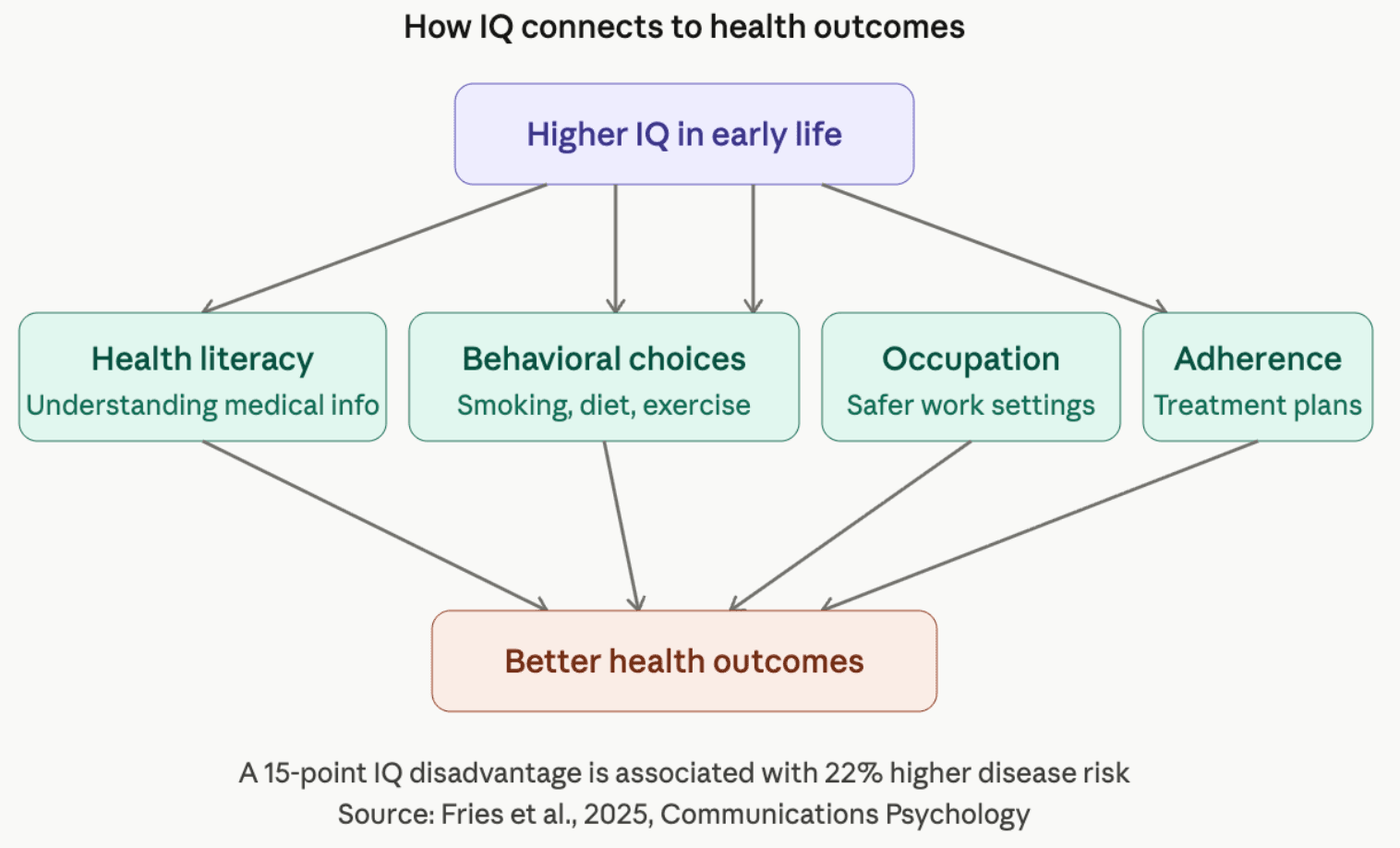
IQ Tests in Clinical and Forensic Settings
Beyond education and employment, IQ tests play a critical role in clinical and forensic psychology. In mental health settings, psychologists administer IQ tests as part of comprehensive psychological assessments. The data from these assessments help clinicians understand a patient's cognitive strengths and weaknesses, which in turn informs treatment planning. Some therapeutic interventions are more effective at certain IQ levels than others (Gallo et al., 2020, Behavior Therapy), and knowing where a patient falls on the cognitive spectrum allows clinicians to tailor their approach. In forensic settings — courts, prisons, and parole boards — IQ tests carry even more weight. Courts rely on IQ data to determine whether a defendant is competent to stand trial, whether an offender qualifies for certain sentencing considerations, and even (in capital cases in the United States) whether an individual meets the criteria for an intellectual disability that would exempt them from the death penalty under the Supreme Court's ruling in Atkins v. Virginia (2002). In these contexts, the accuracy and scientific rigor of the IQ test being used is not an academic concern; it is a matter that can determine the course of a person's life.
IQ data also informs risk assessment. Research consistently finds that lower IQ is associated with higher rates of criminal behavior, even after controlling for socioeconomic status, education, and other demographic variables. Schwartz et al. (2015, Intelligence) found a linear, negative association between IQ and criminal offending in a total birth cohort. This does not mean that low IQ causes crime — many factors contribute, and most people with below-average IQs never commit crimes — but the statistical relationship is strong enough that it has practical implications for risk assessment and intervention planning.
IQ and Economic Outcomes
Intelligence is also a meaningful predictor of economic success. Research using the National Longitudinal Survey of Youth (NLSY) has found that each IQ point is associated with an increase in annual income of approximately $234 to $616, after controlling for education, occupation, and other factors (Zagorsky, 2007, Intelligence). The IQ-income relationship is moderate in magnitude — typically around r = .30 to .40 — but it is persistent and it operates partly through and partly independently of educational attainment. The mechanism is not mysterious. Higher IQ facilitates entry into occupations that require advanced training and complex problem-solving, and those occupations tend to pay more. Additionally, within any given occupation, higher cognitive ability is associated with better performance, faster skill acquisition, and greater adaptability — all of which translate to higher earnings over time.
IQ is not the sole determinant of income, of course. Personality traits like conscientiousness, social skills, entrepreneurial risk-taking, and favorable circumstances all contribute to economic outcomes.
IQ Predicts Outcomes Across the Lifespan
What makes IQ remarkable as a psychological variable is its predictive reach across both domains and decades. Childhood IQ predicts not only school performance but also adult occupational status, income, health, longevity, and even the likelihood of criminal behavior. Lubinski's longitudinal research (2004) on intellectually talented youth found that IQ measured in adolescence predicted career accomplishment, income, and life satisfaction 25 to 35 years later.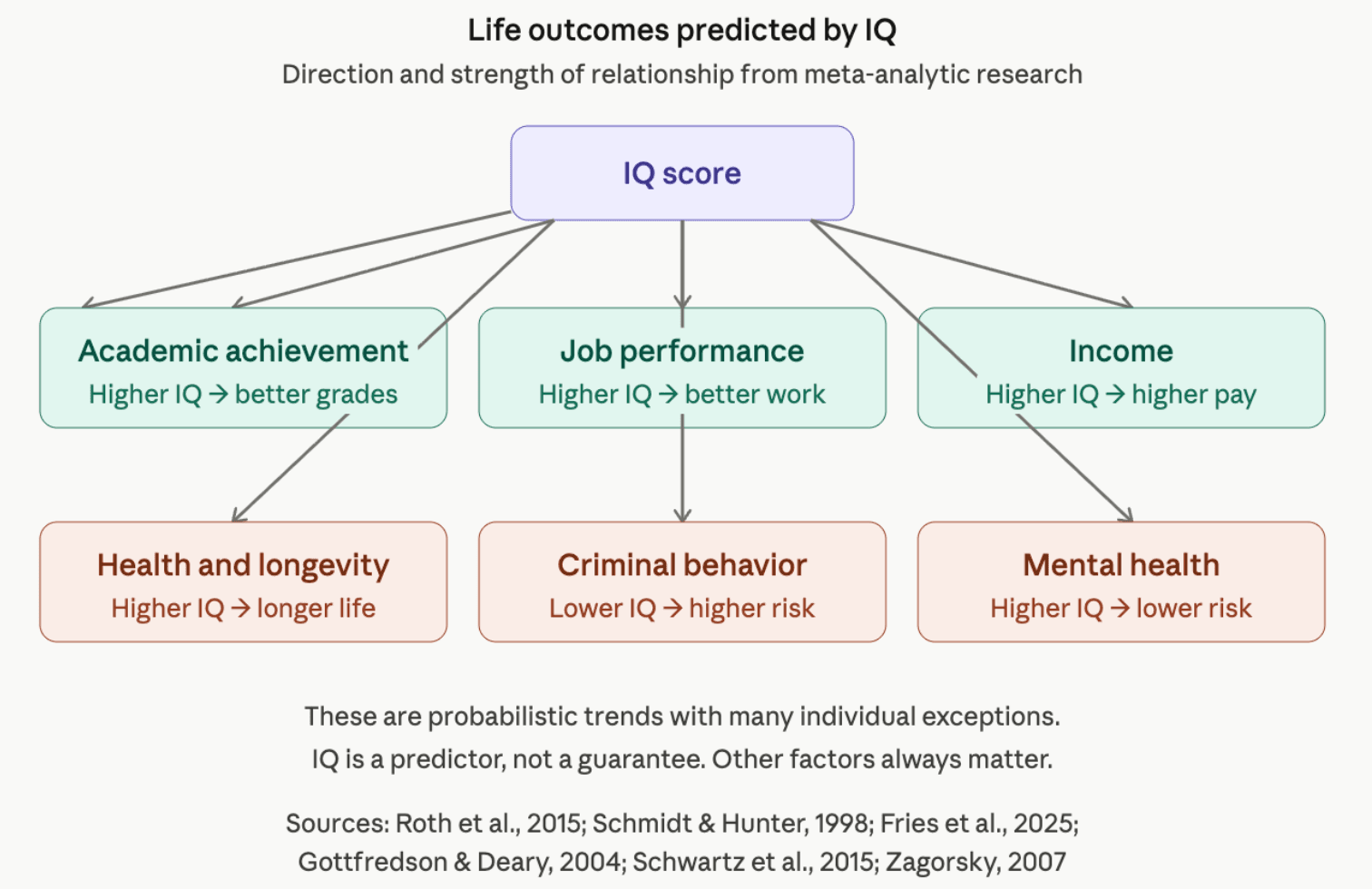 It is important to emphasize that these predictions are probabilistic, not deterministic. IQ is a tailwind in life, not a guarantee. Plenty of high-IQ individuals struggle with substance abuse, poor career choices, or bad luck. And many people with average or below-average IQs lead successful, fulfilling lives through hard work, beneficial personality traits, strong social support, and favorable circumstances. Non-cognitive characteristics can compensate for moderate IQ differences — roughly 7 to 10 IQ points, depending on the context — but they cannot fully substitute for large cognitive differences. As I noted in my book In the Know (Cambridge University Press), a probabilistic view of the relationship between IQ and life outcomes is not only more optimistic than a deterministic one; it is more accurate.
IQ Tests Contribute to Scientific Knowledge
Beyond their practical applications, IQ tests are indispensable tools for scientific research. Every year, hundreds of studies that report IQ scores are published across a wide range of disciplines, including psychology, education, neuroscience, genetics, epidemiology, and economics. The cumulative body of research built on IQ test data is one of the largest and most consistent in all of the social sciences.
IQ tests have been central to some of the most important discoveries about the human mind. The identification of the g factor was made possible by data from IQ tests. The discovery that intelligence is substantially heritable (with heritability estimates averaging .50 to .60 in non-deprived environments, and higher in adults) came from twin and adoption studies that relied on IQ tests. The identification of hundreds of genetic variants associated with intelligence (Savage et al., 2018, Nature Genetics) was made possible by large-scale studies that used IQ tests and similar cognitive measures. The documentation of the Flynn effect depended entirely on data from IQ tests administered across generations. Without IQ tests, none of these discoveries would have been possible. The tests provide the standardized, reliable measurement that science requires. A poorly constructed test produces noisy data that obscures real effects. A test built according to the Standards for Educational and Psychological Testing established by the American Educational Research Association, the American Psychological Association, and the National Council on Measurement in Education produces data that can be trusted.
What Makes an IQ Test Worth Taking?
Not all IQ tests are equally useful. The importance of IQ tests depends entirely on their quality. A professionally developed IQ test provides accurate, reliable, and valid data that can inform important decisions. A poorly constructed test — the kind that proliferates on the internet — provides data that is meaningless at best and misleading at worst.
Several features distinguish a professional IQ test from an amateur one. A professional test is created by experts with training in psychometrics, the science of psychological measurement. Its technical properties are documented in a manual or equivalent publication. It has been independently evaluated by outside scientists, ideally through use in peer-reviewed research. It is grounded in a recognized scientific theory of intelligence. And critically, it uses a norm sample that is representative of its target population, so that the comparisons it makes are meaningful.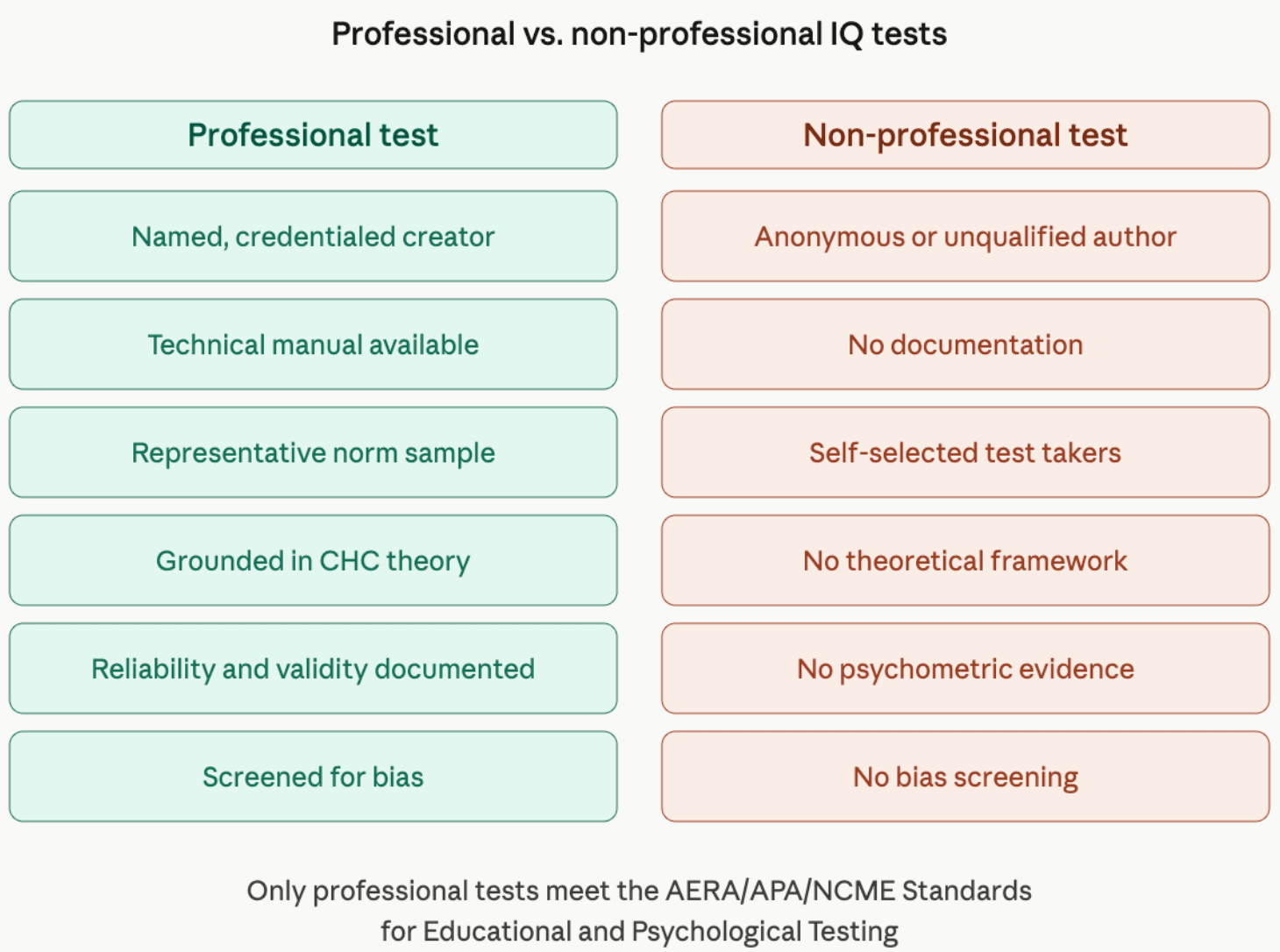 When a test lacks these features — when the creator is anonymous, the norm sample is self-selected, and no technical documentation exists — the resulting IQ score is essentially uninterpretable. It might be close to accurate, or it might be wildly off. There is no way to know, and that makes the score worse than useless: it gives the appearance of precision without the substance of it.
Putting It All Together
The evidence reviewed in this article converges on a clear conclusion: IQ tests matter because they measure something real, stable, and consequential. The data come from large-scale meta-analyses, longitudinal studies spanning decades, and replicated findings across dozens of countries and populations. No other single psychological measure predicts so many important outcomes across so many areas of life.
None of this means that IQ is all that matters. Intelligence is one piece of a complex puzzle that includes personality, motivation, opportunity, culture, and chance. But it is a piece that cannot be ignored or wished away. Dismissing the evidence does not change it, and failing to measure intelligence when measurement would be useful does a disservice to the individuals who could benefit from the information.
The Reasoning and Intelligence Online Test (RIOT) was built with this understanding. I spent over 15 years conducting peer-reviewed research on intelligence and psychological testing before creating the RIOT as the first online IQ test designed to meet the same professional standards that govern traditional in-person assessments. It underwent the rigorous development process that those standards require: expert content review by a panel of psychologists from cognitive, educational, and developmental psychology; a representative, U.S.-based online norm sample (the first of its kind for an online test); documented reliability and validity evidence; and a foundation in CHC theory. The RIOT reports six index scores — Verbal Reasoning, Fluid Reasoning, Spatial Ability, Working Memory, Processing Speed, and Reaction Time — in addition to an overall IQ, giving examinees a detailed picture of their cognitive profile rather than a single number.
Sources
Fries, J., Oberleiter, S., Bodensteiner, F. A., Fries, N., & Pietschnig, J. (2025). Multilevel multiverse meta-analysis indicates lower IQ as a risk factor for physical and mental illness. Communications Psychology, 3, 74. https://doi.org/10.1038/s44271-025-00245-2 Gallo, K. P., Comer, J. S., Barlow, D. H., Clarke, R. N., & Antony, M. M. (2020). The role of client IQ in CBT outcomes. Behavior Therapy, 51(6), 882–896. https://doi.org/10.1016/j.beth.2020.03.008 Gottfredson, L. S. (1997). Mainstream science on intelligence. Intelligence, 24(1), 13–23. https://doi.org/10.1016/S0160-2896(97)90011-8 Gottfredson, L. S., & Deary, I. J. (2004). Intelligence predicts health and longevity, but why? Current Directions in Psychological Science, 13(1), 1–4. https://doi.org/10.1111/j.0963-7214.2004.01301001.x Haier, R. J. (2017). The neuroscience of intelligence. Cambridge University Press. https://doi.org/10.1017/9781316105771 Pesta, B. J., Fuerst, J. G. R., & Kirkegaard, E. O. W. (2023). Occupational IQ and intelligence. Intelligence, 99, 101755. https://doi.org/10.1016/j.intell.2023.101755 Roth, B., Becker, N., Romeyke, S., Schäfer, S., Domnick, F., & Spinath, F. M. (2015). Intelligence and school grades: A meta-analysis. Intelligence, 53, 118–137. https://doi.org/10.1016/j.intell.2015.09.001 Savage, J. E., Jansen, P. R., Stringer, S., Watanabe, K., Bryois, J., de Leeuw, C. A., ... & Posthuma, D. (2018). Genome-wide association meta-analysis in 269,867 individuals identifies new genetic and functional links to intelligence. Nature Genetics, 50(7), 912–919. https://doi.org/10.1038/s41588-018-0152-6 Schmidt, F. L., & Hunter, J. E. (1998). The validity and utility of selection methods in personnel psychology: Practical and theoretical implications of 85 years of research findings. Psychological Bulletin, 124(2), 262–274. https://doi.org/10.1037/0033-2909.124.2.262 Schmidt, F. L., Oh, I.-S., & Shaffer, J. A. (2016). The validity and utility of selection methods in personnel psychology: Practical and theoretical implications of 100 years of research findings. Working paper, University of Iowa.
Schwartz, J. A., Savolainen, J., Aaltonen, M., Merikukka, M., Paananen, R., & Gissler, M. (2015). Intelligence and criminal behavior in a total birth cohort. Intelligence, 51, 109–118. https://doi.org/10.1016/j.intell.2013.05.001 Warne, R. T. (2020). In the know: Debunking 35 myths about human intelligence. Cambridge University Press. https://doi.org/10.1017/9781108593298 Zaboski, B. A., Kranzler, J. H., & Gage, N. A. (2018). Meta-analysis of the relationship between academic achievement and broad abilities of the Cattell-Horn-Carroll theory. Journal of School Psychology, 71, 42–56. https://doi.org/10.1016/j.jsp.2018.10.001 Zagorsky, J. L. (2007). Do you have to be smart to be rich? The impact of IQ on wealth, income, and financial distress. Intelligence, 35(5), 489–501. https://doi.org/10.1016/j.intell.2007.02.003 Piatek, R., & Pinger, P. (2016). Maintaining (locus of) control? Data combination for the identification and inference of factor structure models. Journal of Applied Econometrics, 31(4), 734–755. https://doi.org/10.1257/000282802320191570
Take our professional IQ test
Want to know your IQ? Try the first ever professional online IQ test.
AuthorDr. Russell T. WarneChief Scientist
