Jun 23, 2026·Taking an IQ TestWho Should Take an IQ Test?
Wondering if you or your child needs a cognitive evaluation? Learn the top reasons to take an IQ test. Read the article and try the RIOT IQ test today!
Dr. Russell T. WarneChief Scientist
IQ tests are among the most powerful tools in psychology, but that does not mean everyone needs one. Like any scientific instrument, an IQ test is most valuable when it is used for a purpose that matches what the test measures. A blood pressure cuff is indispensable for a cardiovascular evaluation and pointless for diagnosing a broken bone. IQ tests work the same way: they provide specific information about cognitive functioning, and certain situations call for that information more than others. Having spent my career researching intelligence and psychological testing, I have seen IQ tests used well and used poorly. The difference almost always comes down to whether the right person took the test for the right reason. This article explains who is most likely to benefit from an IQ test and why.
Is There a Concern About Learning or Academic Performance?
One of the most common and most valuable uses of IQ testing is in the evaluation of learning difficulties. When a child or adult is struggling academically and the cause is not obvious, an IQ test can clarify the situation in ways that no other tool can.
Consider a child who is failing reading despite strong effort and adequate instruction. The question facing parents and educators is whether the child has a specific learning disability (such as dyslexia), a broader intellectual limitation, or something else entirely. An IQ test helps answer this question by measuring cognitive ability independently of academic skills. If the test reveals strong reasoning and verbal abilities alongside poor reading scores, that discrepancy points toward a specific learning disability. If the test reveals uniformly low cognitive scores, the picture looks different, and so does the intervention.
This diagnostic process is not just useful — it is often required. Under federal law in the United States, a comprehensive cognitive evaluation is a standard component of the process for identifying students who qualify for special education services. The Standards for Educational and Psychological Testing established by the American Educational Research Association, the American Psychological Association, and the National Council on Measurement in Education provide the framework that governs how these evaluations should be conducted. IQ testing is equally important at the other end of the ability spectrum. Gifted and talented programs in many states use IQ scores as part of the selection process, often as the primary criterion. Without an IQ test, identifying intellectually gifted children becomes a matter of teacher recommendations, parent nominations, and classroom performance — all of which are susceptible to bias based on socioeconomic status, race, and the child's behavior in class (Warne, 2015, Gifted Child Quarterly). IQ tests, while not perfect, provide a more objective and standardized measure than the alternatives.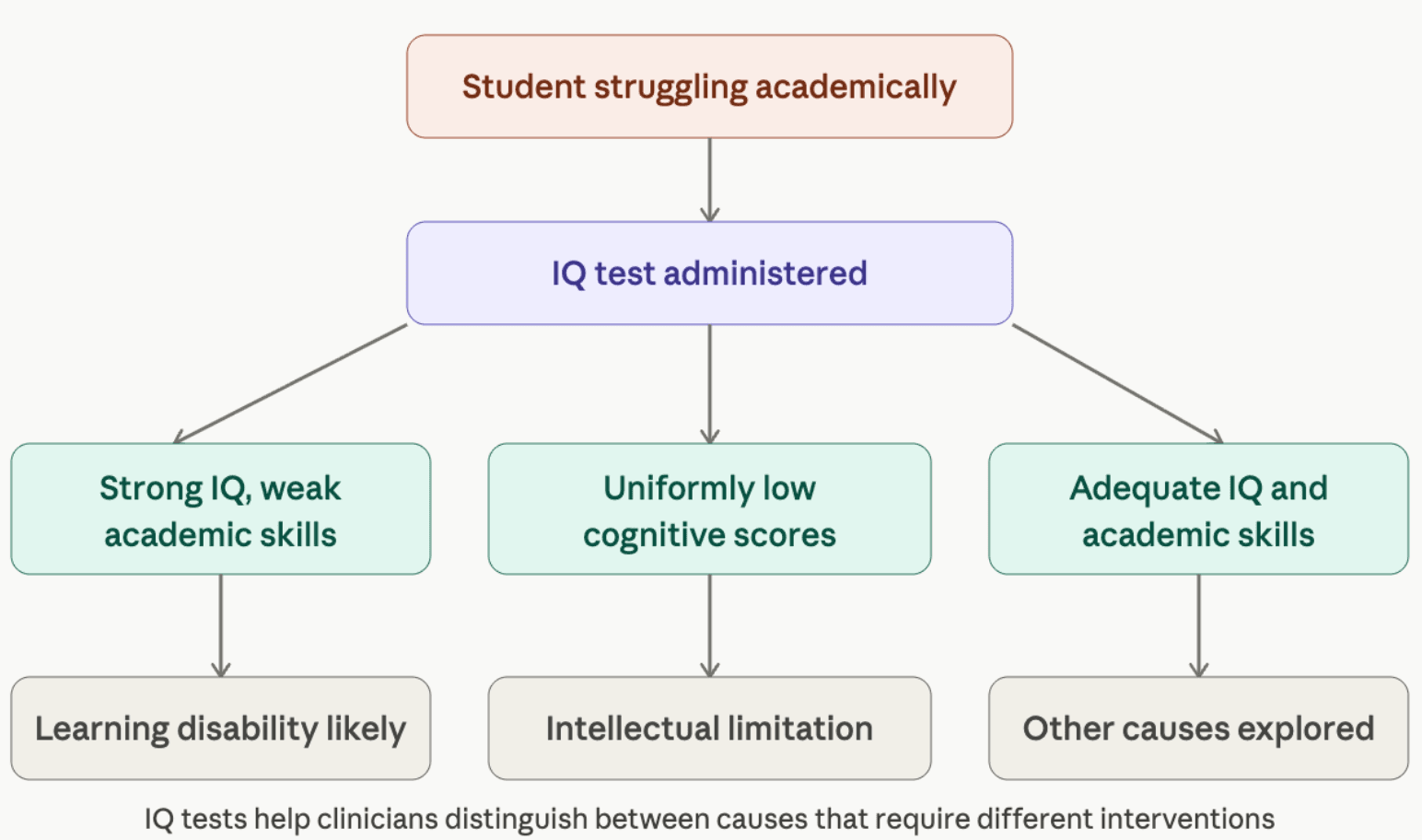 Adults are not exempt from this need. Adults who were never evaluated as children sometimes seek IQ testing to understand patterns of difficulty that have followed them throughout their lives. An adult who has always struggled with reading, with organizing complex projects, or with processing information quickly may benefit from a cognitive evaluation that identifies specific abilities and limitations. That information can lead to accommodations in the workplace or in higher education, and it can provide a framework for understanding difficulties that were previously unexplained.
Is a Clinical or Neuropsychological Evaluation Needed?
In clinical psychology and psychiatry, IQ tests are a standard part of comprehensive psychological assessments. When a person enters treatment for a mental health condition, the clinician needs a full picture of cognitive functioning. IQ data contribute to that picture in several important ways.
First, IQ scores help establish a baseline of cognitive ability. This is especially valuable when cognitive decline is suspected. If a 60-year-old patient presents with memory complaints and a clinician administers an IQ test, the results can be compared against what would be expected for someone of that age, education level, and background. A significant discrepancy between expected and observed performance raises the possibility of a neurodegenerative condition and warrants further investigation.
Second, the pattern of scores across different subtests provides information that a single global score cannot. A person with strong verbal abilities but weak processing speed may function very differently in daily life than a person with the reverse pattern, even if both receive the same overall IQ. Research using the Wechsler scales has shown that neurodevelopmental conditions like ADHD and autism spectrum disorder are associated with distinctive cognitive profiles — specific configurations of high and low scores across subtests (Wilson et al., 2024, Archives of Clinical Neuropsychology). Identifying these profiles helps clinicians make more accurate diagnoses and develop more targeted treatment plans. Third, cognitive data informs treatment selection. Some therapeutic approaches are more effective at certain cognitive ability levels than others (Gallo et al., 2020, Behavior Therapy). A clinician who knows that a patient has strong verbal reasoning may rely more heavily on talk-based interventions, while a patient with weaker verbal abilities might benefit from approaches that use visual aids or behavioral techniques. Without IQ data, these decisions are made by guesswork. Traumatic brain injury is another area where IQ testing serves a critical function. Following a head injury, cognitive testing can document the extent of impairment, track recovery over time, and provide evidence for disability claims or legal proceedings. The comparison between estimated premorbid IQ (what the person's IQ likely was before the injury) and current performance quantifies the cognitive cost of the injury in a way that subjective reports cannot.
Is an Employer or the Military Requesting Cognitive Data?
In employment settings, cognitive ability testing is more common than most people realize. The largest employer in the United States to use an intelligence test is the military, which administers the Armed Services Vocational Aptitude Battery (ASVAB) to every recruit. The ASVAB functions as a cognitive ability test and is used to determine which military occupational specialties a recruit qualifies for. The logic is simple and well-supported by research: intelligence is the strongest single predictor of job performance across virtually all occupations (Schmidt & Hunter, 1998, Psychological Bulletin), and matching people to jobs that fit their cognitive capabilities benefits both the individual and the organization. Civilian employers also use cognitive ability tests, though the practice varies by industry and position. Cognitively demanding jobs — those that involve complex decision-making, problem-solving under uncertainty, or rapid learning of new systems — are precisely the positions where cognitive ability testing provides the most useful information. Research by Conte and Harmata (2023) demonstrated that people with similar overall IQ scores can have very different cognitive profiles, and those profiles predict different patterns of job performance. In other words, the specific shape of a person's cognitive abilities matters for job fit, not just the overall number. Anyone entering these systems — whether enlisting in the military, applying for a position that requires cognitive screening, or seeking promotion in an organization that uses ability testing — should expect to take some form of cognitive assessment. In these cases, the question is not whether to take an IQ test but how to approach it thoughtfully.
Is There a Desire to Understand Cognitive Strengths and Weaknesses?
Not everyone who takes an IQ test does so because an institution requires it. Many people are simply curious about their cognitive abilities. That curiosity is legitimate, and when satisfied by a rigorous test, it can be genuinely informative.
A well-designed IQ test does not just produce a single number. It produces a profile of scores across multiple cognitive domains. One person might discover that their fluid reasoning is exceptionally strong while their processing speed is average. Another might find that their verbal abilities outpace their spatial skills. These patterns have practical implications. A person with strong fluid reasoning and weaker processing speed may excel at complex, untimed problem-solving but struggle with tasks that require rapid decisions under time pressure. That insight can inform career choices, study strategies, and even daily work habits.
The key is that this information must come from a test that produces reliable and valid scores. Most free online tests do not meet this standard. They are often created by non-professionals who lack training in psychometrics. These tests typically use self-selected norm samples (meaning that future examinees are compared to whoever happened to take the test, not a representative sample of the population), and they provide no documentation of reliability or validity. A score from such a test is essentially a random number with a veneer of scientific authority.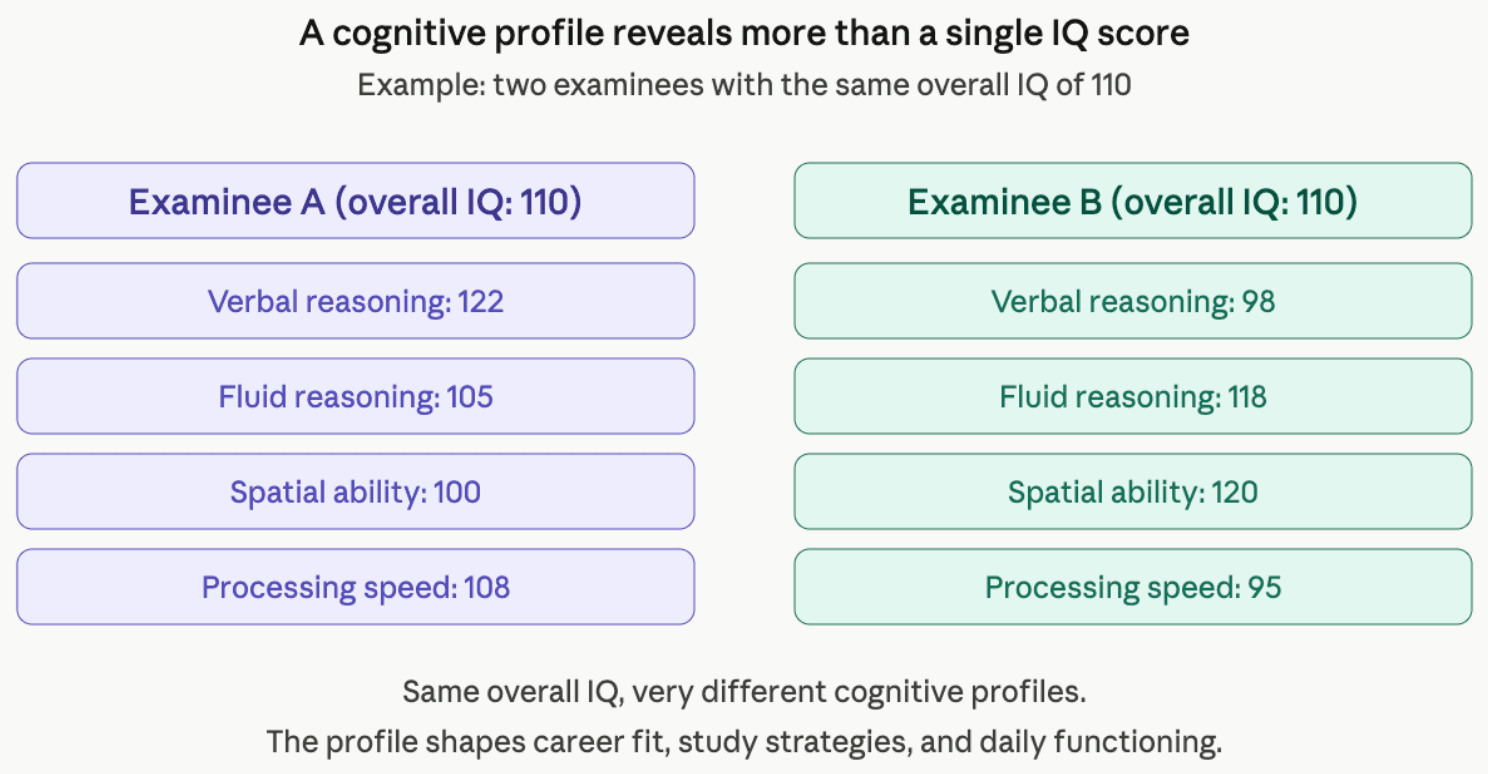 For a person who genuinely wants to understand their cognitive profile — not to satisfy an employer or a clinician, but simply to know — a professionally developed IQ test is the only instrument that can deliver trustworthy results.
Is There a Forensic or Legal Question Involving Cognitive Ability?
In the legal system, IQ tests carry consequences that extend well beyond academic interest. Courts in the United States routinely rely on IQ data for several types of decisions, and the stakes are often extraordinarily high.
The most consequential application is in capital cases. Following the Supreme Court's 2002 ruling in Atkins v. Virginia, individuals with intellectual disabilities cannot be sentenced to death. The determination of whether a defendant meets the criteria for an intellectual disability requires a professionally administered IQ test, along with evidence of deficits in adaptive behavior. The IQ score is not the sole criterion, but it is a central one, and the difference of a few points can determine whether an execution proceeds.
Outside of capital cases, IQ data informs competency evaluations (whether a defendant can understand the charges against them and participate in their own defense), sentencing recommendations, and parole decisions. In civil litigation, IQ testing may be used to document the cognitive impact of a brain injury for purposes of a personal injury claim. In disability determinations, Social Security evaluators use IQ data to assess whether an individual qualifies for benefits based on intellectual impairment.
In all of these contexts, the test must be professionally developed, properly administered, and interpreted by a qualified expert. A shoddy test or an incompetent evaluation can produce results that harm the very person the legal system is trying to assess.
Is a Person Considering a Career Change or Educational Path?
Career decisions are among the most consequential decisions people make, and cognitive ability is relevant to many of them. Different occupations place different demands on specific cognitive abilities. Occupations that require extensive abstract reasoning (such as engineering, law, or scientific research) tend to be populated by people with higher overall IQ, while occupations that emphasize processing speed or spatial reasoning place a premium on those specific abilities.
An IQ test can help a person considering a career change understand whether their cognitive profile aligns with the demands of the new field. This is not about gatekeeping — it is about having better information before committing time and resources. A person with strong verbal abilities and weaker spatial skills may thrive in journalism or education but find architecture or surgery frustrating. A person with exceptional fluid reasoning may be well-suited for fields that require constant problem-solving, such as software engineering or strategic consulting.
This type of self-knowledge is also valuable for educational planning. A student deciding between pursuing a quantitative field (where fluid reasoning and working memory are heavily demanded) and a verbal field (where crystallized knowledge and verbal comprehension matter more) can use IQ test data as one input among many. The data will not make the decision, but it can prevent costly mismatches between ability and aspiration.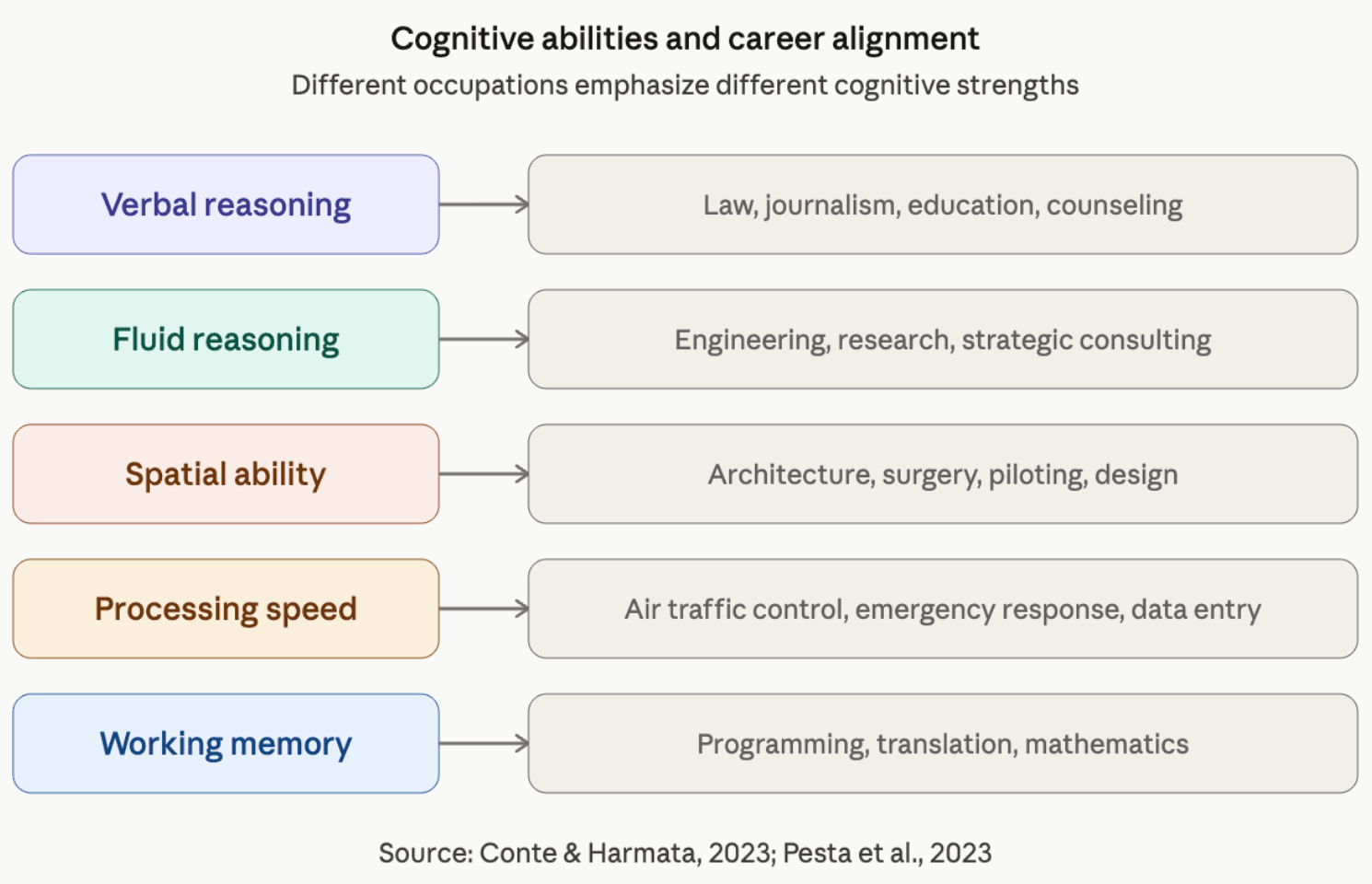
When Is an IQ Test Probably Not Necessary?
Just as there are clear situations where IQ testing adds value, there are situations where it does not. If the information an IQ test provides is unlikely to change a decision or deepen understanding, the test may not be worth the time and expense.
A person who has already taken a legitimate IQ test within the past year or two generally does not need to take another one. IQ scores are quite stable over time in adults, and retaking a test introduces practice effects — score increases that result from familiarity with the test format rather than any actual change in intelligence. Practice effects inflate scores by approximately 5 IQ points on a second administration and about 3 points on a third (Scharfen et al., 2018, Intelligence). A score inflated by practice effects is not a more accurate score; it is a less accurate one. Similarly, taking an IQ test solely to confirm a belief about being highly intelligent is unlikely to produce any useful insight. If the motivation is ego validation rather than genuine inquiry, the result — whatever it is — will not change behavior or inform decisions. IQ tests are scientific instruments, and their value lies in the information they generate, not in the emotional satisfaction of a flattering number.
Putting It All Together
The people who benefit most from IQ testing are those who face a specific question that cognitive data can help answer. That question might be diagnostic, clinical, occupational, legal, or personal — but in every case, the answer depends on the quality of the test. An instrument built by non-professionals, backed by self-selected norms and no technical documentation, cannot answer these questions reliably.
The Reasoning and Intelligence Online Test (RIOT) was designed to make professional-grade cognitive assessment accessible online. I created the RIOT after 15 years of intelligence research because I recognized a gap between what the field knew about good testing and what was actually available on the internet. The RIOT is the first online IQ test built to meet the professional standards that govern traditional in-person assessments — the same rigorous development process, the same expert review, and the first representative U.S.-based online norm sample. It reports six index scores — Verbal Reasoning, Fluid Reasoning, Spatial Ability, Working Memory, Processing Speed, and Reaction Time — giving examinees the kind of detailed cognitive profile that was previously available only through expensive, individually administered tests. For anyone facing a question that cognitive data can help answer, the RIOT provides that data with the rigor the question deserves.
References
Conte, J. M., & Harmata, R. (2023). Cognitive ability profiles and job performance. In A. E. Kato et al. (Eds.), Cognitive ability testing in the workplace: Modern approaches and methods. Journal of Intelligence, 13(6), 68. https://doi.org/10.3390/jintelligence13060068 Fletcher, J. M., & Miciak, J. (2024). Assessment of specific learning disabilities and intellectual disabilities. Assessment, 31(1), 38–56. https://doi.org/10.1177/10731911231194992 Gallo, K. P., Comer, J. S., Barlow, D. H., Clarke, R. N., & Antony, M. M. (2020). The role of client IQ in CBT outcomes. Behavior Therapy, 51(6), 882–896. https://doi.org/10.1016/j.beth.2020.03.008 Gottfredson, L. S. (1997). Mainstream science on intelligence. Intelligence, 24(1), 13–23. https://doi.org/10.1016/S0160-2896(97)90011-8 Pesta, B. J., Fuerst, J. G. R., & Kirkegaard, E. O. W. (2023). Occupational IQ and intelligence. Intelligence, 99, 101755. https://doi.org/10.1016/j.intell.2023.101755 Scharfen, J., Peters, J. M., & Holling, H. (2018). Retest effects in cognitive ability tests: A meta-analysis. Intelligence, 67, 44–66. https://doi.org/10.1016/j.intell.2018.01.003 Schmidt, F. L., & Hunter, J. E. (1998). The validity and utility of selection methods in personnel psychology: Practical and theoretical implications of 85 years of research findings. Psychological Bulletin, 124(2), 262–274. https://doi.org/10.1037/0033-2909.124.2.262 Schmidt, F. L., Oh, I.-S., & Shaffer, J. A. (2016). The validity and utility of selection methods in personnel psychology: Practical and theoretical implications of 100 years of research findings. Working paper, University of Iowa.
Warne, R. T. (2015). Five reasons to put the g back into giftedness. Gifted Child Quarterly, 60(2), 105–118. https://doi.org/10.1177/0016986215605360 Warne, R. T. (2020). In the know: Debunking 35 myths about human intelligence. Cambridge University Press. https://doi.org/10.1017/9781108593298 Wilson, A. C., Brundage, S. B., & Smith, A. (2024). Cognitive profile in autism and ADHD: A meta-analysis of performance on the WAIS-IV and WISC-V. Archives of Clinical Neuropsychology, 39(4), 498–515. https://doi.org/10.1093/arclin/acad073 deLeyer-Tiarks, J. M., Caemmerer, J. M., Bray, M. A., & Kaufman, A. S. (2024). Assessment of human intelligence—the state of the art in the 2020s. Journal of Intelligence, 12(8), 72. https://doi.org/10.3390/jintelligence12080072
Take our professional IQ test
Want to know your IQ? Try the first ever professional online IQ test.
AuthorDr. Russell T. WarneChief Scientist
