
Community
Intelligence Journals & Organizations
News & Press
Our Articles
Our Articles
Our Articles
Our Articles
Our Articles
Community
Intelligence Journals & Organizations
News & Press
Our Articles
Our Articles
Our Articles
Our Articles
Our Articles
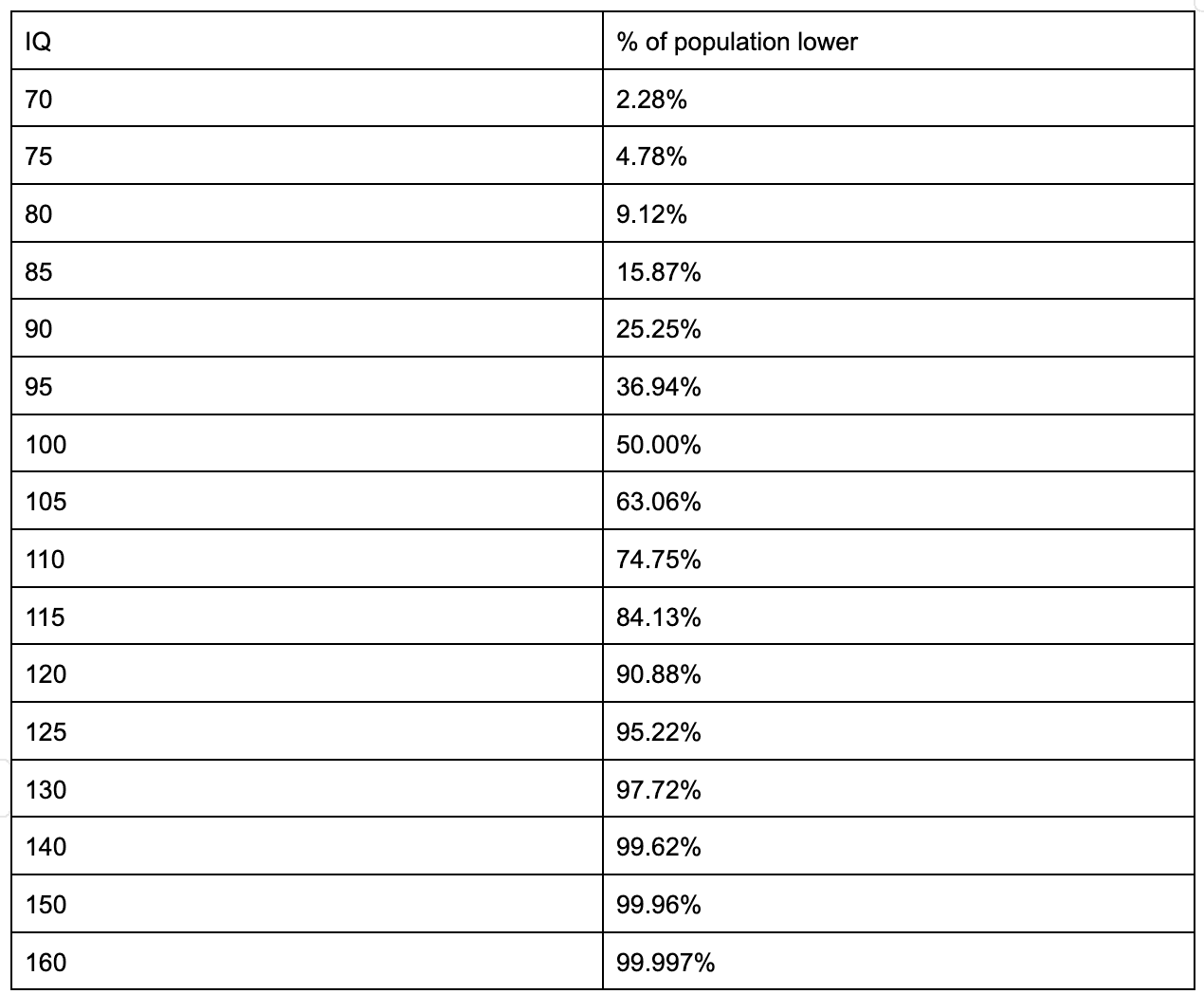
Is 120 IQ good? What about 130 or 160? See exactly what percentage of the population you outrank using our detailed IQ percentile table.
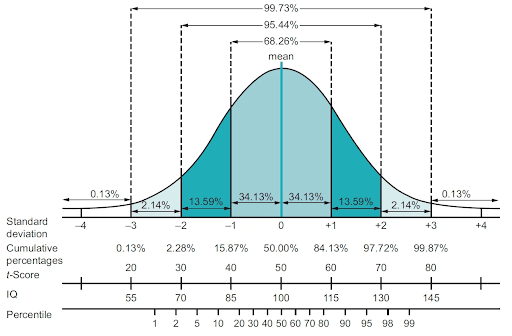 Because a higher IQ is almost always better to have, calculating the percentages of the population with a lower IQ is often a useful method of determining how “good” an IQ score is. For example, if someone has an IQ of 100, then their IQ is higher than 50% of the population. That’s better than having an IQ of 85, which is higher than 15.87% of the population, as shown in the image above.
 Whether any one particular score is considered “good” also depends on what the score will be used for. The minimum IQ needed to participate in a given educational program, job, or other activity varies. This means that an IQ of 90 may be good in one environment (e.g., working at a grocery store) and very bad in another (e.g., working as a lawyer). Context matters when interpreting IQ scores.
Want to know your IQ? Try the first ever professional online IQ test.
5 subtests + 5 cognitive abilities
Features
15 subtests + all cognitive abilities
Features