Oct 4, 2026·Special Population & Related Conditions
Spina Bifida and IQ: The Typical Range, the Learning Profile and the Role of Hydrocephalus
Spina bifida IQ averages in the low 80s in U.S. registry data, with a wide range; verbal skills are usually stronger than math and visual-spatial skills.
Dr. Russell T. WarneChief Scientist
Share
Average IQ in spina bifida (myelomeningocele) falls in the low-average range, about 80 to 86 in most large samples, and the spread is wide: in a 2026 U.S. registry study, scores ran from 40 to 136, about a quarter were at or below 70, and about one in eight were above 100. Hydrocephalus and how it is treated account for much of that spread, and most children show a recognizable profile in which everyday language is a relative strength and math and spatial tasks are harder.
This article covers the typical range and what drives it, the learning profile under the full-scale number, why testing is tricky for this group, and what happens to scores with age. The diagnostic criteria for intellectual disability are covered in our article on low IQ and intellectual disability, so they are not repeated here.
The typical IQ range in spina bifida
Spina bifida is a birth defect in which the neural tube fails to close completely during the first month of pregnancy. It affects about 3 of every 10,000 live births, according to the 2026 registry report by Castillo and colleagues. Most research on cognition concerns its most serious form, "myelomeningocele," in which the spinal cord and its coverings protrude through an opening in the back. Many children with myelomeningocele also have hydrocephalus, a buildup of cerebrospinal fluid in the brain, and a brain malformation called Chiari II; in the registry sample described below, 67% of those tested had had shunt surgery to drain the fluid.
The largest recent dataset comes from the National Spina Bifida Patient Registry. Castillo and colleagues analyzed full-scale IQ scores for 435 people aged 4 to 22 from five U.S. clinics, 89% of whom had myelomeningocele. The mean was 81.3, with a "standard deviation" (the typical distance of a score from the mean) of 16.9, slightly wider than the 15 points of the general population. Scores ran from 40 to 136. Twenty-three percent scored 70 or below, and 13% scored above 100.
Those numbers need one caution. Only 43% of registry participants in the participating clinics had an IQ score on file at all, and people who received academic accommodations were more likely to have been tested. The authors note that their sample mean sat further below the population average than in some other studies, so the registry figure may lean low. Smaller research cohorts tell a similar story. In a Houston and Toronto sample of 184 children and adults with myelomeningocele and shunted hydrocephalus, Ware and colleagues reported mean full-scale IQs of 79 and 86 in two surgical-history groups.
Hydrocephalus, shunts and the level of the lesion
Much of the variation in IQ tracks how much the brain itself was affected. Hampton and colleagues tested 208 children with spina bifida and grouped them by hydrocephalus status. Averaged across the whole test battery, children without hydrocephalus had a mean standard score of 92.60, children whose hydrocephalus had stabilized without a shunt averaged 86.86, and children with a shunt averaged 82.30. Typically developing controls averaged 105.94. The authors noted that part of the gap between every spina bifida group and the controls reflected lower family socioeconomic status in the spina bifida sample.
The level of the spinal lesion matters too, because a higher lesion is a marker of more extensive brain malformation. In a study of 268 children, Fletcher and colleagues found that children with lesions at the twelfth thoracic vertebra or above had more abnormalities in the midbrain and related structures, smaller brain volumes, lower scores on intelligence, academic and adaptive behavior measures, and a higher rate of intellectual disability than children with lower lesions.
Shunt history is a more mixed predictor. In a Cambridge cohort followed from birth into adulthood, Hunt and colleagues found that adults whose shunts had been revised after age 2 were much less likely to live independently, hold a job and drive than those who never needed a revision. In Ware's sample, however, a higher number of shunt revisions went with higher nonverbal IQ, which the authors read as evidence that well-managed hydrocephalus need not cost IQ points. Timing of the first operations also mattered in that study: closing the back and placing the shunt within the same 72 hours was associated with lower full-scale and verbal IQ than doing them separately.
Does prenatal surgery change IQ?
Repairing the spine before birth reduces the need for a shunt. At school age, though, the Management of Myelomeningocele Study (MOMS) trial found improved mobility and fewer shunt operations in the prenatal-surgery group, "with no strong evidence of improved cognitive functioning," according to Houtrow and colleagues. A secondary analysis by Fletcher and colleagues found that children who needed a shunt, in either surgical group, had poorer cognitive and adaptive outcomes than those who did not.
Prevention sits further upstream. In the randomized Medical Research Council Vitamin Study, folic acid taken around conception had a 72% protective effect against neural tube defects in women who had a previous affected pregnancy. Castillo and colleagues note that folic acid fortification and supplementation have since lowered the rate of spina bifida at birth.
The cognitive profile: fluent talk, harder math and spatial work
A full-scale score hides a fairly consistent pattern. Dennis and Barnes describe the core of it as a contrast between skills built on learned associations, which hold up well, and skills that require assembling and integrating information in real time, which are harder.
• Language: Vocabulary and word-level reading are relative strengths. Children with spina bifida are typically "polite and friendly, sociable, cooperative, and interested in talking," in Dennis and Barnes's words, but making inferences, telling a coherent story and understanding longer texts are weaker. The older clinical label for fluent but loosely connected talk is "cocktail party syndrome," the title of a 1979 paper by Tew.
• Math: Counting and basic calculation are learned, though often slowly. Estimation, mental calculation and word problems remain difficult from childhood into adulthood.
• Visual-spatial skills: Recognizing objects and landmarks is largely intact, but judging precise distances and spatial relationships is impaired.
• Attention and fine motor speed: Orienting to things in the environment, timing and rhythm, and precise, well-timed hand movements are common weaknesses.
On standard IQ tests, this usually shows up as verbal scores above nonverbal ones. In a five-year study of 65 young children, Brookshire and colleagues found that children with shunted hydrocephalus had higher rates of Performance IQ falling significantly below Verbal IQ. Dennis and Barnes also note that spina bifida shares some genes, brain features and cognitive traits with 22q11.2 deletion syndrome, another condition with an uneven profile.
Why IQ testing is tricky in spina bifida
Many IQ subtests are timed or require building, drawing or manipulating materials, and children with spina bifida often have weak, slow or poorly coordinated hands, the same response-format problem that affects children with cerebral palsy. Hampton's study found that fine motor tasks best separated children with shunts from those with arrested hydrocephalus. U.S. special education law reflects the concern: 34 CFR 300.304 requires that a test given to a child with impaired "sensory, manual, or speaking skills" measure the child's aptitude "rather than reflecting" those impairments.
Motor demands do not explain everything, though. Brookshire and colleagues concluded that the lower nonverbal scores in their shunted group "could not be attributed to motor demands of the nonverbal tasks." That means a careful evaluation reads index scores separately. A Verbal Comprehension Index near average sitting beside a much lower Visual Spatial Index is a typical finding, and the full-scale average of the two describes neither well. Castillo and colleagues make the same point, noting that the full-scale score alone "may not adequately represent the overall ability" of people with spina bifida.
Do IQ scores change with age?
On average, scores are fairly stable. Among the 56 registry participants tested twice, Castillo and colleagues found no significant change between the first and second full-scale scores. Long-term outcomes vary widely, though. In the Cambridge cohort followed for 50 years, 29 of the 37 survivors had an IQ above 80 in childhood, with a range from 51 to 137. In that cohort, adults with no history of raised pressure inside the skull were more likely to live independently (17 of 23, against 3 of 14 with such a history). Families who notice a sudden change in a child's learning or alertness should raise it with the child's neurosurgery team.
Frequently asked questions
What is the average IQ of a child with spina bifida?
In the largest U.S. registry dataset, the mean full-scale IQ was 81.3, in the low-average range. Children without hydrocephalus tend to score higher, and the range runs from intellectual disability to above average.
Do all children with spina bifida have an intellectual disability?
No. In registry data about 23% scored 70 or below, and most scored in the borderline to average range, with 13% above 100.
Why is my child good at talking but struggling with math?
That pattern is typical of spina bifida with hydrocephalus. Learned vocabulary and conversation are relative strengths, while math problem solving, estimation and spatial reasoning tend to be weaker.
Does a shunt lower IQ?
Children with shunts score lower on average than children who never needed one, mainly because a shunt marks more severe hydrocephalus. Studies disagree on whether later revisions themselves cost IQ points.
Who should test a child with spina bifida?
A pediatric psychologist or neuropsychologist who knows the condition, ideally linked to a spina bifida clinic. The Spina Bifida Association's care guidelines recommend neuropsychological evaluation at several points across childhood and adulthood.
The takeaway
IQ in spina bifida averages in the low 80s, with a wide range that includes many people scoring in the average range or above. Hydrocephalus and the level of the spinal lesion explain much of the variation, and the usual profile pairs relatively strong vocabulary and conversation with weaker math and spatial skills. Because the full-scale score blends those strengths and weaknesses, index scores and the child's learning history tell parents and teachers more than the single number. Readers interested in how reasoning is measured against a defined norm group can try a professionally developed IQ test that reports its margin of error alongside the score.
References
1. Castillo, H., Drewry, S., Heffelfinger, A., Queally, J. T., Freeman, K. A., Avemil, V., Adams, R., Murphy, P., Smith, K., Roach, A., Heuer, G., Walker, W., Castillo, J., & Riley, C. (2026). Profile of individuals with full-scale intelligence quotient (FSIQ) scores in the National Spina Bifida Patient Registry (NSBPR). Journal of Pediatric Rehabilitation Medicine. Advance online publication. [doi.org/10.1177/18758894261485648](. doi.org
2. Ware, A. L., Kulesz, P. A., Orkisz, J. S., Arrington, C. N., Bowman, R. M., & Fletcher, J. M. (2020). Long-term intellectual and fine motor outcomes in spina bifida are related to myelomeningocele repair and shunt intervention history. Journal of the International Neuropsychological Society, 26(4), 364-371. [doi.org/10.1017/s1355617719001176](. doi.org
3. Hampton, L. E., Fletcher, J. M., Cirino, P. T., Blaser, S., Kramer, L. A., Drake, J., & Dennis, M. (2011). Hydrocephalus status in spina bifida: An evaluation of variations in neuropsychological outcomes. Journal of Neurosurgery: Pediatrics, 8(3), 289-298. [doi.org/10.3171/2011.6.peds10584](. doi.org
4. Fletcher, J. M., Copeland, K., Frederick, J. A., Blaser, S. E., Kramer, L. A., Northrup, H., Hannay, H. J., Brandt, M. E., Francis, D. J., Villarreal, G., Drake, J. M., Laurent, J. P., Townsend, I., Inwood, S., Boudousquie, A., & Dennis, M. (2005). Spinal lesion level in spina bifida: A source of neural and cognitive heterogeneity. Journal of Neurosurgery: Pediatrics, 102(3), 268-279. [doi.org/10.3171/ped.2005.102.3.0268](. doi.org
5. Hunt, G. M., Oakeshott, P., & Kerry, S. (1999). Link between the CSF shunt and achievement in adults with spina bifida. Journal of Neurology, Neurosurgery & Psychiatry, 67(5), 591-595. [doi.org/10.1136/jnnp.67.5.591](. doi.org
6. Houtrow, A. J., Thom, E. A., Fletcher, J. M., Burrows, P. K., Adzick, N. S., Thomas, N. H., Brock, J. W., Cooper, T., Lee, H., Bilaniuk, L., Glenn, O. A., Pruthi, S., MacPherson, C., Farmer, D. L., Johnson, M. P., Howell, L. J., Gupta, N., & Walker, W. O. (2020). Prenatal repair of myelomeningocele and school-age functional outcomes. Pediatrics, 145(2), e20191544. [doi.org/10.1542/peds.2019-1544](. doi.org
7. Fletcher, J. M., Houtrow, A. J., MacPherson, C., Thomas, N. H., Gupta, N., Adzick, N. S., & Thom, E. A. (2023). Hydrocephalus and school-age neurodevelopmental outcomes in the management of myelomeningocele prenatal surgery trial: A secondary analysis. Journal of Neurosurgery: Pediatrics, 31(6), 517-527. [doi.org/10.3171/2022.10.peds22358](. doi.org
8. MRC Vitamin Study Research Group. (1991). Prevention of neural tube defects: Results of the Medical Research Council Vitamin Study. The Lancet, 338(8760), 131-137. [doi.org/10.1016/0140-6736(91)90133-A](. doi.org
9. Dennis, M., & Barnes, M. A. (2010). The cognitive phenotype of spina bifida meningomyelocele. Developmental Disabilities Research Reviews, 16(1), 31-39. [doi.org/10.1002/ddrr.89](. doi.org
10. Tew, B. (1979). The "cocktail party syndrome" in children with hydrocephalus and spina bifida. British Journal of Disorders of Communication, 14(2), 89-101. [doi.org/10.3109/13682827909011349](. doi.org
11. Brookshire, B. L., Fletcher, J. M., Bohan, T. P., Landry, S. H., Davidson, K. C., & Francis, D. J. (1995). Verbal and nonverbal skill discrepancies in children with hydrocephalus: A five-year longitudinal follow-up. Journal of Pediatric Psychology, 20(6), 785-800. [doi.org/10.1093/jpepsy/20.6.785](. doi.org
12. U.S. Department of Education. (2006). Evaluation procedures, 34 CFR 300.304. [law.cornell.edu/cfr/text/34/300.304](. law.cornell.edu
13. Oakeshott, P., Poulton, A., Hunt, G. M., & Reid, F. (2019). Walking and living independently with spina bifida: A 50-year prospective cohort study. Developmental Medicine & Child Neurology, 61(10), 1202-1207. [doi.org/10.1111/dmcn.14168](. doi.org
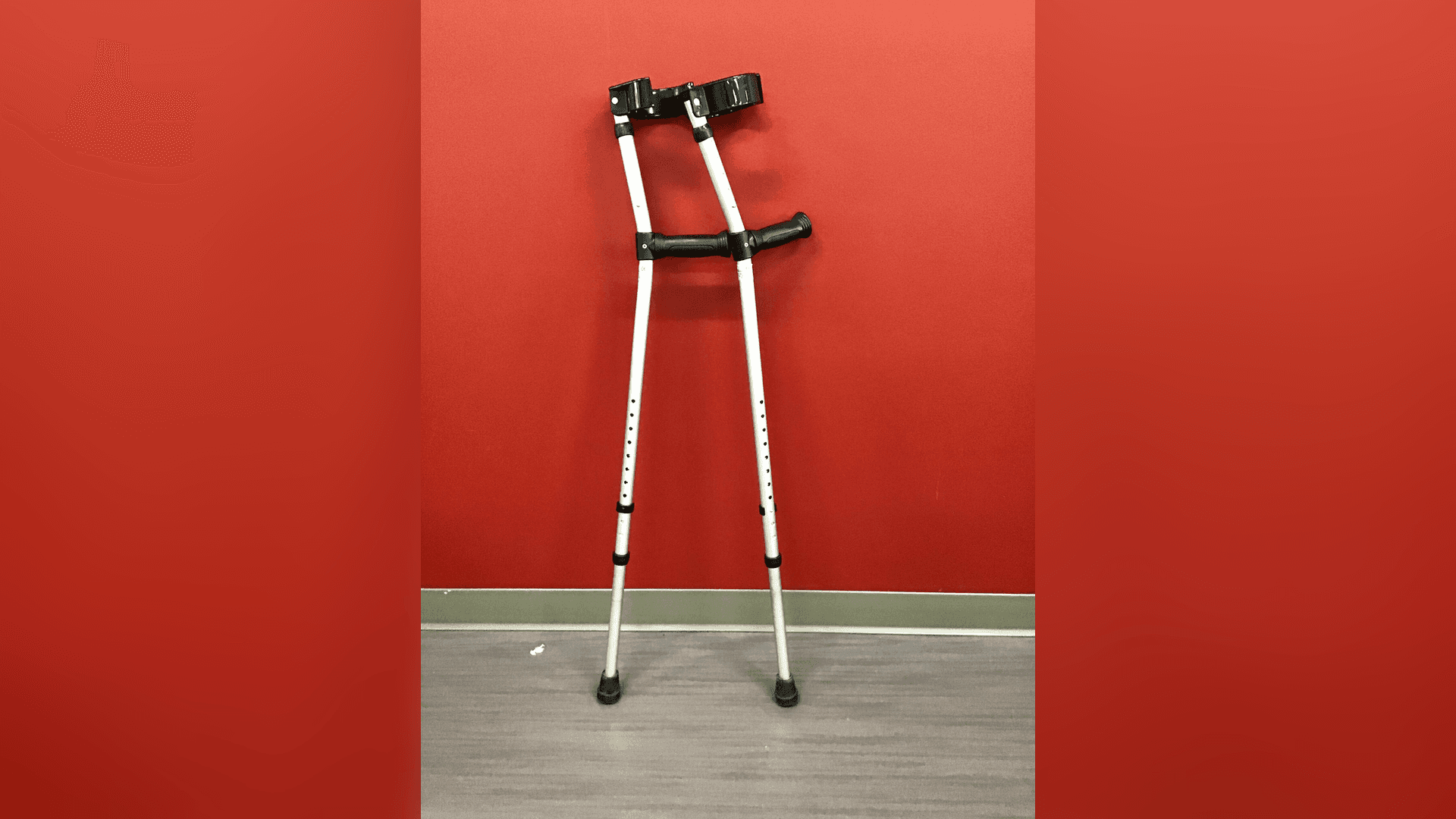
Hero image: Forearm Crutches, by Jessica Fisher, licensed CC BY-SA 4.0 (creativecommons.org/licenses/by-sa/4.0). Via Wikimedia Commons.
Take our professional IQ test
Want to know your IQ? Try the first ever professional online IQ test.