Oct 3, 2026·Special Population & Related Conditions
Epilepsy and IQ: How Seizures, Their Causes and Their Treatment Relate to Intelligence
Epilepsy and IQ: most people with epilepsy score in the normal range, but early onset, hard-to-control seizures and some causes are tied to lower scores.
Dr. Russell T. WarneChief Scientist
Share
Epilepsy and IQ are linked, but most people with epilepsy have IQ scores in the normal range. As a group they score lower than people without epilepsy, and in a community study about one child in four with epilepsy showed below-normal overall cognitive ability. The risk is concentrated in epilepsy that has an underlying brain cause and in seizures that start in infancy and resist medication.
This article covers how wide the range of scores is, how IQ differs by type and cause of epilepsy, why early and uncontrolled seizures matter most, what the research shows about antiseizure medication (including exposure before birth), and what happens to IQ after epilepsy surgery. Epilepsy is common: a meta-analysis of 222 population studies by Fiest and colleagues put lifetime prevalence at 7.60 per 1,000 people, so these questions affect millions of families.
How wide is the range of IQ in epilepsy?
The International League Against Epilepsy defines epilepsy in practice as at least two unprovoked seizures more than 24 hours apart, or one unprovoked seizure with a high risk of more, or the diagnosis of a recognized epilepsy syndrome. That definition covers an enormous range of conditions, from a child who has a handful of seizures and outgrows them to a person with a severe brain malformation. IQ scores in epilepsy are correspondingly spread out.
The clearest picture of the whole range comes from community samples, which avoid the bias of studying only patients sent to specialist centers. Berg and colleagues followed 613 children from the time they were first diagnosed for a median of 10.5 years. The results:
• Within normal limits: 451 children (73.6%).
• Borderline: 31 children (5.1%).
• Mild intellectual disability: 21 children (3.4%), with another 45 (7.3%) in the more severe range.
• Profoundly impaired or not fully classified: 29 children (4.7%) described as neurologically devastated and 36 (5.9%) impaired but not further classified.
The authors summarized it as subnormal global cognitive function in "approximately one of four children with epilepsy." Samples of children whose epilepsy is still active show higher rates. In the Children with Epilepsy in Sussex Schools study, 40% of 85 school-age children with active epilepsy met criteria for intellectual disability (IQ below 70), and 80% had a behavioral disorder, cognitive impairment (IQ below 85), or both. The gap between the two studies reflects who is counted: many children in a newly diagnosed group go into remission, while those who still have seizures years later are more likely to have a structural or genetic cause. How an IQ below 70 fits into a diagnosis is covered in our article on low IQ and intellectual disability.
IQ by epilepsy type and cause
The single most important question for IQ is what is causing the seizures. In the Berg cohort, a "symptomatic" cause (a known brain injury, malformation, or other underlying condition) and an "epileptic encephalopathy" (a severe syndrome in which the epileptic activity itself is thought to impair development) were each strongly associated with lower cognitive function. Seizure onset before age 5 and continuing treatment were also independently associated with lower function, a point the next section returns to.
Normal range does not always mean unaffected, though. Self-limited epilepsy with centrotemporal spikes, often called rolandic epilepsy, was long labeled "benign." Wickens, Bowden and D'Souza pooled 42 case-control samples covering 1,237 affected children and 1,137 controls. Children with the condition scored lower than controls on every cognitive factor examined, with effects from 0.42 to 0.81 standard deviations. The largest gap was in long-term storage and retrieval, the smallest in visual processing. On an IQ-style scale with a standard deviation of 15, that is roughly 6 to 12 points on individual abilities, in a condition that leaves most children with average overall scores.
Deficits are often present before any treatment starts. Witt and Helmstaedter tested 247 patients with newly diagnosed, untreated epilepsy. Attention and executive function were impaired in 49.4%, memory in 47.8%, and only 27.9% were unimpaired in both areas. Patients also underreported their difficulties: only about a quarter described memory problems themselves. Findings like these suggest that part of the cognitive burden comes from the same brain differences that cause the seizures, since medication cannot explain deficits measured before it was taken.
Early onset and uncontrolled seizures carry the most risk
Two features of the seizures themselves predict IQ: how early they started and whether medication controls them. Berg and colleagues followed 198 children whose epilepsy began before age 8 and tested them with the WISC-III eight to nine years later. Children with "pharmacoresistant" epilepsy, meaning seizures that continue despite adequate trials of medication, scored 11.4 points lower in full-scale IQ, with similar gaps in each domain. The effect was strongest when seizures began in infancy and weakened with older age at onset. The Sussex study pointed the same way: children whose seizures began in the first 24 months had 13 times the odds of intellectual disability compared with onset between 24 and 60 months.
In adults with long-standing epilepsy, overall IQ tends to be fairly stable while memory is more vulnerable. Helmstaedter and colleagues retested 249 adults with temporal lobe epilepsy after 2 to 10 years. Half of the medically treated patients showed significant memory decline, with little change in other abilities. Patients whose seizures were fully controlled after surgery recovered nonmemory functions within a year and memory functions later. The authors concluded that memory decline "may be stopped and even reversed if seizures are fully controlled."
Antiseizure medication and IQ
Medication can affect test scores, and the clearest evidence comes from two kinds of studies.
• Medication taken by the child: In a randomized trial, Farwell and colleagues gave 217 toddlers who had had a febrile seizure (a fever-triggered seizure, which is usually not epilepsy) either phenobarbital or placebo. After two years, mean IQ was 7.03 points lower in the phenobarbital group, a figure later corrected in an erratum. Six months after the drug was stopped, the gap was 5.2 points, a difference that fell just short of statistical significance.
• Exposure before birth: The NEAD study followed 311 children of mothers with epilepsy who took a single antiseizure drug during pregnancy. Adjusted mean IQ at age 6 was 97 after valproate exposure, compared with 105 after carbamazepine, 108 after lamotrigine and 108 after phenytoin, a gap of 8 to 11 points. Higher valproate doses were associated with lower IQ (r = -0.56), while the other drugs showed no such dose relationship. Children whose mothers took folate around conception had higher mean IQs (108 versus 101).
These are group averages from specific drugs and doses. Questions about any particular medication, in pregnancy or otherwise, belong with the prescribing neurologist, who weighs cognitive effects against the real risks of uncontrolled seizures.
Epilepsy surgery and what an IQ score can show
For people whose seizures come from one identifiable area of the brain, surgery to remove that area is an established option, and its effect on IQ is better than many people expect. Sherman and colleagues pooled 23 studies that used reliable-change methods and found that few patients showed IQ declines after surgery. The risks were specific: verbal memory declined in 44% of patients after left temporal lobe surgery and 20% after right-sided surgery, and naming declined in 34% of left-sided cases.
Some children gain. Skirrow and colleagues followed 42 children for an average of nine years after temporal lobe surgery. At follow-up, 86% were seizure-free and 57% no longer took antiseizure medication. Seventeen of them (41%) gained at least 10 full-scale IQ points, compared with 1 of 11 children (9%) in a nonsurgical comparison group, and the gains were associated with stopping medication.
These results show why a single full-scale IQ is a limited summary in epilepsy. A person can have an average IQ alongside a marked weakness in verbal memory, naming, or processing speed, and those specific abilities are what change after surgery or with medication. That is why epilepsy centers rely on a broader neuropsychological evaluation, usually before and after any surgery, and why results are interpreted alongside seizure frequency and the timing of the last seizure.
Frequently asked questions
Does epilepsy lower IQ?
On average, people with epilepsy score lower than people without it, but most still fall in the normal range. Lower scores are concentrated in people whose epilepsy has an underlying brain cause and in those whose seizures began in infancy and resist medication.
Can seizures make IQ drop over time?
In children with seizures that resist medication, IQ is lower, especially when seizures began in infancy. In adults with long-standing temporal lobe epilepsy, memory is more likely to decline than overall IQ, and decline can stop when seizures are controlled.
Do epilepsy medications affect IQ?
Some can. A randomized trial found phenobarbital lowered toddlers' IQ by about 7 points, and children exposed to valproate before birth scored 8 to 11 points lower at age 6 than children exposed to other older drugs. Any question about a specific medication should go to the treating neurologist.
Can people with epilepsy have high IQs?
Yes. Epilepsy occurs across the whole range of ability, and in community studies about three in four children with epilepsy have cognitive function within normal limits.
Does epilepsy surgery change IQ?
Pooled studies show few IQ declines after surgery, although verbal memory and naming can decline after left temporal lobe operations. In one long-term study, 41% of children gained 10 or more IQ points after temporal lobe surgery.
The takeaway
The link between epilepsy and IQ is real but uneven. Most people with epilepsy score in the normal range, and the lower scores cluster where an underlying brain abnormality is present and where seizures start very early and resist treatment. Specific abilities such as memory are often affected even when the full-scale score is average, and some medications, especially valproate exposure before birth, are associated with measurable IQ differences. A full-scale IQ is one useful number in that picture. For a sense of how a standardized score is built and reported with its margin of error, you can take a full-length online IQ test designed by psychometricians.
References
1. Fiest, K. M., Sauro, K. M., Wiebe, S., Patten, S. B., Kwon, C.-S., Dykeman, J., Pringsheim, T., Lorenzetti, D. L., & Jetté, N. (2017). Prevalence and incidence of epilepsy: A systematic review and meta-analysis of international studies. Neurology, 88(3), 296-303. doi.org
2. Fisher, R. S., Acevedo, C., Arzimanoglou, A., Bogacz, A., Cross, J. H., Elger, C. E., Engel, J., Jr., Forsgren, L., French, J. A., Glynn, M., Hesdorffer, D. C., Lee, B. I., Mathern, G. W., Moshé, S. L., Perucca, E., Scheffer, I. E., Tomson, T., Watanabe, M., & Wiebe, S. (2014). ILAE official report: A practical clinical definition of epilepsy. Epilepsia, 55(4), 475-482. doi.org
3. Berg, A. T., Langfitt, J. T., Testa, F. M., Levy, S. R., DiMario, F., Westerveld, M., & Kulas, J. (2008). Global cognitive function in children with epilepsy: A community-based study. Epilepsia, 49(4), 608-614. doi.org
4. Reilly, C., Atkinson, P., Das, K. B., Chin, R. F., Aylett, S. E., Burch, V., Gillberg, C., Scott, R. C., & Neville, B. G. (2014). Neurobehavioral comorbidities in children with active epilepsy: A population-based study. Pediatrics, 133(6), e1586-e1593. doi.org
5. Wickens, S., Bowden, S. C., & D'Souza, W. (2017). Cognitive functioning in children with self-limited epilepsy with centrotemporal spikes: A systematic review and meta-analysis. Epilepsia, 58(10), 1673-1685. doi.org
6. Witt, J.-A., & Helmstaedter, C. (2012). Should cognition be screened in new-onset epilepsies? A study in 247 untreated patients. Journal of Neurology, 259(8), 1727-1731. doi.org
7. Berg, A. T., Zelko, F. A., Levy, S. R., & Testa, F. M. (2012). Age at onset of epilepsy, pharmacoresistance, and cognitive outcomes: A prospective cohort study. Neurology, 79(13), 1384-1391. doi.org
8. Helmstaedter, C., Kurthen, M., Lux, S., Reuber, M., & Elger, C. E. (2003). Chronic epilepsy and cognition: A longitudinal study in temporal lobe epilepsy. Annals of Neurology, 54(4), 425-432. doi.org
9. Farwell, J. R., Lee, Y. J., Hirtz, D. G., Sulzbacher, S. I., Ellenberg, J. H., & Nelson, K. B. (1990). Phenobarbital for febrile seizures: Effects on intelligence and on seizure recurrence. New England Journal of Medicine, 322(6), 364-369. doi.org
10. Meador, K. J., Baker, G. A., Browning, N., Cohen, M. J., Bromley, R. L., Clayton-Smith, J., Kalayjian, L. A., Kanner, A., Liporace, J. D., Pennell, P. B., Privitera, M., Loring, D. W., & NEAD Study Group. (2013). Fetal antiepileptic drug exposure and cognitive outcomes at age 6 years (NEAD study): A prospective observational study. The Lancet Neurology, 12(3), 244-252. doi.org
11. Sherman, E. M. S., Wiebe, S., Fay-McClymont, T. B., Tellez-Zenteno, J., Metcalfe, A., Hernandez-Ronquillo, L., Hader, W. J., & Jetté, N. (2011). Neuropsychological outcomes after epilepsy surgery: Systematic review and pooled estimates. Epilepsia, 52(5), 857-869. doi.org
12. Skirrow, C., Cross, J. H., Cormack, F., Harkness, W., Vargha-Khadem, F., & Baldeweg, T. (2011). Long-term intellectual outcome after temporal lobe surgery in childhood. Neurology, 76(15), 1330-1337. doi.org
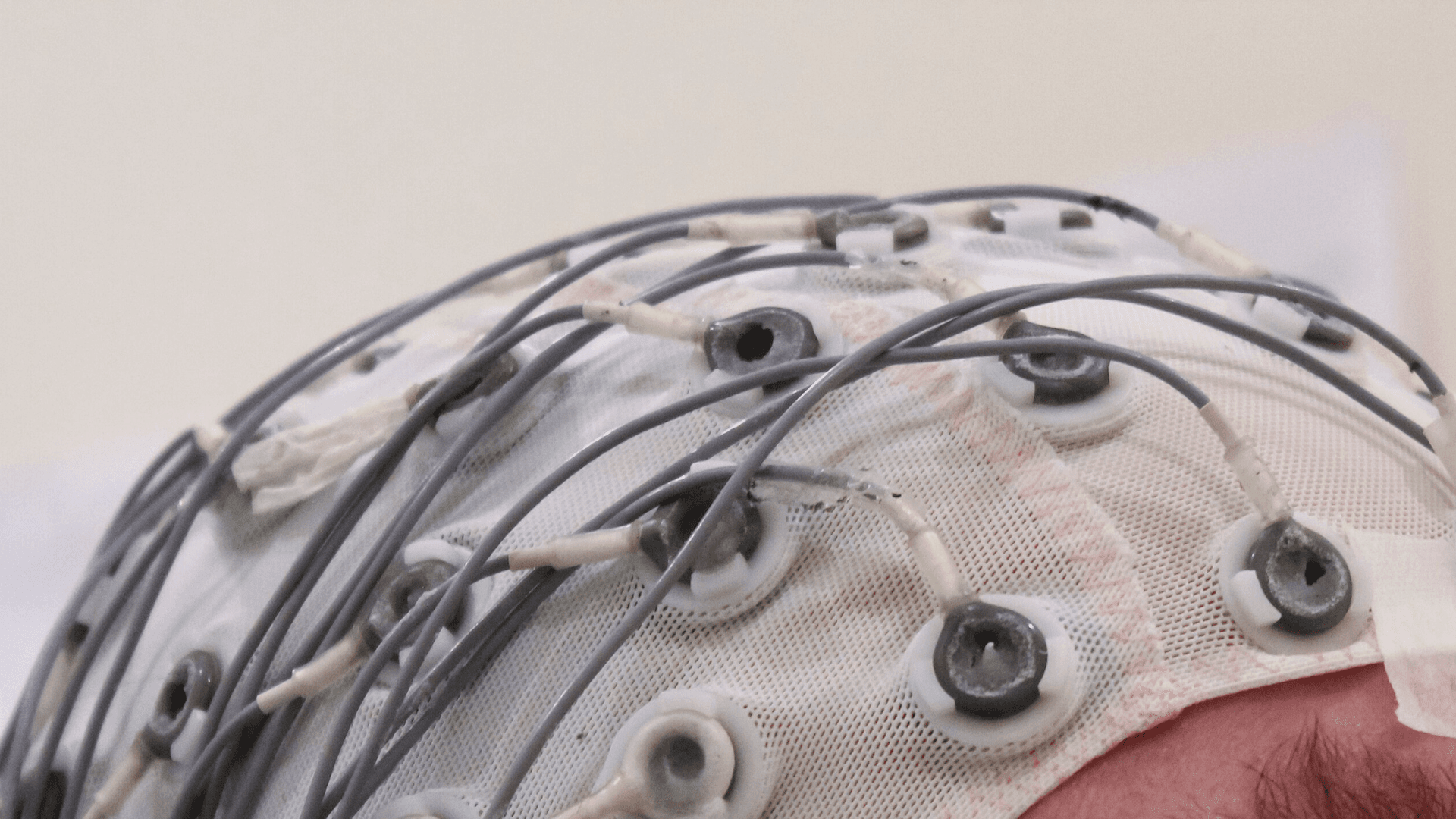
Hero image: EEG Recording Cap, by Chris Hope, licensed CC BY 2.0 (creativecommons.org/licenses/by/2.0). Via Wikimedia Commons.
Take our professional IQ test
Want to know your IQ? Try the first ever professional online IQ test.