Oct 5, 2026·Special Population & Related Conditions
Sleep Apnea and IQ: What the Research Shows in Children and Adults
Sleep apnea and IQ: in adults general intelligence is the least affected skill, while children who snore or have apnea score lower on average in studies.
Dr. Russell T. WarneChief Scientist
Share
In adults, obstructive sleep apnea has little measurable effect on IQ: general intelligence and verbal ability are the skills least affected, while vigilance, attention and executive functions take the biggest hit. In children the picture is different, because groups of children who snore or have sleep apnea score several points lower on IQ tests than their peers, although randomized trials of tonsil and adenoid surgery have found little or no improvement in cognitive test scores.
This article covers what obstructive sleep apnea is, what the studies in children show, what happens to scores after treatment, how the adult evidence differs, and what the condition means for anyone taking an IQ test.
What sleep apnea is, and how it differs from short sleep
Obstructive sleep apnea is a disorder in which the upper airway repeatedly narrows or closes during sleep. Each episode lowers blood oxygen and often ends with a brief awakening the sleeper does not remember. Severity is usually expressed as the "apnea-hypopnea index" (AHI), the number of full or partial breathing pauses per hour of sleep. In adults, an AHI of 5 or more counts as at least mild apnea and 15 or more as moderate to severe.
The condition is common. Using those cutoffs, Benjafield and colleagues estimated that about 936 million adults aged 30 to 69 worldwide have obstructive sleep apnea, and 425 million have the moderate-to-severe form. In otherwise healthy children, the usual causes are enlarged tonsils and adenoids, obesity, or both.
Sleep apnea is related to, but distinct from, simply sleeping too little. Short sleep and its effect on test performance are covered in our article on how sleep affects IQ and cognitive performance. Apnea adds two things to that story: repeated drops in oxygen and sleep broken into fragments, often in people who believe they slept a full night.
Children: snoring, sleep apnea and IQ scores
Most research on sleep-disordered breathing and IQ comes from school-age children, and the group differences are consistent.
• A 10-point gap in one matched study: Kohler and colleagues compared 44 snoring children awaiting tonsil and adenoid surgery with 48 non-snoring controls. On the Stanford-Binet, the snoring group's mean full-scale IQ was 99.8 against 110.3 for controls, a gap of about 10 points, although both groups averaged within the normal range. The snoring children also came from somewhat less advantaged areas, which the authors adjusted for statistically.
• Even simple snoring is linked to lower scores: Bourke and colleagues tested 137 children aged 7 to 12 after overnight sleep studies and found lower general intellectual ability in every sleep-disordered breathing group, including children with "primary snoring" who had no measurable apnea.
• A dose-response pattern in a large community sample: Hunter and colleagues studied 1,010 children aged 5 to 7 recruited from public schools. Verbal, nonverbal and overall IQ scores on the Differential Ability Scales all differed across severity groups, and children with an AHI above 5 performed worst.
• The meta-analytic picture: Menzies and colleagues pooled 63 studies and found impairments in every cognitive domain they examined, with the largest differences in overall and verbal intelligence. They found deficits in children with primary snoring as well as in those with sleep apnea.
These are associations, and they come with caveats. Children with sleep-disordered breathing differ from other children in weight, family income and other ways that also relate to IQ, and not every study finds a link with severity. In Kohler's sample, for example, the AHI did not predict IQ once age, weight and socioeconomic status were taken into account.
What happens to scores after treatment in children?
If apnea were lowering IQ directly, treating it should bring scores back up. Randomized trials suggest the effect is small at best.
The Childhood Adenotonsillectomy Trial (CHAT) randomly assigned 464 children aged 5 to 9 with sleep apnea to early surgery or watchful waiting. Marcus and colleagues reported that the primary attention and executive-function score started close to the population mean of 100 and improved by 7.1 points after surgery and 5.1 points with watchful waiting, a difference that was not statistically significant. Behavior, quality of life, symptoms and the sleep studies themselves improved more in the surgery group. A secondary analysis by Taylor and colleagues found that surgery produced slightly larger gains on nonverbal reasoning, fine motor skill and selective attention, with small effect sizes (Cohen's d of 0.20 to 0.24).
The Pediatric Adenotonsillectomy Trial for Snoring (PATS), which enrolled 459 children aged 3 to 12 with snoring and mild sleep-disordered breathing, found the same pattern. Redline and colleagues reported no significant difference in executive function or attention at 12 months, while behavior, sleepiness, symptoms and quality of life improved more after surgery.
Observational follow-ups are mixed. Kohler's 10-point gap was still there six months after surgery. In a four-year Australian follow-up by Biggs and colleagues, children whose breathing improved tended to gain on performance IQ, but not on verbal IQ or academic measures. Taken together, the trials suggest that whatever explains the lower scores in children with sleep-disordered breathing, it is not quickly reversed.
Adults: attention and vigilance more than IQ
The adult literature points in a different direction. In a meta-analysis of 25 studies covering 1,092 untreated patients, Beebe and colleagues found that obstructive sleep apnea had "a negligible impact on intellectual and verbal functioning" but a substantial impact on vigilance and executive functioning. A later meta-analysis of 19 studies by Stranks and Crowe found deficits across a broader range of domains, including verbal functioning and verbal reasoning as well as attention, processing speed and executive function, so the adult picture is not entirely clean.
Treatment studies in adults tell a similar story to the child trials. A meta-analysis of randomized trials of continuous positive airway pressure (CPAP) by Kylstra and colleagues found a small effect on attention (d = 0.19) and no significant effect on other domains. The APPLES trial, which randomized 1,105 adults to real or sham CPAP, found only a "mild, transient" improvement in executive function in people with severe apnea, alongside clear gains in alertness.
Later life is where the stakes rise. In a study of 298 older women by Yaffe and colleagues, those with sleep-disordered breathing were more likely to develop mild cognitive impairment or dementia when reassessed several years later (44.8% against 31.1%), and the risk tracked oxygen levels during sleep more than sleep fragmentation.
What sleep apnea means for an IQ test
One plausible reason the adult findings look this way is how IQ tests are built. Most subtests are short, varied and engaging, which is close to the opposite of the long, monotonous tasks that expose lapses in vigilance. Even so, untreated apnea can show up on a test.
• Speed and attention indexes: Sleepiness tends to slow responses and cause lapses, so a low Processing Speed Index or working memory score in someone with untreated apnea may understate their reasoning ability.
• Timing of the test: Someone who is very sleepy on the day of testing is not showing their typical performance, and an examiner can only take that into account if they know about it.
• Who to see: Loud snoring, observed breathing pauses or heavy daytime sleepiness are reasons to talk to a doctor. Adults are usually assessed by a sleep medicine physician, and children by their pediatrician, who may refer them to a pediatric sleep specialist or an ear, nose and throat surgeon. The American Academy of Pediatrics recommends that children with snoring and other signs of apnea have an overnight sleep study.
Frequently asked questions
Does sleep apnea lower IQ?
In adults, the effect on general intelligence is small; vigilance, attention and executive skills are affected more. In children, groups with sleep-disordered breathing score several points lower on average, but the cause of that gap is not settled.
Does removing tonsils raise a child's IQ?
Randomized trials have not shown clear gains in cognitive test scores after adenotonsillectomy compared with watchful waiting, although behavior, symptoms and quality of life improved.
Does CPAP improve IQ?
Meta-analyses and the large APPLES trial found small and mostly temporary improvements in attention and executive function. These trials rarely measured general intelligence at all.
Can a child who snores have lower test scores?
Yes, on average. Several studies find lower scores even in children who snore without measurable apnea, though most of these children still score in the normal range.
Should someone with sleep apnea delay an IQ test?
It is reasonable to tell the examiner about the diagnosis and about any unusual sleepiness on the day, because tiredness mainly affects speed and attention subtests.
The takeaway
Sleep apnea affects attention and vigilance more than intelligence itself. Adults with untreated apnea usually score close to their expected level on IQ tests, and children with sleep-disordered breathing score lower as a group, for reasons that surgery trials suggest are not quickly reversed. Anyone with symptoms should see a sleep physician or pediatrician, and anyone taking a test while very tired should read speed and memory scores with caution. Readers who want a well-rested baseline of their reasoning can try an online IQ test built by psychometricians that reports its margin of error alongside the score.
References
1. Benjafield, A. V., Ayas, N. T., Eastwood, P. R., Heinzer, R., Ip, M. S. M., Morrell, M. J., Nunez, C. M., Patel, S. R., Penzel, T., Pépin, J.-L., Peppard, P. E., Sinha, S., Tufik, S., Valentine, K., & Malhotra, A. (2019). Estimation of the global prevalence and burden of obstructive sleep apnoea: A literature-based analysis. The Lancet Respiratory Medicine, 7(8), 687-698. [doi.org/10.1016/S2213-2600(19)30198-5](. doi.org
2. Kohler, M. J., Lushington, K., van den Heuvel, C. J., Martin, J., Pamula, Y., & Kennedy, D. (2009). Adenotonsillectomy and neurocognitive deficits in children with sleep disordered breathing. PLoS ONE, 4(10), e7343. [doi.org/10.1371/journal.pone.0007343](. doi.org
3. Bourke, R., Anderson, V., Yang, J. S., Jackman, A. R., Killedar, A., Nixon, G. M., Davey, M. J., Walker, A. M., Trinder, J., & Horne, R. S. (2011). Cognitive and academic functions are impaired in children with all severities of sleep-disordered breathing. Sleep Medicine, 12(5), 489-496. [doi.org/10.1016/j.sleep.2010.11.010](. doi.org
4. Hunter, S. J., Gozal, D., Smith, D. L., Philby, M. F., Kaylegian, J., & Kheirandish-Gozal, L. (2016). Effect of sleep-disordered breathing severity on cognitive performance measures in a large community cohort of young school-aged children. American Journal of Respiratory and Critical Care Medicine, 194(6), 739-747. [doi.org/10.1164/rccm.201510-2099oc](. doi.org
5. Menzies, B., Teng, A., Burns, M., & Lah, S. (2022). Neurocognitive outcomes of children with sleep disordered breathing: A systematic review with meta-analysis. Sleep Medicine Reviews, 63, 101629. [doi.org/10.1016/j.smrv.2022.101629](. doi.org
6. Marcus, C. L., Moore, R. H., Rosen, C. L., Giordani, B., Garetz, S. L., Taylor, H. G., Mitchell, R. B., Amin, R., Katz, E. S., Arens, R., Paruthi, S., Muzumdar, H., Gozal, D., Thomas, N. H., Ware, J., Beebe, D., Snyder, K., Elden, L., Sprecher, R. C., ... Redline, S. (2013). A randomized trial of adenotonsillectomy for childhood sleep apnea. New England Journal of Medicine, 368(25), 2366-2376. [doi.org/10.1056/nejmoa1215881](. doi.org
7. Taylor, H. G., Bowen, S. R., Beebe, D. W., Hodges, E., Amin, R., Arens, R., Chervin, R. D., Garetz, S. L., Katz, E. S., Moore, R. H., Morales, K. H., Muzumdar, H., Paruthi, S., Rosen, C. L., Sadhwani, A., Thomas, N. H., Ware, J., Marcus, C. L., Ellenberg, S. S., ... Giordani, B. (2016). Cognitive effects of adenotonsillectomy for obstructive sleep apnea. Pediatrics, 138(2), e20154458. [doi.org/10.1542/peds.2015-4458](. doi.org
8. Redline, S., Cook, K., Chervin, R. D., Ishman, S., Baldassari, C. M., Mitchell, R. B., Tapia, I. E., Amin, R., Hassan, F., Ibrahim, S., Ross, K., Elden, L. M., Kirkham, E. M., Zopf, D., Shah, J., Otteson, T., Naqvi, K., Owens, J., Young, L., ... Wang, R. (2023). Adenotonsillectomy for snoring and mild sleep apnea in children: A randomized clinical trial. JAMA, 330(21), 2084-2095. [doi.org/10.1001/jama.2023.22114](. doi.org
9. Biggs, S. N., Vlahandonis, A., Anderson, V., Bourke, R., Nixon, G. M., Davey, M. J., & Horne, R. S. (2014). Long-term changes in neurocognition and behavior following treatment of sleep disordered breathing in school-aged children. Sleep, 37(1), 77-84. [doi.org/10.5665/sleep.3312](. doi.org
10. Beebe, D. W., Groesz, L., Wells, C., Nichols, A., & McGee, K. (2003). The neuropsychological effects of obstructive sleep apnea: A meta-analysis of norm-referenced and case-controlled data. Sleep, 26(3), 298-307. [doi.org/10.1093/sleep/26.3.298](. doi.org
11. Stranks, E. K., & Crowe, S. F. (2016). The cognitive effects of obstructive sleep apnea: An updated meta-analysis. Archives of Clinical Neuropsychology, 31(2), 186-193. [doi.org/10.1093/arclin/acv087](. doi.org
12. Kylstra, W. A., Aaronson, J. A., Hofman, W. F., & Schmand, B. A. (2013). Neuropsychological functioning after CPAP treatment in obstructive sleep apnea: A meta-analysis. Sleep Medicine Reviews, 17(5), 341-347. [doi.org/10.1016/j.smrv.2012.09.002](. doi.org
13. Kushida, C. A., Nichols, D. A., Holmes, T. H., Quan, S. F., Walsh, J. K., Gottlieb, D. J., Simon, R. D., Guilleminault, C., White, D. P., Goodwin, J. L., Schweitzer, P. K., Leary, E. B., Hyde, P. R., Hirshkowitz, M., Green, S., McEvoy, L. K., Chan, C., Gevins, A., Kay, G. G., ... Dement, W. C. (2012). Effects of continuous positive airway pressure on neurocognitive function in obstructive sleep apnea patients: The Apnea Positive Pressure Long-term Efficacy Study (APPLES). Sleep, 35(12), 1593-1602. [doi.org/10.5665/sleep.2226](. doi.org
14. Yaffe, K., Laffan, A. M., Harrison, S. L., Redline, S., Spira, A. P., Ensrud, K. E., Ancoli-Israel, S., & Stone, K. L. (2011). Sleep-disordered breathing, hypoxia, and risk of mild cognitive impairment and dementia in older women. JAMA, 306(6), 613-619. [doi.org/10.1001/jama.2011.1115](. doi.org
15. Marcus, C. L., Brooks, L. J., Draper, K. A., Gozal, D., Halbower, A. C., Jones, J., Schechter, M. S., Sheldon, S. H., Spruyt, K., Ward, S. D., Lehmann, C., Shiffman, R. N., & American Academy of Pediatrics. (2012). Diagnosis and management of childhood obstructive sleep apnea syndrome. Pediatrics, 130(3), 576-584. [doi.org/10.1542/peds.2012-1671](. doi.org
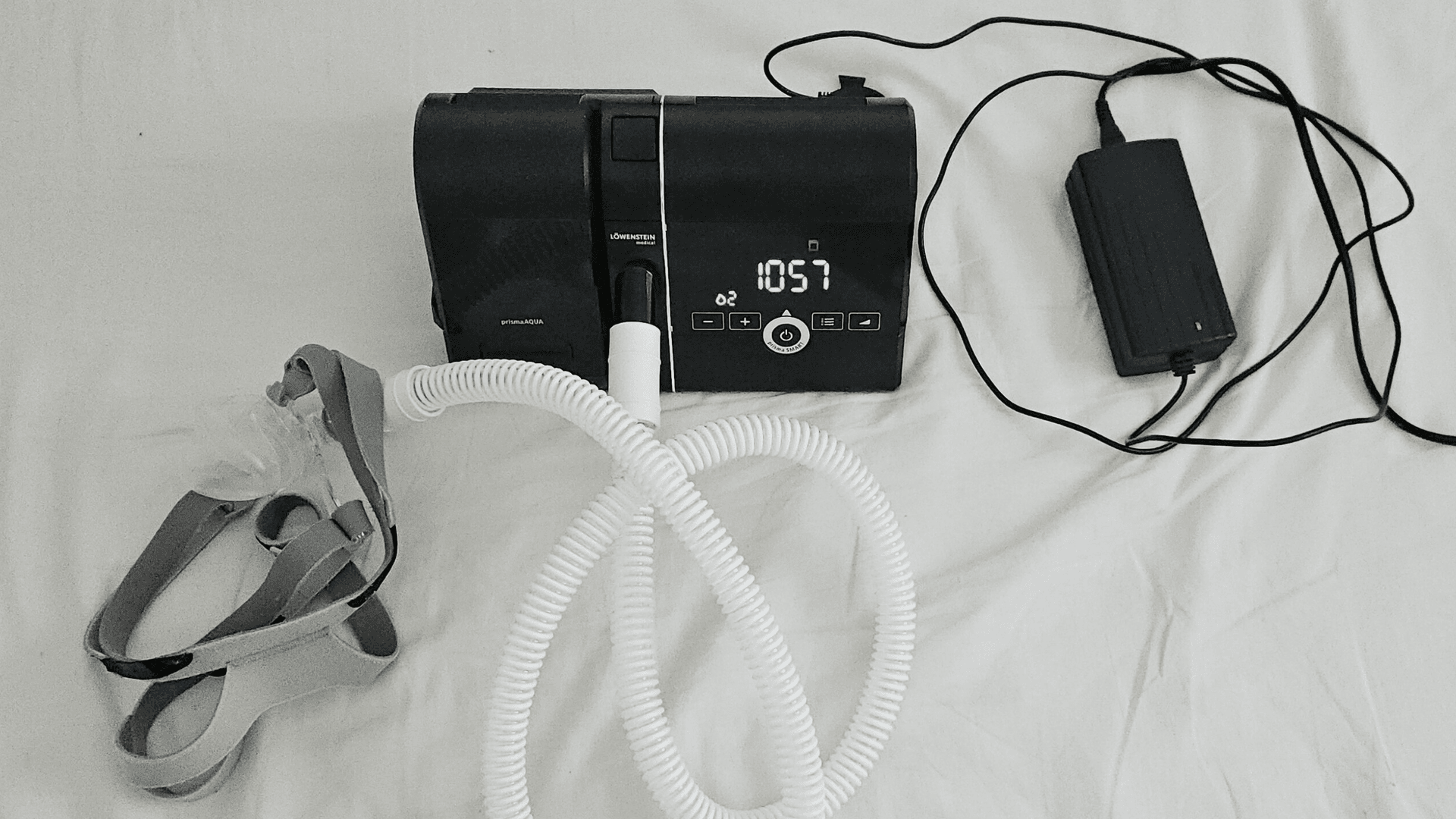
Hero image: CPAP machine, by Mnalis, released under CC0 (creativecommons.org/publicdomain/zero/1.0). Via Wikimedia Commons.
Take our professional IQ test
Want to know your IQ? Try the first ever professional online IQ test.