Oct 6, 2026·Special Population & Related Conditions
Noonan Syndrome and IQ: Typical Scores, Gene Differences, and Attention
Noonan syndrome IQ scores are mildly lowered on average, near the mid-80s in children, yet most people score in or near the average range.
Dr. Russell T. WarneChief Scientist
Share
Most people with Noonan syndrome score in or near the average range on IQ tests, but the group average is mildly lowered: studies of children put the mean full-scale IQ in the mid-80s, roughly one standard deviation below the population average of 100. Intellectual disability affects a minority, and the gene involved and the high rate of attention problems help explain why scores vary so widely.
This page covers the typical Noonan syndrome IQ range, how the causative gene changes the picture, the attention and language profile beneath the full-scale score, and how scores change between childhood and adulthood.
The typical Noonan syndrome IQ range
Noonan syndrome occurs in about 1 in 1,000 to 2,500 people, according to MedlinePlus Genetics. It is one of the RASopathies, a family of conditions caused by changes in the RAS/MAPK cell signaling pathway. Short stature and congenital heart defects are typical, with narrowing of the pulmonary valve the most common heart problem. MedlinePlus notes that most children with the condition have normal intelligence, while some have special educational needs and a few have intellectual disability.
The research numbers fit that summary. In a UK cohort of 48 children assessed on the Wechsler scales, Lee and colleagues found a mean full-scale IQ of 84, and about a quarter of the children had learning disabilities. In a US study of 65 children and adolescents aged 4 to 18, Pierpont and colleagues reported a group mean of 86.2 on the Differential Ability Scales, with scores ranging from 44 to 123. Eleven participants (17%) scored below 70, and about half scored in the average range or higher.
A later study by Pierpont, Tworog-Dube and Roberts, using the Wechsler Abbreviated Scale of Intelligence, found that 66% of 32 children with Noonan syndrome scored in the average range or above, and only 2 (6%) scored below 70. The group mean was still significantly lower than that of their unaffected brothers and sisters, all of whom scored at or above the average range. Comparing children with their own siblings matters, because it holds family background roughly constant.
Noonan syndrome is sometimes mentioned alongside Williams syndrome, since both involve heart defects and distinctive facial features, but their cognitive pictures differ sharply. Most people with Williams syndrome score in the borderline to moderate intellectual disability range, as our article on IQ and Williams syndrome explains.
Which gene is involved makes a difference
About half of all cases of Noonan syndrome are caused by variants in the PTPN11 gene. Variants in SOS1 account for another 10 to 15%, RAF1 and RIT1 for about 5% each, and other genes for smaller shares, according to MedlinePlus. The cause is unknown in 15 to 20% of people with the condition.
Gene type predicts part of the IQ variation:
• PTPN11: In the Pierpont study, 61% of children with PTPN11 variants scored below 90. A 2022 Dutch study of 100 patients aged 6 to 61 by Wingbermühle and colleagues found a mean full-scale IQ of 85 in its PTPN11 group.
• SOS1: All six children with SOS1 variants in the Pierpont study scored in the average range or higher (91 to 123), and the Dutch study also found higher scores in its SOS1 group than in its PTPN11 group.
• KRAS, RAF1 and SHOC2: The Dutch study found mean full-scale IQs clearly below 100 in patients with variants in these genes, although these groups were small.
• Specific PTPN11 variants: Even within one gene the range is wide. Pierpont found that children with two particular PTPN11 variants (N308D and N308S) showed no or only mild cognitive delays.
Non-genetic factors mattered too: hearing loss, fine motor dexterity and parental education each accounted for significant variation in scores. The severity of a child's heart disease, by contrast, was not related to cognitive functioning.
Noonan syndrome shares its signaling pathway with neurofibromatosis type 1, another RASopathy in which average scores are shifted downward and attention problems are common. That condition is covered in our article on neurofibromatosis type 1 and IQ.
Attention, language and the profile beneath the score
Attention problems are the most frequent neurodevelopmental issue in Noonan syndrome. In the 2009 Pierpont cohort, the most common diagnosis was attention-deficit/hyperactivity disorder (29%). In the later sibling study, 31% of children with Noonan syndrome had a previous ADHD diagnosis from a medical professional, far above the 11% rate parents report in community samples, and 34% met diagnostic criteria on a parent rating scale at the time of the study. Six of those 11 children had never been diagnosed.
Attention problems appear to drag on test scores in this group. Children with Noonan syndrome performed worse than their siblings on sustained attention and response inhibition, and these skills predicted IQ in the Noonan group but not in the siblings: each 1-point gain in sustained attention predicted a 2.66-point higher IQ. Attention difficulties did not always come with low ability, though. Seventy percent of the children with a prior ADHD diagnosis scored in the average range (85 or above). How ADHD interacts with IQ testing in general is explained in our article on IQ and ADHD.
Language problems are more frequent than in the general population and raise the risk of reading and spelling difficulties. In a study of 66 children and adolescents, Pierpont and colleagues found that language skill was closely tied to nonverbal cognition, hearing, articulation, motor dexterity and phonological memory, and they did not find a selective language deficit. Fine motor skill is a common weakness: in the 2009 cohort, 72% of the children tested scored below average on a pegboard task. Lee's UK study found that about half the children showed mild to moderate motor impairment, and verbal IQ tended to be slightly lower than performance IQ.
These factors create measurement problems. Timed subtests that require handling blocks or drawing penalize clumsy hands, and hearing loss can lower scores on spoken verbal tasks. Pierpont also noted that 8 of the 23 children who scored in the low or very low range had never been identified as having a learning disability, a reminder that a mildly lowered IQ is easy to miss in a child who seems to be coping.
How scores change into adulthood
The adult picture looks milder than the childhood one. Wingbermühle and colleagues compared 42 adults with Noonan syndrome with 42 controls matched on age, sex and education. The only clear difference was slower speed of information processing, and the adults with Noonan syndrome reported many more complaints about their own thinking than their test results showed.
A longitudinal study by Roelofs and colleagues followed 16 people from a childhood Wechsler assessment to an adult one about 10 years later. Full-scale IQ rose by an average of about 5 points, a change the authors considered small in clinical terms. Performance IQ rose by about 11 points, almost one standard deviation, while verbal IQ did not improve, so adults showed a gap in favor of performance IQ. The authors suggested that delayed development of executive functioning, or later maturation of motor skills, might explain the late gains. With 16 participants, this finding needs replication.
For a child with Noonan syndrome who is struggling at school, a psychologist or neuropsychologist who knows the condition can assess attention, language, hearing and motor skills alongside IQ, which gives a far clearer picture than a single full-scale score.
Frequently asked questions
What is the average IQ of someone with Noonan syndrome?
Childhood studies report group means of about 84 to 86, roughly one standard deviation below the population average. Many individuals score in the average range or higher.
Does Noonan syndrome cause intellectual disability?
Only in a minority. Rates of scores below 70 ranged from 6% to 17% in two US cohorts, and MedlinePlus describes most affected children as having normal intelligence.
Does the gene matter for IQ in Noonan syndrome?
Yes, on average. People with SOS1 variants tend to score higher than those with PTPN11 variants, though scores vary widely within every gene group.
Is ADHD common in Noonan syndrome?
Yes. About 30% of children in two US studies had an ADHD diagnosis, and attention problems were linked to lower IQ scores.
Does a more severe heart defect mean a lower IQ?
No. In a study of 65 children, the severity of cardiac disease was not related to cognitive functioning.
The takeaway
Noonan syndrome IQ scores are mildly lowered on average, with childhood means in the mid-80s, but most people score in or near the average range and intellectual disability is uncommon. The causative gene, attention, hearing and motor skills explain much of the variation, while heart disease severity does not. Adults appear to show a milder profile than children, with slower processing speed the clearest difference. To see how a full-scale score is built in the general adult population, you can try a professionally developed IQ test.
References
1. MedlinePlus Genetics. (2018). Noonan syndrome. National Library of Medicine. [medlineplus.gov](. medlineplus.gov
2. Lee, D. A., Portnoy, S., Hill, P., Gillberg, C., & Patton, M. A. (2005). Psychological profile of children with Noonan syndrome. Developmental Medicine & Child Neurology, 47(1), 35-38. [doi.org/10.1017/S001216220500006X](. doi.org
3. Pierpont, E. I., Pierpont, M. E., Mendelsohn, N. J., Roberts, A. E., Tworog-Dube, E., & Seidenberg, M. S. (2009). Genotype differences in cognitive functioning in Noonan syndrome. Genes, Brain and Behavior, 8(3), 275-282. [doi.org/10.1111/j.1601-183X.2008.00469.x](. doi.org
4. Pierpont, E. I., Tworog-Dube, E., & Roberts, A. E. (2015). Attention skills and executive functioning in children with Noonan syndrome and their unaffected siblings. Developmental Medicine & Child Neurology, 57(4), 385-392. [doi.org/10.1111/dmcn.12621](. doi.org
5. Wingbermühle, E., Roelofs, R. L., Oomens, W., Kramer, J., Draaisma, J. M. T., Leenders, E., Kleefstra, T., Kessels, R. P. C., & Egger, J. I. M. (2022). Cognitive phenotype and psychopathology in Noonan syndrome spectrum disorders through various Ras/MAPK pathway associated gene variants. Journal of Clinical Medicine, 11(16), 4735. [doi.org/10.3390/jcm11164735](. doi.org
6. Pierpont, E. I., Ellis Weismer, S., Roberts, A. E., Tworog-Dube, E., Pierpont, M. E., Mendelsohn, N. J., & Seidenberg, M. S. (2010). The language phenotype of children and adolescents with Noonan syndrome. Journal of Speech, Language, and Hearing Research, 53(4), 917-932. [pmc.ncbi.nlm.nih.gov/articles/PMC3086511](. pmc.ncbi.nlm.nih.gov
7. Wingbermühle, E., Roelofs, R. L., van der Burgt, I., Souren, P. M., Verhoeven, W. M. A., Kessels, R. P. C., & Egger, J. I. M. (2012). Cognitive functioning of adults with Noonan syndrome: A case-control study. Genes, Brain and Behavior, 11(7), 785-793. [doi.org/10.1111/j.1601-183X.2012.00821.x](. doi.org
8. Roelofs, R. L., Janssen, N., Wingbermühle, E., Kessels, R. P. C., & Egger, J. I. M. (2016). Intellectual development in Noonan syndrome: A longitudinal study. Brain and Behavior, 6(7), e00479. [doi.org/10.1002/brb3.479](. doi.org
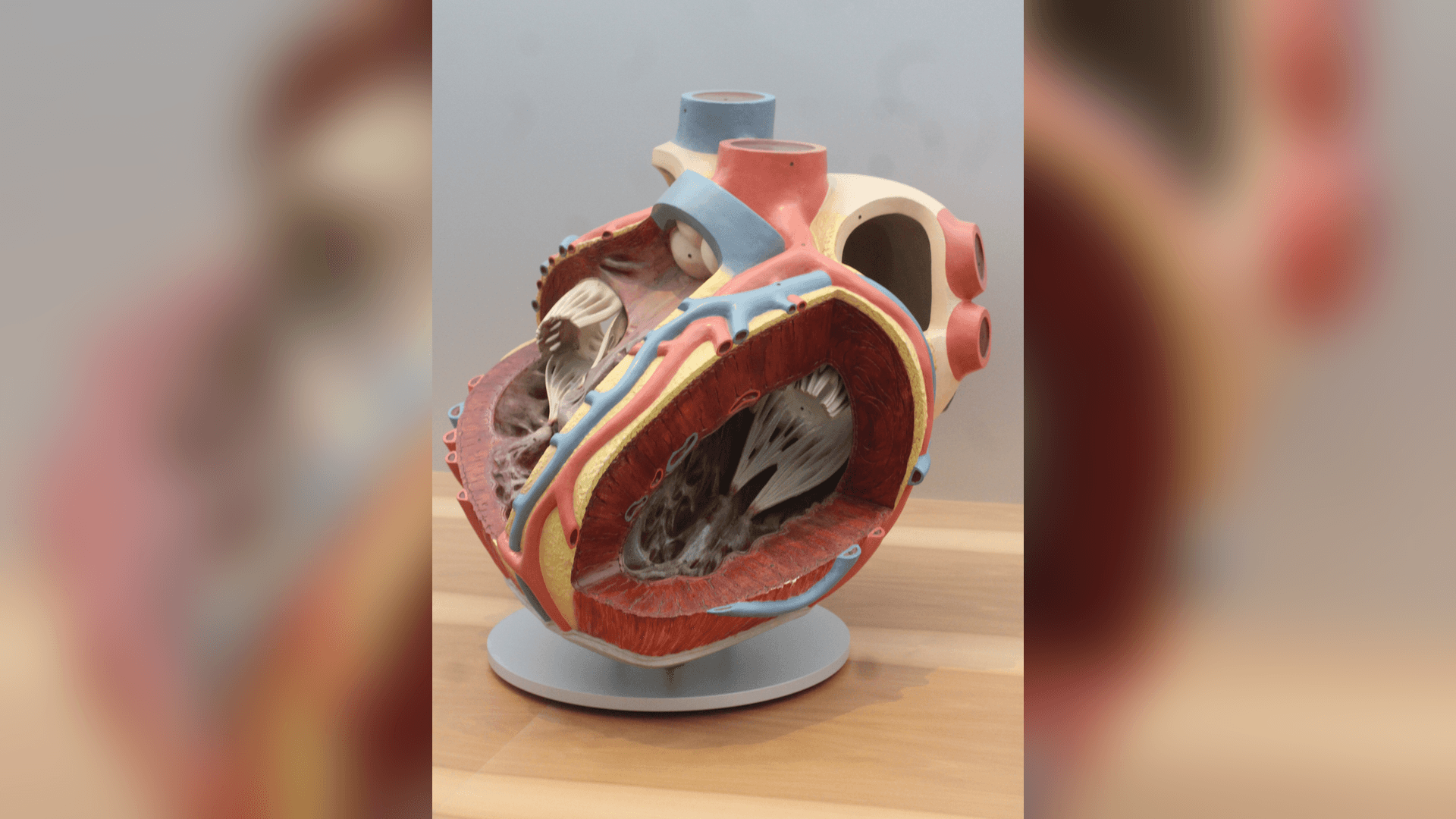
Hero image: Dresden, Deutsches Hygiene-Museum, anatomisches Modell, Herz, by Dguendel, licensed CC BY 4.0 (creativecommons.org/licenses/by/4.0). Via Wikimedia Commons.
Take our professional IQ test
Want to know your IQ? Try the first ever professional online IQ test.