Oct 6, 2026·Special Population & Related Conditions
Tuberous Sclerosis and IQ: The Two-Peaked Distribution and Why Early Seizures Matter
Tuberous sclerosis IQ has two peaks: about half of people score in the normal range, while roughly 30% have profound intellectual disability.
Dr. Russell T. WarneChief Scientist
Share
Tuberous sclerosis IQ scores fall into two groups rather than one bell curve: in a population-based study from England, about 55% of people with tuberous sclerosis complex (TSC) scored in the normal range and about 30% had profound intellectual disability, with relatively few in between. The strongest predictor of which group a person falls into is a history of seizures in the first year of life, especially infantile spasms.
This article explains the two-peaked IQ distribution, what predicts lower scores, the cognitive and behavioral difficulties that occur even when IQ is average, the measurement problems involved, and what is known about change with age. Diagnostic criteria for intellectual disability are covered in our article on low IQ and intellectual disability.
What tuberous sclerosis complex is
TSC is a genetic condition that causes noncancerous growths in many organs, including the brain, skin, kidneys, heart and lungs. MedlinePlus Genetics estimates that it affects 1 in 6,000 to 10,000 people. It is caused by a variant in either the TSC1 or the TSC2 gene, which normally help regulate cell growth. About one-third of affected people inherit the variant from a parent; the rest have a new variant.
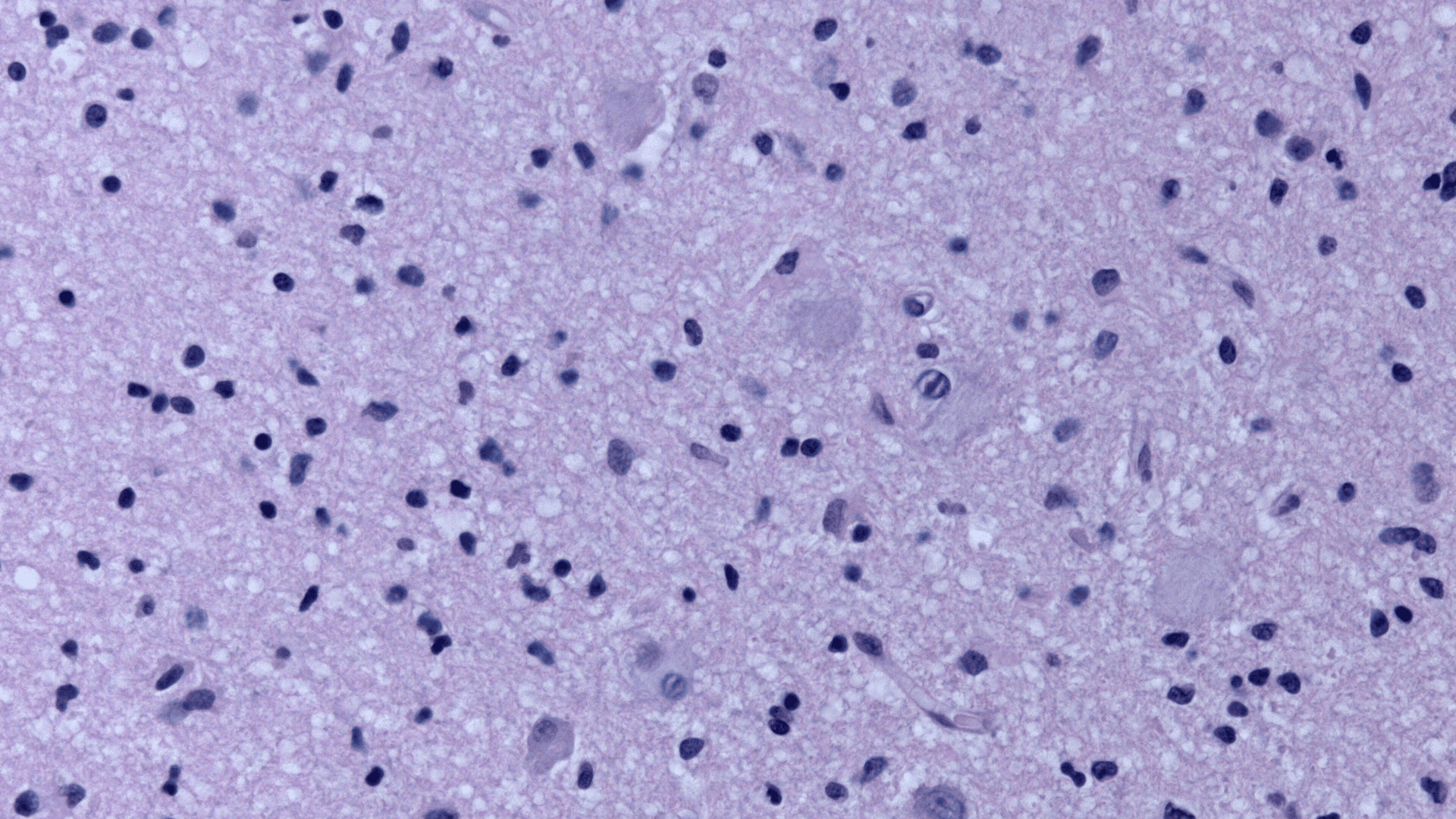
In the brain, TSC produces cortical tubers (areas of disorganized tissue in the outer layer of the brain) and other lesions. Epilepsy develops in 70% to 90% of children with TSC, often starting in infancy, according to the investigators of the EPISTOP trial. Seizures in TSC and their effects on thinking overlap with the topics in our article on IQ and epilepsy.
A two-peaked IQ distribution
Most traits cluster around a single average. IQ in TSC does not. Joinson and colleagues tested 108 people with TSC from a population-based sample in the Wessex region of southwest England, aged 4 to 75, along with 29 of their unaffected siblings. The results were bimodal: 55.5% had an IQ in the normal range, 14% had mild to severe impairment and 30.5% had profound disability, with an IQ below 21. In total, 44% had an IQ below 70.
Within the normal-range group, scores formed their own bell curve with a mean of 93.6, about 12 points below the siblings' mean of 105.6. So even people with TSC who do not have intellectual disability score, on average, somewhat lower than their own brothers and sisters.
Larger clinic samples give a somewhat different split. The international TOSCA registry had IQ scores for 885 participants, and 44.4% were in the normal range, with mild, moderate, severe and profound intellectual disability in 28.1%, 15.1%, 9.3% and 3.1%, respectively. IQ results were available for only about 40% of the 2,216 people enrolled, and the authors note substantial missing data, so the percentages depend on who was formally tested. Different samples, tests and age ranges make exact figures unstable, but both large studies find a very wide spread. That spread sets TSC apart from conditions such as Rett syndrome, in which nearly every affected girl scores in the impaired range on standard tests.
What predicts lower IQ
• Early seizures and infantile spasms: In the Wessex sample, every person with intellectual disability had a history of seizures, usually beginning before 12 months of age and often presenting as infantile spasms. Both a seizure history and infantile spasms independently predicted the degree of impairment. In a small prospective study of 11 infants with TSC, Humphrey and colleagues found that the estimated mean IQ of the six who developed infantile spasms fell from 92 before the spasms to 73 after up to a month of spasms and to 62 after longer exposure, while the five children with other seizure types showed no significant drop. The sample was very small, so the size of the drop is uncertain.
• Brain lesions: O'Callaghan and colleagues scanned 41 people with TSC and found that a larger number of tubers was associated with lower IQ. Infantile spasms remained strongly related to IQ even after accounting for tuber count.
• Which gene is affected: Wong and colleagues assessed 100 people with known variants. Most people with TSC1 variants had IQ scores distributed like the general population, with about 10% showing profound intellectual disability. Among those with TSC2 variants, 34% had profound intellectual disability, and the remaining scores were more variable and shifted lower. The TOSCA authors stress that both genes have been linked to the full range of ability, from high IQ to profound intellectual disability.
Because early seizures and lower IQ are so closely linked, researchers have run clinical trials to test whether starting seizure medication before seizures appear changes developmental outcomes. In the PREVeNT trial, cognitive scores on the Bayley scales at 24 months were similar in the early-treatment and placebo groups. Decisions about seizure treatment belong with a child's neurologist.
Difficulties beneath an average IQ
A normal full-scale IQ does not mean a person with TSC has no cognitive or behavioral difficulties. In 2015, an international panel coined the term TSC-associated neuropsychiatric disorders (TAND) to group these problems together. De Vries and colleagues estimate that about 90% of people with TSC will have some of these difficulties during their lifetime, yet only about 20% ever receive evaluation and treatment for them. The panel recommends screening at least once a year using the TAND Checklist.
The TOSCA data show how common they are. Neuropsychological deficits, defined as performance below the 5th percentile on at least one assessed skill, were identified in 55.7% of participants, and academic difficulties in 58.6%. Psychiatric diagnoses included autism spectrum disorder in 21.1% and ADHD in 19.1%.
Estimates for autism vary with the sample. The TACERN study, which followed 138 children from infancy, found a 25% rate of clinical autism diagnosis at 36 months, and a 2022 meta-analysis of 34 studies found autism in 30% of children with TSC. Some older clinic-based studies reported higher rates. Autism in TSC is closely tied to cognitive level: the same meta-analysis found that 90% of children with both TSC and autism also had intellectual disability. A related meta-analysis found that autism was associated with a history of seizures, particularly infantile spasms, and with male sex, but not with tuber count or genotype. How IQ is assessed in autistic people is covered in our article on IQ and autism.
Measurement problems and change with age
Testing a population this varied requires more than one kind of instrument. Studies of TSC often mix Wechsler scales, nonverbal tests such as Raven's matrices, and developmental quotients for people whose skills fall below the floor of age-appropriate IQ tests. Wong's team, for example, used "a range of IQ or developmental quotient (DQ) measures." Pooling these scores is a practical necessity, but a developmental quotient is not interchangeable with an IQ, and percentages of people in each range depend on how that mix is handled.
For people with average IQ, the full-scale score can hide weaknesses that matter for school and work. A neuropsychological assessment that looks at attention, memory and executive skills separately, as the TAND framework recommends, gives a more useful picture than the IQ alone.
Longitudinal data on IQ in adults with TSC are limited. Most of the change appears to happen early, around the onset of seizures in infancy, as the Humphrey study suggests. In adulthood, the main concerns shift toward mental health. In a population-based sample of 60 adults with TSC, Raznahan and colleagues found that 40% had a lifetime history of mental illness, most often depression, and it was more common among those with IQ above 70. The TOSCA team likewise found higher rates of anxiety and depressed mood in adults than in children. For an assessment, families usually work with a clinical psychologist or neuropsychologist alongside the TSC clinic's neurology team.
Frequently asked questions
What is the average IQ in tuberous sclerosis?
A single average is misleading because the distribution has two peaks. In a population-based study from England, about 55% scored in the normal range, with a mean of 93.6 in that group, and about 30% had profound intellectual disability.
Does tuberous sclerosis always cause intellectual disability?
No. Roughly half of people with TSC have an IQ in the normal range, although many still have specific learning, attention or behavioral difficulties.
Does tuberous sclerosis cause autism?
Autism is much more common in TSC than in the general population, affecting roughly a quarter to a third of children in recent studies. It is strongly associated with early seizures and with intellectual disability.
How does tuberous sclerosis affect the brain?
It causes cortical tubers and other lesions, and most children develop epilepsy, often in infancy. Infantile spasms and early seizure onset are the strongest known predictors of lower IQ.
Is TSC1 or TSC2 associated with lower IQ?
TSC2 variants are associated with more severe intellectual disability on average. In one study, 34% of people with TSC2 variants had profound intellectual disability, compared with about 10% of those with TSC1 variants.
The takeaway
Tuberous sclerosis IQ follows a two-peaked pattern: about half of people score in the normal range, slightly below their siblings on average, and a substantial minority have profound intellectual disability. Seizures in the first year of life, especially infantile spasms, are the strongest predictor of lower IQ, with TSC2 variants and more cortical tubers also contributing. Even with an average IQ, most people with TSC have some neuropsychiatric or learning difficulty, which is why specialists recommend regular TAND screening. For a look at how a full-scale score is built in the general adult population, you can take the RIOT IQ test.
References
1. MedlinePlus Genetics. (2022). Tuberous sclerosis complex. National Library of Medicine. [medlineplus.gov](. medlineplus.gov
2. Kotulska, K., Kwiatkowski, D. J., Curatolo, P., Weschke, B., Riney, K., Jansen, F., Feucht, M., Krsek, P., Nabbout, R., Jansen, A. C., Wojdan, K., Sijko, K., Głowacka-Walas, J., Borkowska, J., Sadowski, K., Domańska-Pakieła, D., Moavero, R., Hertzberg, C., Hulshof, H., ... the EPISTOP Investigators. (2021). Prevention of epilepsy in infants with tuberous sclerosis complex in the EPISTOP trial. Annals of Neurology, 89(2), 304-314. [doi.org/10.1002/ana.25956](. doi.org
3. Joinson, C., O'Callaghan, F. J., Osborne, J. P., Martyn, C., Harris, T., & Bolton, P. F. (2003). Learning disability and epilepsy in an epidemiological sample of individuals with tuberous sclerosis complex. Psychological Medicine, 33(2), 335-344. [doi.org/10.1017/S0033291702007092](. doi.org
4. de Vries, P. J., Belousova, E., Benedik, M. P., Carter, T., Cottin, V., Curatolo, P., Dahlin, M., D'Amato, L., d'Augères, G. B., Ferreira, J. C., Feucht, M., Fladrowski, C., Hertzberg, C., Jozwiak, S., Kingswood, J. C., Lawson, J. A., Macaya, A., Marques, R., Nabbout, R., ... Jansen, A. C. (2018). TSC-associated neuropsychiatric disorders (TAND): Findings from the TOSCA natural history study. Orphanet Journal of Rare Diseases, 13, 157. [doi.org/10.1186/s13023-018-0901-8](. doi.org
5. Humphrey, A., MacLean, C., Ploubidis, G. B., Granader, Y., Clifford, M., Haslop, M., Neville, B. G., Yates, J. R., Bolton, P. F., & Tuberous Sclerosis 2000 Study Group. (2014). Intellectual development before and after the onset of infantile spasms: A controlled prospective longitudinal study in tuberous sclerosis. Epilepsia, 55(1), 108-116. [doi.org/10.1111/epi.12484](. doi.org
6. O'Callaghan, F. J., Harris, T., Joinson, C., Bolton, P., Noakes, M., Presdee, D., Renowden, S., Shiell, A., Martyn, C. N., & Osborne, J. P. (2004). The relation of infantile spasms, tubers, and intelligence in tuberous sclerosis complex. Archives of Disease in Childhood, 89(6), 530-533. [doi.org/10.1136/adc.2003.026815](. doi.org
7. Wong, H. T., McCartney, D. L., Lewis, J. C., Sampson, J. R., Howe, C. J., & de Vries, P. J. (2015). Intellectual ability in tuberous sclerosis complex correlates with predicted effects of mutations on TSC1 and TSC2 proteins. Journal of Medical Genetics, 52(12), 815-822. [doi.org/10.1136/jmedgenet-2015-103154](. doi.org
8. Bebin, E. M., Peters, J. M., Porter, B. E., McPherson, T. O., O'Kelley, S., Sahin, M., Taub, K. S., Rajaraman, R., Randle, S. C., McClintock, W. M., Koenig, M. K., Frost, M. D., Northrup, H. A., Werner, K., Nolan, D. A., Wong, M., Krefting, J. L., Biasini, F., Peri, K., ... the PREVeNT Study Group. (2024). Early treatment with vigabatrin does not decrease focal seizures or improve cognition in tuberous sclerosis complex: The PREVeNT trial. Annals of Neurology, 95(1), 15-26. [doi.org/10.1002/ana.26778](. doi.org
9. de Vries, P. J., Whittemore, V. H., Leclezio, L., Byars, A. W., Dunn, D., Ess, K. C., Hook, D., King, B. H., Sahin, M., & Jansen, A. (2015). Tuberous sclerosis associated neuropsychiatric disorders (TAND) and the TAND Checklist. Pediatric Neurology, 52(1), 25-35. [doi.org/10.1016/j.pediatrneurol.2014.10.004](. doi.org
10. Capal, J. K., Williams, M. E., Pearson, D. A., Kissinger, R., Horn, P. S., Murray, D., Currans, K., Kent, B., Bebin, M., Northrup, H., Wu, J. Y., Sahin, M., Krueger, D. A., & TACERN Study Group. (2021). Profile of autism spectrum disorder in tuberous sclerosis complex: Results from a longitudinal, prospective, multisite study. Annals of Neurology, 90(6), 874-886. [doi.org/10.1002/ana.26249](. doi.org
11. Mitchell, R. A., Mitchell, M., & Williams, K. (2022). The autism spectrum disorder phenotype in children with tuberous sclerosis complex: A systematic review and meta-analysis. Developmental Medicine & Child Neurology, 64(10), 1214-1229. [doi.org/10.1111/dmcn.15307](. doi.org
12. Mitchell, R. A., Barton, S. M., Harvey, A. S., Ure, A. M., & Williams, K. (2021). Factors associated with autism spectrum disorder in children with tuberous sclerosis complex: A systematic review and meta-analysis. Developmental Medicine & Child Neurology, 63(7), 791-801. [doi.org/10.1111/dmcn.14787](. doi.org
13. Raznahan, A., Joinson, C., O'Callaghan, F., Osborne, J. P., & Bolton, P. F. (2006). Psychopathology in tuberous sclerosis: An overview and findings in a population-based sample of adults with tuberous sclerosis. Journal of Intellectual Disability Research, 50(8), 561-569. [doi.org/10.1111/j.1365-2788.2006.00828.x](. doi.org
Hero image: Tuber HE 20191014 011, by Jensflorian, licensed CC BY-SA 4.0 (creativecommons.org/licenses/by-sa/4.0). Via Wikimedia Commons.
Take our professional IQ test
Want to know your IQ? Try the first ever professional online IQ test.