Oct 6, 2026·Special Population & Related Conditions
Rett Syndrome and IQ: Why There Is No Meaningful Average Score and What Eye-Gaze Testing Shows
Rett syndrome IQ cannot be measured well with standard tests, because they need speech and hand use. Eye-gaze studies show wider ability than scores imply.
Dr. Russell T. WarneChief Scientist
Share
A Rett syndrome IQ score usually cannot be measured in a meaningful way, because standard intelligence tests require spoken answers or purposeful hand movements, and most girls with Rett syndrome lose both in early childhood. Older studies placed nearly everyone with the condition in the severe to profound range of intellectual disability, but researchers who test comprehension through eye gaze have found a much wider spread of ability than those scores suggested.
This article explains why a single average IQ for Rett syndrome is not a useful number, what eye-tracking and adapted developmental tests show, how the milder variant forms differ, and what is known about change across the lifespan. The criteria for intellectual disability itself are covered in our article on low IQ and intellectual disability.
What Rett syndrome is
Rett syndrome affects an estimated 1 in 9,000 to 10,000 females, according to MedlinePlus Genetics, and is usually caused by a variant in a gene on the X chromosome called MECP2. Almost everyone diagnosed is female. Males with MECP2 variants often die in infancy, although a small number survive with a severe or, less often, a milder neurological condition.
The defining feature is regression. MedlinePlus describes 6 to 18 months of apparently normal development, followed by the loss of purposeful hand use and of spoken language, along with repetitive hand-wringing or clapping movements, breathing irregularities and, in many girls, seizures. Data from the US natural history study of more than 600 girls and women suggest that early development is less normal than it looks: many early skills were reached later than usual, and clear differences emerged for skills normally expected after about 6 months of age. The 2010 consensus diagnostic criteria describe a period of regression followed by a stage of stabilization, in which some girls partially regain skills.
Rett syndrome was once grouped with autism. Under DSM-IV, Rett's disorder was classified as one of the pervasive developmental disorders, the same family as autistic disorder. Today it is diagnosed on its own clinical criteria, which require the regression. How intelligence is measured in autism is covered separately in our article on IQ and autism.
Why a single average IQ is not meaningful
An IQ test asks a person to do something observable: name a picture, arrange blocks, point to the right answer. A girl with classic Rett syndrome may have lost speech entirely and may have severe apraxia, meaning she cannot reliably turn an intention into a hand movement. When she fails an item, the tester cannot tell whether she did not know the answer or could not produce it.
Byiers and Symons, writing in Developmental Medicine & Child Neurology, point out that the first clinical descriptions in the 1980s and 1990s reported standardized IQ and adaptive behavior scores in the severe to profound range, but that the researchers rarely acknowledged the bias of testing people with severe apraxia on instruments built on the assumption of normal speech and movement. In their account, the belief that Rett syndrome always means severe to profound impairment rests largely on those tests.
A score at the floor of a test has a second problem. When nearly every item is beyond reach, the score stops separating one person from another. An "average IQ" calculated from such scores would describe the limits of the tests more than the girls who took them. For that reason, specialists describe ability in Rett syndrome with developmental levels, adaptive behavior interviews and eye-gaze measures, and they treat any single number with caution. A structured interview about everyday skills, explained in our article on adaptive behavior assessment, is a standard part of that picture.
What eye-gaze testing shows
Parents and clinicians have long reported that girls with Rett syndrome communicate with their eyes, and researchers have used eye-tracking technology to turn that observation into test responses. In this approach, the girl hears a word or sees a picture, and the response is the image she looks at longest.
The early studies were small. In a 2006 pilot study of seven girls, Baptista and colleagues found that 62.4% of fixations landed on the correct picture, well above chance, and six of the seven responded correctly to all verbal instructions. A Norwegian study by von Tetzchner and colleagues used a preferential-looking test of visual recognition with 42 girls and women and found lower average scores than a comparison group, although Byiers and Symons note that some participants performed at or near the level of typically developing peers.
Later work added comparison groups and standardized tests. Rose and colleagues tested 27 girls and young women with an eye-tracking version of a visual recognition memory task and found that they recognized both faces and patterns at better than chance, though less well than 30 typically developing participants. Ahonniska-Assa and colleagues gave the Peabody Picture Vocabulary Test, a standardized receptive vocabulary test, to 17 girls who answered by looking at the chosen picture. Receptive vocabulary in 32% of the girls fell between the low-average range and mild impairment, and the other 68% showed moderate to severe impairment. Younger girls tended to score higher.
Clarkson and colleagues adapted the Mullen Scales of Early Learning so that items did not depend on fine motor or expressive language skills. Girls scored higher on visual reception and receptive language than on fine motor and expressive language, and an eye-tracking version gave results as accurate as the adapted version in 44% less time. Across these studies, the consistent finding is that understanding runs ahead of what a girl can show through speech or hands. None of these tools yet has the large normative samples needed to produce an IQ, and Byiers and Symons caution that more validation work is needed before they guide individual decisions.
How variant forms and genetics change the picture
Rett syndrome includes variant forms. The best characterized is the preserved speech variant, also called the Zappella variant. In a study comparing 29 girls with this variant to 129 with classic Rett syndrome, Renieri and colleagues found that the girls went through the same early stages, then slowly gained manual and verbal skills during the second half of the first decade. Most could speak in sentences and walk without help, and some could make simple drawings and write a few words. The authors grouped the girls as low, intermediate or high functioning, and autistic behavior was common in the two higher groups.
The specific MECP2 variant also matters within classic Rett syndrome. The natural history study found that girls with certain changes, including R133C, R294X, R306C and truncations near the end of the gene, tended to reach more developmental skills. These are group tendencies, and two girls with the same variant can differ considerably. Other genetic conditions show a much wider spread; in tuberous sclerosis complex, for example, many people score in the average range of IQ while others have profound intellectual disability.
Change across the lifespan
After the regression, abilities generally stabilize, and the 2010 criteria note that some girls regain skills. The cognitive data on adults are thin. Von Tetzchner's team found that visual processing and memory scores declined somewhat with age, and in the eye-gaze vocabulary study, younger girls scored higher. An Australian registry study by Urbanowicz and colleagues found that women aged 19 or older had the lowest scores for communicative use of eye gaze. Whether these patterns reflect cognitive change, worsening motor control or reduced practice is not settled.
Many people with Rett syndrome live into adulthood. Using the Australian Rett Syndrome Database, Anderson and colleagues estimated survival at 77.6% at age 20, 71.5% at age 25 and 59.8% at age 37. In the adult sample, 71% lived in the family home and just over half could walk, either independently (18%) or with assistance (43%). Families seeking an assessment should look for a psychologist or developmental pediatrician with experience in severe motor and communication disabilities, ideally one who can offer eye-gaze or other motor-free response formats, working alongside the girl's neurology team.
Frequently asked questions
What is the average IQ in Rett syndrome?
There is no meaningful average. Standard IQ tests depend on speech and hand use, which most girls with Rett syndrome lose, so their scores fall at the floor of the test and say more about the test than about the girl.
Does Rett syndrome affect intelligence?
Yes. Most girls with classic Rett syndrome have substantial cognitive impairment, but eye-gaze studies show that comprehension varies widely and is often better than speech and movement suggest.
Is Rett syndrome a form of autism?
It used to be grouped with autism under DSM-IV. It is now diagnosed as a separate condition, defined by regression and usually caused by MECP2 variants.
Can girls with Rett syndrome understand more than they can show?
The research suggests many can. In one study using eye-tracking, about a third of girls had receptive vocabulary scores between the low-average range and mild impairment.
Do girls with the preserved speech variant have higher abilities?
Generally, yes. Girls with the Zappella variant usually regain some speech and hand use, and many speak in sentences and walk independently.
The takeaway
A Rett syndrome IQ score from a standard test mainly reflects lost speech and hand use, so a single average figure is not meaningful. Older studies placed nearly everyone in the severe to profound range; eye-gaze and adapted developmental tests show that understanding is usually ahead of what a girl can express and that ability varies far more than those scores suggested. The milder Zappella variant and certain MECP2 variants are linked to better outcomes, and abilities generally stabilize after the regression. For readers curious how a standardized score is built when speech and movement are not barriers, a professionally developed IQ test shows the process from the other side.
References
1. MedlinePlus Genetics. (2018). Rett syndrome. National Library of Medicine. [medlineplus.gov](. medlineplus.gov
2. Neul, J. L., Kaufmann, W. E., Glaze, D. G., Christodoulou, J., Clarke, A. J., Bahi-Buisson, N., Leonard, H., Bailey, M. E., Schanen, N. C., Zappella, M., Renieri, A., Huppke, P., & Percy, A. K. (2010). Rett syndrome: Revised diagnostic criteria and nomenclature. Annals of Neurology, 68(6), 944-950. [doi.org/10.1002/ana.22124](. doi.org
3. Neul, J. L., Lane, J. B., Lee, H.-S., Geerts, S., Barrish, J. O., Annese, F., Baggett, L. M., Barnes, K., Skinner, S. A., Motil, K. J., Glaze, D. G., Kaufmann, W. E., & Percy, A. K. (2014). Developmental delay in Rett syndrome: Data from the natural history study. Journal of Neurodevelopmental Disorders, 6(1), 20. [doi.org/10.1186/1866-1955-6-20](. doi.org
4. Byiers, B., & Symons, F. (2013). The need for unbiased cognitive assessment in Rett syndrome: Is eye tracking the answer? Developmental Medicine & Child Neurology, 55(4), 301-302. [doi.org/10.1111/dmcn.12088](. doi.org
5. Baptista, P. M., Mercadante, M. T., Macedo, E. C., & Schwartzman, J. S. (2006). Cognitive performance in Rett syndrome girls: A pilot study using eyetracking technology. Journal of Intellectual Disability Research, 50(9), 662-666. [doi.org/10.1111/j.1365-2788.2006.00818.x](. doi.org
6. von Tetzchner, S., Jacobsen, K. H., Smith, L., Skjeldal, O. H., Heiberg, A., & Fagan, J. F. (1996). Vision, cognition and developmental characteristics of girls and women with Rett syndrome. Developmental Medicine & Child Neurology, 38(3), 212-225. [doi.org/10.1111/j.1469-8749.1996.tb15083.x](. doi.org
7. Rose, S. A., Djukic, A., Jankowski, J. J., Feldman, J. F., Fishman, I., & Valicenti-McDermott, M. (2013). Rett syndrome: An eye-tracking study of attention and recognition memory. Developmental Medicine & Child Neurology, 55(4), 364-371. [doi.org/10.1111/dmcn.12085](. doi.org
8. Ahonniska-Assa, J., Polack, O., Saraf, E., Wine, J., Silberg, T., Nissenkorn, A., & Ben-Zeev, B. (2018). Assessing cognitive functioning in females with Rett syndrome by eye-tracking methodology. European Journal of Paediatric Neurology, 22(1), 39-45. [doi.org/10.1016/j.ejpn.2017.09.010](. doi.org
9. Clarkson, T., LeBlanc, J., DeGregorio, G., Vogel-Farley, V., Barnes, K., Kaufmann, W. E., & Nelson, C. A. (2017). Adapting the Mullen Scales of Early Learning for a standardized measure of development in children with Rett syndrome. Intellectual and Developmental Disabilities, 55(6), 419-431. [doi.org/10.1352/1934-9556-55.6.419](. doi.org
10. Renieri, A., Mari, F., Mencarelli, M. A., Scala, E., Ariani, F., Longo, I., Meloni, I., Cevenini, G., Pini, G., Hayek, G., & Zappella, M. (2009). Diagnostic criteria for the Zappella variant of Rett syndrome (the preserved speech variant). Brain & Development, 31(3), 208-216. [doi.org/10.1016/j.braindev.2008.04.007](. doi.org
11. Urbanowicz, A., Downs, J., Girdler, S., Ciccone, N., & Leonard, H. (2016). An exploration of the use of eye gaze and gestures in females with Rett syndrome. Journal of Speech, Language, and Hearing Research, 59(6), 1373-1383. [doi.org/10.1044/2015_JSLHR-L-14-0185](. doi.org
12. Anderson, A., Wong, K., Jacoby, P., Downs, J., & Leonard, H. (2014). Twenty years of surveillance in Rett syndrome: What does this tell us? Orphanet Journal of Rare Diseases, 9, 87. [doi.org/10.1186/1750-1172-9-87](. doi.org
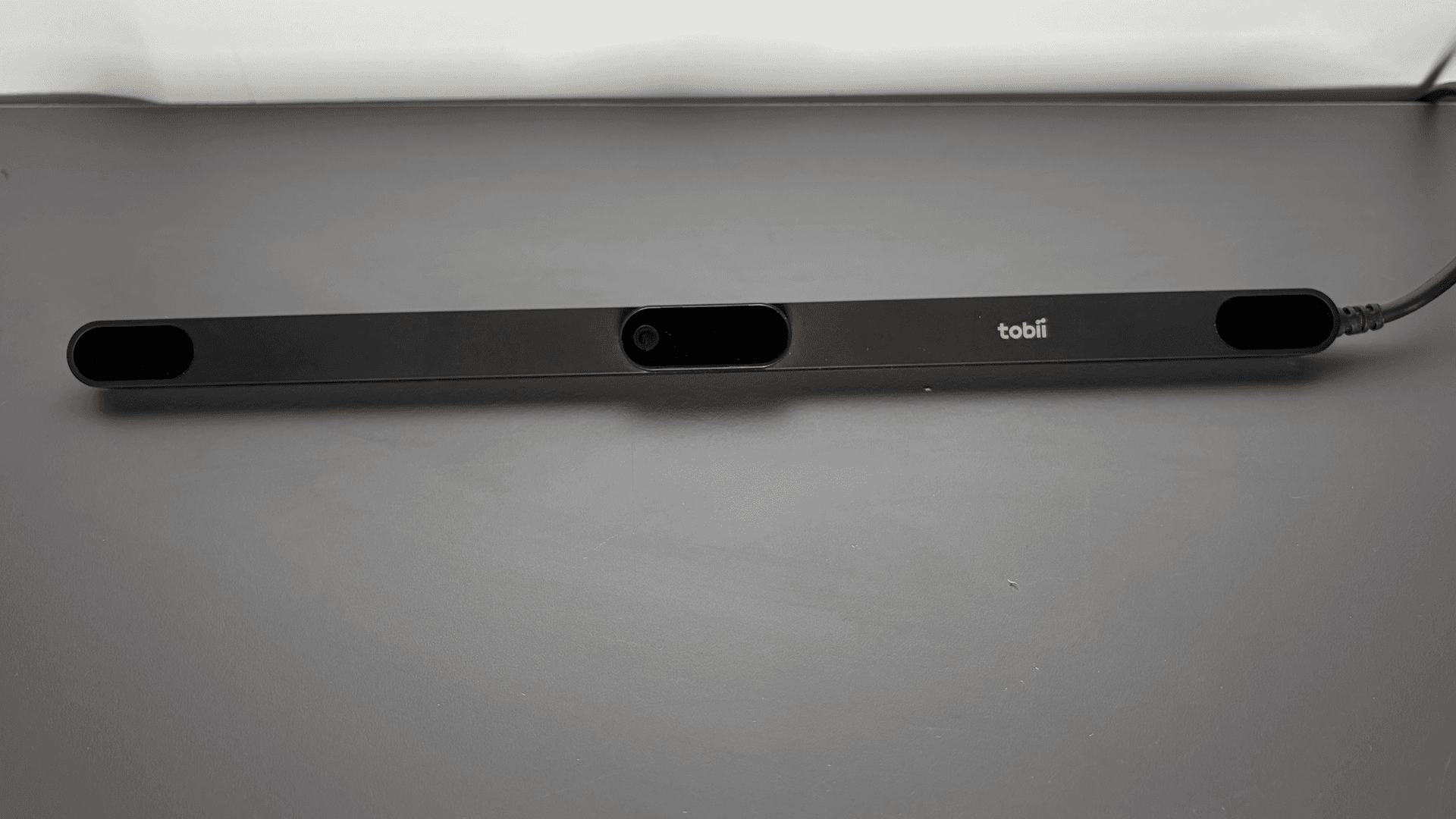
Hero image: InclusiveGameLab Eyetracker 1, by InclusiveGameLab, licensed CC BY-SA 4.0 (creativecommons.org/licenses/by-sa/4.0). Via Wikimedia Commons.
Take our professional IQ test
Want to know your IQ? Try the first ever professional online IQ test.