Oct 7, 2026·Special Population & Related Conditions
Synesthesia and IQ: Is Synesthesia a Sign of Intelligence?
Synesthesia IQ research finds no large intelligence advantage: synesthetes score in the normal range, with modest gains in memory and verbal comprehension.
Dr. Russell T. WarneChief Scientist
Share
Synesthesia is not a reliable sign of high intelligence. In the best-designed studies, people with synesthesia score in the normal range on IQ tests, with small to moderate advantages on a few measures, mainly memory and verbal comprehension. Their overall IQ is ordinary to slightly above average.
"Synesthesia" is a trait in which one kind of experience automatically triggers another: the letter A may always look red, a piano note may have a colour, or the months may sit in a fixed shape in space. This page explains how common synesthesia is, what the IQ studies found, where the clearest cognitive differences appear, how the trait relates to creativity and autism, and why online lists of "signs of a genius" tend to overstate the link.
What synesthesia is and how common it is
For most of the twentieth century synesthesia was thought to be extremely rare, with one older estimate putting it at about 1 in 2,000 people (0.05%). Earlier estimates relied on people who came forward on their own. In 2006 Julia Simner and colleagues tested people who had not referred themselves and checked each report with objective tests. They found synesthesia to be 88 times more common than the old estimate, or roughly 4% of people. The most common type was coloured days of the week, and grapheme-colour synesthesia (colours for letters and digits) affected about 1%.
Other forms are more common still under broad definitions. Ward and colleagues estimated that 8.1% to 12.8% of people have "sequence-space" synesthesia, in which numbers, dates or months are seen as an ordered pattern in space. In children, Simner's team screened 615 pupils aged 6 to 7 in 21 UK primary schools and estimated that the average UK primary school has two or three grapheme-colour synesthetes at any time.
Researchers separate real synesthesia from ordinary associations by testing consistency. A synesthete who says the letter K is lime green will pick nearly the same green weeks or months later without warning, while non-synesthetes who are asked to invent colours drift. Online versions of this approach, such as the Synesthesia Battery described by Eagleman and colleagues in 2007, have made large studies possible. Learning plays a part too: in a sample of 6,588 grapheme-colour synesthetes, at least 6% had letter colours that matched a popular coloured magnet-letter toy they had owned as children.
What the IQ studies show
Very few studies have given a full IQ test to synesthetes and matched controls, and the most careful of them is small. Charlotte Chun and Jean-Michel Hupé recruited participants from a pool of 3,743 people at universities and a science museum in southern France, so synesthetes were found by screening a general pool and did not simply volunteer. They compared 29 confirmed synesthetes with 36 controls matched on sex, age, education and artistic activity, using the WAIS-III index scores.
The mean index scores were:
• Verbal Comprehension: 112.4 for synesthetes and 106.4 for controls, a difference that was statistically significant.
• Perceptual Organization: 105.1 and 106.3, no meaningful difference.
• Processing Speed: 108.2 and 109.9, no meaningful difference.
• Working Memory: 106.7 and 105.6, no meaningful difference.
So the synesthetes were about 6 points higher on one index and level with controls on the other three. Both groups, with an average age of about 23, scored above the population average of 100. The authors warned that their confidence intervals were wide, that the differences "may be minor", and that earlier studies with self-referred volunteers had probably overestimated how different synesthetes are.
A Dutch study by Romke Rouw and Steven Scholte took a broader approach. They tested a large sample recruited without mentioning synesthesia and found that the synesthetes, who showed no differences in handedness, education, age or sex from non-synesthetes, scored higher on intelligence measures. The advantage was general and was not tied to one ability. A reanalysis by Jamie Ward of all 14 intelligence, personality and emotion measures in that study (89 synesthetes and 107 controls) found effect sizes from 0.02 to 0.74 standard deviations, with a mean of 0.31, which is small to moderate. Ward's point was that many modest differences add up to a distinctive profile. A modest average difference between groups still leaves a single synesthete's IQ anywhere in the normal range.
Memory is the clearest advantage
The most consistent finding in this literature concerns memory, and it is one of the few areas with a formal meta-analysis. Ward, Field and Chin pooled the published studies and found that synesthetes have better long-term (episodic) memory than controls, with a medium effect size of d = 0.61. Their advantage in working memory, the short-term holding of information, was smaller, at d = 0.36. The memory benefit also appeared for material where synesthesia should not help, such as abstract images, which led the authors to argue that the extra colours are unlikely to explain the whole advantage. Synesthesia seems to come with a wider cognitive profile.
The size of that advantage is easy to exaggerate. Rothen and Meier gave grapheme-colour synesthetes the Wechsler Memory Scale and found better episodic memory but no difference in short-term memory, with performance "still within the ordinary range". Earlier case studies had suggested extraordinary memory, but group studies describe a modest benefit. Readers interested in exceptional recall can see our article on eidetic memory, a separate claim with its own evidence problems.
Studies of children point the same way. Simner and Bain tested randomly sampled child synesthetes at age 10 to 11 and found no advantage in receptive vocabulary or a memory matrix task, but above-average processing speed and a near-significant advantage in letter span. A much larger analysis of the Growing Up in Scotland cohort by Smees and colleagues found that child synesthetes had better expressive and receptive vocabulary at age 10, but no advantage in sentence comprehension. They also made more progress across the primary school years after starting school with no advantage.
Creativity, autism and sensory sensitivity
The link with the arts is better documented than the link with IQ. Rothen and Meier found grapheme-colour synesthesia in about 7% of art students compared with about 2% of controls. Lunke and Meier found more artists among synesthetes, especially those who see colours for sounds, yet only one subgroup scored higher on a test of divergent creativity, and synesthetes as a whole did better on mental rotation. Involvement in art, in other words, does not necessarily mean higher creative ability on tests. Our article on whether a high IQ makes a person more creative explains why creativity and IQ only partly overlap.
There is also an overlap with autism. Baron-Cohen and colleagues found synesthesia in 18.9% of 164 autistic adults compared with 7.2% of 97 controls. A later study by Hughes and colleagues suggested the raised rate applies mainly to autistic people with savant skills. Ward and colleagues found that synesthetes and autistic people both report heightened sensory sensitivity, such as an aversion to certain sounds, with a large effect size, and synesthetes scored in the autistic range on the attention-to-detail part of the Autism-Spectrum Quotient. Our page on IQ and autism covers how scores in that group vary.
Synesthesia sits alongside other differences in inner experience, such as aphantasia, the absence of mental imagery. Ward and Filiz found that synesthetes tend to have more vivid imagery and better episodic memory, among other differences, and that their non-synesthetic relatives are cognitively similar to them. Synesthesia is not a disorder and needs no treatment. If sensory sensitivity causes distress, a general practitioner or a clinical psychologist is the right first contact, and any new change in perception in adulthood is worth raising with a doctor.
Frequently asked questions
Is synesthesia a sign of intelligence?
Not in any reliable way. Group studies find small to moderate advantages on some measures, mainly memory and verbal comprehension, and synesthetes as a group score in the normal range.
Do synesthetes have a higher IQ?
The few studies that measured IQ found averages a few points higher than matched controls in some samples, with wide uncertainty. A single person's synesthesia says almost nothing about their IQ.
How common is synesthesia?
About 4% of people have some form of synesthesia, and grapheme-colour synesthesia affects about 1%. Broader forms, such as seeing numbers or months in space, may affect 8% to 13%.
Does synesthesia improve memory?
On average, yes, modestly. A meta-analysis found a medium advantage for long-term memory and a smaller one for working memory.
Is synesthesia linked to autism?
Synesthesia appears more often in autistic adults than in the general population, particularly among those with savant skills, and the two share heightened sensory sensitivity.
The takeaway
Synesthesia IQ research does not support the idea that synesthetes are geniuses. The trait comes with a distinctive cognitive profile, including better long-term memory and, in some samples, stronger verbal comprehension, but the differences are modest and overall IQ scores are ordinary to slightly above average. If you want to know where your own reasoning stands, whether or not your Tuesdays are yellow, you can take a full-length online IQ test with proper norms.
References
1. Simner, J., Mulvenna, C., Sagiv, N., Tsakanikos, E., Witherby, S. A., Fraser, C., Scott, K., & Ward, J. (2006). Synaesthesia: The prevalence of atypical cross-modal experiences. Perception, 35(8), 1024-1033. doi.org
2. Ward, J., Ipser, A., Phanvanova, E., Brown, P., Bunte, I., & Simner, J. (2018). The prevalence and cognitive profile of sequence-space synaesthesia. Consciousness and Cognition, 61, 79-93. doi.org
3. Simner, J., Harrold, J., Creed, H., Monro, L., & Foulkes, L. (2009). Early detection of markers for synaesthesia in childhood populations. Brain, 132(1), 57-64. doi.org
4. Eagleman, D. M., Kagan, A. D., Nelson, S. S., Sagaram, D., & Sarma, A. K. (2007). A standardized test battery for the study of synesthesia. Journal of Neuroscience Methods, 159(1), 139-145. doi.org
5. Witthoft, N., Winawer, J., & Eagleman, D. M. (2015). Prevalence of learned grapheme-color pairings in a large online sample of synesthetes. PLoS ONE, 10(3), e0118996. doi.org
6. Chun, C. A., & Hupé, J.-M. (2016). Are synesthetes exceptional beyond their synesthetic associations? A systematic comparison of creativity, personality, cognition, and mental imagery in synesthetes and controls. British Journal of Psychology, 107(3), 397-418. doi.org
7. Rouw, R., & Scholte, H. S. (2016). Personality and cognitive profiles of a general synesthetic trait. Neuropsychologia, 88, 35-48. doi.org
8. Ward, J. (2024). When small effect sizes become huge: Synaesthesia is linked to very large differences in cognition. Perception, 53(3), 208-210. doi.org
9. Ward, J., Field, A. P., & Chin, T. (2019). A meta-analysis of memory ability in synaesthesia. Memory, 27(9), 1299-1312. doi.org
10. Rothen, N., & Meier, B. (2010). Grapheme-colour synaesthesia yields an ordinary rather than extraordinary memory advantage: Evidence from a group study. Memory, 18(3), 258-264. doi.org
11. Simner, J., & Bain, A. E. (2018). Do children with grapheme-colour synaesthesia show cognitive benefits? British Journal of Psychology, 109(1), 118-136. doi.org
12. Smees, R., Hughes, J., Carmichael, D. A., & Simner, J. (2019). Learning in colour: Children with grapheme-colour synaesthesia show cognitive benefits in vocabulary and self-evaluated reading. Philosophical Transactions of the Royal Society B, 374(1787), 20180348. doi.org
13. Rothen, N., & Meier, B. (2010). Higher prevalence of synaesthesia in art students. Perception, 39(5), 718-720. doi.org
14. Lunke, K., & Meier, B. (2019). Creativity and involvement in art in different types of synaesthesia. British Journal of Psychology, 110(4), 727-744. doi.org
15. Baron-Cohen, S., Johnson, D., Asher, J., Wheelwright, S., Fisher, S. E., Gregersen, P. K., & Allison, C. (2013). Is synaesthesia more common in autism? Molecular Autism, 4, 40. doi.org
16. Hughes, J. E. A., Simner, J., Baron-Cohen, S., Treffert, D. A., & Ward, J. (2017). Is synaesthesia more prevalent in autism spectrum conditions? Only where there is prodigious talent. Multisensory Research, 30(3-5), 391-408. doi.org
17. Ward, J., Hoadley, C., Hughes, J. E. A., Smith, P., Allison, C., Baron-Cohen, S., & Simner, J. (2017). Atypical sensory sensitivity as a shared feature between synaesthesia and autism. Scientific Reports, 7, 41155. doi.org
18. Ward, J., & Filiz, G. (2020). Synaesthesia is linked to a distinctive and heritable cognitive profile. Cortex, 126, 134-140. doi.org
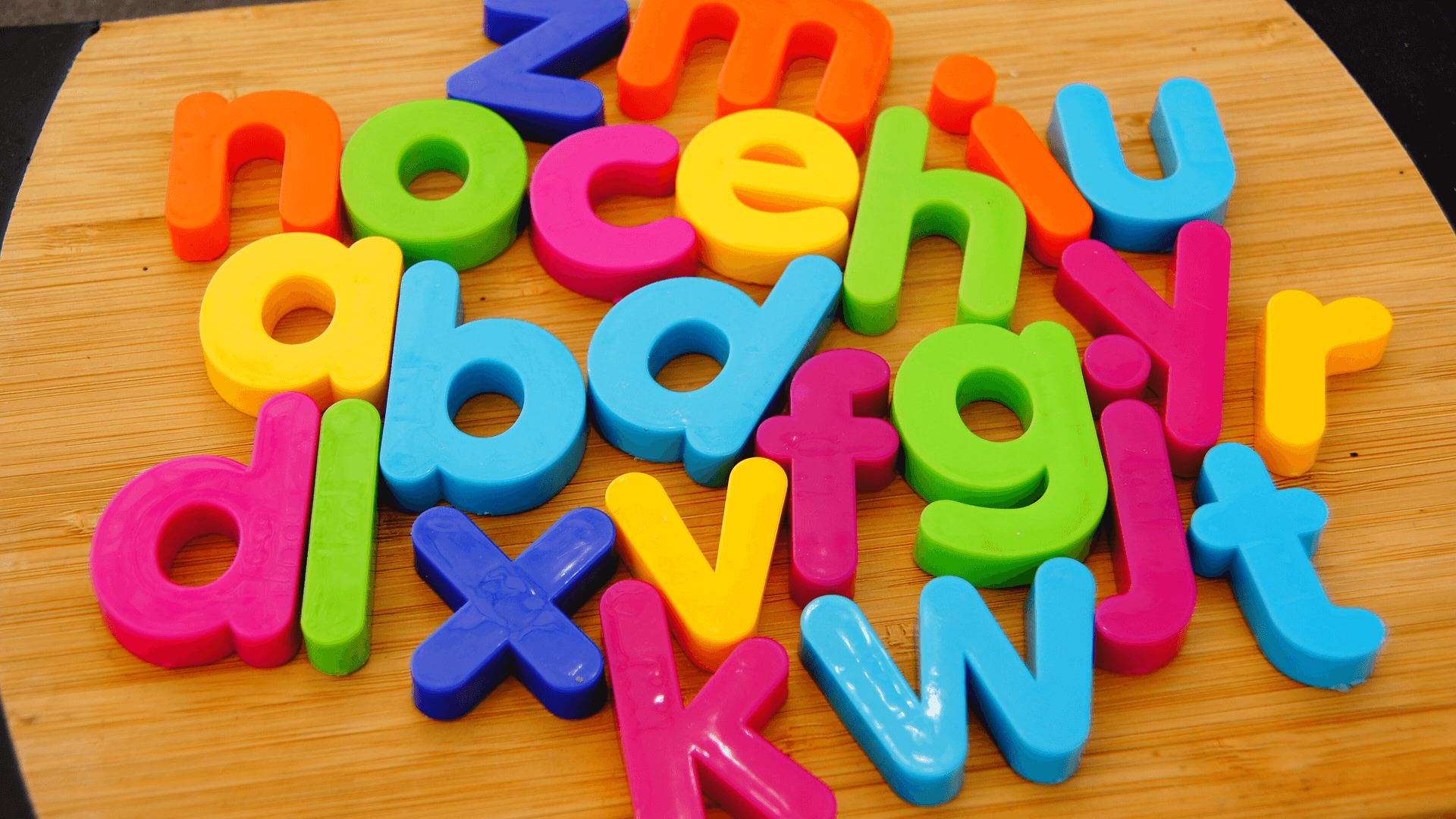
Hero image: Plastic alphabet 03, by Martin Abegglen, licensed CC BY-SA 2.0 (creativecommons.org/licenses/by-sa/2.0). Via Wikimedia Commons.
Take our professional IQ test
Want to know your IQ? Try the first ever professional online IQ test.