Hearing Loss and IQ: Does Losing Your Hearing Affect Intelligence? | Riot IQ
Oct 17, 2026·Special Population & Related Conditions
Hearing Loss and IQ: Does Losing Your Hearing Affect Intelligence?
Hearing loss and IQ: older adults with hearing loss score modestly lower on thinking tests, but a 3-year hearing aid trial found no overall cognitive benefit.
Dr. Russell T. WarneChief Scientist
Share
Hearing loss is linked with modestly lower scores on thinking tests: in a nationally representative US sample of adults in their 60s, a 25-decibel hearing loss went with a drop on a timed symbol-coding test equal to about 7 years of aging, and children with hearing loss in one ear score about 6 IQ points lower on average. What is still unsettled is cause, because a large randomized trial of hearing aids found no overall slowing of cognitive decline over 3 years.
This article covers what the big studies of older adults show, what the hearing aid trial found, how poor hearing can make a test score look lower than a person's real ability, and what is known about children with mild or one-sided hearing loss. It describes research and is not medical advice. If you notice trouble hearing, an audiologist can measure it and a GP or an ear, nose and throat specialist can look for a cause.
What the large studies of older adults show
Hearing loss is common in later life. The US National Institute on Deafness and Other Communication Disorders (NIDCD) estimates that about one in three Americans aged 65 to 74 has hearing loss, and nearly half of those over 75 have difficulty hearing. Most of the research on hearing and thinking comes from this age group, and much of the best-known work was led by Frank Lin and colleagues at Johns Hopkins.
• US national data: In 605 adults aged 60 to 69 from the National Health and Nutrition Examination Survey, each 10 decibels of hearing loss went with a 1.5-point lower score on the Digit Symbol Substitution Test, a timed nonverbal task. The gap for a 25-decibel loss equalled the effect of about 7 extra years of age.
• The Baltimore study: In 347 adults aged 55 and over, worse hearing went with lower scores on tests of memory and "executive function" (the planning and control skills that steer thinking), even after adjusting for age, sex, race, education, diabetes, smoking and high blood pressure.
• Faster decline: In the Health ABC study, 1,984 adults with an average age of 77 were followed for 6 years. Those with hearing loss declined 41% faster on a global cognitive screening test and 32% faster on the digit symbol test, and they had a 24% higher risk of developing cognitive impairment.
• Dementia: Among 639 Baltimore participants followed for a median of 11.9 years, dementia risk rose with each 10 decibels of hearing loss (hazard ratio 1.27). A 2026 analysis of 3,602 adults aged 68 to 89 in the ARIC study found a hazard ratio of 1.49 for mild and 1.68 for moderate-to-severe hearing loss, after adjusting for education and cardiovascular risk factors.
David Loughrey and colleagues pooled 36 studies with about 20,264 participants. They found a small but significant association between age-related hearing loss and every area of thinking they examined. In the prospective studies, which follow people forward in time, hearing loss raised the odds of cognitive impairment by 22% and of dementia by 28%. Our article on whether IQ is correlated with dementia covers how earlier ability relates to that later risk.
Does treating hearing loss protect thinking?
If hearing loss damages cognition, fixing it should help. The ACHIEVE trial tested this directly. Researchers randomly assigned 977 adults aged 70 to 84 with untreated hearing loss to receive hearing aids and audiology counselling or to attend health education sessions, and followed them for 3 years.
The main result was null. Cognitive scores fell by 0.200 standard deviations in the hearing group and 0.202 in the control group, a difference of 0.002 that was statistically indistinguishable from zero. A "standard deviation" is a measure of how spread out scores are; on an IQ-style scale it equals 15 points, so the groups declined by the same 3 points.
There was a twist. A prespecified analysis split the sample by where people were recruited. Among 238 participants drawn from the long-running ARIC heart study, who were older and had more risk factors, hearing aids cut 3-year decline by 48% (a difference of 0.191 standard deviations, roughly 3 points on an IQ-style scale). Among 739 healthier volunteers, there was no benefit. The authors concluded that hearing aids might slow decline in people at higher risk. A subgroup result like this needs replication before it can be treated as settled.
Observational data on hearing aids are mixed too. In the 2026 ARIC analysis, people with hearing loss who used hearing aids had a dementia hazard ratio of 0.87, a difference that was not statistically significant. One widely reported 2023 UK Biobank study that linked hearing aid use with normal dementia risk was retracted by The Lancet Public Health in December 2023, so it should not be cited.
The Lancet Commission on dementia nonetheless ranks hearing loss among the largest modifiable risk factors. Its 2024 report estimated that 14 risk factors together account for about 45% of dementia worldwide, with midlife hearing loss contributing 7%, tied after rounding with high LDL cholesterol for the largest single share. Its 2020 report put hearing loss at 8%. Both estimates assume the link is causal, which ACHIEVE has not yet confirmed.
Why a hearing problem can look like an IQ problem
Some of the association may be an artefact of testing. Most cognitive tests are given out loud: the examiner reads instructions, word lists or arithmetic problems, and a person who mishears them loses points for reasons that have nothing to do with reasoning.
Jorgensen and colleagues showed this with 125 young adults who had normal hearing. They were randomly assigned to one of five levels of simulated hearing loss and then took the Mini-Mental State Examination, a common dementia screen. Scores fell as audibility fell, and the researchers warned that hearing loss could be mistaken for cognitive decline. Dupuis and colleagues tested 301 older adults on the Montreal Cognitive Assessment and found that people with hearing or vision loss were less likely to pass, even after the scores were adjusted for sensory items. A 2026 scoping review found 10 experiments of this kind, using tasks such as digit span and the arithmetic subtest of the Wechsler adult intelligence scale, and concluded that simulated hearing loss goes with poorer test performance.
This does not explain everything. Lin's national survey finding used a nonverbal, visual test, and the Baltimore results held up after excluding people with severe loss. Still, anyone with hearing loss who sits an orally administered IQ test should have their hearing checked first and use their hearing aids during testing. Assessing children who are deaf raises its own questions about language and test choice, covered in our article on how deaf children are assessed for IQ.
Children with mild or one-sided hearing loss
The evidence on IQ in children with milder hearing loss is thinner, and most of it concerns children with normal hearing in one ear only ("unilateral hearing loss"). Patricia Purcell and colleagues pooled the four high-quality studies that reported IQ scores for 173 children aged 6 to 18 with unilateral hearing loss and 202 children with normal hearing.
• Full-scale IQ: 6.3 points lower in the children with unilateral loss (95% confidence interval 3.5 to 9.1 points).
• Performance IQ: 3.8 points lower, on the nonverbal part of the test.
• Verbal IQ: 6.6 points lower in the main model, but the studies disagreed sharply. Without one outlying study from a high-risk group, the gap was about 4 points.
Four studies is a small evidence base, and because the studies were observational they cannot show that the hearing loss itself caused the gap. The authors called for research into ways to reduce it. Parents who suspect a hearing problem can ask a pediatrician to refer their child to a pediatric audiologist.
Why the link might exist
The 2024 Lancet Commission summarised several proposed explanations, and they are not mutually exclusive.
• Listening effort: Straining to hear takes extra mental resources that would otherwise go to understanding and remembering.
• Less stimulation: Hearing loss can reduce contact with sounds and people, and loneliness, depression and social isolation may follow. Social isolation is itself one of the Commission's 14 risk factors.
• A common cause: Vascular disease may damage both the inner ear and the brain. Loughrey's meta-analysis also pointed to vascular problems as a possible contributor.
• Confounding: Education, income, occupation and noise exposure all relate to both hearing and test scores. Good studies adjust for them, but adjustment is never perfect.
Measured differences are averages across groups. Many people with significant hearing loss score well above average, and hearing loss in itself says little about any one person's ability.
Frequently asked questions
Does hearing loss lower your IQ?
Hearing loss is linked with somewhat lower scores on memory, speed and reasoning tests in older adults, and with about 6 points lower full-scale IQ in children with one-sided loss. Whether it causes a loss of underlying ability is not proven.
Do hearing aids prevent cognitive decline?
In the ACHIEVE trial, hearing aids did not slow cognitive decline over 3 years in the full group. A subgroup at higher risk declined 48% more slowly, a result that needs confirming.
Is hearing loss a risk factor for dementia?
Many cohort studies link hearing loss to higher dementia risk, and the 2024 Lancet Commission attributes about 7% of dementia worldwide to it. That estimate assumes the link is causal.
Can hearing loss affect an IQ test result?
Yes. When instructions or items are spoken, mishearing them lowers scores, and experiments with simulated hearing loss show this even in young adults with normal hearing.
Who should I see about hearing loss and memory problems?
An audiologist can measure hearing, and a GP or ear, nose and throat specialist can look for a medical cause. Persistent memory problems warrant a doctor's assessment, and sometimes a referral to a neurologist or neuropsychologist.
The takeaway
Hearing loss and lower cognitive scores travel together, especially in older adults, and children with even one-sided loss score a few points lower on IQ tests. The best trial so far found that hearing aids did not slow decline in most people, so the causal question is still open. Hearing loss can also make test results look worse than they are. If you want a fair reading of your reasoning, choose a quiet setting, use any hearing aids you have and take a full-length online IQ test.
References
1. National Institute on Deafness and Other Communication Disorders. (2023). Age-related hearing loss (presbycusis). [nidcd.nih.gov](. nidcd.nih.gov
2. Lin, F. R. (2011). Hearing loss and cognition among older adults in the United States. The Journals of Gerontology Series A: Biological Sciences and Medical Sciences, 66A(10), 1131-1136. [doi.org/10.1093/gerona/glr115](. doi.org
3. Lin, F. R., Ferrucci, L., Metter, E. J., An, Y., Zonderman, A. B., & Resnick, S. M. (2011). Hearing loss and cognition in the Baltimore Longitudinal Study of Aging. Neuropsychology, 25(6), 763-770. [doi.org/10.1037/a0024238](. doi.org
4. Lin, F. R., Yaffe, K., Xia, J., Xue, Q. L., Harris, T. B., Purchase-Helzner, E., Satterfield, S., Ayonayon, H. N., Ferrucci, L., Simonsick, E. M., & Health ABC Study Group. (2013). Hearing loss and cognitive decline in older adults. JAMA Internal Medicine, 173(4), 293-299. [doi.org/10.1001/jamainternmed.2013.1868](. doi.org
5. Lin, F. R., Metter, E. J., O'Brien, R. J., Resnick, S. M., Zonderman, A. B., & Ferrucci, L. (2011). Hearing loss and incident dementia. Archives of Neurology, 68(2), 214-220. [doi.org/10.1001/archneurol.2010.362](. doi.org
6. Deal, J. A., Shin, J. J., Jiang, K., Sharrett, A. R., Coresh, J., Gottesman, R. F., Knopman, D. S., Mosley, T., Walker, K. A., Lin, F. R., & Reed, N. S. (2026). Hearing loss and incident dementia over 8 years in Black and White older adults: The Atherosclerosis Risk in Communities Neurocognitive Study. Frontiers in Epidemiology, 6, 1798451. [doi.org/10.3389/fepid.2026.1798451](. doi.org
7. Loughrey, D. G., Kelly, M. E., Kelley, G. A., Brennan, S., & Lawlor, B. A. (2018). Association of age-related hearing loss with cognitive function, cognitive impairment, and dementia: A systematic review and meta-analysis. JAMA Otolaryngology–Head & Neck Surgery, 144(2), 115-126. [doi.org/10.1001/jamaoto.2017.2513](. doi.org
8. Lin, F. R., Pike, J. R., Albert, M. S., Arnold, M., Burgard, S., Chisolm, T., Couper, D., Deal, J. A., Goman, A. M., Glynn, N. W., Gmelin, T., Gravens-Mueller, L., Hayden, K. M., Huang, A. R., Knopman, D., Mitchell, C. M., Mosley, T., Pankow, J. S., Reed, N. S., ... Coresh, J. (2023). Hearing intervention versus health education control to reduce cognitive decline in older adults with hearing loss in the USA (ACHIEVE): A multicentre, randomised controlled trial. The Lancet, 402(10404), 786-797. [doi.org/10.1016/S0140-6736(23)01406-X](. doi.org
9. The Lancet Public Health. (2024). Retraction: Association between hearing aid use and all-cause and cause-specific dementia: An analysis of the UK Biobank cohort. The Lancet Public Health, 9(1), e10. [doi.org/10.1016/S2468-2667(22)00314-0](. doi.org
10. Livingston, G., Huntley, J., Liu, K. Y., Costafreda, S. G., Selbæk, G., Alladi, S., Ames, D., Banerjee, S., Burns, A., Brayne, C., Fox, N. C., Ferri, C. P., Gitlin, L. N., Howard, R., Kales, H. C., Kivimäki, M., Larson, E. B., Nakasujja, N., Rockwood, K., ... Mukadam, N. (2024). Dementia prevention, intervention, and care: 2024 report of the Lancet standing Commission. The Lancet, 404(10452), 572-628. [doi.org/10.1016/S0140-6736(24)01296-0](. doi.org
11. Livingston, G., Huntley, J., Sommerlad, A., Ames, D., Ballard, C., Banerjee, S., Brayne, C., Burns, A., Cohen-Mansfield, J., Cooper, C., Costafreda, S. G., Dias, A., Fox, N., Gitlin, L. N., Howard, R., Kales, H. C., Kivimäki, M., Larson, E. B., Ogunniyi, A., ... Mukadam, N. (2020). Dementia prevention, intervention, and care: 2020 report of the Lancet Commission. The Lancet, 396(10248), 413-446. [doi.org/10.1016/S0140-6736(20)30367-6](. doi.org
12. Jorgensen, L. E., Palmer, C. V., Pratt, S., Erickson, K. I., & Moncrieff, D. (2016). The effect of decreased audibility on MMSE performance: A measure commonly used for diagnosing dementia. Journal of the American Academy of Audiology, 27(4), 311-323. [doi.org/10.3766/jaaa.15006](. doi.org
13. Dupuis, K., Pichora-Fuller, M. K., Chasteen, A. L., Marchuk, V., Singh, G., & Smith, S. L. (2015). Effects of hearing and vision impairments on the Montreal Cognitive Assessment. Aging, Neuropsychology, and Cognition, 22(4), 413-437. [doi.org/10.1080/13825585.2014.968084](. doi.org
14. Holdinga, M., Merkus, P., Ket, J. C. F., Kramer, S. E., & Smits, C. (2026). Effects of simulated hearing loss on cognitive task performance: A scoping review. Neuropsychology. Advance online publication. [doi.org/10.1037/neu0001111](. doi.org
15. Purcell, P. L., Shinn, J. R., Davis, G. E., & Sie, K. C. Y. (2016). Children with unilateral hearing loss may have lower intelligence quotient scores: A meta-analysis. The Laryngoscope, 126(3), 746-754. [doi.org/10.1002/lary.25524](. doi.org
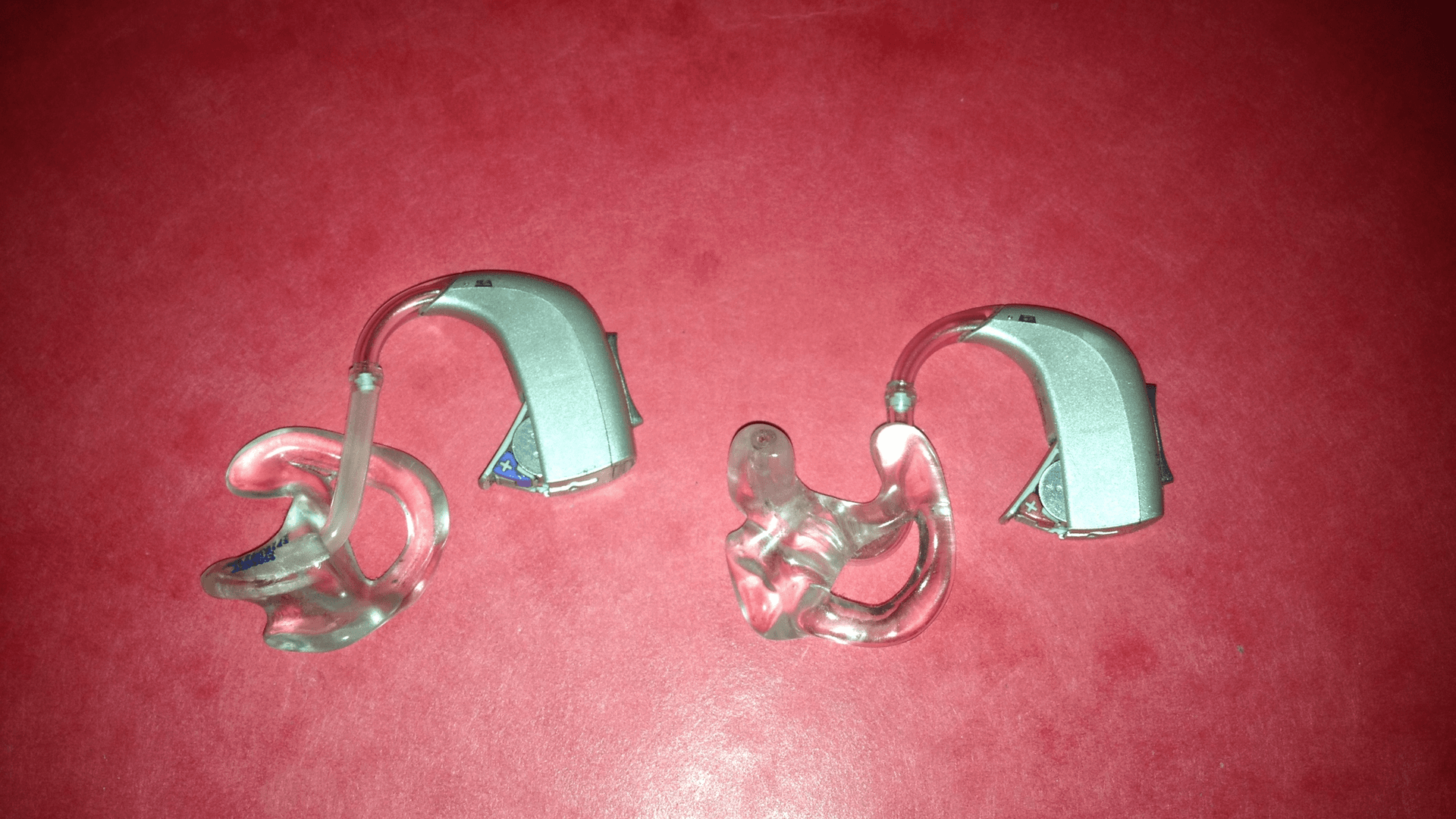
Hero image: Digital Behind-the-ear Hearing Aids, by Christian P. Nielsen, public domain. Via Wikimedia Commons.
Take our professional IQ test
Want to know your IQ? Try the first ever professional online IQ test.