Oct 7, 2026·Special Population & Related Conditions
Misophonia and IQ: Is Hating Chewing Sounds a Sign of Intelligence?
No study shows a higher misophonia IQ. The claim that hating chewing sounds signals intelligence comes from a creativity study that never measured misophonia.
Dr. Russell T. WarneChief Scientist
Share
There is no evidence that misophonia, a strong aversion to sounds such as chewing or breathing, is a sign of high intelligence. No published study has compared the IQ scores of people with and without misophonia, and the popular "sign of genius" claim traces back to a creativity study that never measured misophonia at all.
This article explains what misophonia is and how common it is, where the intelligence claim came from, what the research shows about attention and thinking when trigger sounds are present, and which conditions travel with it.
What misophonia is
Misophonia was named and described in 2001 by the hearing researchers Pawel and Margaret Jastreboff. In 2022 a panel of 15 experts led by Susan Swedo used a structured voting process (a "Delphi study") to agree on a consensus definition. They describe misophonia as "a disorder of decreased tolerance to specific sounds or stimuli associated with such sounds." These "triggers" provoke strong negative emotional and physical reactions that most people do not have. Anger, irritation, disgust and anxiety are the most common reactions, and symptoms are typically first noticed in childhood or early adolescence.
Triggers are usually sounds other people make, such as chewing, slurping, breathing or pen clicking, though some people also react to sights such as a jiggling leg. Misophonia does not yet have its own entry in the DSM-5-TR, the American diagnostic manual.
How common it is depends heavily on where the cutoff is drawn:
• UK: In a sample of 772 adults stratified to match the UK population, Vitoratou and colleagues estimated that 18.4% had misophonia to a degree that caused a significant burden.
• United States: In a nationally representative survey of 4,005 adults, Dixon and colleagues found that 78.5% reported some sensitivity to misophonia sounds, but only 4.6% reported clinical levels.
• Germany: In a representative survey of 2,522 people, Pfeiffer and colleagues found moderate to severe symptoms in 2.1% and severe to extreme symptoms in 0.1%, with many more people reporting milder symptoms.
• Ankara, Turkey: A household interview study by Kılıç and colleagues found a current prevalence of 12.8% among 541 residents, and only 5.8% of those affected had contacted services about it.
Mild dislike of these sounds is close to universal, and the line between ordinary annoyance and a disorder is still being worked out.
Is misophonia a sign of intelligence?
No research supports that idea. A search of the misophonia literature turns up no study that gave IQ tests to people with misophonia and compared them with controls. The claim seems to come from a 2015 Northwestern University study by Zabelina and colleagues, which looked at "sensory gating," the brain's early filtering of irrelevant sounds. In 84 participants, people with more real-world creative achievements showed "leaky" sensory gating, meaning their brains filtered out less incoming sound, while people who scored higher on a divergent thinking test showed more selective gating.
That study measured creativity and an early electrical brain response to sound (the P50). It did not measure misophonia, did not measure IQ, and found that the two creativity measures pointed in opposite directions. Treating it as evidence that people who hate chewing sounds are smarter stretches it well past what it showed.
The little indirect evidence that exists points the other way, though weakly:
• Education in a national sample: In the US survey, Dixon and colleagues found higher misophonia symptoms among participants with less than a high school education, along with several other demographic differences.
• Genetics: Smit and colleagues analysed genetic data on one misophonia symptom (rage at eating sounds) from 23andMe customers. It showed a small negative genetic correlation with educational attainment (rG = −0.18), and it clustered with depression and anxiety-related disorders.
Educational attainment is not the same thing as IQ, and a single self-reported symptom is not a diagnosis. These findings do not show that misophonia lowers intelligence. They do make the "sign of genius" story hard to defend. The fair summary is that misophonia occurs across the full range of ability, and its link to IQ, if there is one, has simply not been studied.
How trigger sounds affect thinking and test performance
Where misophonia does matter for cognition is in the moment, when a trigger is present:
• Slower and less accurate under triggers: In a study of 26 people with misophonia and 39 controls, Hansen and colleagues found that people with misophonia were slower on a simple face judgment task while hearing trigger sounds. Across all participants, faces originally paired with highly uncomfortable sounds were remembered less well.
• An attention-to-detail style: In a study of 136 people with misophonia and 203 without, Simner and colleagues found that people with misophonia reported more attention to detail and more cognitive inflexibility. They also described more vivid auditory imagery. In a smaller lab sample, those with worse symptoms were more accurate on the Embedded Figures task, which involves finding a simple shape hidden in a complex drawing. Simner and Ward also study synesthesia, another trait where perception works differently.
• A brain response to triggers: Using brain imaging, Kumar and colleagues found that trigger sounds produced greatly exaggerated responses in the anterior insula, a region involved in emotion and in noticing signals from the body. This is a finding about emotional salience, and it says nothing about general reasoning ability.
The practical point for testing is simple. A person with misophonia who sits an IQ test in a room with a ticking clock or an examiner chewing gum may score below their true ability, because part of their attention is taken up by the sound. A quiet room matters more for this group than for most.
Related conditions and who to see
People with misophonia often have other conditions. In the largest clinical series, Jager and colleagues confirmed misophonia in 575 people referred to an Amsterdam clinic. Of these, 26% had traits of obsessive-compulsive personality disorder, 10% had mood disorders, 5% had ADHD and 3% had autism. Nearly all scored high on perfectionism. Obsessive-compulsive personality traits differ from obsessive-compulsive disorder, and in the genetic study above misophonia showed no genetic correlation with OCD. The overlap with anxiety is substantial, and our article on IQ and anxiety covers how anxiety relates to test scores.
The consensus definition says misophonia should not be better explained by another auditory or psychiatric condition, and it singles out hyperacusis (a reduced tolerance to the loudness of everyday sounds) as the condition most important to tell apart. An audiologist can check hearing and loudness tolerance, and a psychologist or psychiatrist familiar with misophonia can assess the emotional reactions and any related conditions.
Does misophonia change with age?
Symptoms usually start in childhood or early adolescence. The consensus panel concluded that there is not yet enough long-term research to describe a typical course, such as whether it stays stable or worsens. There is no evidence that it changes IQ at any age.
Frequently asked questions
Is misophonia a sign of high intelligence?
No. No study has found that people with misophonia have higher IQ scores, and the claim rests on a creativity study that did not measure misophonia.
Do people with misophonia have a lower IQ?
There is no evidence of that either. A genetic study found a small negative correlation with educational attainment, but education is not IQ and no study has tested IQ directly.
Can misophonia affect an IQ test score?
It can if trigger sounds are present during testing, because they slow responses and take up attention. Testing in a quiet room reduces that risk.
Is misophonia a form of autism or OCD?
No. A minority of people with misophonia have autism or ADHD, and about a quarter in one large clinic had obsessive-compulsive personality traits. Misophonia is defined as a condition of its own.
Who should I see about misophonia?
An audiologist can rule out hearing problems and hyperacusis, and a psychologist or psychiatrist familiar with misophonia can assess the emotional side and any related conditions.
The takeaway
Misophonia is a real and sometimes disabling aversion to everyday sounds, and it is far more common in mild form than most people assume. It is not a sign of intelligence. No study has measured IQ in people with misophonia, the creativity study behind the claim never looked at misophonia, and the indirect data on education lean slightly the other way. What the research does show is that triggers disrupt attention in the moment, so a fair test needs a quiet room. Adults who want an accurate picture of their reasoning ability can take a full-length online IQ test somewhere free of the sounds that bother them.
References
1. Swedo, S. E., Baguley, D. M., Denys, D., Dixon, L. J., Erfanian, M., Fioretti, A., Jastreboff, P. J., Kumar, S., Rosenthal, M. Z., Rouw, R., Schiller, D., Simner, J., Storch, E. A., Taylor, S., Vander Werff, K. R., Altimus, C. M., & Raver, S. M. (2022). Consensus definition of misophonia: A Delphi study. Frontiers in Neuroscience, 16, 841816. [doi.org/10.3389/fnins.2022.841816](. doi.org
2. Jastreboff, M. M., & Jastreboff, P. J. (2001). Hyperacusis. AudiologyOnline. [audiologyonline.com/articles/hyperacusis-1223](. audiologyonline.com
3. Vitoratou, S., Hayes, C., Uglik-Marucha, N., Pearson, O., Graham, T., & Gregory, J. (2023). Misophonia in the UK: Prevalence and norms from the S-Five in a UK representative sample. PLoS ONE, 18(3), e0282777. [doi.org/10.1371/journal.pone.0282777](. doi.org
4. Dixon, L. J., Schadegg, M. J., Clark, H. L., Sevier, C. J., & Witcraft, S. M. (2024). Prevalence, phenomenology, and impact of misophonia in a nationally representative sample of U.S. adults. Journal of Psychopathology and Clinical Science, 133(5), 403-412. [doi.org/10.1037/abn0000904](. doi.org
5. Pfeiffer, E., Allroggen, M., & Sachser, C. (2025). The prevalence of misophonia in a representative population-based survey in Germany. Social Psychiatry and Psychiatric Epidemiology, 60(1), 257-264. [doi.org/10.1007/s00127-024-02707-0](. doi.org
6. Kılıç, C., Öz, G., Avanoğlu, K. B., & Aksoy, S. (2021). The prevalence and characteristics of misophonia in Ankara, Turkey: Population-based study. BJPsych Open, 7(5), e144. [doi.org/10.1192/bjo.2021.978](. doi.org
7. Zabelina, D. L., O'Leary, D., Pornpattananangkul, N., Nusslock, R., & Beeman, M. (2015). Creativity and sensory gating indexed by the P50: Selective versus leaky sensory gating in divergent thinkers and creative achievers. Neuropsychologia, 69, 77-84. [doi.org/10.1016/j.neuropsychologia.2015.01.034](. doi.org
8. Smit, D. J. A., Bakker, M., Abdellaoui, A., Hoetink, A. E., Vulink, N., & Denys, D. (2023). A genome-wide association study of a rage-related misophonia symptom and the genetic link with audiological traits, psychiatric disorders, and personality. Frontiers in Neuroscience, 16, 971752. [doi.org/10.3389/fnins.2022.971752](. doi.org
9. Hansen, H. A., Leber, A. B., & Saygin, Z. M. (2024). The effect of misophonia on cognitive and social judgments. PLoS ONE, 19(5), e0299698. [doi.org/10.1371/journal.pone.0299698](. doi.org
10. Simner, J., Koursarou, S., Rinaldi, L. J., & Ward, J. (2021). Attention, flexibility, and imagery in misophonia: Does attention exacerbate everyday disliking of sound? Journal of Clinical and Experimental Neuropsychology, 43(10), 1006-1017. [doi.org/10.1080/13803395.2022.2056581](. doi.org
11. Kumar, S., Tansley-Hancock, O., Sedley, W., Winston, J. S., Callaghan, M. F., Allen, M., Cope, T. E., Gander, P. E., Bamiou, D. E., & Griffiths, T. D. (2017). The brain basis for misophonia. Current Biology, 27(4), 527-533. [doi.org/10.1016/j.cub.2016.12.048](. doi.org
12. Jager, I., de Koning, P., Bost, T., Denys, D., & Vulink, N. (2020). Misophonia: Phenomenology, comorbidity and demographics in a large sample. PLoS ONE, 15(4), e0231390. [doi.org/10.1371/journal.pone.0231390](. doi.org
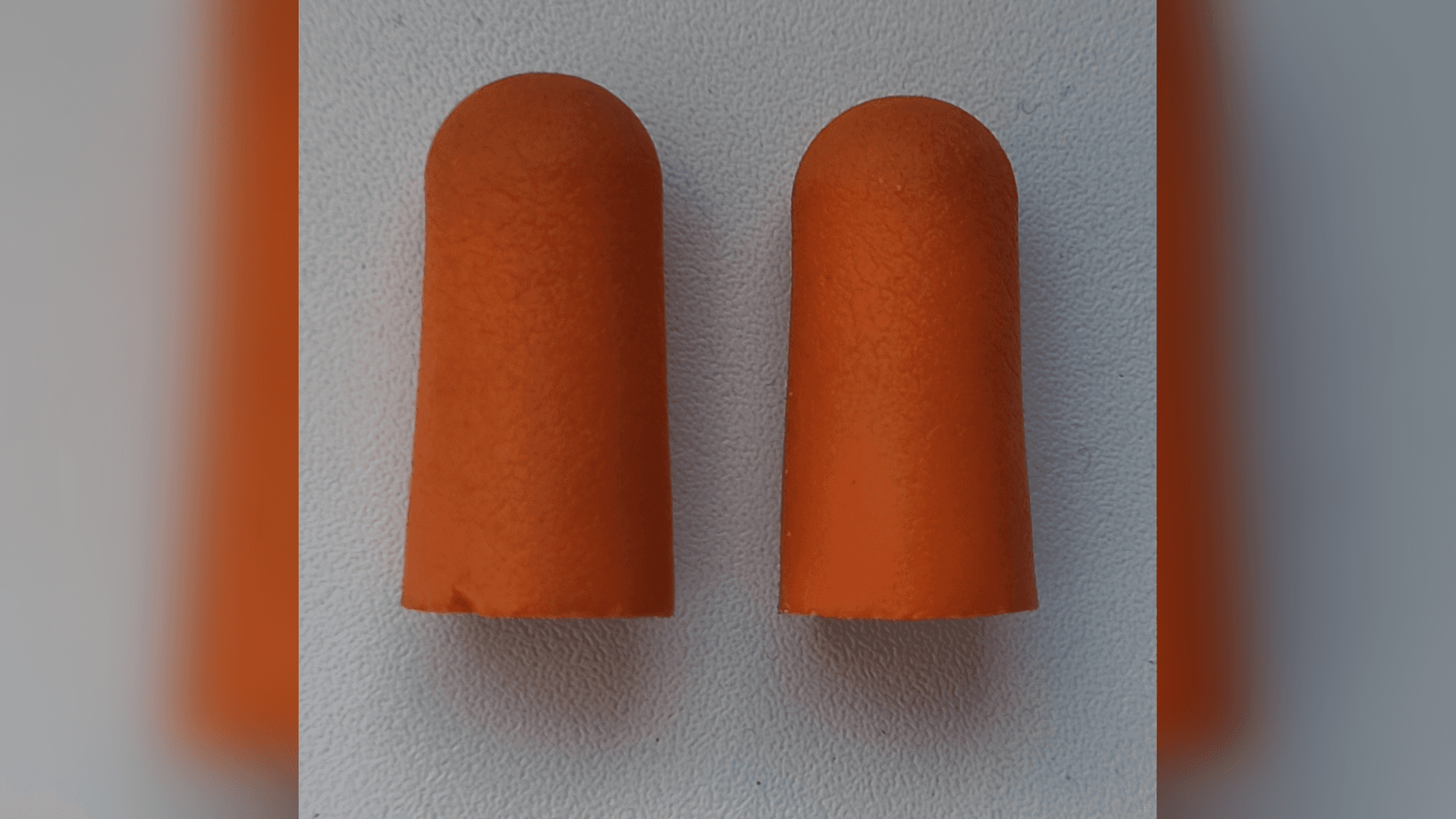
Hero image: A pair of orange foam earplugs, by Sokolikmawwer0, licensed CC BY-SA 3.0 (creativecommons.org/licenses/by-sa/3.0). Via Wikimedia Commons.
Take our professional IQ test
Want to know your IQ? Try the first ever professional online IQ test.