What is Child Find? The IDEA duty to identify and evaluate
Child Find is the IDEA duty on every state and district to identify, locate and evaluate all children with disabilities, without waiting for a parent request.
Dr. Russell T. WarneChief Scientist
Share
Child Find is the affirmative legal duty, binding on every state and school district that accepts federal special education funding, to identify, locate and evaluate all children with disabilities who need special education. It runs continuously and it does not wait to be asked. A district that has never received a referral can still be in violation of it.
Three ideas sit close to this one. Developmental screening is the brief, population-level procedure that flags a child for a closer look. A diagnostic assessment is the longer individualized instrument that follows a flag. Child Find is the legal duty that makes the sequence mandatory, and the act it compels is the evaluation. That is why it matters to anyone interested in testing: Child Find is the rule that converts a suspicion into a comprehensive assessment the family does not pay for.
What the Child Find regulation actually says
The statutory source is 20 U.S.C. 1412(a)(3)(A), which conditions a state's eligibility for Part B funds on assurance that all children with disabilities in the state, "including children with disabilities who are homeless children or are wards of the State and children with disabilities attending private schools, regardless of the severity of their disabilities," and who need special education, "are identified, located, and evaluated."
The implementing regulation, 34 CFR 300.111, repeats that language and adds the clause that decides most disputes. Under 300.111(c), Child Find "also must include" two further groups:
• Children who are passing: The regulation reaches "children who are suspected of being a child with a disability under § 300.8 and in need of special education, even though they are advancing from grade to grade." Grade promotion is therefore not a defence. A student earning C grades through heroic effort and an hour of parental help each night may still be a child the district was obliged to evaluate.
• Children who move: The duty covers "highly mobile children, including migrant children," so a family that changes districts twice in a year does not reset anyone's clock.
Two further pieces matter. Section 300.111(b) lets a state apply the category "developmental delay" to children aged three through nine, which matters because a preschooler often cannot yet be sorted into a named disability category. And 34 CFR 300.131 puts a separate, parallel duty on the district where a private school sits, including for children who live in another state, and provides at 300.131(d) that the cost of those evaluations may not be counted against the district's proportionate-share obligation.
What triggers the duty, and how it differs from a referral
The trigger is reasonable suspicion of eligibility, which can arise from a teacher's concern, a hospital discharge, a behaviour pattern or a parent's letter. Perry Zirkel's synthesis of the case law describes the modern obligation as having two parts, a duty to evaluate once suspicion is reasonable and a duty to start that evaluation within a reasonable period, and notes that neither boundary is a bright line.
A parent request and the Child Find duty are different things. Under 34 CFR 300.301(b) either a parent or the public agency may initiate a request for an initial evaluation, so no referral is required for the duty to bite. The converse also holds: if the district genuinely does not suspect a disability, it may decline a parent's request, provided it issues prior written notice explaining the refusal and the data behind it. The parent's recourse is a state complaint or a due process hearing.
What a district may not do is substitute an informal look for an assessment. In Timothy O. v. Paso Robles Unified School District the Ninth Circuit held that notice of a suspected disability "automatically triggers mandatory statutory procedures," and that a staff member's unscientific observation could not dispel that suspicion. The evaluation must cover every area of suspected disability, and the failure to assess for autism in that case denied the student a free appropriate public education. Once consent is signed, 34 CFR 300.301(c) gives the district 60 days, or a state timeline where one exists, to finish. Our page on a psychoeducational evaluation describes what that evaluation contains and who assembles it.
Child Find from birth to three
Part C of the IDEA carries its own version of the duty. Under 34 CFR 303.302 each state must operate a "comprehensive child find system" that is consistent with the Part B regulation and that reaches infants and toddlers who are homeless, in foster care or wards of the state, along with Indian infants and toddlers residing on reservations in the state.
The Part C system is built around outside referral rather than school staff. Section 303.303 requires the state's procedures to provide for referring a child "as soon as possible, but in no case more than seven days, after the child has been identified," and it names the primary referral sources, including hospitals, physicians, parents, child care programmes and child protective services. Referral is mandatory for any child under three who is the subject of a substantiated case of abuse or neglect or who is identified as directly affected by prenatal substance exposure. The regulation also requires coordination with Medicaid's early periodic screening programme, newborn hearing detection and Head Start, which is the machinery by which a paediatrician's concern becomes a publicly funded evaluation.
RTI and Child Find: what OSEP said, and what courts have done
Districts have sometimes answered a referral by saying the child must first work through the tiers of a multi-tiered intervention system. The Office of Special Education Programs addressed this directly in OSEP Memorandum 11-07, issued on 21 January 2011. It states that "the use of RTI strategies cannot be used to delay or deny the provision of a full and individual evaluation" to a child suspected of having a disability, and that it would be inconsistent with the evaluation provisions "for an LEA to reject a referral and delay provision of an initial evaluation on the basis that a child has not participated in an RTI framework." The regulation points the same way: 34 CFR 300.309(c) requires the agency to "promptly request parental consent to evaluate" whenever a child is referred, or where a child has not made adequate progress after an appropriate period of instruction.
The litigated reality is less tidy than the memorandum. Zirkel's review of the decided cases found that in most of them documented intervention counted in the district's favour on reasonable suspicion rather than against it, the deciding factor being whether the intervention worked. A district that intervened early, measured the result and referred when the result was poor tends to win; one that cycled a child through tiers for two years while the gap widened tends to lose. Our page on response to intervention covers how those tiers and their progress data are supposed to operate.
Remedies, harmless error, and the two-year clock
A Child Find failure is a procedural violation, so it runs through 20 U.S.C. 1415(f)(3)(E)(ii): a hearing officer may find a denial of a free appropriate public education only where the inadequacy impeded the child's right to that education, significantly impeded the parents' chance to participate, or caused a deprivation of educational benefits. Where the test is met, the usual remedy is compensatory education, sometimes private tuition reimbursement, sometimes an order to evaluate, and attorneys' fees may follow. Where it is not met, nothing follows: the Fifth Circuit has reasoned that the statute "does not penalize school districts for not timely evaluating students who do not need special education." If a parent disputes the district's eventual findings, an independent educational evaluation is the next step.
The timing question is unsettled. Section 1415(f)(3)(C) gives a parent two years from the date they "knew or should have known about the alleged action that forms the basis of the complaint," with exceptions at 1415(f)(3)(D) where the district misrepresented that it had fixed the problem or withheld information it owed the parent. The hard question is whether those two years only limit when you may file or also cap how far back relief can reach. The Third Circuit held in G.L. v. Ligonier Valley School District Authority that the period "functions in a traditional way, that is, as a filing deadline that runs from the date of reasonable discovery and not as a cap on a child's remedy." The Ninth Circuit agreed in Avila v. Spokane School District 81, rejecting an occurrence rule tied to the date of injury. Most circuits have not ruled, and for a Child Find claim, where the injury is years of unnoticed failure, the answer decides what the case is worth.
Reading an evaluation report is the skill that makes any of this usable. To see how a carefully normed cognitive measure expresses uncertainty, you can take a full-length online IQ test, which returns index scores with confidence intervals rather than a single number.
Frequently asked questions
Does Child Find mean the school must evaluate my child if I ask?
Not automatically. A district may refuse a parent's request if it does not suspect a disability, but it must then give you prior written notice setting out the refusal and the information behind it, and you can challenge that refusal through a state complaint or a due process hearing.
Can a school refuse to evaluate because my child is passing?
No. 34 CFR 300.111(c)(1) extends Child Find to children suspected of having a disability "even though they are advancing from grade to grade." Passing grades are evidence a district may weigh, not a reason to decline an evaluation.
Does Child Find cover private school and homeschooled children?
Private school children are covered by 34 CFR 300.131, which places the duty on the district where the school is located. For home-schooled children and parentally placed private school children, 34 CFR 300.300(d)(4) bars the district from using due process to override a parent's refusal of consent, so the duty effectively ends with the offer.
Who pays for a Child Find evaluation?
The public agency. An initial evaluation conducted under the IDEA is at no cost to the family, and 34 CFR 300.131(d) confirms this holds for private school children as well.
How long do I have to bring a Child Find claim?
Two years from when you knew or should have known about the failure, under 20 U.S.C. 1415(f)(3)(C), unless state law sets a different period or one of the two statutory exceptions applies. Whether relief can reach back past those two years depends on your circuit.
The takeaway
Child Find is a duty to go looking. The regulation obliges districts to identify, locate and evaluate children with disabilities, and it names the groups most often missed, including children in private schools, children who are homeless or wards of the state, migrant and highly mobile children, and children who are quietly passing. The trigger is reasonable suspicion rather than a request, and the obligation is to assess every area of suspected disability rather than to form an impression. If you believe a district has waited too long, write down when you first raised the concern. That date, and not the date you finally lost patience, is usually the one the two-year clock runs from.
References
1. Individuals with Disabilities Education Act, State eligibility, 20 U.S.C. 1412(a)(3). law.cornell.edu
2. U.S. Department of Education. (2006). Child find, 34 CFR 300.111. law.cornell.edu
3. U.S. Department of Education. (2006). Child find for parentally-placed private school children with disabilities, 34 CFR 300.131. law.cornell.edu
4. U.S. Department of Education. (2006). Initial evaluations, 34 CFR 300.301. law.cornell.edu
5. U.S. Department of Education. (2011). Determining the existence of a specific learning disability, 34 CFR 300.309. law.cornell.edu
6. U.S. Department of Education. (2011). Comprehensive child find system, 34 CFR 303.302. law.cornell.edu
8. Musgrove, M. (2011). A response to intervention (RTI) process cannot be used to delay-deny an evaluation for eligibility under the Individuals with Disabilities Education Act (IDEA) (OSEP Memorandum 11-07). Office of Special Education Programs, U.S. Department of Education. tn.gov
9. Zirkel, P. A. (2014). "Child find": The lore v. the law. West's Education Law Reporter, 307, 574-580 (updated 2017). perryzirkel.com
10. Timothy O. v. Paso Robles Unified School District, 822 F.3d 1105 (9th Cir. 2016). cdn.ca9.uscourts.gov
11. G.L. v. Ligonier Valley School District Authority, 802 F.3d 601 (3d Cir. 2015). www2.ca3.uscourts.gov
12. Avila v. Spokane School District 81, 852 F.3d 936 (9th Cir. 2017). cdn.ca9.uscourts.gov
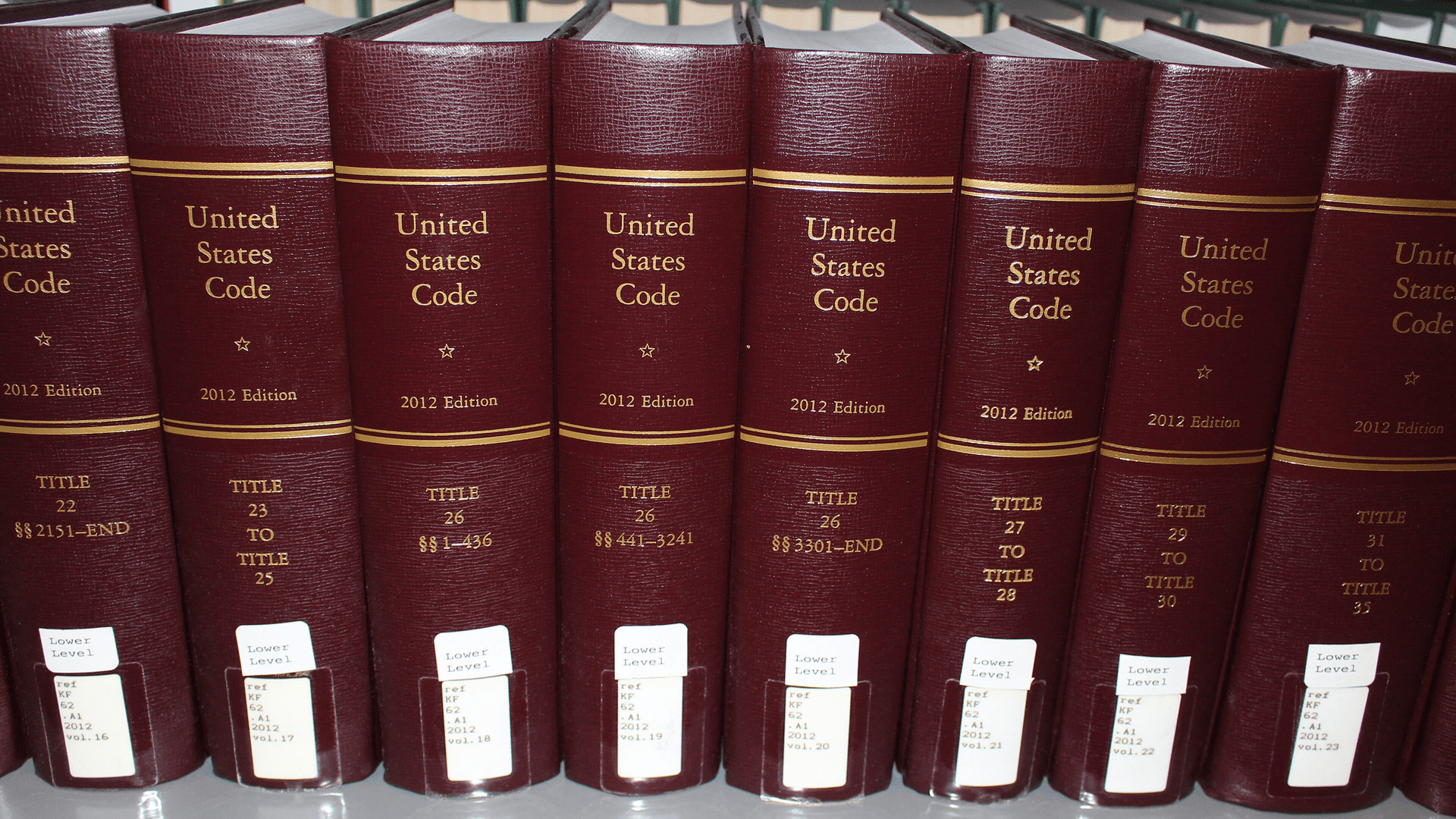
Hero image: volumes of the United States Code, 2012 Official Edition, by Coolcaesar, licensed CC BY-SA 4.0 (creativecommons.org/licenses/by-sa/4.0). Via Wikimedia Commons.
Take our professional IQ test
Want to know your IQ? Try the first ever professional online IQ test.