🇺🇸The official website of Riot IQ
Log in
  • Home
  • About

Measure your
intelligence online.

Google

Assessments

  • All IQ Tests
  • Basic IQ Test
  • Full IQ Test
  • Custom IQ Test
  • Free IQ Test

Our Socials

  • X
  • YouTube
  • Facebook
  • LinkedIn

Other IQ Tests

  • WAIS-V
  • SB-5
  • Raven's 2
  • RIAS-2
  • CogAT 9
  • WISC-V

Community

  • Join Subreddit
  • Join Discord

Other Pages

  • Test Manual
  • Administer IQ Tests
  • About Us
  • Articles
  • Data
  • FAQ

Research

  • What do polygenic scores really predict?
  • Working speed and ability on the RIOT

Intelligence Journals & Organizations

  • Human Intelligence Research & Education (HIRE) Foundation
  • International Society for Intelligence Research (ISIR)
  • Intelligence & Cognitive Abilities Journal (ICA)
  • Intelligence Journal
  • Mensa Foundation

Contact

  • Email
  • Support

News & Press

  • International Society for Intelligence Research
  • American Thinker
  • Mensa Foundation (1/2)
  • Mensa Northern New Jersey
  • The University of Western Australia
  • Prolific
  • Quillette
  • Brainz

Our Articles

  • Gmatclub (1/2)
  • ApolloTechnical
  • LessWrong
  • Psychreg
  • Study in Switzerland
  • SuccessConsciousness
  • Creative Organizational Design (1/2)
  • ABNewsWire
  • Vanderbilt University

Our Articles

  • The Globe and Mail
  • Barchart
  • Journal
  • Mensa Foundation (2/2)
  • Psychologs
  • Creative Organizational Design (2/2)
  • AZBigMedia
  • Thoughts on Life and Love
  • Anxiety and Depression Association of America

Our Articles

  • Before It's News
  • Siglo XXI
  • TechBullion
  • Medium
  • Gmatclub (2/2)
  • MSN
  • National Review
  • Minding the Campus
  • Launching Next

Our Articles

  • Comparing Cronbach’s Alpha and McDonald’s Omega Reliability
  • Breaking the Intelligence & IQ Taboo
  • What is the Flynn Effect?
  • A Comprehensive History of IQ Tests
  • The 15 Subtests of the RIOT

Our Articles

  • How to Take an IQ Test
  • How to Calculate IQ
  • What is the RIOT IQ Test?
  • The Pro-Human Aspects of Intelligence Research
  • What is an IQ Test? A Beginner's Guide.

Our Articles

  • 5 Best IQ Tests in 2025
  • Cognitive Profiles on the RIOT IQ Test Results
  • 6 Cognitive Abilities of the RIOT
  • Are There Any Professional and Real Online IQ Tests?

Our Articles

  • Resources to Learn About IQ and Intelligence
  • Studying IQ Matters
  • The Search for Albert Einstein's IQ
  • Do Non-g Gains from the Flynn Effect Matter?

Riot IQ © 2026

  • Terms of Service
  • Privacy Policy
  • BAA Agreement
  • Test Administrator Terms
  • Terms of Service
  • •Privacy Policy
  • •BAA Agreement
  • •Test Administrator Terms

Table of Contents

  • Does Emotional Intelligence Correlate with Real-World Outcomes?
  • Theoretical Problems
  • Conclusion
Nov 7, 2025·Advanced Topics & Research

Is Emotional Intelligence a Real Ability that Is Helpful in Life?

A critical examination of emotional intelligence research reveals weak empirical support for EI as a distinct psychological ability. While emotion regulation matters, current evidence suggests EI may simply overlap with existing personality traits and general intelligence rather than representing a separate, meaningful construct with real-world importance.

Dr. Russell T. WarneChief Scientist
Share
Is Emotional Intelligence a Real Ability that Is Helpful in Life?
While a superior IQ doesn't ensure success, wealth, or contentment in life, educational systems and society emphasize academic prowess while overlooking emotional intelligence—traits that significantly influence personal outcomes. Managing emotional life requires distinct competencies, much like mathematics or literacy, and proficiency in these skills explains why some individuals flourish while others with comparable intellect struggle (Goleman, 1995, p. 36).

Non-cognitive behaviors and experiences make humans compelling subjects of study. Though intelligence and cognitive capacities fascinate researchers, a purely logical existence lacks warmth, and experiencing love, suffering, desire, and diverse emotions constitutes a vital aspect of being human. Consequently, psychologists have extensively examined emotion over the past century. From this work emerged emotional intelligence—a concept that has permeated popular culture, with many viewing emotion-based reasoning as essential for sound decision-making and meaningful living (Goleman, 1995).

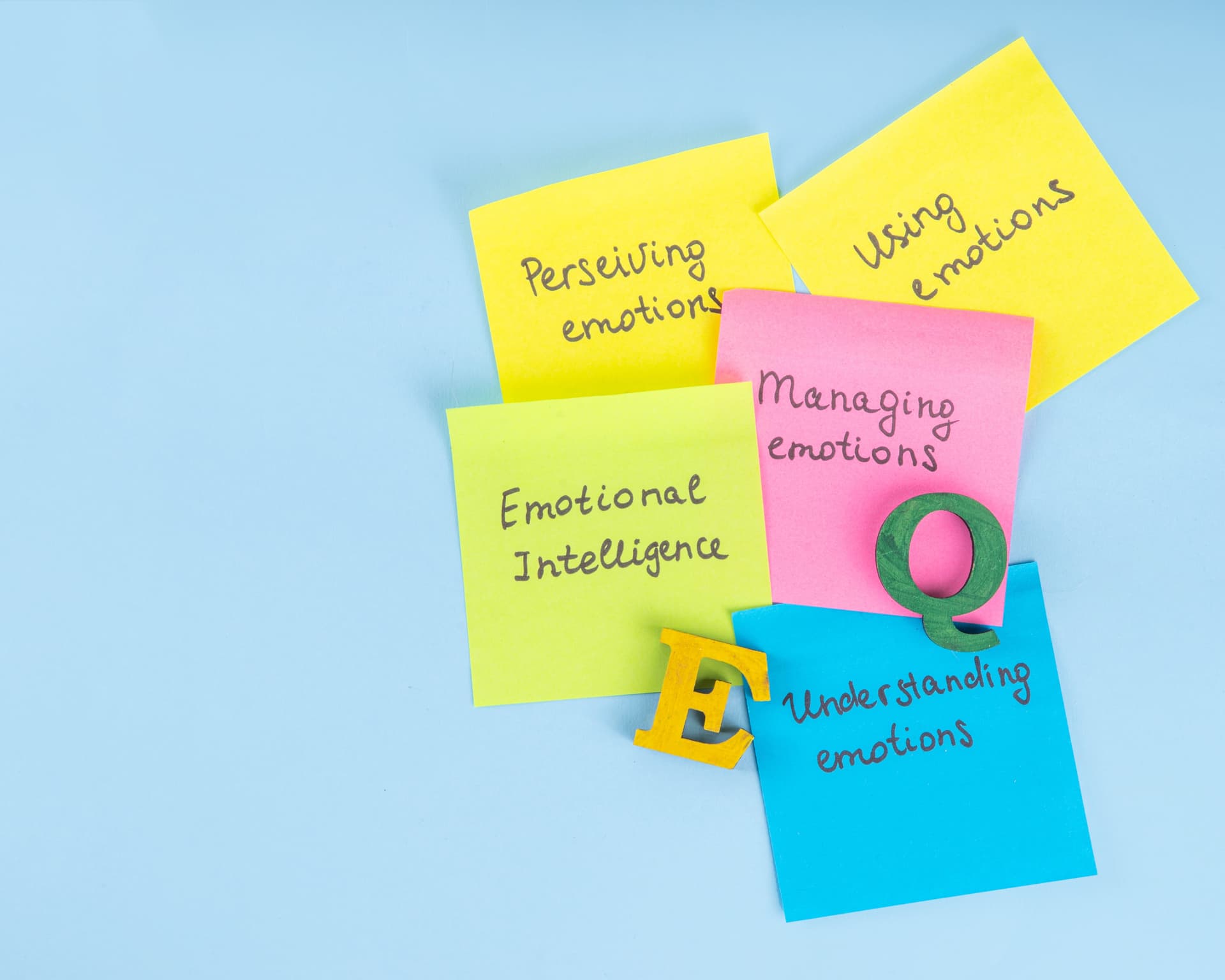
Definitions of emotional intelligence vary widely, with authorities sometimes disagreeing so fundamentally that it's uncertain whether they're describing the same characteristic (Matthews, Roberts, & Zeidner, 2004; Waterhouse, 2006). This chapter adopts the definition from leading researchers: "the capacity to reason, understand, and manage emotions," including the emotion system's ability to utilize emotion for enhanced thinking (Mayer, Salovey, & Caruso, 2008, p. 321). Advocates view this trait as comparable to other reasoning capabilities—just as verbal reasoning involves understanding language, emotional intelligence applies similar processes to emotions. Rather than regarding emotion as irrational or detrimental to clear thinking, people can leverage it to enhance life functioning (Mayer et al., 2004).

Leading authorities identify two components: reasoning with and about emotion, and employing emotion to strengthen thinking abilities (Mayer et al., 2008). People theoretically use emotional intelligence to recognize emotions in themselves and others, enhance decision-making, and regulate their own and others' emotional states. If genuine, this ability would prove valuable in situations requiring composure, interpersonal problem-solving, and addressing concerns of others, making it particularly relevant for workplace and personal contexts (Pesta et al., 2015).


Does Emotional Intelligence Correlate with Real-World Outcomes?

While theorizing has merit, emotional intelligence's value depends on predicting actual outcomes. Proponents acknowledge this necessity (Mayer & Salovey, 1997). Reported correlations with variables like job performance and social support appear modest, but most studies lack peer review or publication (Matthews et al., 2004; Waterhouse, 2006). Available research tends toward poor design and underwhelming findings (N. Brody, 2004). Published literature shows emotional intelligence as a weaker academic performance predictor than IQ (Siu & Reiter, 2009), with correlations of r = .23 for academic success and r = .28 for job performance versus intelligence's r ≈ .50-.70 for academics and r ≈ .25-.50 for job performance. Research on interpersonal outcomes like avoiding divorce or maintaining friendships has proven disappointing, with correlations rarely exceeding .30 (Mayer et al., 2004, 2008).

These weak correlations may reflect that emotional intelligence tests partially measure Big Five personality traits important for functioning (Matthews et al., 2004). Controlling for personality traits often reduces correlations to near-zero (N. Brody, 2004), suggesting relationships between emotional intelligence and outcomes stem solely from personality trait overlap. Controlling for intelligence similarly eliminates correlations with academic outcomes (Mayer et al., 2004), indicating emotional intelligence offers little novelty.


Theoretical Problems

Like other proposed intelligences, emotional intelligence faces theoretical challenges questioning its existence. One issue: why must emotion management, perception, and utilization constitute an intelligence (Locke, 2005)? Expanding intelligence definitions risks diluting the term's meaning.

Fundamentally, there's no justification for why g cannot fulfill emotional intelligence's role. Research demonstrates g reasons about others' emotions and mental states (Coyle et al., 2018; Schlegel et al., 2020). If g handles verbal, spatial, and logical content, why not emotions? Emotional intelligence theorists cite unique neurological processing (Mayer et al., 2008), yet auditory and visual information also process uniquely while g integrates them.

Another problem involves claiming emotions provide informational input for conclusions (Mayer et al., 2008). However, this reverses causality—believing danger exists creates fear, not vice versa (Locke, 2005). Emotions are automatic and irrational, making them inherently unsuited for reasoning, a contradiction theorists haven't resolved.


Conclusion

Emotional intelligence possesses compelling aspects, potentially bridging intelligence and emotion research to illuminate human decision-making. It offers valuable perspectives on interpersonal challenges (Matthews et al., 2004), with evidence supporting elements like emotional self-regulation's importance during adolescence (Trentacosta & Shaw, 2009). However, research hasn't substantiated claims that emotional intelligence constitutes a genuine trait with significant real-world impact. Currently, "there is no empirical data supporting a causal link between EI and any of its supposed, positive effects" (Matthews et al., 2004, p. 189).

This dispute carries practical implications. Advocates promote interventions to enhance emotional intelligence in schools and corporations (Cook et al., 2018). If unreal or unimportant, these programs waste resources better spent on effective training. Proponents should moderate enthusiasm, strengthen research quality, and resolve theoretical contradictions (Waterhouse, 2006) before implementing such practices.

Whether emotional intelligence survives remains uncertain. Regardless, emotions remain crucial to human experience, and researching them advances understanding of humanity. Merging intelligence and emotion concepts would constitute a major psychological breakthrough, but until substantiated, skepticism about emotional intelligence's real-world significance is warranted.


From Chapter 26 of "In the Know: Debunking 35 Myths About Human Intelligence" by Dr. Russell Warne (2020)

Take our professional IQ test

Want to know your IQ? Try the first ever professional online IQ test.

Try our IQ test
Author
Dr. Russell T. WarneChief Scientist

Contact

Table of Contents

  • Does Emotional Intelligence Correlate with Real-World Outcomes?
  • Theoretical Problems
  • Conclusion
Article Categories
All ArticlesUnderstanding IQ ScoresTaking an IQ TestRIOT-Specific InformationGeneral IQ & IntelligenceAdvanced Topics & ResearchIQ Scores & InterpretationMensa & High-IQ SocietiesOnline IQ Tests IQ Test Basics & FundamentalsAverage IQ & DemographicsFamous People & IQHistory & Origins Of IQ TestingAccuracy, Reliability & CriticismSpecial Population & Related ConditionsImproving IQ / PreparationSpecific IQ Tests & FormatsIQ Testing for HR & RecruitmentSkills Assessment
Related Articles
What Is the Difference Between Intellectual Disability and Learning Disability? What Jobs Need High Spatial Ability?Is IQ Correlated With Dementia?Does High IQ Actually Correlate With Higher Salary After Age 30?High IQ vs. High EQ: Which One Predicts Long-Term Relationship Happiness?Are You Left-Brained or Right-Brained? What Neuroscience Actually SaysWhat Does Too Much Screen Time Do to Children's Brains?Types of IQ: The Quotients Explained (IQ, EQ, SQ, AQ, CQ)What Is the Dunning-Kruger Effect? What the Research Actually ShowsSame Test, Different Patterns: How ADHD and Autism Show Up Differently Across IQ SubtestsGeneral Intelligence vs. Multiple Intelligences: What Each Theory Gets RightNeuroplasticity in Your 30s and 40s: What the Science Actually SaysThe G-Factor vs. Gardner's Multiple Intelligences: What the Evidence Actually ShowsCan Hyperlexia Make You Seem Smarter Than You Actually Are?Is There a Correlation Between IQ and Reaction Time?Can Exercise Affect Your IQ Score?How Does IQ Change as a Person Ages?What Is the Flynn Effect and Why Are IQ Scores Rising?What Part of the Brain Controls IQ and Cognitive Function?Unlocking Your Potential: The Role of Online IQ TestingLogical Reasoning on an IQ Test: How It's Defined, Measured, and Why It Predicts So MuchThe Science Behind IQ Tests: Understanding Intelligence AssessmentExploring the Controversies Surrounding IQ TestsThe Future of IQ Testing: Trends and InnovationsVisual & Spatial Reasoning: What It Is and Why It Shows Up on an IQ TestFluid vs. Crystallized Intelligence: What the Difference Actually MeansIs Everyone About as Smart as I Am???Does Intelligence Research Undermine the Fight against Inequality?Does Intelligence Research Lead to Negative Social Policies?Do Past Controversies Taint Modern Research on Intelligence?Should Controversial or Unpopular Ideas Be Held to a Higher Standard of Evidence?Does Stereotype Threat Explain Score Gaps among Demographic Groups?Do Unique Influences Operate on One Group’s Intelligence Test Scores?Are Racial/Ethnic Group IQ Differences Completely Environmental in Origin?Do Males and Females Have the Same Distribution of IQ Scores?Is Emotional Intelligence a Real Ability that Is Helpful in Life?Is Very High Intelligence More Beneficial than Moderately High Intelligence?Are Intelligence Tests Designed to Create or Perpetuate a False Meritocracy?Is Intelligence Important in the Workplace?Do IQ Scores Just Measure How Good Someone is at Taking Tests?Are Admissions Tests A Barrier to College for Underrepresented Students? Do Non-Cognitive Variables Have Powerful Effects on Academic Achievement?Can Effective Schools Make Every Child Academically Proficient?Is Every Child Gifted?Does Improvability of IQ Mean Intelligence Can Be Equalized?Can Braining-Training Programs Raise IQ?Can Social Interventions Drastically Raise IQ?Are Genes Important for Determining Intelligence?Is Raising IQ Possible?Does IQ Reflect A Person’s Socioeconomic Status?Are Intelligence Tests Biased Against Diverse Populations?Is Practical Intelligence a Real Ability Separate from General Intelligence?Is Intelligence Just A Western Concept?Does IQ Correspond to Brain Anatomy or Functioning?Measuring Cognitive Aging with Memory and Processing Speed TasksComparing Cronbach’s Alpha and McDonald’s Omega ReliabilityWhat is the Flynn Effect? Is the World’s Collective IQ Increasing or Decreasing?How Do You Test Cognitive Functions?Does High IQ Correlate with Success?Creating an IQ TestIncreasing Your IQCulture-Fair Intelligence TestsFlynn EffectCognitive DevelopmentIQ Test QualityDo Non-g Gains from the Flynn Effect Matter?
Take our IQ tests

Basic IQ Test

5 subtests + 5 cognitive abilities

Take the IQ test

Features

  • ~13 Minutes
  • IQ score
  • Cognitive abilities breakdown
  • ±5.6 IQ margin of error

5/15 Subtests

Learn more
Vocabulary
Matrix Reasoning
SToVeS
Visual Reversal
Symbol Search
Most comprehensive

Full IQ Test

15 subtests + all cognitive abilities

Take the IQ test

Features

  • ~52 Minutes
  • IQ score
  • Cognitive abilities breakdown
  • ±3.7 IQ margin of error

15/15 Subtests

Learn more
Vocabulary, Information, Analogies
Matrix Reasoning, Visual Puzzles, Figure Weights
Object Rotation, SToVeS, Spatial Orientation
Computation Span, Exposure Memory, Visual Reversal
Symbol Search, Abstract Matching
Simple Reaction Time, Choice Reaction Time
Compare all tests