Anesthesia and IQ: Does General Anesthesia Lower a Child's IQ?
Anesthesia and IQ: in the best randomized trial, under an hour of general anesthesia in infancy changed IQ at age 5 by 0.23 points, essentially zero.
Dr. Russell T. WarneChief Scientist
Share
A single, short general anesthetic in early childhood has no measurable effect on IQ: in the largest randomized trial, children given about an hour of general anesthesia as infants scored 0.23 points lower at age 5 than children given an awake regional anesthetic, a difference statistically equivalent to zero. Questions remain about long or repeated exposures before age 3, where some studies find small differences in specific skills, but even there, overall IQ scores barely move.
This page covers why the worry started, what the randomized trial and the sibling and cohort studies show, what the US Food and Drug Administration (FDA) said and why, how to read the remaining uncertainty about repeated exposures, and briefly what is known about memory and thinking problems after surgery in older adults.
Why people worry that anesthesia lowers IQ
The concern began in animal laboratories. In a 2003 study, Vesna Jevtovic-Todorovic and colleagues gave 7-day-old rats a combination of common anesthetic drugs (midazolam, nitrous oxide and isoflurane) for 6 hours. The rats showed widespread death of brain cells by "apoptosis", a form of programmed cell death, along with lasting memory and learning problems. Every general anesthetic in common use acts on one of the same two receptor systems in the brain (NMDA or GABA-A receptors), so the finding raised an obvious question about human infants, whose brains are also growing rapidly.
Early human studies seemed to point the same way. Using the Western Australian Raine cohort, Caleb Ing and colleagues compared 321 children who had anesthesia before age 3 with 2,287 who did not. At age 10, the exposed children had a higher risk of scoring in the impaired range on language tests and on the Colored Progressive Matrices, a nonverbal reasoning test (adjusted risk ratio 1.69 for the reasoning test). That higher risk was present even after a single exposure.
The trouble with such cohort studies is that children who need surgery are different from children who do not. The illness that requires an operation, the hospital stays around it, and the family circumstances that go with both can affect development on their own. A cohort study cannot cleanly separate the anesthetic from the reason the child needed it, which is why the randomized trial matters so much.
What the GAS trial found
The General Anaesthesia compared to Spinal anaesthesia (GAS) trial, led by Mary Ellen McCann and published in The Lancet in 2019, is the strongest evidence available. Researchers at 28 hospitals in seven countries randomly assigned 722 infants having inguinal hernia repair to one of two kinds of anesthesia. Half received an awake-regional anesthetic, which numbs the lower body while the baby stays awake. The other half received general anesthesia with the inhaled drug sevoflurane, for a median of 54 minutes. All infants were under 60 weeks' postmenstrual age and had been born after 26 weeks of pregnancy, so the trial included some babies born early (our page on IQ and premature birth covers the separate effects of preterm birth itself).
At age 5, the children took the WPPSI-III, a standard individually administered IQ test for young children (our guide to the WPPSI test explains how it works). The testers did not know which group each child had been in. Mean full-scale IQ was 99.08 in the awake-regional group and 98.97 in the general anesthesia group. The difference was 0.23 points, with a 95% confidence interval (the range of values compatible with the data) of -2.59 to 3.06. The researchers had decided in advance that any difference smaller than 5 points would count as equivalent, and the whole interval sat well inside that margin.
Two limits are worth stating. The exposure was short, under an hour for most children. The study population was also predominantly male, which the authors flag in their conclusion. The trial answers the question for one brief anesthetic in infancy, and says nothing directly about long or repeated anesthetics.
What sibling and cohort studies show
Several large observational studies used stronger designs than earlier cohorts, and they point in the same direction as GAS for single exposures.
• PANDA (United States): Lena Sun and colleagues compared 105 pairs of siblings in which one child had a single general anesthetic for hernia surgery before 36 months and the other had none. Tested at an average age of about 10 to 11, both groups averaged a full-scale IQ of 111. The difference between siblings was -0.2 points, and no statistically significant differences appeared in memory, attention, language or behavior.
• MASK (Minnesota): David Warner and colleagues tested 997 children from Olmsted County at ages 8 to 12 or 15 to 20. Compared with unexposed children, those with one anesthetic before age 3 scored 0.5 points lower in IQ and those with two or more scored 1.3 points lower, and neither difference was statistically significant. Children with multiple exposures did score lower on processing speed and fine motor skills, and their parents reported more problems with behavior, reading and executive function.
• Sweden (whole population): Pia Glatz and colleagues followed 33,514 children who had one surgery with anesthesia before age 4 and 159,619 matched children who had none. Exposure was linked to school grades at 16 that were 0.41% lower and conscription IQ scores at 18 that were 0.97% lower. The authors noted that these gaps were markedly smaller than the differences linked to sex, maternal education or month of birth.
The pattern across these studies is consistent. A single anesthetic shows no meaningful link with later IQ. Multiple exposures show, at most, small differences in particular skills, and the MASK authors treated those secondary findings as hypotheses to test, since children who need several operations may also differ in their underlying health.
What the FDA warning says, and what it does not
In December 2016, the FDA issued a drug safety communication about general anesthetic and sedation drugs in children under 3 and in pregnant women in the third trimester. In April 2017 it approved label changes. The new warning says that exposure to these medicines "for lengthy periods of time or over multiple surgeries or procedures" may negatively affect brain development in children younger than 3. The labels also describe the animal studies, in which exposures of more than 3 hours caused widespread loss of nerve cells in the developing brain.
The same FDA alert states that surgeries or procedures in children younger than 3 should not be delayed or avoided when medically necessary, and that parents with questions should talk to their health care professionals. In practice, that means the surgeon and the anesthesiologist, who can explain how long a planned procedure is likely to take, whether more procedures may follow, and the risks of waiting. The warning is aimed at long and repeated exposures, which is the same place the remaining scientific uncertainty sits.
What about adults and older patients?
Older adults sometimes notice memory or concentration problems after an operation, often called "postoperative cognitive dysfunction". The best known early study, ISPOCD1, tested 1,218 patients aged 60 and older before and after major non-cardiac surgery. Compared with people who had not had surgery, 25.8% of patients showed a measurable decline at 1 week and 9.9% at 3 months, against 3.4% and 2.8% of controls. Age was the only risk factor that predicted the later problems. These declines followed surgery and anesthesia together, so the study cannot assign them to the anesthetic alone, and they were measured with memory and attention tests, which are narrower than a full IQ assessment. Our page on measuring cognitive aging explains how researchers track these kinds of changes. Anyone who notices lasting changes after surgery should raise them with their doctor.
Frequently asked questions
Does general anesthesia lower IQ in children?
The best evidence says a single short anesthetic does not. In the randomized GAS trial, IQ at age 5 differed by 0.23 points between children who had general anesthesia as infants and those who stayed awake with a regional anesthetic.
Is repeated anesthesia before age 3 harmful to the brain?
The evidence is less certain. In the MASK study, children with multiple exposures had IQ scores only 1.3 points lower (not statistically significant), but scored lower on processing speed and fine motor tasks, and the FDA's 2017 warning focuses on lengthy or repeated exposures.
Why did the FDA warn about anesthesia in young children?
The warning was based mainly on animal studies, in which young animals exposed for more than 3 hours lost brain cells and later showed learning problems. The FDA also stated that medically necessary procedures should not be delayed or avoided.
Should my child's surgery be postponed because of anesthesia?
That is a decision for the surgeon and anesthesiologist, who can weigh the risks of waiting against the procedure's expected length and any further procedures. The FDA has stated that necessary surgery in young children should not be delayed or avoided.
Can anesthesia affect memory in older adults?
Some older patients show measurable declines in memory and thinking tests after major surgery, most of which fade over the following months. In the ISPOCD1 study, 9.9% of patients aged 60 and older showed a decline at 3 months, compared with 2.8% of people who had not had surgery.
The takeaway
The link between anesthesia and IQ is much weaker than early animal studies suggested. A randomized trial of 722 infants found a 0.23-point difference in IQ at age 5 after about an hour of general anesthesia, and a sibling study found a 0.2-point difference. Questions remain about long or repeated anesthetics before age 3, where some studies find small differences in specific skills while overall IQ barely moves, and parents with concerns should talk to the surgical team. If you want a careful measure of your own reasoning abilities, you can take a full-length online IQ test.
References
1. Jevtovic-Todorovic, V., Hartman, R. E., Izumi, Y., Benshoff, N. D., Dikranian, K., Zorumski, C. F., Olney, J. W., & Wozniak, D. F. (2003). Early exposure to common anesthetic agents causes widespread neurodegeneration in the developing rat brain and persistent learning deficits. Journal of Neuroscience, 23(3), 876-882. [doi.org/10.1523/JNEUROSCI.23-03-00876.2003](. doi.org
2. Ing, C., DiMaggio, C., Whitehouse, A., Hegarty, M. K., Brady, J., von Ungern-Sternberg, B. S., Davidson, A., Wood, A. J. J., Li, G., & Sun, L. S. (2012). Long-term differences in language and cognitive function after childhood exposure to anesthesia. Pediatrics, 130(3), e476-e485. [doi.org/10.1542/peds.2011-3822](. doi.org
3. McCann, M. E., de Graaff, J. C., Dorris, L., Disma, N., Withington, D., Bell, G., Grobler, A., Stargatt, R., et al. (2019). Neurodevelopmental outcome at 5 years of age after general anaesthesia or awake-regional anaesthesia in infancy (GAS): An international, multicentre, randomised, controlled equivalence trial. The Lancet, 393(10172), 664-677. [doi.org/10.1016/S0140-6736(18)32485-1](. doi.org
4. Sun, L. S., Li, G., Miller, T. L. K., Salorio, C., Byrne, M. W., Bellinger, D. C., Ing, C., Park, R., et al. (2016). Association between a single general anesthesia exposure before age 36 months and neurocognitive outcomes in later childhood. JAMA, 315(21), 2312-2320. [doi.org/10.1001/jama.2016.6967](. doi.org
5. Warner, D. O., Zaccariello, M. J., Katusic, S. K., Schroeder, D. R., Hanson, A. C., Schulte, P. J., Buenvenida, S. L., Gleich, S. J., et al. (2018). Neuropsychological and behavioral outcomes after exposure of young children to procedures requiring general anesthesia: The Mayo Anesthesia Safety in Kids (MASK) study. Anesthesiology, 129(1), 89-105. [doi.org/10.1097/ALN.0000000000002232](. doi.org
6. Glatz, P., Sandin, R. H., Pedersen, N. L., Bonamy, A.-K., Eriksson, L. I., & Granath, F. (2017). Association of anesthesia and surgery during childhood with long-term academic performance. JAMA Pediatrics, 171(1), e163470. [doi.org/10.1001/jamapediatrics.2016.3470](. doi.org
7. U.S. Food and Drug Administration. (2017, April 27). General anesthetic and sedation drugs: FDA approves label changes for use in young children [FDA alert, reproduced by the American Society of Anesthesiologists]. [asahq.org](. asahq.org
8. Moller, J. T., Cluitmans, P., Rasmussen, L. S., Houx, P., Rasmussen, H., Canet, J., Rabbitt, P., Jolles, J., et al. (1998). Long-term postoperative cognitive dysfunction in the elderly: ISPOCD1 study. The Lancet, 351(9106), 857-861. [doi.org/10.1016/S0140-6736(97)07382-0](. doi.org
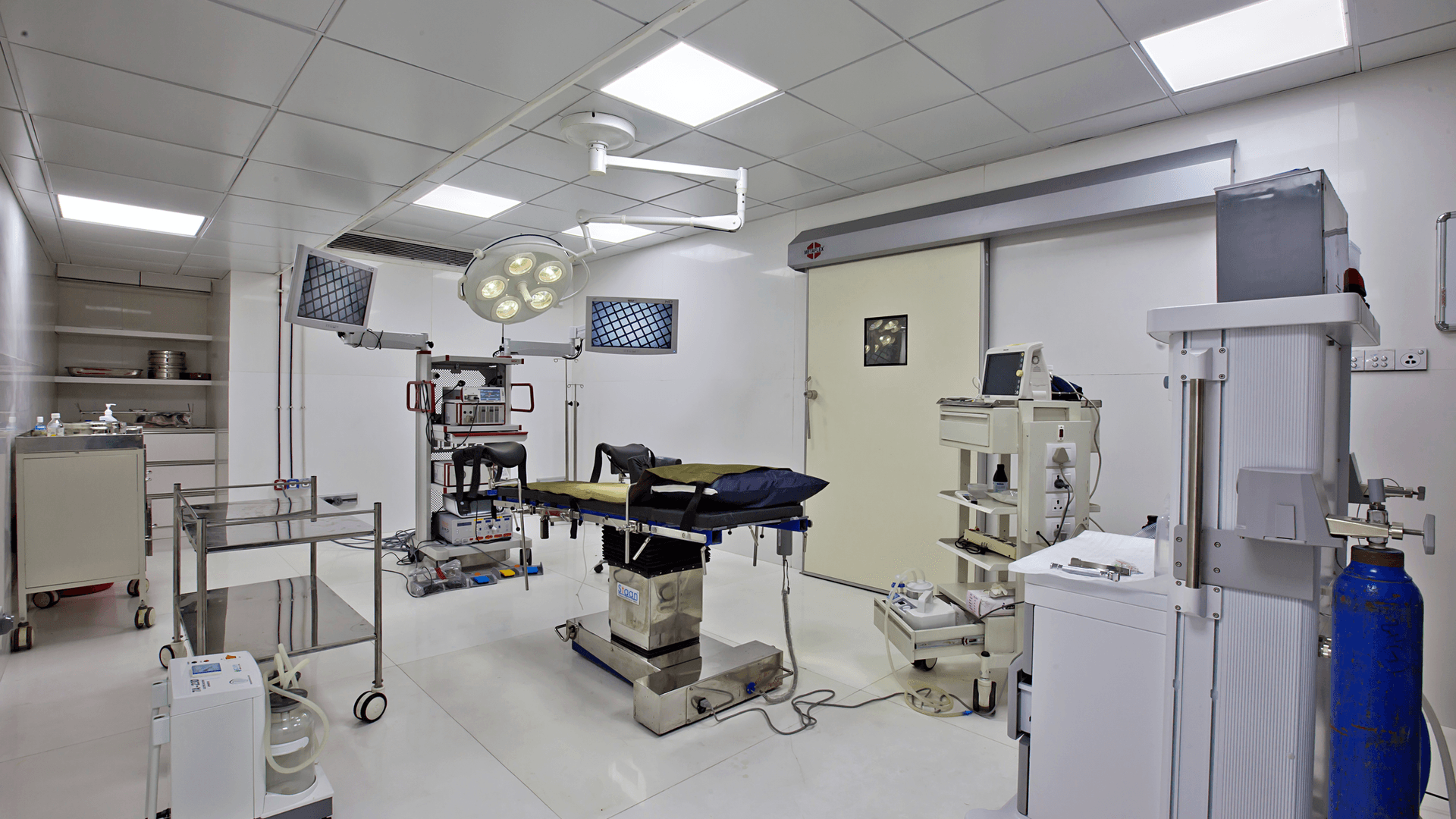
Hero image: Laparoscopic operating theatre, by Dr.jayesh amin, CC BY-SA 3.0. Via Wikimedia Commons.
Take our professional IQ test
Want to know your IQ? Try the first ever professional online IQ test.