Social Media and IQ: Does Scrolling Make You Less Intelligent?
Social media and IQ: no study shows social media lowers IQ. Heavy teen users score slightly lower on some tests, about 0.1 SD, and the cause is unproven.
Dr. Russell T. WarneChief Scientist
Share
There is no direct evidence that social media lowers IQ. The largest study of adolescents, from the US ABCD cohort, found that young teens whose daily use grew by about three hours by age 13 scored roughly 1.8 points lower on a composite cognitive score (about 0.12 standard deviations) than peers who barely used it, and that observational design cannot show which came first.
The effects that have been found are small, uneven across tests and hard to separate from family background, sleep and attention problems. This article covers what the best studies of teenagers and adults show, what is known about short videos and smartphones, whether social media explains falling IQ scores, and why the claim spreads faster than the evidence.
What the best studies of teenagers show
Most of the strongest data come from the "Adolescent Brain Cognitive Development" (ABCD) Study, which has followed thousands of US children from age 9 or 10 with repeated cognitive testing. (Younger children and screens in general are covered in our article on what too much screen time does to children's brains; this page sticks to adolescents and adults.)
• Use trajectories: Nagata and colleagues (2025) grouped 6,554 ABCD participants by how their social media use changed between ages 9 and 13. About 57.6% stayed at little or no use, in 36.6% daily use grew by about 1.3 hours, and in 5.8% it grew by about 3 hours. At the two-year follow-up, the low-increasing group scored 0.85 points lower on a composite cognitive score and the high-increasing group 1.76 points lower, on tests with a standard deviation of 15. The clearest gaps were in memory (4.51 points for the high group) and vocabulary (3.85 points), while attention and processing speed tests showed no significant difference.
• Problematic use: a follow-up of 4,809 ABCD adolescents by the same team (Nagata et al., 2026) looked at problematic social media use instead of hours. Teens on a moderate-to-high trajectory scored lower on memory (standardized β = -0.24, roughly 3.6 points on a 15-point scale) and vocabulary (β = -0.17) than teens with little or no problematic use.
• Controlling for genes: Sauce and colleagues (2022) studied 9,855 ABCD children and adjusted for socioeconomic status and a "polygenic score" for cognitive performance, meaning a DNA-based estimate of genetic predisposition. At age 9-10, time spent socializing online (social media, texting and video chat) correlated -.10 with intelligence. Over the next two years, socializing had no effect on the change in intelligence, while gaming had a positive one, which our article on video games and IQ discusses.
Nagata's models adjusted for income, parent education, ADHD and depression symptoms, other screen time and each child's baseline score, which is more than most studies do. The authors still describe the data as observational, with self-reported social media time and possible residual confounding.
Short videos, smartphones and attention
Much of the public worry concerns attention more than IQ, and here the associations are larger but harder to interpret.
• Short-form video: a meta-analysis by Nguyen and colleagues (2025) pooled 71 studies with 98,299 participants. Heavier use of TikTok-style short videos was associated with poorer cognition (r = -.34), especially attention (r = -.38) and inhibitory control, the ability to resist impulses (r = -.41). The authors noted that few studies examined memory or reasoning, the abilities closest to IQ, and the pooled correlations cannot show whether short videos impair attention or whether people with weaker self-control are drawn to them.
• The "brain drain" effect: Ward and colleagues (2017) reported that the mere presence of one's own smartphone reduced performance on working memory and fluid reasoning tasks. A pre-registered direct replication by Ruiz Pardo and Minda (2022) found no difference between phone-location conditions. Parry's (2024) meta-analysis (k = 56, n = 7,093) found a significant pooled effect only for working memory, smaller than originally claimed, and judged the studies generally underpowered. A second meta-analysis, by Böttger and colleagues (2023), reported an overall negative effect that varied by cognitive domain and by country.
Firth and colleagues (2019), reviewing the psychological and brain-imaging research, argued that the constant stream of online information encourages divided attention at the expense of sustained concentration, and they identified effects on young people's cognitive development as a priority for future research. That is a reasonable hypothesis, and it remains one.
Is social media behind falling IQ scores?
IQ scores rose through most of the 20th century, a pattern called the Flynn effect, and in some countries they have since stalled or fallen. Social media is a popular suspect, but the timing does not fit.
Bratsberg and Rogeberg (2018) analyzed conscription test scores for Norwegian men born from 1962 to 1991. Average scores rose from 99.5 for the 1962 cohort to 102.3 for the 1975 cohort, then fell to 99.4 for men born in 1989. Conscripts were tested at age 18-19, so men born in the late 1970s were tested in the mid-1990s, years before social media existed, and the decline was already under way. The same rise and fall appeared within families, comparing brothers, which argues against explanations based on genes or on differences between families and points to environmental causes. Our article on the Flynn effect and why IQ scores rose explains the broader debate.
None of this shows that social media is harmless. It does mean that falling national scores cannot be pinned on it.
Why the claim spreads, and what confounds it
The "social media makes you dumber" claim draws on real findings about wellbeing, attention and sleep, then stretches them to IQ.
• Wellbeing is not intelligence: Orben and Przybylski (2019) analyzed three large datasets covering 355,358 adolescents and found that digital technology use explained at most 0.4% of the variation in wellbeing. That study did not measure IQ at all, and even for wellbeing the effect was tiny.
• Sleep displacement: a meta-analysis by Ahmed and colleagues (2024), drawing on 98 studies, found that problematic social media use was associated with more sleep problems as well as more depression and anxiety. Sleep loss is a plausible route to worse test performance, though the studies cannot show which comes first.
• Reverse causation: children who find schoolwork harder, or who have more attention difficulties, may spend more time online. In Sauce's data, all screen-time types were negatively associated with both the polygenic score and socioeconomic status.
• Family background: heavy users can differ from light users in income, parental education and mental health. Good studies adjust for the differences they can measure, but unmeasured ones may remain.
It is also worth keeping the size in view. A 1.8-point gap on a composite score is a group average. It would be invisible in any individual, and much smaller than the measurement error of a single IQ test.
Frequently asked questions
Does social media lower your IQ?
There is no direct evidence that it does. Heavy adolescent users score slightly lower on some cognitive tests, but the studies are observational and the gaps are small.
How much lower do heavy social media users score?
In the largest US study, teens whose daily use grew by about three hours by age 13 scored about 1.8 points lower on a composite cognitive score with a standard deviation of 15, with larger gaps for memory and vocabulary.
Do TikTok and short videos hurt attention?
Heavier short-video use is linked with poorer attention and impulse control (correlations of about -.4), but that evidence is correlational, so it cannot say which causes which.
Is the smartphone "brain drain" effect real?
The evidence is mixed. A direct replication failed, and one meta-analysis found only a small effect on working memory, while another reported a broader negative effect.
Is social media causing the decline in IQ scores?
Unlikely. In Norway, scores began falling for men born after 1975, who were tested in the 1990s, well before social media.
The takeaway
Social media has not been shown to lower IQ. The best adolescent data show small differences, concentrated in memory and vocabulary, that may reflect who uses social media heavily as much as what it does to them. The more plausible risks run through sleep and attention, and those deserve study on their own terms. If you want a clear picture of your own reasoning ability, you can take a professionally developed IQ test.
References
1. Nagata, J. M., Wong, J. H., Kim, K. E., Richardson, R. A., Nayak, S., Potes, C., Rauschecker, A. M., Scheffler, A., Sugrue, L. P., Baker, F. C., & Testa, A. (2025). Social media use trajectories and cognitive performance in adolescents. JAMA, 334(21), 1948-1950. [doi.org/10.1001/jama.2025.16613](. doi.org
2. Nagata, J. M., Wong, J. H., Hong, S. L., Nayak, S., Li, E. J., Ganson, K. T., Piatkowski, T., He, J., Brindis, C. D., Testa, A., & Baker, F. C. (2026). Problematic social media use trajectories are linked with lower cognitive performance in adolescents. American Journal of Preventive Medicine, 71(5), 108509. [doi.org/10.1016/j.amepre.2026.108509](. doi.org
3. Sauce, B., Liebherr, M., Judd, N., & Klingberg, T. (2022). The impact of digital media on children's intelligence while controlling for genetic differences in cognition and socioeconomic background. Scientific Reports, 12, 7720. [doi.org/10.1038/s41598-022-11341-2](. doi.org
4. Nguyen, L., Walters, J., Paul, S., Monreal Ijurco, S., Rainey, G. E., Parekh, N., Blair, G., & Darrah, M. (2025). Feeds, feelings, and focus: A systematic review and meta-analysis examining the cognitive and mental health correlates of short-form video use. Psychological Bulletin, 151(9), 1125-1146. [doi.org/10.1037/bul0000498](. doi.org
5. Ward, A. F., Duke, K., Gneezy, A., & Bos, M. W. (2017). Brain drain: The mere presence of one's own smartphone reduces available cognitive capacity. Journal of the Association for Consumer Research, 2(2), 140-154. [doi.org/10.1086/691462](. doi.org
6. Ruiz Pardo, A. C., & Minda, J. P. (2022). Reexamining the "brain drain" effect: A replication of Ward et al. (2017). Acta Psychologica, 230, 103717. [doi.org/10.1016/j.actpsy.2022.103717](. doi.org
7. Parry, D. A. (2024). Does the mere presence of a smartphone impact cognitive performance? A meta-analysis of the "brain drain effect". Media Psychology, 27(5), 737-762. [doi.org/10.1080/15213269.2023.2286647](. doi.org
8. Böttger, T., Poschik, M., & Zierer, K. (2023). Does the brain drain effect really exist? A meta-analysis. Behavioral Sciences, 13(9), 751. [doi.org/10.3390/bs13090751](. doi.org
9. Firth, J., Torous, J., Stubbs, B., Firth, J. A., Steiner, G. Z., Smith, L., Alvarez-Jimenez, M., Gleeson, J., Vancampfort, D., Armitage, C. J., & Sarris, J. (2019). The "online brain": How the Internet may be changing our cognition. World Psychiatry, 18(2), 119-129. [doi.org/10.1002/wps.20617](. doi.org
10. Bratsberg, B., & Rogeberg, O. (2018). Flynn effect and its reversal are both environmentally caused. Proceedings of the National Academy of Sciences, 115(26), 6674-6678. [doi.org/10.1073/pnas.1718793115](. doi.org
11. Orben, A., & Przybylski, A. K. (2019). The association between adolescent well-being and digital technology use. Nature Human Behaviour, 3(2), 173-182. [doi.org/10.1038/s41562-018-0506-1](. doi.org
12. Ahmed, O., Walsh, E. I., Dawel, A., Alateeq, K., Espinoza Oyarce, D. A., & Cherbuin, N. (2024). Social media use, mental health and sleep: A systematic review with meta-analyses. Journal of Affective Disorders, 367, 701-712. [doi.org/10.1016/j.jad.2024.08.193](. doi.org
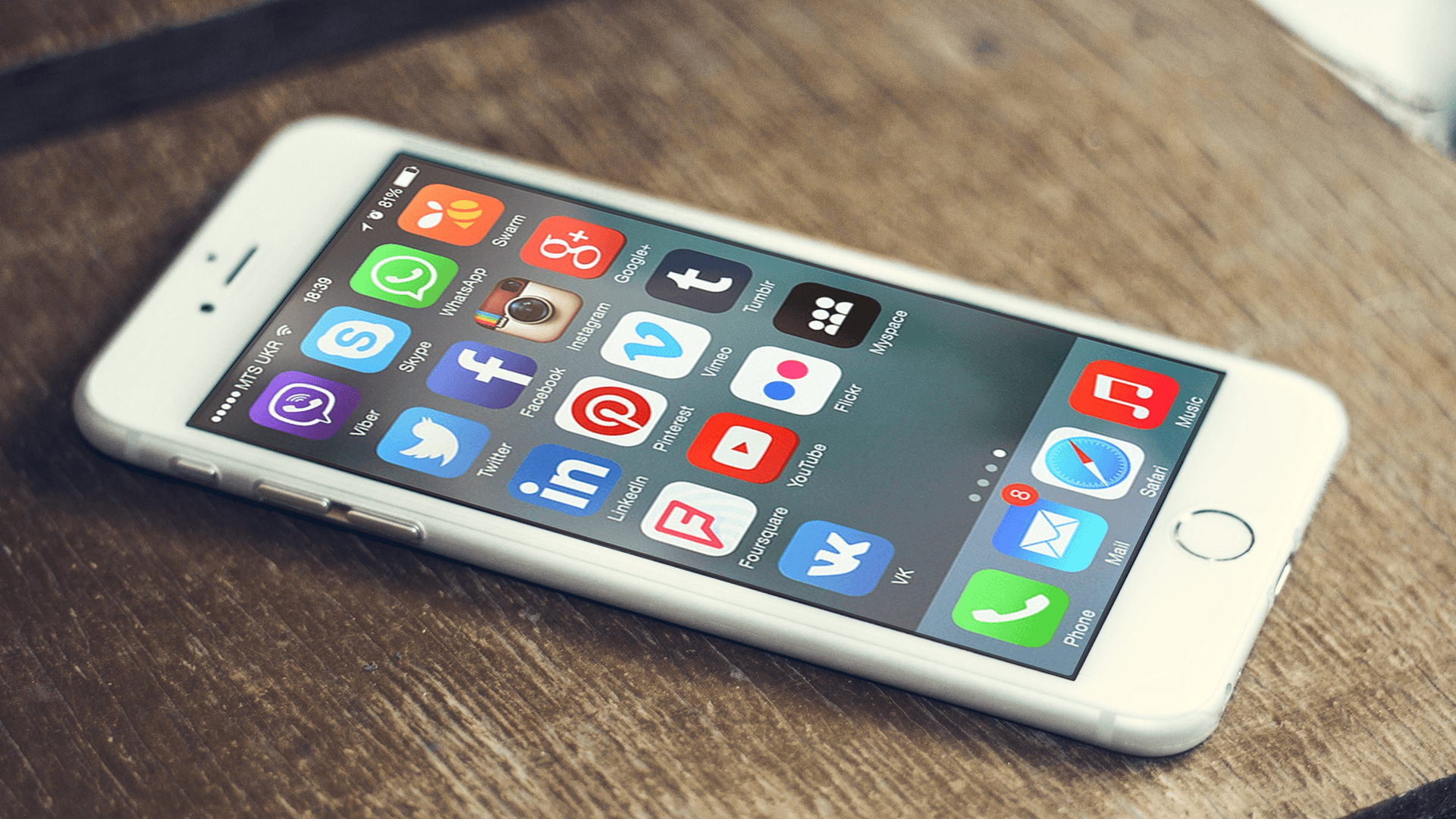
Hero image: Social Media App Icons On The Screen of A Smartphone, by mikemacmarketing, CC BY 2.0. Via Wikimedia Commons.
Take our professional IQ test
Want to know your IQ? Try the first ever professional online IQ test.