Anger and Intelligence: Is a Quick Temper a Sign of a High IQ? | Riot IQ
Oct 11, 2026·Advanced Topics & Research
Anger and Intelligence: Is a Quick Temper a Sign of a High IQ?
Anger and intelligence are barely related: trait anger correlates near zero with tested IQ, but quick-tempered people tend to overrate how smart they are.
Dr. Russell T. WarneChief Scientist
Share
A quick temper is not a sign of high intelligence. In the most direct recent test, trait anger correlated just .02 (men) and .05 (women) with scores on Raven's Advanced Progressive Matrices, which works out to less than one IQ point per standard deviation of anger, while angry people consistently rate their own intelligence higher than their test scores justify.
The anger and intelligence research has more to say about self-image than about ability. This page covers what studies of trait anger and measured IQ find, why angry people tend to overestimate how smart they are, how childhood IQ relates to later aggression and violence, what anger does to thinking in the moment, and the confounds behind the popular claim.
What studies of trait anger and IQ find
Psychologists separate "state anger," the emotion you feel in a given moment, from "trait anger," a stable tendency to get angry often and easily. The "sign of intelligence" question is about the trait, usually measured with questionnaire items such as "I am a hotheaded person."
• Couples study with a full matrices test: Górniak and colleagues (2024) measured trait anger and fluid intelligence (Raven's Advanced Progressive Matrices, 36 items) in 148 heterosexual couples. Trait anger correlated .02 with matrices scores in men and .05 in women. Neither correlation is distinguishable from zero.
• Earlier work from the same lab: Marcin Zajenkowski's group at the University of Warsaw has studied anger and intelligence for years. In a 2017 poster at the International Society for Intelligence Research (a conference abstract, not a peer-reviewed paper), he reported two samples of 314 and 230 people in which those high in trait anger "obtain low score in cognitive ability tests." Górniak and colleagues summarize the lab's 2015 paper as showing that angrier people display worse fluid intelligence.
Taken together, the measured link between trait anger and IQ runs from slightly negative to zero. Nothing in this literature suggests that hot-tempered people are smarter. To put a correlation of .05 in IQ terms, multiply by 15: a person one standard deviation above average in anger would be expected to score less than one point different from average, which is far smaller than the measurement error of any IQ test.
Why angry people think they are smarter
The more robust finding concerns self-perception. Zajenkowski and Gignac (2018) asked two samples (303 and 225 people) to rate their own intelligence and then gave them intelligence tests. Trait anger was positively related to "subjectively assessed intelligence," and this held even after controlling for objective intelligence. In other words, angrier people rated themselves as smarter than their scores warranted.
The authors explained this by contrasting anger with other negative emotions. Neuroticism goes with pessimism and a low sense of control, and neurotic people tend to underrate themselves. Anger goes with optimism, a feeling of control and approach motivation. In the second study, narcissism partly accounted for the link between anger and inflated self-ratings.
Other people do not share that inflated view. In the Górniak couples study, women rated angrier male partners as less intelligent (r = -.16), and anger still predicted lower partner ratings after the men's actual matrices scores were controlled. Angrier men were also less satisfied with their relationships, and so were their partners.
That gap between self-image and reality is one reason the popular claim survives. If quick-tempered people believe they are unusually bright, and say so, the idea that anger goes with intelligence gets repeated by the people it flatters. Self-ratings are only a moderate guide to tested ability in general (a meta-analysis of 36,833 people found r = .30; Patzl et al., 2024), and trait anger pushes them further off. That pattern sits at the far end from intellectual humility, the habit of recognising the limits of what one knows.
Childhood IQ, aggression and violence
Anger is a feeling and aggression is a behaviour, but the two are related, and the research on IQ and aggression is larger and older than the research on trait anger.
• A 22-year longitudinal study: Huesmann, Eron and Yarmel (1987) followed more than 600 people, along with their parents and children. Early IQ was related to early aggression, but it did not predict changes in aggression after age 8. Aggressive behaviour in childhood, on the other hand, predicted poorer intellectual achievement in adulthood. The authors proposed that low intelligence makes aggressive responses easier to learn early on, and aggression then makes further intellectual development harder.
• Swedish conscripts and their brothers: Frisell, Pawitan and Långström (2012) linked the cognitive test scores of 700,514 Swedish men at age 18 with later convictions for violent crime. Lower ability predicted more violent convictions, and the association barely changed after adjusting for childhood socioeconomic factors (β = -0.19 before, -0.18 after). Comparing full brothers, which removes factors that brothers share, cut the association roughly in half (β = -0.10). Most of the link remained even within families.
These are associations with aggression and violent crime, not with ordinary irritability, and most people who get angry are never violent. Aggression that is cold and planned rather than angry is a different topic, which our page on IQ and psychopathy covers.
Where the myth comes from, and what confounds it
Several things make "angry, so must be smart" feel more plausible than the data allow, starting with what anger does to reasoning while it lasts.
What anger does to thinking in the moment
State anger changes how people reason, though not always in the same direction.
• Riskier judgments: Lerner and Keltner (2001) found that angry people made optimistic risk estimates and risk-seeking choices, closer to happy people than to fearful ones. This held for naturally occurring and experimentally induced anger.
• More stereotyping: in Bodenhausen, Sheppard and Kramer's (1994) experiments, angry participants made more stereotypic social judgments and relied more on shortcuts, such as how credible a speaker seemed, when judging persuasive messages. Sad participants did not show this pattern.
• Sometimes more analysis: Moons and Mackie (2007) found that induced anger could increase careful processing. Angry participants were better at telling weak arguments from strong ones, and they used shortcuts mainly when the shortcut seemed valid.
So anger does not simply make thinking worse, which may help the stereotype of the brilliant hothead persist. These effects are about how people process information while angry. They do not change anyone's underlying reasoning ability.
Overconfidence, anecdotes and family background
• Overconfidence: as above, people high in trait anger rate their own intelligence higher than tests support.
• Memorable exceptions: a famously short-tempered scientist or artist makes a vivid story, while bright people who are calm rarely get anecdotes told about them.
• Two-way influence: Huesmann's model treats intellectual development and aggression as shaping each other over time, which makes simple cause-and-effect readings unreliable.
• Family background: the Swedish brother comparison showed that part of the IQ-violence link reflects factors shared within families, so studies that compare unrelated people overstate how closely ability and aggression are tied.
Managing anger well is closer to what psychologists call emotional regulation than to IQ, and our article on whether a person can have a high IQ and low emotional intelligence explains why the two can come apart. If anger is frequent or is causing problems in relationships or at work, a family doctor or a clinical psychologist is the right person to talk to.
Frequently asked questions
Is anger a sign of intelligence?
No. In a study of 148 couples, trait anger correlated .02 to .05 with matrices scores, and earlier work from the same lab found slightly lower scores among angrier people.
Do angry people have a lower IQ?
At most slightly, and in the most recent data not at all. Childhood aggression and violent crime show clearer links with lower ability, but ordinary irritability does not.
Why do angry people think they are smart?
Trait anger goes with optimism, a sense of control and, in part, narcissism. In two samples, angrier people rated their own intelligence higher than their test scores justified.
Does anger make you think less clearly?
It depends on the task. Anger tends to make people take more risks and lean on stereotypes, though in some experiments it increased careful analysis of arguments.
Can a high-IQ person have anger problems?
Yes. Intelligence and anger are nearly independent, so a person can score high on an IQ test and still struggle to manage anger.
The takeaway
The anger and intelligence link is close to zero for measured IQ. A quick temper does not signal a sharp mind, and people high in trait anger tend to overrate their own intelligence while their partners rate them lower. Larger links appear for childhood aggression and violent crime, and even those shrink when brothers are compared. If you want to know where your reasoning ability actually stands, take a full-length online IQ test rather than relying on self-ratings.
References
1. Górniak, J., Zajenkowski, M., Szymaniak, K., & Jonason, P. K. (2024). Kindness or intelligence? Angry men are perceived as less intelligent by their female romantic partners. Evolutionary Psychology, 22(3), 14747049241275706. [doi.org/10.1177/14747049241275706](. doi.org
2. Zajenkowski, M. (2017, July 14). Why angry people think they are more intelligent? [Poster abstract]. 17th Annual Meeting of the International Society for Intelligence Research, Montreal, Canada. [programme.exordo.com](. programme.exordo.com
3. Zajenkowski, M., & Gignac, G. E. (2018). Why do angry people overestimate their intelligence? Neuroticism as a suppressor of the association between Trait-Anger and subjectively assessed intelligence. Intelligence, 70, 12-21. [doi.org/10.1016/j.intell.2018.07.003](. doi.org
4. Patzl, S., Oberleiter, S., & Pietschnig, J. (2024). Mirror, mirror on the wall: A meta-analysis on the validity of self-assessed intelligence through the lens of the multiverse. Journal of Intelligence, 12(9), 81. [doi.org/10.3390/jintelligence12090081](. doi.org
5. Huesmann, L. R., Eron, L. D., & Yarmel, P. W. (1987). Intellectual functioning and aggression. Journal of Personality and Social Psychology, 52(1), 232-240. [doi.org/10.1037/0022-3514.52.1.232](. doi.org
6. Frisell, T., Pawitan, Y., & Långström, N. (2012). Is the association between general cognitive ability and violent crime caused by family-level confounders? PLoS ONE, 7(7), e41783. [doi.org/10.1371/journal.pone.0041783](. doi.org
7. Lerner, J. S., & Keltner, D. (2001). Fear, anger, and risk. Journal of Personality and Social Psychology, 81(1), 146-159. [doi.org/10.1037/0022-3514.81.1.146](. doi.org
8. Bodenhausen, G. V., Sheppard, L. A., & Kramer, G. P. (1994). Negative affect and social judgment: The differential impact of anger and sadness. European Journal of Social Psychology, 24(1), 45-62. [doi.org/10.1002/ejsp.2420240104](. doi.org
9. Moons, W. G., & Mackie, D. M. (2007). Thinking straight while seeing red: The influence of anger on information processing. Personality and Social Psychology Bulletin, 33(5), 706-720. [doi.org/10.1177/0146167206298566](. doi.org
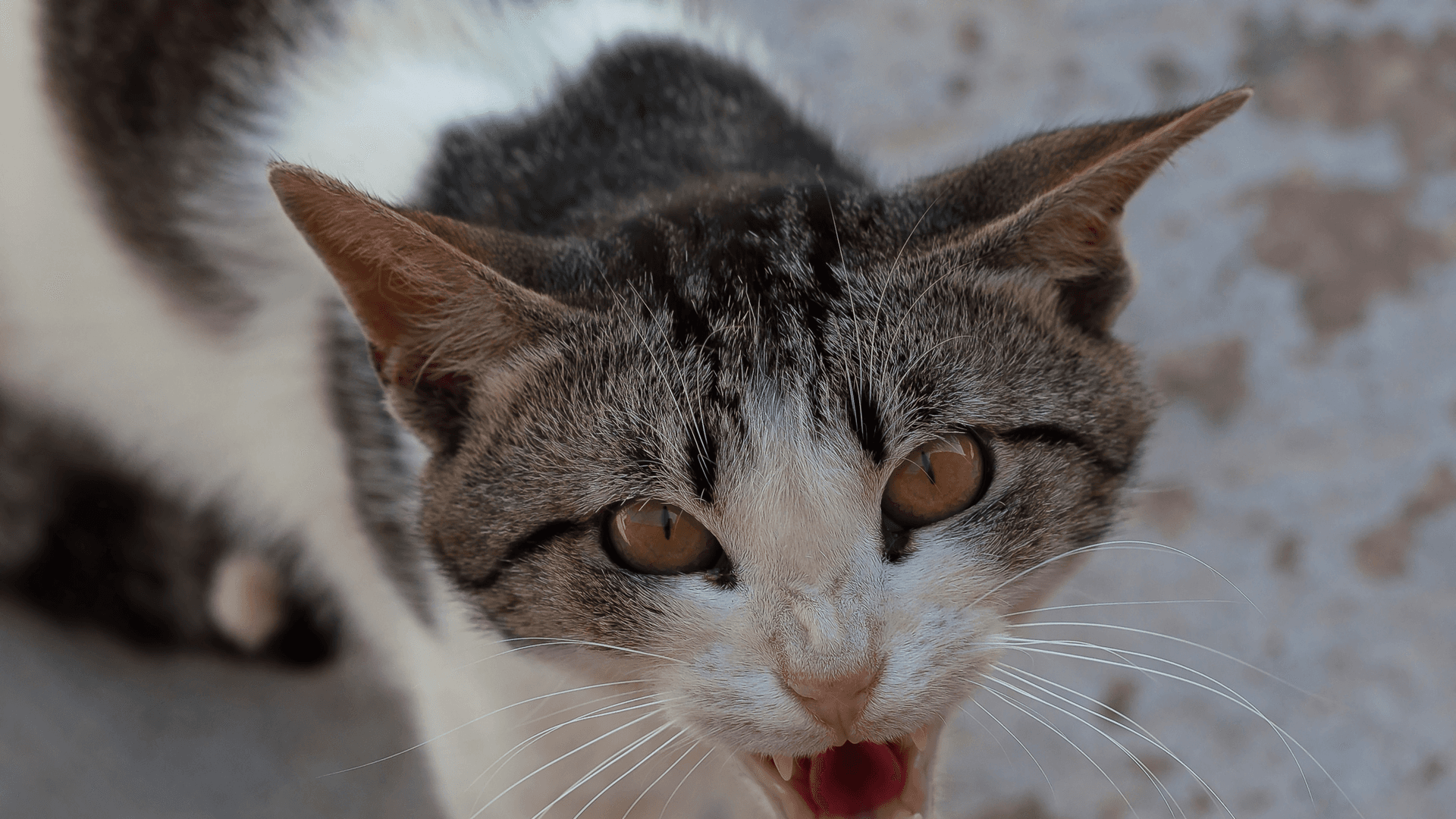
Hero image: Angry Cat, by James Arup Photography, CC BY 2.0. Via Wikimedia Commons.
Take our professional IQ test
Want to know your IQ? Try the first ever professional online IQ test.