Night Owl IQ: Are Night Owls Really More Intelligent?
Night owl IQ is only slightly higher on average: evening types score a little above morning types, a correlation near 0.08, too small to judge any one person.
Dr. Russell T. WarneChief Scientist
Share
Night owls do score slightly higher on intelligence tests on average, but the difference is very small. A meta-analysis of the research put the correlation between eveningness and cognitive ability at about r = 0.08, which means your bedtime tells almost nothing about your IQ.
The idea that staying up late is a sign of intelligence comes mostly from one widely shared 2009 study and a 2024 UK Biobank analysis that made headlines. This article looks at what those studies actually found, how big the effects are, why morning people tend to get better grades anyway, and why the time of day you take a test can matter more than which type you are. It stays on chronotype, meaning your natural preference for mornings or evenings. The separate question of how lost sleep affects thinking is covered in our article on how sleep affects IQ and cognitive performance.
What is a night owl, in research terms?
Researchers call the morning-evening preference "chronotype." It is usually measured with questionnaires that ask when you would choose to wake, sleep, or do demanding work if your schedule were free. People at one end are "morning types" (larks), people at the other are "evening types" (owls), and most people fall somewhere in between.
Chronotype is partly genetic. A genome-wide study of nearly 700,000 people from the UK Biobank and 23andMe identified 351 genetic regions linked to being a morning person. Even so, each region has a tiny effect: people carrying the most morningness variants slept, on average, only 25 minutes earlier than people carrying the fewest.
Chronotype also shifts with age. In a norming study by May, Hasher and Stoltzfus, most younger adults were evening or neutral types, while the large majority of older adults were morning types. That age pattern matters when reading the research below, because age is also linked to test performance.
What the studies found about night owl IQ
Four studies are behind most of the claims you will see online.
• Kanazawa and Perina (2009): Using the US National Longitudinal Study of Adolescent Health (Add Health), Satoshi Kanazawa and Kaja Perina linked a vocabulary-based IQ score measured in adolescence to sleep times reported in early adulthood. Young adults whose adolescent IQ was below 75 went to bed at 23:41 on weeknights on average, and those above 125 went to bed at 00:29, with the other groups in between. That is a gap of about 48 minutes between the extremes of the distribution. The authors themselves noted that although the results were statistically significant because the sample was large, the effect size and the variance explained were "very small." In their regression, a 15-point IQ difference corresponded to a bedtime roughly 7 minutes later.
• Preckel and colleagues (2011): This meta-analysis pooled earlier studies. Eveningness correlated positively with cognitive ability (r = 0.08), and morningness correlated slightly negatively (r = -0.04). A correlation of 0.08 means chronotype accounts for less than 1% of the differences in ability between people.
• West and colleagues (2024): This UK Biobank study, publicized by Imperial College London under the headline that night owls are mentally sharper, analyzed about 26,800 adults aged 53 to 86. Compared with definite morning types, evening types had higher scores on a combined cognitive measure: about 0.14 standard deviations in the group that took all four tests, and about 0.08 in the group that took two. On the familiar IQ scale, 0.14 standard deviations is roughly 2 points. Two limits the authors acknowledge matter a great deal here: the analysis did not adjust for educational attainment, and it did not control the time of day when people took the tests.
• Roberts and Kyllonen (1999): An earlier study of 420 US Air Force recruits also found that evening types scored higher than morning types.
The direction of the finding is fairly consistent. The size is the problem. All of these effects sit far inside the normal spread of IQ scores, where the standard deviation is 15 points.
Why the link is weak and hard to interpret
A correlation between chronotype and test scores does not mean that staying up late makes anyone smarter, or that being smart makes people stay up late. Several other explanations fit the same data.
• Age: Older adults lean toward mornings and also score lower on many timed tasks, so any study that does not handle age carefully can produce an owl advantage.
• Education and work: Students and people in flexible jobs can keep later hours. Kanazawa and Perina found that current students went to bed later, and the UK Biobank analysis could not adjust for education at all.
• The time of testing: If a test session lands in the afternoon or evening, owls are being tested closer to their best time, and larks further from it.
• The theory itself: Kanazawa and Perina framed their result with the "Savanna-IQ Interaction Hypothesis," the idea that brighter people are more likely to adopt evolutionarily novel habits such as nighttime activity. Their data show a small association. They do not test whether that evolutionary story is the reason.
The honest summary is that being a night owl is not a meaningful sign of intelligence. If you are an owl with a high IQ, or a lark with a high IQ, you are both entirely ordinary cases.
Morning people get better grades
The same meta-analysis that found a small owl advantage on ability tests found the opposite for school results. Morningness correlated positively with academic achievement (r = 0.16) and eveningness negatively (r = -0.14). Those correlations are still small, but they are larger than the ones for ability.
A likely explanation is the school timetable. Classes and exams usually take place in the morning, when larks are near their best and owls are not. The gap does not seem to come down to ability or effort alone. In a separate study of 272 German high school students, Preckel and colleagues found that eveningness still predicted a lower grade point average after cognitive ability, conscientiousness, need for cognition, achievement motivation and gender were held constant. For anyone curious about how much non-ability factors add to grades, the evidence is weighed up in our piece on whether non-cognitive variables have powerful effects on academic achievement.
Does the time of day affect your IQ score?
This is the more practical finding, known as the "synchrony effect": people tend to perform better when they are tested at their preferred time of day.
In the study by May, Hasher and Stoltzfus, younger adults remembered more than older adults when both were tested in the late afternoon, which suited the younger evening-leaning group. When both groups were tested in the morning, which suited the older morning types, the age difference in memory disappeared.
Goldstein and colleagues tested morning-type and evening-type adolescents either in a morning session or an afternoon session, at times chosen to match an ordinary school day. On the fluid intelligence tasks, students did better when the session matched their preference. A composite of the subtests used (block design, digit span and vocabulary) worked out to a 6-point difference in estimated IQ. Fluid ability, the capacity to reason with new problems, is explained in our guide to what fluid intelligence is.
These studies are small, and the size of the effect varies across tasks. Still, they point to a sensible rule: if you take an IQ test, take it at a time of day when you usually feel alert. That matters far more for an individual score than whether you are a lark or an owl.
Frequently asked questions
Are night owls smarter than morning people?
Only very slightly on average. Meta-analytic data put the correlation between eveningness and cognitive ability at about r = 0.08, far too small to say anything about an individual.
Is staying up late a sign of high IQ?
No. Large studies find a weak statistical link at the group level, and the bedtime gap between the lowest and highest IQ groups in the best-known study was under an hour.
Why do morning people get better grades if owls score a bit higher on tests?
School usually runs on a morning schedule, which favors larks. Morningness correlates about r = 0.16 with academic achievement in the meta-analytic data.
Does the time of day change an IQ test result?
It can. In one study of adolescents, testing at a non-preferred time lowered fluid reasoning performance by an amount equal to about 6 IQ points on a short composite.
Can I change my chronotype to become smarter?
There is no evidence that shifting your sleep schedule changes intelligence. The research shows correlations only, and chronotype itself is partly genetic and shifts with age.
The takeaway
Night owls score a little higher than morning people on intelligence tests on average, but the effect is so small that chronotype is close to useless as a guide to anyone's IQ. Morning people tend to earn slightly better grades, probably because school runs on their clock. The finding with the most practical value is about timing: you are likely to do your best work when you are tested at your own peak hours. If you would like a reliable measure of your reasoning ability, take a full-length online IQ test at the time of day when you usually feel sharpest.
References
1. Kanazawa, S., & Perina, K. (2009). Why night owls are more intelligent. Personality and Individual Differences, 47(7), 685-690. [doi.org/10.1016/j.paid.2009.05.021](. doi.org
2. Preckel, F., Lipnevich, A. A., Schneider, S., & Roberts, R. D. (2011). Chronotype, cognitive abilities, and academic achievement: A meta-analytic investigation. Learning and Individual Differences, 21(5), 483-492. [doi.org/10.1016/j.lindif.2011.07.003](. doi.org
3. West, R., Wong, R. T. C., Park, J.-E., Lee, S. W., Ekanayake Mudiyanselage, D., Liu, Z., & Ma, D. (2024). Sleep duration, chronotype, health and lifestyle factors affect cognition: A UK Biobank cross-sectional study. BMJ Public Health, 2(1), e001000. [doi.org/10.1136/bmjph-2024-001000](. doi.org
4. Roberts, R. D., & Kyllonen, P. C. (1999). Morningness-eveningness and intelligence: Early to bed, early to rise will likely make you anything but wise! Personality and Individual Differences, 27(6), 1123-1133. [doi.org/10.1016/S0191-8869(99)00054-9](. doi.org
5. Jones, S. E., Lane, J. M., Wood, A. R., van Hees, V. T., Tyrrell, J., Beaumont, R. N., ... Weedon, M. N. (2019). Genome-wide association analyses of chronotype in 697,828 individuals provides insights into circadian rhythms. Nature Communications, 10, 343. [doi.org/10.1038/s41467-018-08259-7](. doi.org
6. May, C. P., Hasher, L., & Stoltzfus, E. R. (1993). Optimal time of day and the magnitude of age differences in memory. Psychological Science, 4(5), 326-330. [doi.org/10.1111/j.1467-9280.1993.tb00573.x](. doi.org
7. Preckel, F., Lipnevich, A. A., Boehme, K., Brandner, L., Georgi, K., Könen, T., Mursin, K., & Roberts, R. D. (2013). Morningness-eveningness and educational outcomes: The lark has an advantage over the owl at high school. British Journal of Educational Psychology, 83(1), 114-134. [doi.org/10.1111/j.2044-8279.2011.02059.x](. doi.org
8. Goldstein, D., Hahn, C. S., Hasher, L., Wiprzycka, U. J., & Zelazo, P. D. (2007). Time of day, intellectual performance, and behavioral problems in morning versus evening type adolescents: Is there a synchrony effect? Personality and Individual Differences, 42(3), 431-440. [doi.org/10.1016/j.paid.2006.07.008](. doi.org
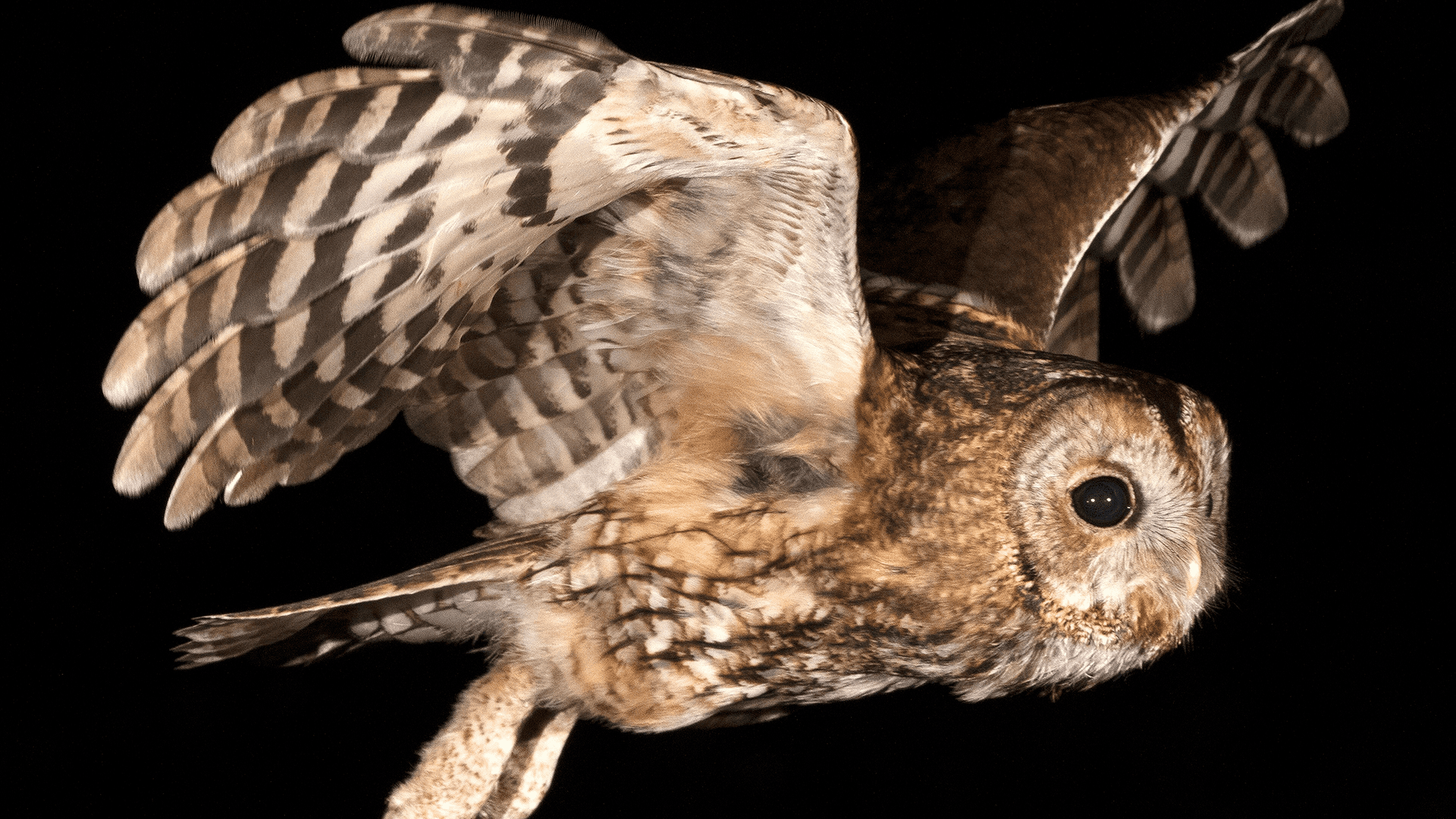
Hero image: Tawny owl at night (42511916510), by BVA, licensed CC BY-SA 2.0 (creativecommons.org/licenses/by-sa/2.0). Via Wikimedia Commons.
Take our professional IQ test
Want to know your IQ? Try the first ever professional online IQ test.