Mercury and IQ: How Much Does Mercury Exposure Lower Intelligence?
Mercury and IQ: each 1 ppm of mercury in a mother's hair predicts about 0.18 fewer IQ points in her child, a tiny effect at typical exposure levels.
Dr. Russell T. WarneChief Scientist
Share
Mercury can lower IQ, but at everyday levels the effect is very small: pooling three large cohort studies, each extra part per million (ppm) of mercury in a pregnant woman's hair predicted a child IQ about 0.18 points lower. Mothers in a Massachusetts cohort averaged 0.55 ppm, which works out to about a tenth of an IQ point, while dental fillings and vaccine preservatives containing mercury showed no measurable effect on children's IQ.
This page covers which forms of mercury matter for the brain, what the famous Faroe Islands and Seychelles studies found, why eating fish in pregnancy involves a trade-off, and what trials show about amalgam fillings and thimerosal.
Which kinds of mercury affect the brain?
Three forms of mercury come up in the IQ debate, and they behave differently:
• Methylmercury: the form found in fish. The US Food and Drug Administration lists king mackerel, marlin, orange roughy, shark, swordfish, Gulf of Mexico tilefish and bigeye tuna as the highest-mercury choices.
• Ethylmercury: produced when the body breaks down thimerosal, a preservative used in some vaccines. The FDA notes that it should be distinguished from methylmercury.
• Elemental mercury vapour: released in small amounts by dental amalgam, the silver fillings that are about 50% mercury.
At very high doses methylmercury is a devastating brain poison. In Minamata, Japan, methylmercury in waste water from a chemical plant contaminated the local fish and shellfish, and the disease was officially recognized in 1956. People who ate the seafood developed numbness, loss of coordination, slurred speech and narrowed vision. Hair mercury reached 705 ppm. Babies were poisoned in the womb, and of 2,252 officially recognized patients, 1,043 had died by the time Masazumi Harada reviewed the outbreak. The research question today is what much lower, everyday exposure does. For the other heavy metal most often linked to lost IQ points, see our page on lead exposure and IQ. Both sit on a longer list of environmental factors that influence IQ, most of them small for any one person.
The Faroe Islands and Seychelles studies
Two island cohorts shaped the science, and they reached opposite conclusions.
In the Faroe Islands, between Scotland and Iceland, Philippe Grandjean and colleagues followed 1,022 children born in 1986 and 1987. Their mothers' mercury came mainly from eating pilot whale meat. At about age 7, 917 children completed a battery of tests. Higher prenatal mercury was linked to poorer performance, most clearly in language, attention and memory. The links held after statistical adjustment and after excluding children whose mothers had hair mercury above 10 ppm.
In the Seychelles, an Indian Ocean nation where 85% of people eat ocean fish daily, Philip Davidson and colleagues tested 711 children at 66 months. Mothers' hair mercury averaged 6.8 ppm, many times the Massachusetts level, yet no adverse outcomes were associated with prenatal or postnatal exposure. A second Seychelles cohort, analysed by J. J. Strain and colleagues, tested 1,237 children at age 7 on 17 outcomes and found no significant association of prenatal mercury, or of mothers' omega-3 levels, with any of them.
Daniel Axelrad and colleagues at the US Environmental Protection Agency and Harvard combined the Faroe, Seychelles and New Zealand studies in one statistical model to estimate the IQ cost directly. Their central estimate was a loss of 0.18 IQ points for each 1 ppm of maternal hair mercury (95% confidence interval 0.009 to 0.378), with alternative models giving 0.13 to 0.25. On that slope, the Seychelles average of 6.8 ppm corresponds to about 1.2 IQ points and the Massachusetts average of 0.55 ppm to about 0.1 points (our arithmetic). The authors note that IQ may not capture every deficit, such as effects on attention and motor skills.
Is fish in pregnancy good or bad for a child's IQ?
Fish brings both mercury and nutrients, including the omega-3 fat DHA, so studies that measure only one can mislead. Emily Oken and colleagues in Project Viva, a Massachusetts cohort, measured both. In 135 infants, each extra weekly serving of fish in pregnancy went with a 4.0-point higher score on a visual memory test at 6 months, while each extra 1 ppm of hair mercury went with a 7.5-point lower score. The best scores came from mothers who ate more than two servings a week but had low mercury.
At age 3, in 341 children, the pattern repeated. Eating fish more than twice a week, compared with never, was linked to a 6.4-point higher score on a visual-motor test, while children whose mothers were in the top tenth for blood mercury scored about 4.5 points lower on a vocabulary test. In the much larger British ALSPAC cohort of 11,875 pregnancies, Joseph Hibbeln and colleagues found that children of mothers who ate no seafood had 1.48 times the odds of a bottom-quarter verbal IQ compared with children of mothers who ate more than 340 grams a week.
All of these are observational studies, and families who eat more fish differ in income, education and diet. They do explain current advice. The FDA and Environmental Protection Agency advise people who are pregnant or breastfeeding to eat 2 to 3 servings a week (a serving is 4 ounces) from a list of lower-mercury "Best Choices" such as salmon, sardines and cod. Whether capsules can replace fish is a separate question, covered in our page on fish oil and IQ. Anyone with questions about diet in pregnancy should talk to a midwife, obstetrician or GP.
Do mercury fillings or vaccines lower IQ?
Two randomized trials published together in 2006 tested amalgam fillings directly. In the New England Children's Amalgam Trial, David Bellinger and colleagues assigned 534 children aged 6 to 10 to amalgam or mercury-free resin fillings for five years. The amalgam group had higher urinary mercury, but its full-scale IQ rose by 3.1 points against 2.1 points in the resin group, a non-significant difference of 1.0 point in favour of amalgam (95% confidence interval -0.6 to 2.5). In Lisbon, Timothy DeRouen and colleagues followed 507 children aged 8 to 10 for seven years and found no differences in memory, attention, visuomotor skills or nerve conduction at any point.
For thimerosal, William Thompson and colleagues tested 1,047 children aged 7 to 10 on 42 neuropsychological outcomes. The few significant associations with early thimerosal exposure were small and split almost evenly between better and worse performance, and the authors concluded the study did not support a causal link with deficits. The FDA reports that all vaccines routinely recommended for children 6 and under in the US are available in formulations without thimerosal.
The main confounds in mercury research:
• Fish nutrients: fish eaters get more DHA and other nutrients along with mercury, which can hide a mercury effect or exaggerate a fish benefit.
• Family background: fish intake differs with income and education, which also predict children's test scores.
• Measurement: hair, cord blood and maternal blood capture different time windows, so studies are not directly comparable.
• Multiple testing: studies with dozens of outcomes will find a few chance associations, which is why the Seychelles and thimerosal teams looked at the overall pattern.
Frequently asked questions
Does mercury lower IQ?
At high doses, as in Minamata, methylmercury causes severe brain damage. At the levels most people get from eating fish, the pooled estimate is about 0.18 IQ points lost per 1 ppm of maternal hair mercury, a tiny average effect.
Should pregnant women stop eating fish because of mercury?
US federal advice is to keep eating fish, 2 to 3 servings a week from lower-mercury choices, and avoid the highest-mercury species. Cohort studies link moderate fish eating in pregnancy with better child scores.
Do mercury fillings lower children's IQ?
Two randomized trials in the US and Portugal found no harm to IQ, memory or attention from amalgam fillings over five to seven years.
Does thimerosal in vaccines affect IQ?
A study of 1,047 children aged 7 to 10 found no consistent link between early thimerosal exposure and neuropsychological performance. Thimerosal contains ethylmercury, which differs from the methylmercury in fish.
Can mercury exposure in adults lower IQ?
The best-studied risk is to the developing brain before birth. High occupational or poisoning exposures can harm adults' nervous systems, and anyone worried about exposure should see a doctor, who can arrange testing.
The takeaway
Mercury is a genuine neurotoxin, and Minamata showed what high doses do. At ordinary exposure levels the IQ effect is small, about 0.1 point at the Massachusetts average and about 1 point even at the high Seychelles average, and fish brings nutrients that may offset it. Official advice favours lower-mercury fish over cutting fish out, and fillings and vaccines show no IQ effect in the best studies. To see where your own reasoning skills stand, you can take a full-length online IQ test.
References
1. Harada, M. (1995). Minamata disease: Methylmercury poisoning in Japan caused by environmental pollution. Critical Reviews in Toxicology, 25(1), 1-24. [doi.org/10.3109/10408449509089885](. doi.org
2. US Food and Drug Administration. (2024). Advice about eating fish. [fda.gov](. fda.gov
3. US Food and Drug Administration. (2025). Thimerosal and vaccines. [fda.gov](. fda.gov
4. Grandjean, P., Weihe, P., White, R. F., Debes, F., Araki, S., Yokoyama, K., Murata, K., Sørensen, N., Dahl, R., & Jørgensen, P. J. (1997). Cognitive deficit in 7-year-old children with prenatal exposure to methylmercury. Neurotoxicology and Teratology, 19(6), 417-428. [doi.org/10.1016/S0892-0362(97)00097-4](. doi.org
5. Davidson, P. W., Myers, G. J., Cox, C., Axtell, C., Shamlaye, C., Sloane-Reeves, J., Cernichiari, E., Needham, L., Choi, A., Wang, Y., Berlin, M., & Clarkson, T. W. (1998). Effects of prenatal and postnatal methylmercury exposure from fish consumption on neurodevelopment: Outcomes at 66 months of age in the Seychelles Child Development Study. JAMA, 280(8), 701-707. [doi.org/10.1001/jama.280.8.701](. doi.org
6. Strain, J. J., Love, T. M., Yeates, A. J., Weller, D., Mulhern, M. S., McSorley, E. M., Thurston, S. W., Watson, G. E., Mruzek, D., Broberg, K., Rand, M. D., Henderson, J., Shamlaye, C. F., Myers, G. J., Davidson, P. W., & van Wijngaarden, E. (2021). Associations of prenatal methylmercury exposure and maternal polyunsaturated fatty acid status with neurodevelopmental outcomes at 7 years of age: Results from the Seychelles Child Development Study Nutrition Cohort 2. The American Journal of Clinical Nutrition, 113(2), 304-313. [doi.org/10.1093/ajcn/nqaa338](. doi.org
7. Axelrad, D. A., Bellinger, D. C., Ryan, L. M., & Woodruff, T. J. (2007). Dose-response relationship of prenatal mercury exposure and IQ: An integrative analysis of epidemiologic data. Environmental Health Perspectives, 115(4), 609-615. [doi.org/10.1289/ehp.9303](. doi.org
8. Oken, E., Wright, R. O., Kleinman, K. P., Bellinger, D., Amarasiriwardena, C. J., Hu, H., Rich-Edwards, J. W., & Gillman, M. W. (2005). Maternal fish consumption, hair mercury, and infant cognition in a U.S. cohort. Environmental Health Perspectives, 113(10), 1376-1380. [doi.org/10.1289/ehp.8041](. doi.org
9. Oken, E., Radesky, J. S., Wright, R. O., Bellinger, D. C., Amarasiriwardena, C. J., Kleinman, K. P., Hu, H., & Gillman, M. W. (2008). Maternal fish intake during pregnancy, blood mercury levels, and child cognition at age 3 years in a US cohort. American Journal of Epidemiology, 167(10), 1171-1181. [doi.org/10.1093/aje/kwn034](. doi.org
10. Hibbeln, J. R., Davis, J. M., Steer, C., Emmett, P., Rogers, I., Williams, C., & Golding, J. (2007). Maternal seafood consumption in pregnancy and neurodevelopmental outcomes in childhood (ALSPAC study): An observational cohort study. The Lancet, 369(9561), 578-585. [doi.org/10.1016/S0140-6736(07)60277-3](. doi.org
11. Bellinger, D. C., Trachtenberg, F., Barregard, L., Tavares, M., Cernichiari, E., Daniel, D., & McKinlay, S. (2006). Neuropsychological and renal effects of dental amalgam in children: A randomized clinical trial. JAMA, 295(15), 1775-1783. [doi.org/10.1001/jama.295.15.1775](. doi.org
12. DeRouen, T. A., Martin, M. D., Leroux, B. G., Townes, B. D., Woods, J. S., Leitão, J., Castro-Caldas, A., Luis, H., Bernardo, M., Rosenbaum, G., & Martins, I. P. (2006). Neurobehavioral effects of dental amalgam in children: A randomized clinical trial. JAMA, 295(15), 1784-1792. [doi.org/10.1001/jama.295.15.1784](. doi.org
13. Thompson, W. W., Price, C., Goodson, B., Shay, D. K., Benson, P., Hinrichsen, V. L., Lewis, E., Eriksen, E., Ray, P., Marcy, S. M., Dunn, J., Jackson, L. A., Lieu, T. A., Black, S., Stewart, G., Weintraub, E. S., Davis, R. L., DeStefano, F., & Vaccine Safety Datalink Team. (2007). Early thimerosal exposure and neuropsychological outcomes at 7 to 10 years. New England Journal of Medicine, 357(13), 1281-1292. [doi.org/10.1056/NEJMoa071434](. doi.org
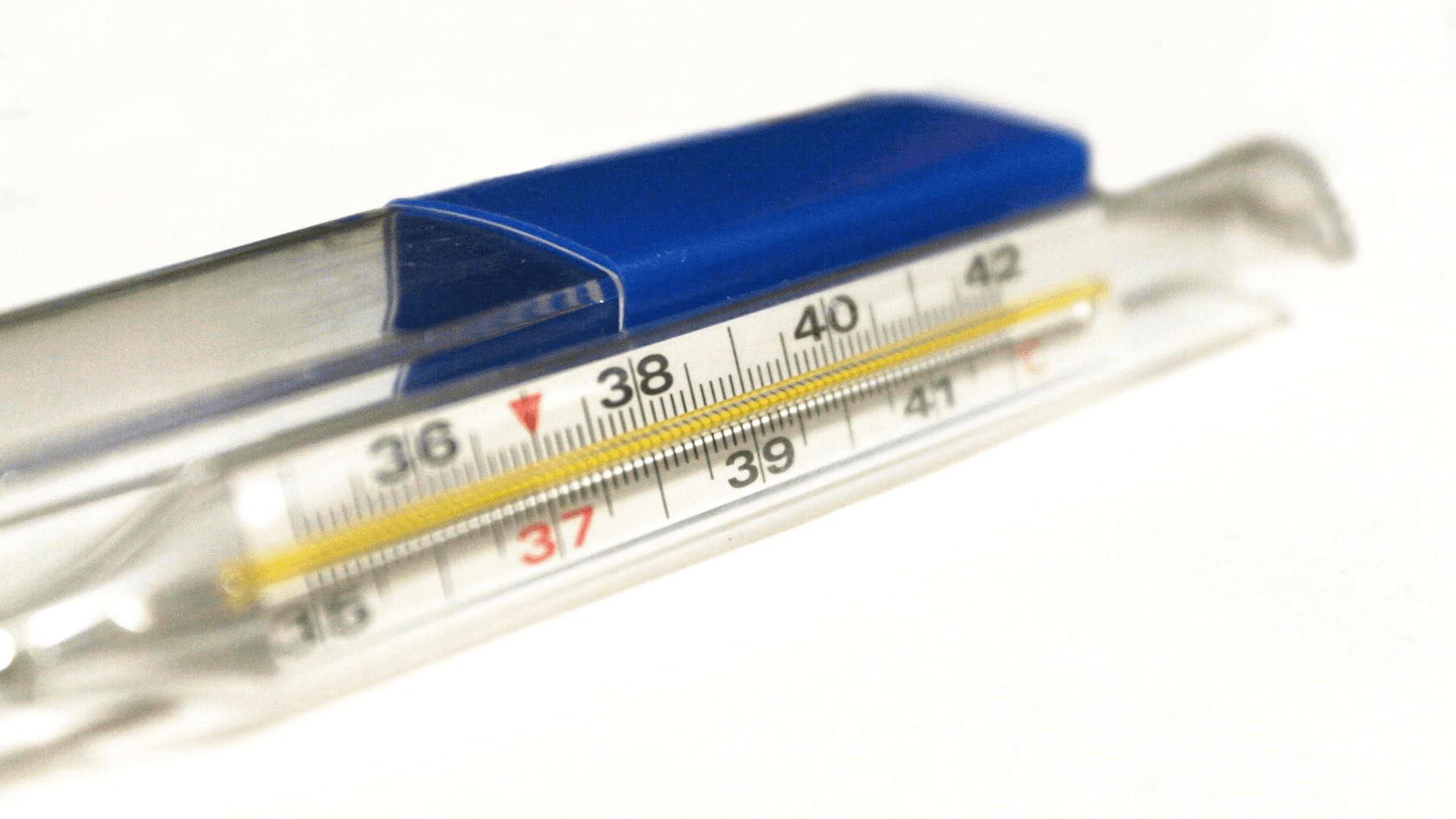
Hero image: Mercury medical thermometer, by IEPCBM, CC0. Via Wikimedia Commons.
Take our professional IQ test
Want to know your IQ? Try the first ever professional online IQ test.