Iron Deficiency and IQ: Does Low Iron Lower Intelligence? | Riot IQ
Oct 13, 2026·Advanced Topics & Research
Iron Deficiency and IQ: Does Low Iron Lower Intelligence?
Iron deficiency is linked to lower IQ: chronically anaemic infants scored 8 to 9 points lower at 19, and iron raises scores mainly in anaemic children.
Dr. Russell T. WarneChief Scientist
Share
Iron deficiency is linked to lower IQ: in a Costa Rican cohort, children who had chronic iron deficiency as infants still scored 8 to 9 points lower than well-nourished peers at age 19 despite treatment, and in low-income families the gap grew to 25 points. Randomised trials show that iron supplements raise intelligence test scores in school-age children, by roughly 6 to 7 IQ-point equivalents in pooled analyses of mostly small trials and more in those who start out anaemic, while children and adults with normal iron show little or no benefit.
This page covers how common iron deficiency is, what the long-term infant studies found and why they are hard to interpret, what the supplementation trials show at different ages, and why more iron is not always better.
Why the brain needs iron, and how common deficiency is
Iron is best known for carrying oxygen in red blood cells, but the developing brain needs it for its own work too. A 2006 review by Lozoff and colleagues describes three routes by which early iron deficiency could leave lasting effects: on the brain's energy metabolism, on "myelination" (the insulating sheath that speeds signals along nerve fibres), and on chemical messengers such as dopamine. Research in animal models points to these mechanisms.
"Anaemia" means too little haemoglobin in the blood, and iron deficiency is its leading cause, though not the only one. The World Health Organization estimates that about 40% of children aged 6 to 59 months worldwide, 37% of pregnant women and 30% of women aged 15 to 49 are anaemic. The largest causes are dietary iron deficiency, inherited blood disorders such as thalassaemia, and malaria, and the burden is heaviest in low-income countries, rural areas and poorer households. That concentration in poorer settings is the main obstacle to reading the evidence.
What happens to infants with iron deficiency anaemia?
The best-known long-term study followed about 190 children in an urban community in Costa Rica who were assessed for iron status at 12 to 23 months of age, treated where needed, and retested repeatedly up to age 19. At ages 11 to 14, the 48 children who had severe, chronic iron deficiency as infants scored lower on mental and motor tests than the 114 with good iron status. After adjustment for background factors they still did worse on arithmetic, written expression and some specific memory tasks, more had repeated a grade, and parents and teachers reported more anxiety and attention problems.
The 19-year follow-up, published in 2006, brought out the role of family circumstances. In middle-class families, children with chronic iron deficiency in infancy averaged 101.2 on a composite of standardised cognitive scores against 109.3 for those with good iron status, and the gap stayed at 8 to 9 points through age 19. In low-income families the gap started at 10 points (93.1 against 102.8) and widened to 25 points (70.4 against 95.3) over the follow-up. Infant iron deficiency and poverty seemed to compound each other.
A larger cohort in Santiago, Chile, followed 1,000 young people from working-class families from infancy to age 21. East and colleagues found that those who had been iron deficient as infants had poorer executive control as young adults, and more severe infant deficiency was linked to lower verbal IQ at age 10.
These are observational studies. Children who become iron deficient often differ in diet, family income, parental education and home environment, and those factors affect IQ in their own right. A 2001 review by Grantham-McGregor and Ani concluded that the longitudinal studies consistently linked infant anaemia to poorer cognition into middle childhood, but that confounding by poor social backgrounds prevented a causal conclusion.
Does iron supplementation raise IQ?
Randomised trials are the way around confounding, and their answer depends on age and starting iron status.
• Infants and toddlers: a 2013 Cochrane review of anaemic children under three found no convincing evidence that iron treatment improved development within 30 days. Only two trials ran longer, with very different results, so the longer-term effect remains unclear. A 2005 meta-analysis by Sachdev and colleagues likewise found no clear benefit on infant development scores in children under 27 months.
• School-age children: the same 2005 meta-analysis found that iron improved intelligence scores in children aged 8 and over by a standardised mean difference of 0.41, about 6 IQ points (multiplying by the IQ scale's standard deviation of 15). A 2023 meta-analysis of trials in 6- to 12-year-olds found 0.46, about 7 points, rising to 0.79 in children who were anaemic at the start. A 2022 meta-analysis of nine trials in low- and middle-income countries found a similar 0.47.
• Older children and adults: a 2010 meta-analysis by Falkingham and colleagues pooled 14 trials. Across more than 2,000 people with normal iron there was no effect on intelligence. In 209 anaemic participants the effect was 0.54, which the authors expressed as 2.5 points on the Raven's test scale they used; on a standard IQ scale an effect of that size would be closer to 8 points. Iron also improved attention and concentration regardless of starting status.
The pattern is consistent: iron helps the scores of people who are short of it. The trials are mostly small and short, though, the Falkingham team noted signs of publication bias, and the large effects in anaemic subgroups rest on a few hundred children.
Pregnancy is less studied. In a Nepalese trial, Christian and colleagues followed 676 children whose mothers had been randomised to different supplements in pregnancy. At ages 7 to 9, children whose mothers took iron and folic acid scored 2.4 points higher on a nonverbal intelligence test scored with a standard deviation of 10, roughly 3.5 IQ points, and did better on some working-memory and self-control tasks. Supplements that combined iron with zinc, or with many other micronutrients, showed no significant difference, so the result needs confirming.
Iron is often discussed alongside iodine, another nutrient whose deficiency affects the developing brain (covered in our page on iodine and IQ), and it appears under nutrition among the top environmental factors that influence IQ.
Can too much iron be a problem?
Iron is not a case of "more is better". In Chile, Gahagan and colleagues followed 405 adolescents who had been randomised as six-month-old infants, none anaemic at the time, to iron-fortified formula at the level recommended in the US or to a low-iron formula. At age 16, those given the iron-fortified formula scored lower on visual memory, arithmetic and reading comprehension. For one visual-motor test, high iron helped infants who started with low haemoglobin and hurt those who started high. The authors concluded that preventing anaemia matters for brain development but that the best level of iron for infants is still unclear.
The confounds to keep in mind across this research:
• Income and education: iron deficiency tracks poverty, and in Costa Rica the widest gaps appeared in low-income families.
• Parental IQ and home environment: the Chilean studies adjusted for maternal IQ and the home environment, but observational designs can only partly remove them.
• Other causes of anaemia: malaria, infections and inherited blood disorders also cause anaemia, and iron does not treat them.
• Age at exposure: the long-term cohorts concern deficiency between about 6 and 24 months of age, while the clearest trial benefits are in school-age children.
Iron deficiency is diagnosed with a blood test. Parents worried about a child's diet, energy or development should see a paediatrician or GP, and adults, including anyone who is pregnant, should talk to their GP or midwife before taking iron, since the right approach depends on test results.
Frequently asked questions
Does iron deficiency lower IQ?
Chronic iron deficiency in infancy is linked to scores 8 to 9 points lower at age 19 in middle-class families and more in poorer ones, though family circumstances explain part of that gap. In anaemic school-age children, iron supplements raise intelligence test scores in randomised trials.
Can iron supplements raise IQ in healthy people?
Not on current evidence. A 2010 meta-analysis found no effect on intelligence in more than 2,000 people with normal iron, and one Chilean trial found that extra iron in non-anaemic infants was followed by lower scores at 16. Brain-boosting claims for creatine supplements in healthy adults have fared similarly in trials.
Is the damage from infant iron deficiency permanent?
In Costa Rica, children treated for chronic iron deficiency as infants had not caught up by age 19, and the gap widened in low-income families. Whether the remaining difference is caused by the iron deficiency itself or by the circumstances around it is still debated.
Does iron deficiency in pregnancy affect a baby's IQ?
The evidence is limited. One Nepalese trial found that children of mothers given iron and folic acid in pregnancy scored about 3.5 IQ points higher at ages 7 to 9, but other supplement combinations in the same trial showed no significant effect.
Can adults lose IQ points from iron deficiency?
Adult trials are few. In the small number of anaemic women studied, iron improved scores on a reasoning test, and iron improved attention and concentration across age groups in the 2010 meta-analysis.
The takeaway
Iron deficiency is one of the most common nutritional problems in the world, and it matters most for the youngest brains. Infants with severe, chronic anaemia go on to score lower years later, though poverty accounts for part of that, and randomised trials show that correcting anaemia in school-age children raises their test scores. For people with normal iron, extra iron offers no IQ benefit and may carry risks in infancy. If you are curious about your own reasoning skills, an online IQ test built by psychometricians gives a properly normed score.
References
1. Lozoff, B., Beard, J., Connor, J., Barbara, F., Georgieff, M., & Schallert, T. (2006). Long-lasting neural and behavioral effects of iron deficiency in infancy. Nutrition Reviews, 64(5 Pt 2), S34-S43. [doi.org/10.1301/nr.2006.may.s34-s43](. doi.org
2. World Health Organization. (2025). Anaemia [Fact sheet]. [who.int](. who.int
3. Lozoff, B., Jimenez, E., Hagen, J., Mollen, E., & Wolf, A. W. (2000). Poorer behavioral and developmental outcome more than 10 years after treatment for iron deficiency in infancy. Pediatrics, 105(4), e51. [doi.org/10.1542/peds.105.4.e51](. doi.org
4. Lozoff, B., Jimenez, E., & Smith, J. B. (2006). Double burden of iron deficiency in infancy and low socioeconomic status: A longitudinal analysis of cognitive test scores to age 19 years. Archives of Pediatrics & Adolescent Medicine, 160(11), 1108-1113. [doi.org/10.1001/archpedi.160.11.1108](. doi.org
5. East, P., Doom, J. R., Blanco, E., Burrows, R., Lozoff, B., & Gahagan, S. (2021). Iron deficiency in infancy and neurocognitive and educational outcomes in young adulthood. Developmental Psychology, 57(6), 962-975. [doi.org/10.1037/dev0001030](. doi.org
6. Grantham-McGregor, S., & Ani, C. (2001). A review of studies on the effect of iron deficiency on cognitive development in children. The Journal of Nutrition, 131(2), 649S-666S. [doi.org/10.1093/jn/131.2.649S](. doi.org
7. Wang, B., Zhan, S., Gong, T., & Lee, L. (2013). Iron therapy for improving psychomotor development and cognitive function in children under the age of three with iron deficiency anaemia. Cochrane Database of Systematic Reviews, 2013(6), CD001444. [doi.org/10.1002/14651858.CD001444.pub2](. doi.org
8. Sachdev, H., Gera, T., & Nestel, P. (2005). Effect of iron supplementation on mental and motor development in children: Systematic review of randomised controlled trials. Public Health Nutrition, 8(2), 117-132. [doi.org/10.1079/PHN2004677](. doi.org
9. Gutema, B. T., Sorrie, M. B., Megersa, N. D., Yesera, G. E., Yeshitila, Y. G., Pauwels, N. S., De Henauw, S., & Abbeddou, S. (2023). Effects of iron supplementation on cognitive development in school-age children: Systematic review and meta-analysis. PLOS ONE, 18(6), e0287703. [doi.org/10.1371/journal.pone.0287703](. doi.org
10. Chen, Z., Yang, H., Wang, D., Sudfeld, C. R., Zhao, A., Xin, Y., Chen, J. C., Fawzi, W. W., Xing, Y., & Li, Z. (2022). Effect of oral iron supplementation on cognitive function among children and adolescents in low- and middle-income countries: A systematic review and meta-analysis. Nutrients, 14(24), 5332. [doi.org/10.3390/nu14245332](. doi.org
11. Falkingham, M., Abdelhamid, A., Curtis, P., Fairweather-Tait, S., Dye, L., & Hooper, L. (2010). The effects of oral iron supplementation on cognition in older children and adults: A systematic review and meta-analysis. Nutrition Journal, 9, 4. [doi.org/10.1186/1475-2891-9-4](. doi.org
12. Christian, P., Murray-Kolb, L. E., Khatry, S. K., Katz, J., Schaefer, B. A., Cole, P. M., LeClerq, S. C., & Tielsch, J. M. (2010). Prenatal micronutrient supplementation and intellectual and motor function in early school-aged children in Nepal. JAMA, 304(24), 2716-2723. [doi.org/10.1001/jama.2010.1861](. doi.org
13. Gahagan, S., Delker, E., Blanco, E., Burrows, R., & Lozoff, B. (2019). Randomized controlled trial of iron-fortified versus low-iron infant formula: Developmental outcomes at 16 years. The Journal of Pediatrics, 212, 124-130.e1. [doi.org/10.1016/j.jpeds.2019.05.030](. doi.org
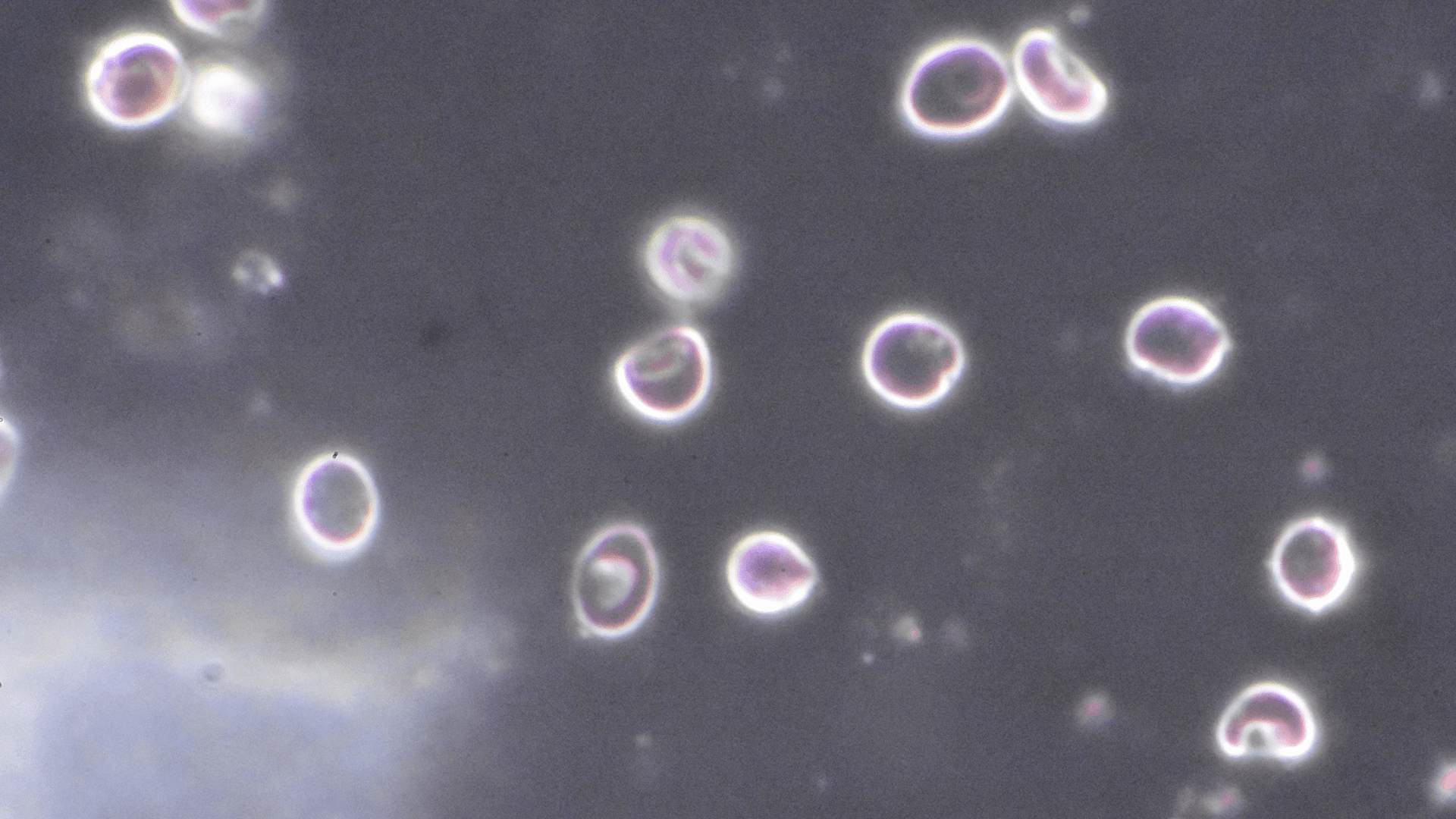
Hero image: Red blood cells by darkfield microscopy, by Dr Graham Beards, CC BY-SA 4.0. Via Wikimedia Commons.
Take our professional IQ test
Want to know your IQ? Try the first ever professional online IQ test.