Tattoos and Intelligence: Are People With Tattoos Less Smart? | Riot IQ
Oct 13, 2026·Advanced Topics & Research
Tattoos and Intelligence: Are People With Tattoos Less Smart?
Tattoos and intelligence show no proven link: the one study using an IQ-type test found no gap, though tattooed people score slightly higher on impulsivity.
Dr. Russell T. WarneChief Scientist
Share
There is no good evidence that people with tattoos are less intelligent: the only study we could find that gave tattooed and non-tattooed adults a standard intelligence test, a sample of 104 German university students, found no significant difference. Direct evidence is very thin, though. The research that does exist mainly finds small differences in impulsivity and present-focus.
This article sets out what that small literature shows, including one large online study in which tattooed people did worse on a short reasoning puzzle, the role of education and income in the pattern, and why the "tattoos mean low IQ" stereotype outlasts the evidence.
What direct evidence exists?
Very little. Searches of the psychology literature turn up many studies of tattoos and personality, risk-taking and stigma, but almost none that measure intelligence itself.
The one direct comparison we found is Cebula (2015), which tested 50 tattooed and 54 non-tattooed students, aged 20 to 54, at several universities and colleges in Hamburg. Each took the MWT-A, a German multiple-choice vocabulary test used to estimate "crystallized intelligence" (knowledge and verbal skills built up through learning), and five subtests of a creativity test. There were no significant group differences in crystallized intelligence, and having tattoos was not related to creativity either.
That result deserves weight but not too much. The sample was small, limited to students (which removes much of the education difference found in the general population) and published in a low-profile journal. It tells us that tattooed students did not score lower on a vocabulary test, and little more.
Tattoos, impulsivity and time preference
Most of the relevant research asks a different question: do people with tattoos make more impulsive or short-sighted choices?
The "Tat will tell" study
Ruffle and Wilson (2019) recruited 1,104 US adults online through Amazon Mechanical Turk. Of these, 781 had no tattoos, 255 had only tattoos that clothing can hide and 68 had at least one visible tattoo (for example on the face, neck or hands).
• Time preference: in a choice task with real payments, people chose between $1 in 18 hours and larger amounts in three weeks. The non-tattooed needed about $1.55 on average to wait, while the visibly tattooed demanded over $2. Women with only hidden tattoos did not differ from non-tattooed women.
• The cognitive reflection test: participants also answered four "CRT" questions, short puzzles with a tempting but wrong intuitive answer. Among men, the non-tattooed answered 2.54 correctly on average, the hidden-tattooed 2.09 and the visibly tattooed 1.50. Among women the figures were 1.89, 1.72 and 1.36.
The CRT result is the closest this literature gets to an ability measure. With standard deviations of about 1.4 to 1.5, the gap between non-tattooed and visibly tattooed men is roughly 0.7 standard deviations, and the other gaps are about 0.1 to 0.35. Ruffle and Wilson treat the CRT as a measure of impulsive thinking, but a meta-analysis by Otero, Salgado and Moscoso (2022) found CRT scores are largely explained by general intelligence plus numerical ability (together 69% of CRT variance). So these gaps probably reflect some mix of ability and a habit of not double-checking, and the study cannot separate the two. It also cannot be converted into IQ points, because the CRT is a four-item puzzle set rather than an IQ test.
Smaller laboratory studies
Kertzman and colleagues (2013) compared 60 tattooed and 60 non-tattooed women aged 18 to 35 in Israel. The tattooed women reported higher impulsivity on the Barratt Impulsiveness Scale and chose more often from the disadvantageous decks of the Iowa Gambling Task, a card game that rewards long-run thinking. In a follow-up with the same women (Kertzman et al., 2019), the tattooed group was slower on one inhibition task (Go/NoGo) but did not differ on two others, the Stroop task and the Matching Familiar Figures Test.
Other studies find the differences are small. In a London sample of 378 adults, Swami and colleagues (2015) found tattooed adults scored somewhat higher on anger, verbal aggression and reactive rebelliousness, with small effect sizes and no difference in physical aggression or hostility. A companion paper's title summed up their impulsivity results: tattooed adults are "only slightly more impulsive and willing to take risks" (Swami et al., 2016). In 762 Swedish adults without an ADHD diagnosis, having a tattoo was linked to slightly more ADHD symptoms, with small effect sizes (Glans et al., 2024).
The confounds: who gets tattoos
Any raw difference between tattooed and non-tattooed people has to be read against who gets tattoos.
• Education: in a 2023 Pew Research Center survey of 8,480 US adults, 37% of those with some college or less had a tattoo, compared with 24% of those with a bachelor's degree and 21% of those with a postgraduate degree.
• Income: 43% of lower-income adults had a tattoo, compared with 31% in middle-income and 21% in upper-income households.
• Age: tattoos were most common among adults aged 30 to 49 (46%) and least common among those 65 and older (13%).
Because education and income are themselves correlated with measured intelligence, a small average IQ gap between tattooed and non-tattooed adults in the general population would not be surprising, and it would say more about social background than about tattoos. The Kertzman samples show the problem in miniature: 46.7% of the tattooed women had a high school diploma or less, compared with 25% of the comparison group.
Labor-market data point the same way. Using US survey data, French, Mortensen and Timming (2019) found no evidence of wage, earnings or employment penalties for people with tattoos, which fits the view that tattoos mostly travel with other background characteristics. Personality matters too. For the broader picture of how traits and ability relate, see our article on high giftedness and personality.
No study has followed people's test scores before and after they got tattooed, or compared tattooed and non-tattooed siblings, so nothing here shows that tattoos reveal, let alone cause, a difference in ability.
Why the stereotype persists
The idea that tattoos signal low intelligence is mostly a stereotype, and stereotypes about tattoos are well documented.
In Forbes's (2001) study of 341 college students, people with and without tattoos or piercings did not differ on Big Five personality measures, yet students without body modifications perceived those with them as quite different from themselves. The tattooed group did report more risk-taking and more alcohol and marijuana use. In two experiments, Broussard and Harton (2018) showed people photographs of the same men and women with and without digitally removed tattoos. Tattooed targets were rated as stronger and more independent but more negatively on other character attributes.
Snap judgments based on appearance are a recurring theme in this research area; our article on IQ and attractiveness looks at the much better-studied case of good looks.
Frequently asked questions
Are people with tattoos less intelligent?
There is no solid evidence that they are. The one study using a standard intelligence test, with 104 students, found no difference, though no large, representative study has tested the question directly.
Do tattoos say anything about personality?
A little. Studies find tattooed adults are slightly more impulsive and more willing to take risks on average, but the differences are small and many tattooed people show neither trait.
Are visible tattoos different from hidden ones?
In one study of 1,104 US adults, people with visible tattoos showed the most present-focused choices and the lowest scores on a short reasoning puzzle, while those with only hidden tattoos sat in between.
Do tattoos hurt your career?
Hiring-manager surveys suggest a stigma, but one analysis of US survey data found no wage, earnings or employment penalty for tattooed workers.
Are tattooed people more creative?
The only study we found that tested this directly reported no link between having tattoos and creativity scores among German students.
The takeaway
Tattoos are not a sign of low intelligence. The single direct test found no gap, and the differences that turn up elsewhere, mainly in impulsivity and on a four-question reasoning puzzle, are mostly small and tangled up with education and income. Given how common tattoos now are, the honest answer is that the evidence is thin and the stereotype runs well ahead of it. A tattoo tells you about someone's taste; to learn about reasoning ability, you need a measurement. You can take a full-length online IQ test if you want one for yourself.
References
1. Cebula, A. S. (2015). Differences in intelligence and creativity between tattooed and non-tattooed students. Psychology and Behavioral Sciences, 4(4), 165-169. [doi.org/10.11648/j.pbs.20150404.14](. doi.org
2. Ruffle, B. J., & Wilson, A. E. (2019). Tat will tell: Tattoos and time preferences. Journal of Economic Behavior & Organization, 166, 566-585. [doi.org/10.1016/j.jebo.2019.08.001](. doi.org
3. Otero, I., Salgado, J. F., & Moscoso, S. (2022). Cognitive reflection, cognitive intelligence, and cognitive abilities: A meta-analysis. Intelligence, 90, 101614. [doi.org/10.1016/j.intell.2021.101614](. doi.org
4. Kertzman, S., Kagan, A., Vainder, M., Lapidus, R., & Weizman, A. (2013). Interactions between risky decisions, impulsiveness and smoking in young tattooed women. BMC Psychiatry, 13, 278. [doi.org/10.1186/1471-244X-13-278](. doi.org
5. Kertzman, S., Kagan, A., Hegedish, O., Lapidus, R., & Weizman, A. (2019). The role of inhibition capacities in the Iowa gambling test performance in young tattooed women. BMC Psychology, 7, 87. [doi.org/10.1186/s40359-019-0363-3](. doi.org
6. Swami, V., Gaughan, H., Tran, U. S., Kuhlmann, T., Stieger, S., & Voracek, M. (2015). Are tattooed adults really more aggressive and rebellious than those without tattoos? Body Image, 15, 149-152. [doi.org/10.1016/j.bodyim.2015.09.001](. doi.org
7. Swami, V., Tran, U. S., Kuhlmann, T., Stieger, S., Gaughan, H., & Voracek, M. (2016). More similar than different: Tattooed adults are only slightly more impulsive and willing to take risks than non-tattooed adults. Personality and Individual Differences, 88, 40-44. [doi.org/10.1016/j.paid.2015.08.054](. doi.org
8. Glans, M. R., Nilsson, J., & Bejerot, S. (2024). Tattoos, piercings, and symptoms of ADHD in non-clinical adults: A cross-sectional study. Frontiers in Psychiatry, 14, 1224811. [doi.org/10.3389/fpsyt.2023.1224811](. doi.org
9. Schaeffer, K., & Dinesh, S. (2023). 32% of Americans have a tattoo, including 22% who have more than one. Pew Research Center. [pewresearch.org](. pewresearch.org
10. French, M. T., Mortensen, K., & Timming, A. R. (2019). Are tattoos associated with employment and wage discrimination? Analyzing the relationships between body art and labor market outcomes. Human Relations, 72(5), 962-987. [doi.org/10.1177/0018726718782597](. doi.org
11. Forbes, G. B. (2001). College students with tattoos and piercings: Motives, family experiences, personality factors, and perception by others. Psychological Reports, 89(3), 774-786. [doi.org/10.2466/pr0.2001.89.3.774](. doi.org
12. Broussard, K. A., & Harton, H. C. (2018). Tattoo or taboo? Tattoo stigma and negative attitudes toward tattooed individuals. The Journal of Social Psychology, 158(5), 521-540. [doi.org/10.1080/00224545.2017.1373622](. doi.org
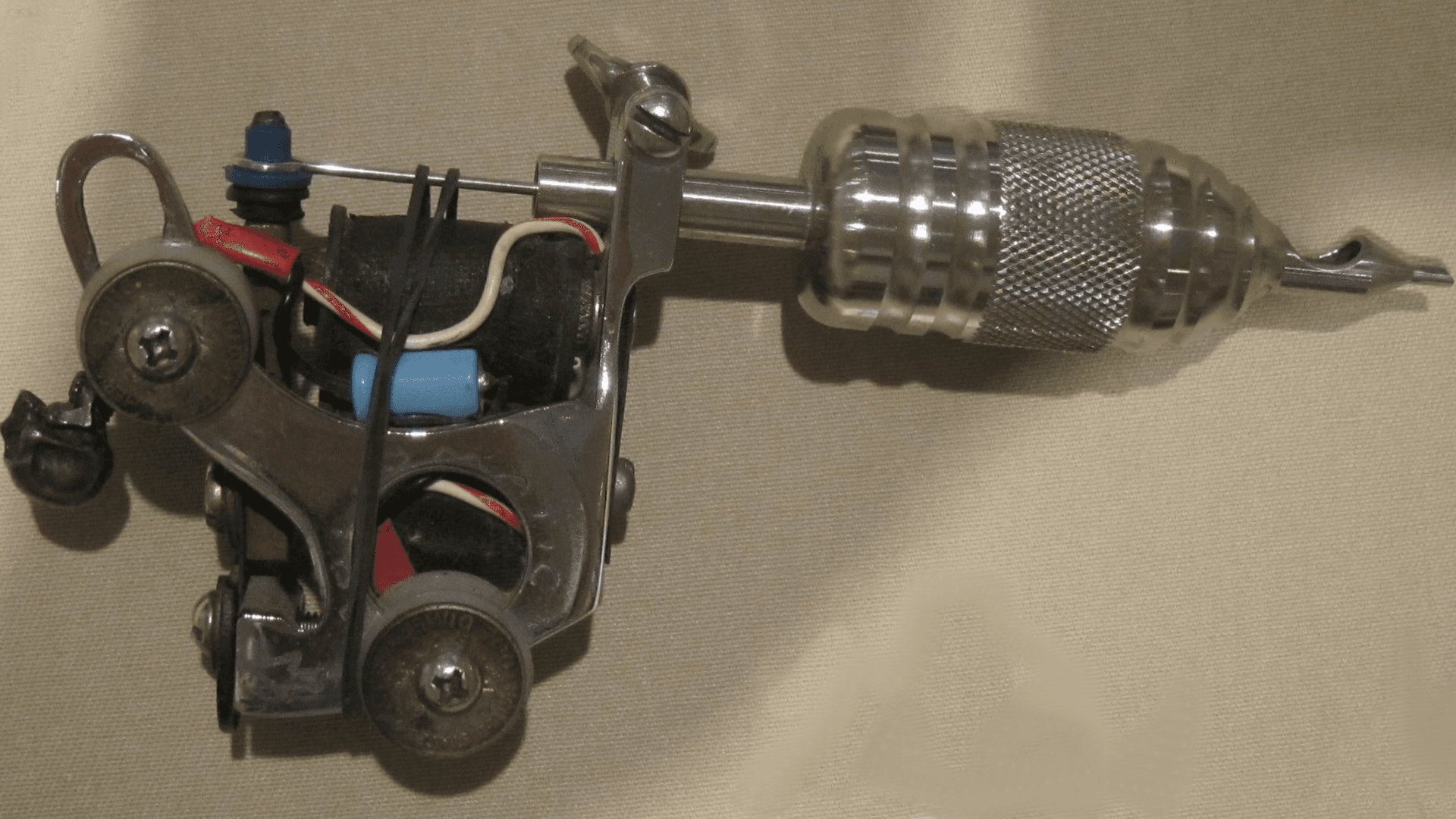
Hero image: 'Rollomatic' liner, by Haa900, CC0. Via Wikimedia Commons.
Take our professional IQ test
Want to know your IQ? Try the first ever professional online IQ test.