Handwriting and Intelligence: Is Messy Handwriting a Sign of a High IQ? | Riot IQ
Oct 9, 2026·Advanced Topics & Research
Handwriting and Intelligence: Is Messy Handwriting a Sign of a High IQ?
Handwriting intelligence claims don't hold up: neat or messy, handwriting shows no reliable link to IQ, and graphologists do no better than untrained judges.
Dr. Russell T. WarneChief Scientist
Share
Handwriting is not a meaningful sign of intelligence: neat or messy, the way a person forms letters has no reliable link to IQ. In the most direct test, two samples of 129 and 80 university students, a few handwriting features correlated with intelligence scores at about 0.2 to 0.3, but they were different features in each study, which is what chance findings look like.
The idea that handwriting reveals the mind is old and persistent, and it still drives searches for "messy handwriting intelligence" and handwriting analysis services. This page covers what the small body of research on handwriting and IQ shows, how graphology has fared in controlled tests, why handwriting still affects school grades, and when poor handwriting is worth a professional look.
What studies of handwriting and IQ actually show
Very few studies have measured handwriting and intelligence in the same people. The clearest attempt comes from Adrian Furnham, Tomas Chamorro-Premuzic and Ines Callahan, who published two studies in Individual Differences Research in 2003. In the first, 129 students from American and UK universities took two reasoning and spatial tests. Four months later, one page of each student's anonymous exam script was coded on 14 handwriting features, such as letter size, slant, spacing and how often the i's were dotted. A trained coder who was not a graphologist did the coding, and a second coder confirmed that it was reliable.
The results looked like noise. Of 112 correlations in the first study, 13 were statistically significant, and only three passed the stricter cutoff that so many tests call for. Students who scored higher on both ability tests were more likely to write in black ink (correlations of 0.23 and 0.21). In the second study, 80 British undergraduates took the Wonderlic, a short general intelligence test, and this time larger handwriting went with higher scores (a correlation of 0.29), a link that had not appeared in the first study. The authors pointed out that the pattern differed between the two studies, reinforcing their view that chance factors were at work.
Two points make these numbers easier to read:
• Multiple testing: with 14 handwriting features and several test scores, about 1 correlation in 20 will reach significance by luck alone, so a handful of hits is expected even when nothing is there.
• Variance explained: even taken at face value, a correlation of 0.29 means handwriting size accounts for about 8% of the differences in test scores (0.29 squared is 0.084), and it was not seen in the other sample.
There is a modest connection in young children, and it runs through motor skill. In a study of 213 children by Claire Cameron and colleagues, fine motor skills measured at ages 3 and 4, especially the ability to copy designs, predicted higher scores on standardized achievement tests in kindergarten, alongside executive function and after controlling for background variables. Controlling the pencil is a skill that helps early schoolwork; it is a weak stand-in for reasoning ability. IQ itself is one of the strongest predictors of school results, as our article on what IQ predicts explains.
Can graphology read intelligence from handwriting?
Graphology, the practice of inferring personality or ability from handwriting, has been tested many times, and the results are consistently poor. Geoffrey Dean's 1992 meta-analysis of more than 200 studies, as summarized by Roy King and Derek Koehler, gave a generous estimate of r = 0.12 for inferring personality from scripts with fixed content, which King and Koehler judged too small to be of any practical value. Furnham's team, summarizing the same work, notes Dean's conclusion that non-graphologists are generally as good at handwriting analysis as graphologists.
Studies of job performance point the same way. Gershon Ben-Shakhar and colleagues had graphologists rate bank employees from handwritten biographical sketches. The graphologists' ratings correlated about 0.2 to 0.3 with supervisors' ratings, but a clinical psychologist with no graphology training did about as well, and a simple statistical model built from the text's content, such as the writer's education, did better than either. In a second study, graphologists tried to identify the professions of 40 successful people from uniform scripts and did no better than chance. Neter and Ben-Shakhar's meta-analysis of 17 studies found that graphologists did no better than non-graphologists, and that when every writer copied the same neutral text, neither group could predict job performance.
So why does the belief survive? King and Koehler showed people handwriting samples paired at random with made-up personality profiles. Participants still "saw" the relationships graphologists claim, because words used for handwriting and for personality overlap: bold writing sounds like a bold person. The researchers argued that this kind of illusory correlation may partly explain why graphology is still used despite overwhelming evidence against it.
Why handwriting still affects school grades
Handwriting says little about intelligence, but it does change how a reader judges the writer. In a 1976 experiment by Lynda Markham, 45 teachers and 36 student teachers scored paragraphs that varied in content quality and in handwriting. Papers with better handwriting consistently received higher scores, whatever the quality of their content.
A meta-analysis by Steve Graham, Karen Harris and Michael Hebert pooled nine effects from eight papers, in which the same composition was presented in more and less legible versions. Less legible versions scored lower, with an average effect of 0.76 standard deviations. For school-age writers the effect was a full standard deviation (1.03). In practical terms, the authors estimated that a typical paper would fall from the 50th percentile to somewhere between the 22nd and 10th percentiles if it were written in poor but readable handwriting.
Handwriting speed matters for children's writing too. In a study of 4,950 primary-grade students, Gustaf Skar and colleagues found that handwriting fluency accounted for 7.4% of the variance in the quality of students' texts, after allowing for attitude to writing, language background, gender and grade. A child who has to concentrate on forming letters has less attention left for ideas. That is an argument for teaching handwriting well, and it says nothing about how intelligent a slow writer is.
Is messy handwriting a sign of genius?
The romantic version of the myth holds that brilliant minds think faster than their hands can write. There is no research support for it, and the best-known example falls apart on inspection. Berwick and Winickoff collected handwriting samples from 209 health professionals, including 82 doctors, in a standardized 10-second task, and four raters scored legibility. Doctors' handwriting was no less legible than anyone else's. The groups with lower than average legibility were executives and men.
The reverse claim, that writing by hand makes you smarter, is weaker than headlines suggest. A widely shared 2014 study by Pam Mueller and Daniel Oppenheimer suggested that students who took lecture notes longhand learned more than laptop users. In a direct replication with 74 laptop and 68 longhand note-takers, Heather Urry and colleagues found that laptop users wrote more words verbatim but did not differ from longhand users on the later quiz, and a mini meta-analysis of eight similar studies showed the same pattern. Handedness and eye color are other physical traits that get tied to intelligence; our article on left-handedness and IQ covers that evidence.
Handwriting can carry medical information in later life, as a change within one person. Werner and colleagues recorded handwriting on a computerized system in 31 people with mild cognitive impairment, 22 with mild Alzheimer's disease and 41 healthy controls. More impaired groups wrote more slowly and with lighter pressure, and handwriting measures combined with cognitive scores classified 69% to 72% of participants correctly. A noticeable change in an older adult's handwriting is a reason to see a doctor, who may refer on to a neurologist; a lifelong messy hand is not.
When poor handwriting needs a closer look
Handwriting problems are common in children. In a review in Developmental Medicine & Child Neurology, Feder and Majnemer reported that handwriting difficulties affect between 10% and 30% of school-aged children and tend not to resolve without intervention. Handwriting draws on many separate skills, including fine motor control and visual-motor integration, so the cause can differ from one child to the next.
When the difficulty is severe and persistent, the label is "dysgraphia", a specific learning difficulty with writing. A low handwriting score on its own says nothing about a child's reasoning ability, which is why a full assessment measures the two separately. An occupational therapist typically assesses the motor side of handwriting, and a school or educational psychologist can assess writing within a broader evaluation. Our article on how dysgraphia is tested walks through that process.
Frequently asked questions
Is messy handwriting a sign of intelligence?
No. Controlled studies find no reliable link between handwriting neatness and IQ, and the few significant correlations reported have not replicated.
Can handwriting analysis measure IQ?
No. Graphologists have performed no better than untrained judges in controlled tests, and when everyone copies the same text, neither group can predict ability or job performance from it.
Do doctors really have worse handwriting?
Not according to a study of 209 health professionals. Doctors' handwriting was no less legible than that of other staff; executives and men tended to write less legibly.
Does neat handwriting lead to better grades?
It can. In experiments where the same essay was presented in more and less legible versions, the less legible versions scored lower, by about one standard deviation for school-age writers.
Does writing by hand make you smarter?
There is no good evidence that it raises intelligence. A direct replication of a famous note-taking study found no quiz advantage for longhand notes over laptop notes.
The takeaway
Handwriting is a motor skill shaped by practice and instruction, and it tells you almost nothing about how well someone reasons. The best studies find correlations with IQ that are small and inconsistent from one sample to the next, and graphology has repeatedly failed controlled tests. Handwriting does affect how readers grade written work, and persistent difficulties in children deserve assessment, but neither is a measure of intelligence. To measure reasoning directly, use a professionally developed IQ test.
References
1. Furnham, A., Chamorro-Premuzic, T., & Callahan, I. (2003). Does graphology predict personality and intelligence? Individual Differences Research, 1(2), 78-94. doi.org
2. Cameron, C. E., Brock, L. L., Murrah, W. M., Bell, L. H., Worzalla, S. L., Grissmer, D., & Morrison, F. J. (2012). Fine motor skills and executive function both contribute to kindergarten achievement. Child Development, 83(4), 1229-1244. doi.org
3. King, R. N., & Koehler, D. J. (2000). Illusory correlations in graphological inference. Journal of Experimental Psychology: Applied, 6(4), 336-348. doi.org
4. Ben-Shakhar, G., Bar-Hillel, M., Bilu, Y., Ben-Abba, E., & Flug, A. (1986). Can graphology predict occupational success? Two empirical studies and some methodological ruminations. Journal of Applied Psychology, 71(4), 645-653. doi.org
5. Neter, E., & Ben-Shakhar, G. (1989). The predictive validity of graphological inferences: A meta-analytic approach. Personality and Individual Differences, 10(7), 737-745. doi.org
6. Markham, L. R. (1976). Influences of handwriting quality on teacher evaluation of written work. American Educational Research Journal, 13(4), 277-283. doi.org
7. Graham, S., Harris, K. R., & Hebert, M. (2011). It is more than just the message: Presentation effects in scoring writing. Focus on Exceptional Children, 44(4). doi.org
8. Skar, G. B., Lei, P.-W., Graham, S., Aasen, A. J., Johansen, M. B., & Kvistad, A. H. (2022). Handwriting fluency and the quality of primary grade students' writing. Reading and Writing, 35(2), 509-538. doi.org
9. Berwick, D. M., & Winickoff, D. E. (1996). The truth about doctors' handwriting: A prospective study. BMJ, 313(7072), 1657-1658. doi.org
10. Urry, H. L., Crittle, C. S., Floerke, V. A., Leonard, M. Z., Perry, C. S., Akdilek, N., ... Zarrow, J. E. (2021). Don't ditch the laptop just yet: A direct replication of Mueller and Oppenheimer's (2014) Study 1 plus mini meta-analyses across similar studies. Psychological Science, 32(3), 326-339. doi.org
11. Werner, P., Rosenblum, S., Bar-On, G., Heinik, J., & Korczyn, A. (2006). Handwriting process variables discriminating mild Alzheimer's disease and mild cognitive impairment. The Journals of Gerontology, Series B: Psychological Sciences and Social Sciences, 61(4), P228-P236. doi.org
12. Feder, K. P., & Majnemer, A. (2007). Handwriting development, competency, and intervention. Developmental Medicine & Child Neurology, 49(4), 312-317. doi.org
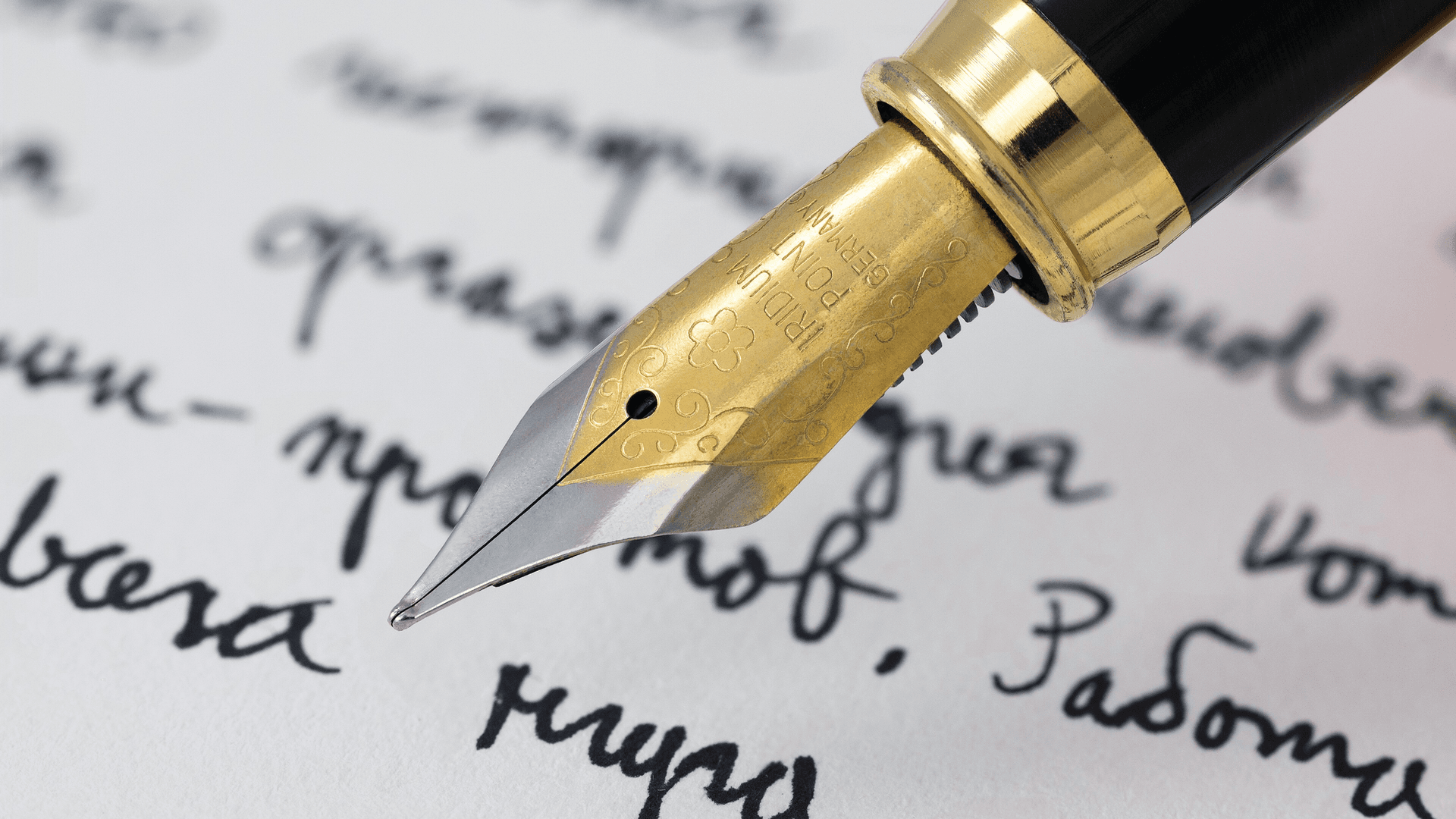
Hero image: Fountain pen writing (literacy), by Petar Milošević, CC BY-SA 4.0. Via Wikimedia Commons.
Take our professional IQ test
Want to know your IQ? Try the first ever professional online IQ test.