Does Juggling Make You Smarter? What the Brain Scans Show | Riot IQ
Oct 18, 2026·Advanced Topics & Research
Does Juggling Make You Smarter? What the Brain Scans Show
Does juggling make you smarter? No study shows it raises IQ. Learning to juggle briefly changes brain areas for tracking motion, and that is all.
Dr. Russell T. WarneChief Scientist
Share
Juggling does not make you smarter in the sense of raising IQ, and no study has given jugglers an IQ test before and after learning. What learning to juggle does is cause small, temporary increases in grey matter in parts of the brain that track visual motion, changes that faded within months once people stopped practising.
This article covers the brain-imaging studies that made juggling famous, why a change on a brain scan is not a change in intelligence, the few studies that tested thinking skills directly, why the claim spread, and the problems with the evidence.
What the brain-scan studies found
In 2004, Bogdan Draganski and colleagues published a one-page report in Nature that has since been cited more than 1,900 times, by Crossref's count. They took 24 young adults (average age 22) with no juggling experience and split them into two groups of 12. One group spent three months learning the classic three-ball cascade; the other did not juggle. Everyone had MRI scans before training, after three months and again after a further three months without practice.
The jugglers showed a selective increase in grey matter in the mid-temporal area of the brain known as hMT/V5, which processes complex visual motion. Three months after they stopped practising, the increase had largely shrunk back. The authors described the change as "transient."
Several follow-ups replicated and extended the finding:
• Speed of change: Joenna Driemeyer and colleagues scanned 20 young adults learning to juggle and found grey matter changes in the same visual motion area after only 7 days of training. Neither how well people juggled nor how many hours they practised predicted the change; learning something new seemed to matter more than continued practice.
• Older adults: Janina Boyke and colleagues taught juggling to healthy older adults (average age about 60). They learned less proficiently than 20-year-olds but showed similar grey matter increases in hMT/V5, plus temporary increases in the left hippocampus and the nucleus accumbens.
• White matter: Jan Scholz and colleagues at Oxford trained 24 adults for six weeks and compared them with 24 untrained controls. Using diffusion imaging, they found an increase in "fractional anisotropy," a measure of white matter structure, under the intraparietal sulcus, part of a network the authors linked to arm movements, grasping and tracking objects in peripheral vision. It was the first evidence that training changes white matter in healthy adults.
A 2022 systematic review by Jakub Malik and colleagues found 11 studies of juggling and brain structure with about 400 participants in total. All reported some structural change, mostly in hMT/V5, but the authors noted the small number of well-designed studies and a high risk of bias.
Why a change on a brain scan is not a change in IQ
None of these studies measured intelligence. Their outcomes were grey matter estimates from a method called "voxel-based morphometry," which compares the amount of grey tissue in each small block of the brain across scans, and white matter measures from diffusion imaging. Scholz and colleagues noted that these MRI measures are indirect and hard to interpret, so a local increase does not necessarily mean new neurons or connections.
The location of the changes matters too. hMT/V5 handles visual motion, which a juggler uses constantly to track balls in flight. Growth there is what you would expect from practising a task that depends on watching moving objects, and it says nothing about reasoning or memory. IQ tests measure "g," the general factor of intelligence that shows up across many different mental tasks, explained in our article on the g factor. A brain area devoted to one skill getting bigger for a few months is not a change in g.
The changes also did not track skill. Scholz and colleagues found that structural changes generally did not correlate with how much progress people made or how well they could juggle by the end. If the brain change does not predict how good someone is at juggling, there is little reason to expect it to predict anything broader.
Does juggling improve any thinking skills?
A handful of studies have tested thinking skills directly, and they focus on "mental rotation," the ability to imagine an object turning in space, which is one part of visual-spatial reasoning.
• Girls aged 6 to 14: Petra Jansen, Léonie Lange and Martin Heil gave 26 girls three months of juggling training and 24 girls light strength training with exercise bands. The juggling group became significantly faster at a mental rotation task with 3D block figures.
• Children with spina bifida: Jennifer Lehmann and Petra Jansen found that children aged 8 to 12 who had 8 weeks of juggling training became faster at mental rotation than children who had no training.
• Older adults: in a 2024 randomized crossover study, Malik and colleagues added juggling three times a week for four weeks to the routine of 26 active adults with an average age of 70. Juggling improved balance while doing a second task, but the changes in reaction time and attention tests were not statistically significant. The trial was registered only after it was done.
These are small studies, and the outcomes are mental rotation speed or reaction time, not IQ. Even if the effects are real, they are "near transfer," improvement on a skill closely related to the one practised. Giovanni Sala and Fernand Gobet's reviews of chess, music and working memory training conclude that "far transfer," practice in one skill improving general intelligence, rarely if ever happens, and juggling offers no evidence against that conclusion.
Why the "juggling makes you smarter" idea spread
The original finding was striking. The Nature paper said its result contradicted the traditional view that learning changes how the adult cortex works without changing its anatomy. A study showing that three months of juggling visibly changed an MRI scan was easy to remember and easy to turn into a headline, and "your brain grows" slides naturally into "you get smarter."
Juggling also looks clever. It takes coordination and concentration, and people who can do it impress others. That makes it easy to assume jugglers must be smart, a misreading of the same kind that surrounds other visible skills, such as solving a Rubik's cube.
Selection may play a part as well. Cassandra Sampaio-Baptista and colleagues scanned 44 people before six weeks of daily juggling practice and found that people with more grey matter in certain visual and parietal areas at the start learned faster. If people whose brains suit the task are the ones who stick with juggling, comparisons of jugglers with non-jugglers will partly reflect who takes up the hobby.
Problems with the evidence
The studies are small. The original Nature report had 12 jugglers, and most follow-ups had a few dozen participants. Small brain-imaging studies run thousands of statistical comparisons across the brain, so false positives are a constant risk, and the review by Malik and colleagues rated the risk of bias as high.
Most volunteers were young adults who chose to take part, so they are not representative. Control groups usually did nothing at all, so the jugglers also differed in having a new routine that involved some light physical activity. Juggling is also gentle exercise, and the evidence on whether physical activity changes IQ is covered in our article on whether exercise can affect your IQ score.
Finally, the brain changes were temporary. In both the young and the older adults, grey matter increases faded once training stopped. A lasting rise in intelligence would need lasting change, and none has been shown.
Frequently asked questions
Does juggling increase IQ?
No study has measured an IQ change from juggling. Learning to juggle changes grey matter in visual motion areas for a few months, but that is not a change in general intelligence.
Does juggling make your brain grow?
In a sense, yes, temporarily. MRI studies found small increases in grey matter in an area that processes visual motion, which shrank back after people stopped practising.
Is juggling good for your brain as you age?
Older adults can learn to juggle and show similar brain changes to young adults. A small trial in 70-year-olds found better balance during a dual task but no significant change in reaction time or attention.
Are jugglers smarter than other people?
There is no evidence that they are. No study has compared IQ scores of jugglers and non-jugglers.
Does juggling help with spatial skills?
Small studies in children found that juggling training made them faster at mental rotation. That is a specific spatial skill, and the studies were too small to be conclusive.
The takeaway
Juggling is one of the clearest demonstrations that adult brains change when they learn something new, and that is worth knowing. It is not a way to raise your IQ. The brain changes are tied to the visual demands of the skill and are temporary, and the few tests of thinking skills show small, specific effects. Learn to juggle because it is fun. If you want a real measure of your reasoning ability, try an online IQ test built by psychometricians.
References
1. Draganski, B., Gaser, C., Busch, V., Schuierer, G., Bogdahn, U., & May, A. (2004). Changes in grey matter induced by training. Nature, 427(6972), 311-312. [doi.org/10.1038/427311a](. doi.org
2. Driemeyer, J., Boyke, J., Gaser, C., Büchel, C., & May, A. (2008). Changes in gray matter induced by learning: Revisited. PLoS ONE, 3(7), e2669. [doi.org/10.1371/journal.pone.0002669](. doi.org
3. Boyke, J., Driemeyer, J., Gaser, C., Büchel, C., & May, A. (2008). Training-induced brain structure changes in the elderly. Journal of Neuroscience, 28(28), 7031-7035. [doi.org/10.1523/JNEUROSCI.0742-08.2008](. doi.org
4. Scholz, J., Klein, M. C., Behrens, T. E. J., & Johansen-Berg, H. (2009). Training induces changes in white-matter architecture. Nature Neuroscience, 12(11), 1370-1371. [doi.org/10.1038/nn.2412](. doi.org
5. Malik, J., Stemplewski, R., & Maciaszek, J. (2022). The effect of juggling as dual-task activity on human neuroplasticity: A systematic review. International Journal of Environmental Research and Public Health, 19(12), 7102. [doi.org/10.3390/ijerph19127102](. doi.org
6. Jansen, P., Lange, L., & Heil, M. (2011). The influence of juggling on mental rotation performance in children. Biomedical Human Kinetics, 3, 18-22. [doi.org/10.2478/v10101-011-0005-6](. doi.org
7. Lehmann, J., & Jansen, P. (2012). The influence of juggling on mental rotation performance in children with spina bifida. Brain and Cognition, 80(2), 223-229. [doi.org/10.1016/j.bandc.2012.07.004](. doi.org
8. Malik, J., Główka, N., Jelonek, W., Stemplewski, R., & Maciaszek, J. (2024). Effect of a juggling-based physical activity on postural stability, reaction time, and attention focus in older adults: A randomized crossover study. European Review of Aging and Physical Activity, 21, 15. [doi.org/10.1186/s11556-024-00351-w](. doi.org
9. Sala, G., & Gobet, F. (2017). Does far transfer exist? Negative evidence from chess, music, and working memory training. Current Directions in Psychological Science, 26(6), 515-520. [doi.org/10.1177/0963721417712760](. doi.org
10. Sampaio-Baptista, C., Scholz, J., Jenkinson, M., Thomas, A. G., Filippini, N., Smit, G., Douaud, G., & Johansen-Berg, H. (2014). Gray matter volume is associated with rate of subsequent skill learning after a long term training intervention. NeuroImage, 96, 158-166. [doi.org/10.1016/j.neuroimage.2014.03.056](. doi.org
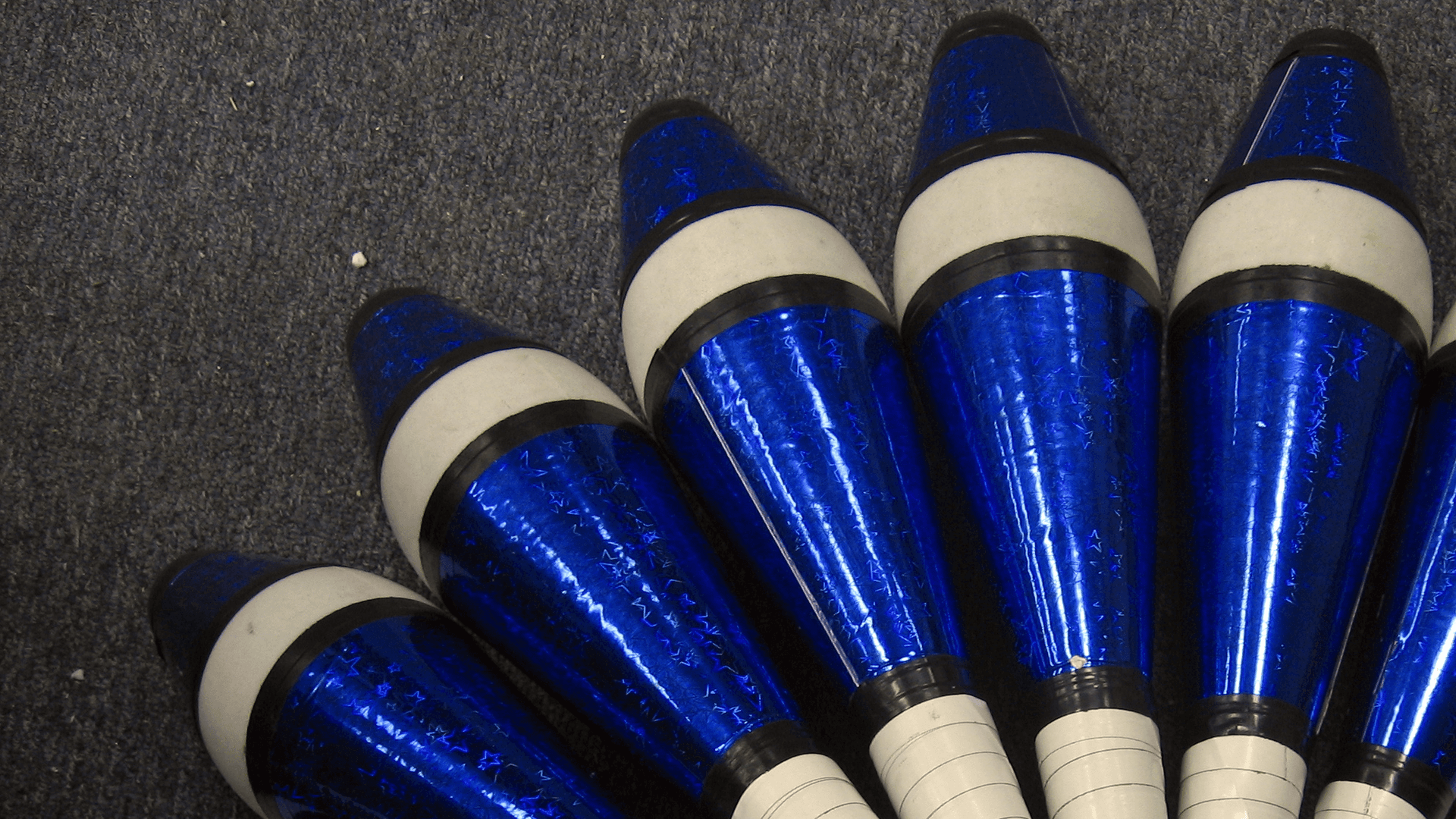
Hero image: Clubs, by Casey West, CC BY-SA 2.0. Via Wikimedia Commons.
Take our professional IQ test
Want to know your IQ? Try the first ever professional online IQ test.