Does Knitting Make You Smarter? What the Research Shows | Riot IQ
Oct 19, 2026·Advanced Topics & Research
Does Knitting Make You Smarter? What the Research Shows
Does knitting make you smarter? No study shows it raises IQ. Older crafters have about a 28% lower risk of mild cognitive impairment, but that is not proof.
Dr. Russell T. WarneChief Scientist
Share
Knitting does not make you smarter in the sense of raising your IQ: no study has tested knitting against an IQ test, and the closest randomized trial found that three months of learning to quilt did not reliably improve memory. Older adults who do crafts such as knitting do have about a 28% lower risk of developing mild cognitive impairment over four years (hazard ratio 0.72), but that comes from observational data, and the people who keep crafting may simply be the people whose minds are already in better shape.
Knitting is often described as a workout for the brain, a form of meditation and a shield against dementia. This page covers what the population studies show, what happened when researchers actually assigned older adults to learn a craft, why knitters may look sharp for reasons unrelated to yarn, and what the evidence does support.
What studies of crafting and memory show
Most of the evidence comes from the Mayo Clinic Study of Aging in Olmsted County, Minnesota, where researchers asked older adults how often they did various activities and then checked their thinking skills.
• A snapshot of 1,321 people aged 70 to 89: Geda and colleagues compared 1,124 cognitively normal adults with 197 who had "mild cognitive impairment" (MCI), a measurable decline in memory or thinking that falls short of dementia. People who did craft activities such as knitting and quilting had lower odds of MCI (odds ratio 0.66), as did people who used computers, played games or read books. Social activities such as traveling were only marginally linked. Because this was a single snapshot, the authors noted that they could not tell which came first.
• Four years of follow-up: Krell-Roesch and colleagues then followed 1,929 cognitively normal adults aged 70 and over for a median of four years. Crafting was linked to a 28% lower risk of new MCI (hazard ratio 0.72, 95% confidence interval 0.57 to 0.90), after adjusting for age, sex and education. Games, computer use and social activities showed similar associations.
• The oldest old: Roberts and colleagues followed 256 people with a median age of 87. Those who reported crafts in both midlife and late life had a lower risk of MCI (hazard ratio 0.55), though the midlife activity was recalled decades later.
These are real associations in well-run cohorts. They are also associations with a clinical diagnosis of decline, which is a different outcome from intelligence. Our article on whether IQ is correlated with dementia explains how earlier ability itself predicts later decline.
The closest experiment: learning to quilt
Only a randomized trial can show whether a craft causes better thinking. The best one is the Synapse Project, run by Denise Park and colleagues in Dallas. They enrolled 259 adults aged 60 to 90, and 221 completed a 14-week program. Participants spent about 15 hours a week on one of six conditions: learning to quilt, learning digital photography, learning both, a social group with outings and entertainment, a "placebo" condition of at-home activities such as listening to classical music and word puzzles, or no treatment.
The three learning groups together improved more on episodic memory, the ability to remember events and lists, than the social and placebo groups. Processing speed, mental control and visuospatial skills showed no such advantage.
The result for quilting on its own was less encouraging. When each learning group was compared with the placebo group, photography produced a clear gain in episodic memory (a net effect of 0.54 standard deviations). The quilting group showed no significant improvement on any measure. After correcting for multiple comparisons, only the photography result survived.
If that 0.54 were an IQ-scale effect, it would equal about 8 points, since 1 standard deviation is 15 points. The outcome was a memory composite, though, and the photography condition involved learning complex software and camera skills. The trial is evidence that demanding new learning can help memory in older adults; it offers little support for the idea that a textile craft in particular does.
Why knitters may look sharper anyway
Three problems sit underneath the population studies.
• Reverse causation: People in the early stages of decline often drop demanding hobbies. In the Victoria Longitudinal Study, Hultsch and colleagues found that changes in intellectual activity tracked changes in cognition, but an alternative model fit the data too, in which "high-ability individuals lead intellectually active lives until cognitive decline in old age limits their activities."
• Selection: People who pick up complex hobbies tend to differ from those who do not in education, health and earlier ability. The Mayo analyses adjusted for education, but none had a childhood IQ score to adjust for.
• Self-report: The largest knitting-specific study, by Riley and colleagues, surveyed 3,545 knitters recruited through a knitting website. More frequent knitters reported feeling calmer and happier and rated their own cognitive functioning higher. Nobody was tested, and the sample was self-selected enthusiasts.
Timothy Salthouse reviewed the wider "use it or lose it" literature and found that mentally active people do tend to score higher, but very few studies show that activity slows the rate of age-related decline. That is the pattern you would expect if active people start out ahead.
Knitting, calm and the meditation claim
Many knitters describe the repetitive rhythm of the needles as meditative, and the Riley survey links knitting frequency with feeling calm. That is plausible and worth something on its own terms. Our page on whether meditation increases IQ covers that evidence, which also finds no measured IQ gain.
There is also a broader reason to doubt that any single hobby raises intelligence. Sala and Gobet's meta-analyses of chess, music and working memory training found that "far transfer," improvement on abilities beyond the practised skill, rarely appears once studies use active control groups. Knitting reliably makes people better at knitting: they learn stitches, read patterns and count rows faster. There is no evidence that this spills over into general reasoning.
None of this is a reason to put the needles down. Knitting is cheap, social when done in groups and pleasant for many people, and staying engaged in later life is linked to better outcomes even if the cause is unclear. The same Mayo study that examined crafting found that people who spent more than 6 hours a day watching TV had higher odds of MCI. A hobby you enjoy and keep doing is a reasonable choice for wellbeing, as long as expectations stay realistic.
Frequently asked questions
Does knitting increase IQ?
No study has shown that it does. Research on knitting measures wellbeing, self-reported thinking or the risk of cognitive impairment, and none has tested IQ before and after learning to knit.
Is knitting good for your brain?
Older adults who do crafts have a lower risk of mild cognitive impairment in cohort studies. Those studies cannot rule out that healthier, sharper people are simply more likely to keep knitting.
Can knitting prevent dementia?
There is no trial showing that knitting prevents dementia. The observational links are modest, and reverse causation is a serious alternative explanation.
Is knitting better than other hobbies for memory?
The evidence suggests not. In the Synapse Project, learning photography improved memory and learning to quilt did not, and in the Mayo cohorts crafts performed about the same as games, computer use and social activities.
Does knitting help with stress and focus?
Surveys of knitters report feeling calmer and happier, especially among frequent knitters. These are self-reports from enthusiasts, so the size of the effect is uncertain.
The takeaway
Knitting has never been shown to raise IQ. Older adults who craft have a modestly lower risk of mild cognitive impairment, but people tend to give up demanding hobbies as their thinking declines, so the arrow may point the other way. In the only randomized trial of a closely related craft, quilting did not improve memory, while learning digital photography did. Knit because you enjoy it and because it may help you relax. If you want an accurate measure of your reasoning ability, take a professionally developed IQ test.
References
1. Krell-Roesch, J., Vemuri, P., Pink, A., Roberts, R. O., Stokin, G. B., Mielke, M. M., Christianson, T. J. H., Knopman, D. S., Petersen, R. C., Kremers, W. K., & Geda, Y. E. (2017). Association between mentally stimulating activities in late life and the outcome of incident mild cognitive impairment, with an analysis of the APOE ε4 genotype. JAMA Neurology, 74(3), 332-338. [doi.org/10.1001/jamaneurol.2016.3822](. doi.org
2. Geda, Y. E., Topazian, H. M., Roberts, L. A., Roberts, R. O., Knopman, D. S., Pankratz, V. S., Christianson, T. J. H., Boeve, B. F., Tangalos, E. G., Ivnik, R. J., & Petersen, R. C. (2011). Engaging in cognitive activities, aging, and mild cognitive impairment: A population-based study. Journal of Neuropsychiatry and Clinical Neurosciences, 23(2), 149-154. [doi.org/10.1176/jnp.23.2.jnp149](. doi.org
3. Roberts, R. O., Cha, R. H., Mielke, M. M., Geda, Y. E., Boeve, B. F., Machulda, M. M., Knopman, D. S., & Petersen, R. C. (2015). Risk and protective factors for cognitive impairment in persons aged 85 years and older. Neurology, 84(18), 1854-1861. [doi.org/10.1212/WNL.0000000000001537](. doi.org
4. Park, D. C., Lodi-Smith, J., Drew, L., Haber, S., Hebrank, A., Bischof, G. N., & Aamodt, W. (2014). The impact of sustained engagement on cognitive function in older adults: The Synapse Project. Psychological Science, 25(1), 103-112. [doi.org/10.1177/0956797613499592](. doi.org
5. Hultsch, D. F., Hertzog, C., Small, B. J., & Dixon, R. A. (1999). Use it or lose it: Engaged lifestyle as a buffer of cognitive decline in aging? Psychology and Aging, 14(2), 245-263. [doi.org/10.1037/0882-7974.14.2.245](. doi.org
6. Riley, J., Corkhill, B., & Morris, C. (2013). The benefits of knitting for personal and social wellbeing in adulthood: Findings from an international survey. British Journal of Occupational Therapy, 76(2), 50-57. [doi.org/10.4276/030802213X13603244419077](. doi.org
7. Salthouse, T. A. (2006). Mental exercise and mental aging: Evaluating the validity of the "use it or lose it" hypothesis. Perspectives on Psychological Science, 1(1), 68-87. [doi.org/10.1111/j.1745-6916.2006.00005.x](. doi.org
8. Sala, G., & Gobet, F. (2017). Does far transfer exist? Negative evidence from chess, music, and working memory training. Current Directions in Psychological Science, 26(6), 515-520. [doi.org/10.1177/0963721417712760](. doi.org
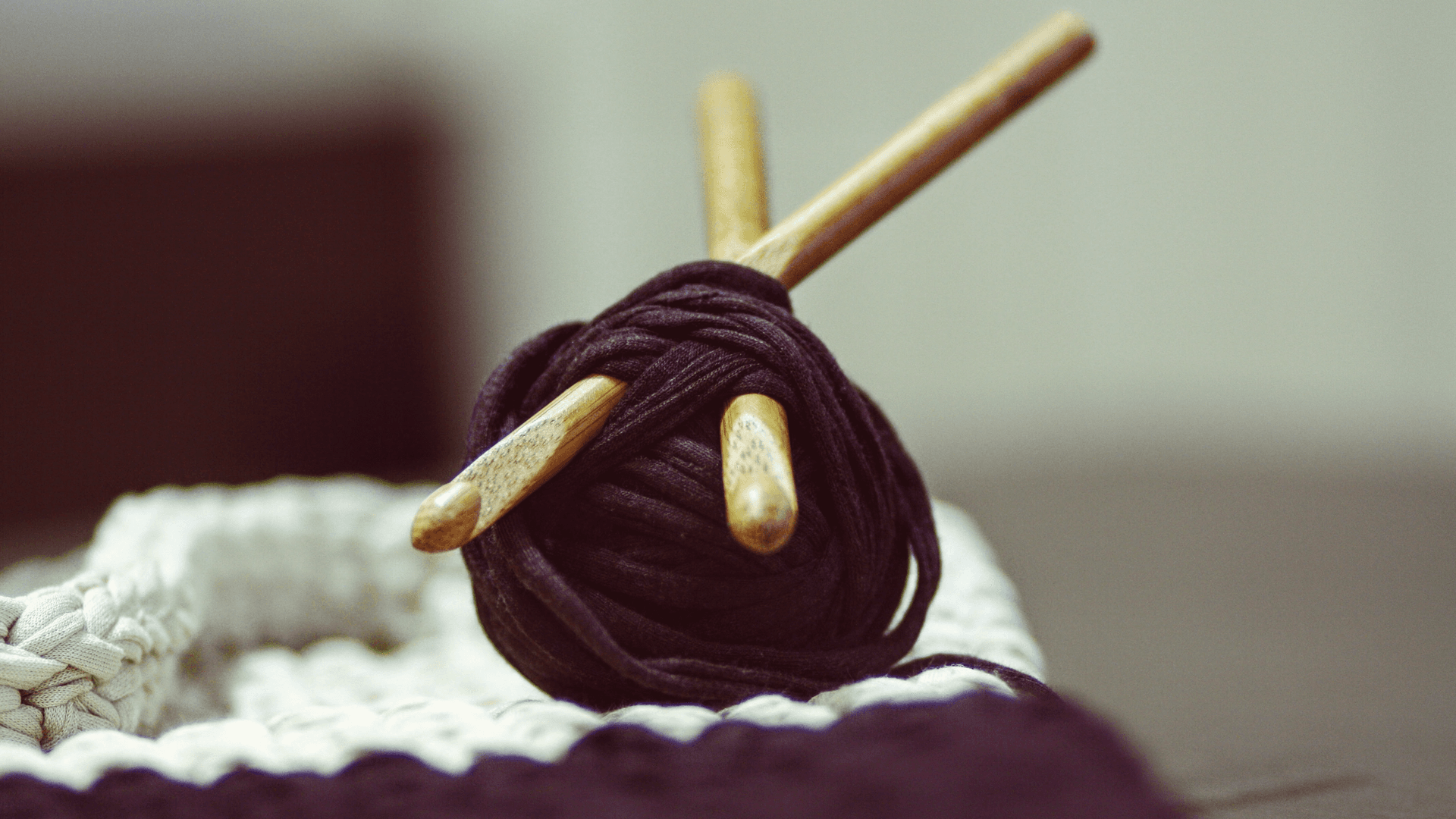
Hero image: Knitting needles and yarn (Unsplash), by Olliss fomaolea, CC0. Via Wikimedia Commons.
Take our professional IQ test
Want to know your IQ? Try the first ever professional online IQ test.