Do Blueberries Make You Smarter? What the Research Shows for IQ
Do blueberries make you smarter? No trial has measured IQ. Small studies hint at modest memory gains in older adults, and a larger trial found none.
Dr. Russell T. WarneChief Scientist
Share
No study has shown that blueberries make you smarter in the sense of raising IQ, because no trial has measured IQ. The best pooled estimate, a 2025 meta-analysis of nine small trials in older adults with memory complaints, found a modest gain on episodic memory tests (a standardized difference of 0.34), and a larger six-month trial in adults with metabolic syndrome found no effect on any cognitive test.
Blueberries have a reputation as a "brain food", and the reputation is not entirely invented. This page covers what the blueberry trials measured in children and older adults, what the reviews conclude, why the research has drawn criticism, and why a better score on a word-recall task is a different thing from higher intelligence. It describes research and is not medical or dietary advice.
Why blueberries became a brain food
Blueberries are rich in "anthocyanins", the pigments that make them blue and purple. Anthocyanins belong to the flavonoid family, the same broad group of plant compounds found in cocoa and tea. Animal studies in the 1990s and 2000s suggested that berry-rich diets could slow age-related memory loss in rodents, and human trials followed.
The second source of the reputation is a large observational study. Devore and colleagues followed 16,010 women aged 70 or older in the Nurses' Health Study, who had reported their diets on food questionnaires since 1980. Women who ate the most blueberries and strawberries declined more slowly on cognitive tests over about four years of follow-up. The authors estimated that the difference was equivalent to delaying cognitive aging by up to 2.5 years.
That is a correlation, and correlations in nutrition are notoriously hard to interpret. Women who eat more berries also tend to differ in income, education, exercise and overall diet. The authors adjusted for many of these factors, but no adjustment removes every difference between people who choose different foods. The study was funded by the National Institutes of Health and the California Strawberry Commission. For the wider picture of what diet can and cannot do, see our overview of whether diet or nutrition affects IQ.
What the blueberry trials show
Randomized trials are the better test, because chance decides who gets the berries. The blueberry trials are mostly small, and they vary widely in who was studied and in the form and dose of blueberry used.
• Children, single doses: Whyte, Schafer and Williams gave 21 children aged 7 to 10 a drink made with 15 or 30 grams of freeze-dried wild blueberry powder, or a placebo drink, on separate days. In the hours afterwards the children did better on some memory tasks, such as delayed word recognition, and on harder trials of an attention task. These were short-term effects measured within six hours of one drink.
• Older adults with memory complaints: Krikorian and colleagues gave wild blueberry juice to nine older adults with early memory changes for 12 weeks. Their paired-associate learning and word-list recall improved. There was no randomized placebo group in that study; the authors compared the results with seven people from a separate trial. The juice and part of the funding came from the Wild Blueberry Association of North America.
• Healthy older adults: Miller and colleagues randomized 37 adults aged 60 to 75 to freeze-dried blueberry (24 grams a day, about a cup of fresh berries) or a placebo powder for 90 days. The blueberry group made fewer repetition errors on a word-learning test and showed a smaller "switch cost" on a task-switching test, but not better gait or balance. Funders listed for the paper include the US Highbush Blueberry Council. Bowtell and colleagues gave 26 healthy older adults blueberry concentrate or a placebo drink for 12 weeks and found more blood flow and activity in some brain regions, with only borderline evidence of better working memory.
• A larger trial of extracts: Whyte and colleagues randomized 122 adults aged 65 to 80 to placebo or one of three blueberry products for six months. Only the purified extract beat placebo, on delayed word recognition at three months, and not on most other tests. The study was funded by Naturex, the company that made the extract, which contributed to its design and to writing the paper.
• A six-month null result: Curtis and colleagues randomized adults with metabolic syndrome to freeze-dried blueberry powder (equal to half a cup or one cup of fresh berries a day) or a placebo. In the 115 people who completed the cognitive assessments, blueberries had no effect on attention, working memory, episodic memory, executive function or picture recognition after six months. In a smaller substudy, self-rated calmness improved in the 24 hours after one cup. This trial was also funded by the US Highbush Blueberry Council, which shows that industry funding does not guarantee a positive result.
What the reviews and meta-analyses conclude
A "meta-analysis" pools the results of many studies into one estimate. Three reviews matter most here.
• Older adults with cognitive decline: Da Silva and colleagues pooled nine randomized trials with 513 older adults who had mild cognitive impairment or subjective memory complaints. Blueberries improved episodic memory (SMD = 0.34, 95% confidence interval 0.11 to 0.57). They found no reliable gain in processing speed, working memory, recognition memory or visuospatial learning.
• All ages: Travica and colleagues reviewed 12 blueberry studies in children, young adults and older people. Eight reported better scores on some cognitive measure, especially memory. The authors noted that the studies differed so much in design, dose and anthocyanin content that they were hard to compare, and they did not pool them.
• Berries more broadly: Wang and colleagues pooled trials of blueberries, grapes and cranberries in adults. The pooled berry results showed no significant difference from control on memory (SMD = 0.04) or executive function (SMD = 0.02).
An SMD (standardized mean difference) is a gap between groups in standard deviation units. Multiplying by 15 puts it on the familiar IQ-point scale, so 0.34 corresponds to about 5 points. That figure describes scores on memory tests in older adults with memory complaints. It is not an IQ gain.
The research has also drawn methodological criticism. An earlier review by Hein and colleagues, funded by the Wild Blueberry Association of North America, concluded that blueberries may benefit memory and executive function. Vorland and colleagues then reported errors or irreproducibility in that review's effect-size calculations and incomplete reporting of results. Brydges and Gaeta ran a "p-curve" analysis of the 22 p-values in the same review. They found no evidential value for an effect of blueberries on cognition, and their tests suggested publication bias or questionable research practices, such as selectively reporting the tests that came out significant.
Why better memory scores do not mean higher IQ
It is tempting to read "better memory" as "smarter". The blueberry trials do not support that step.
• No IQ outcome: None of the trials gave a full IQ test. An IQ score summarizes many abilities, including reasoning, vocabulary, spatial skill, memory and speed. A gain on one word-list task is a much narrower claim, and our page on chocolate and IQ shows the same pattern for cocoa flavanols.
• Many tests, few wins: Most trials gave each person a long battery of tasks and found a benefit on one or two. When a study checks many outcomes, some will reach significance by chance. That is why the p-curve result matters.
• Who was studied: The clearest pooled gains come from older adults with memory complaints. Slowing a decline, or recovering some lost ground, is different from raising the ability of a healthy young adult.
• Short-term and acute effects: The children's studies measured performance a few hours after a single drink. Even if real, a temporary boost on a test day says nothing about lasting intelligence.
• Industry funding: Several trials and reviews were funded by blueberry trade groups or by the company that sold the product. Industry funding does not make a result wrong, as the null result from Curtis and colleagues shows. It does make independent, preregistered replication more important.
Blueberries are a healthy fruit, and nothing here suggests avoiding them. Anyone worried about their memory, or considering a concentrated blueberry supplement alongside other medicines, should talk to a doctor.
Frequently asked questions
Do blueberries make you smarter?
There is no evidence that they raise IQ, because no trial has measured IQ. Small trials report modest gains on specific memory tasks, mostly in older adults with memory complaints.
Do blueberries improve memory?
A 2025 meta-analysis found a modest improvement in episodic memory (SMD = 0.34) across nine trials in older adults with cognitive decline. A six-month trial in adults with metabolic syndrome found no memory benefit.
Do blueberries help children do better at school?
Small studies found that children did slightly better on some memory and attention tasks a few hours after a blueberry drink. No study has shown effects on school grades or IQ.
How many blueberries were used in the studies?
Doses varied widely, from small amounts of extract to freeze-dried powder equal to about one or two cups of fresh berries a day. Many trials used wild (lowbush) blueberry products.
Are blueberries good for the brain?
They are a nutritious fruit, and some evidence links berry-rich diets with slower cognitive aging. That evidence is mostly observational, so it cannot show that the berries themselves caused the difference.
The takeaway
Blueberries have not been shown to make anyone smarter. The trials are small and often industry-funded, and none measured IQ. The best pooled evidence suggests a modest gain on episodic memory tests in older adults with memory complaints, and the largest trial in adults with metabolic syndrome found nothing. If you want an accurate picture of your reasoning ability, try a professionally developed IQ test.
References
1. da Silva, A. B. N., de Oliveira, G. M., Gallo Ruelas, M., Gadelha, M. S. M., de Farias Santos, A. C. F., & Zamora, F. V. (2025). Blueberries for brainpower: A systematic review and meta-analysis with Bayesian post hoc analysis of RCTs exploring cognitive function in the elderly with prior cognitive decline. Biogerontology, 26(5), 171. [doi.org/10.1007/s10522-025-10308-w](. doi.org
2. Travica, N., D'Cunha, N. M., Naumovski, N., Kent, K., Mellor, D. D., Firth, J., Georgousopoulou, E. N., Dean, O. M., Loughman, A., Jacka, F., & Marx, W. (2020). The effect of blueberry interventions on cognitive performance and mood: A systematic review of randomized controlled trials. Brain, Behavior, and Immunity, 85, 96-105. [doi.org/10.1016/j.bbi.2019.04.001](. doi.org
3. Wang, Y., Haskell-Ramsay, C., Lara Gallegos, J., & Lodge, J. K. (2023). Effects of chronic consumption of specific fruit (berries, cherries and citrus) on cognitive health: A systematic review and meta-analysis of randomised controlled trials. European Journal of Clinical Nutrition, 77(1), 7-22. [doi.org/10.1038/s41430-022-01138-x](. doi.org
4. Hein, S., Whyte, A. R., Wood, E., Rodriguez-Mateos, A., & Williams, C. M. (2019). Systematic review of the effects of blueberry on cognitive performance as we age. The Journals of Gerontology: Series A, 74(7), 984-995. [doi.org/10.1093/gerona/glz082](. doi.org
5. Vorland, C. J., Mattey-Mora, P. P., Mestre, L. M., Chen, X., Dickinson, S. L., Brown, A. W., & Allison, D. B. (2020). Errors or irreproducibility in effect size calculations and incomplete reporting of results in "Systematic review of the effects of blueberry on cognitive performance as we age". The Journals of Gerontology: Series A, 75(8), e24-e26. [doi.org/10.1093/gerona/glaa041](. doi.org
6. Brydges, C., & Gaeta, L. (2019). Do blueberries actually improve cognitive performance? An analysis of publication bias in published research. Innovation in Aging, 3(Suppl. 1), S849-S850. [doi.org/10.1093/geroni/igz038.3126](. doi.org
7. Whyte, A. R., Schafer, G., & Williams, C. M. (2016). Cognitive effects following acute wild blueberry supplementation in 7- to 10-year-old children. European Journal of Nutrition, 55(6), 2151-2162. [doi.org/10.1007/s00394-015-1029-4](. doi.org
8. Krikorian, R., Shidler, M. D., Nash, T. A., Kalt, W., Vinqvist-Tymchuk, M. R., Shukitt-Hale, B., & Joseph, J. A. (2010). Blueberry supplementation improves memory in older adults. Journal of Agricultural and Food Chemistry, 58(7), 3996-4000. [doi.org/10.1021/jf9029332](. doi.org
9. Miller, M. G., Hamilton, D. A., Joseph, J. A., & Shukitt-Hale, B. (2018). Dietary blueberry improves cognition among older adults in a randomized, double-blind, placebo-controlled trial. European Journal of Nutrition, 57(3), 1169-1180. [doi.org/10.1007/s00394-017-1400-8](. doi.org
10. Bowtell, J. L., Aboo-Bakkar, Z., Conway, M. E., Adlam, A. R., & Fulford, J. (2017). Enhanced task-related brain activation and resting perfusion in healthy older adults after chronic blueberry supplementation. Applied Physiology, Nutrition, and Metabolism, 42(7), 773-779. [doi.org/10.1139/apnm-2016-0550](. doi.org
11. Whyte, A. R., Cheng, N., Fromentin, E., & Williams, C. M. (2018). A randomized, double-blinded, placebo-controlled study to compare the safety and efficacy of low dose enhanced wild blueberry powder and wild blueberry extract (ThinkBlue) in maintenance of episodic and working memory in older adults. Nutrients, 10(6), 660. [doi.org/10.3390/nu10060660](. doi.org
12. Curtis, P. J., van der Velpen, V., Berends, L., Jennings, A., Haag, L., Minihane, A. M., Chandra, P., Kay, C. D., Rimm, E. B., & Cassidy, A. (2024). Chronic and postprandial effect of blueberries on cognitive function, alertness, and mood in participants with metabolic syndrome: Results from a six-month, double-blind, randomized controlled trial. The American Journal of Clinical Nutrition, 119(3), 658-668. [doi.org/10.1016/j.ajcnut.2023.12.006](. doi.org
13. Devore, E. E., Kang, J. H., Breteler, M. M. B., & Grodstein, F. (2012). Dietary intakes of berries and flavonoids in relation to cognitive decline. Annals of Neurology, 72(1), 135-143. [doi.org/10.1002/ana.23594](. doi.org
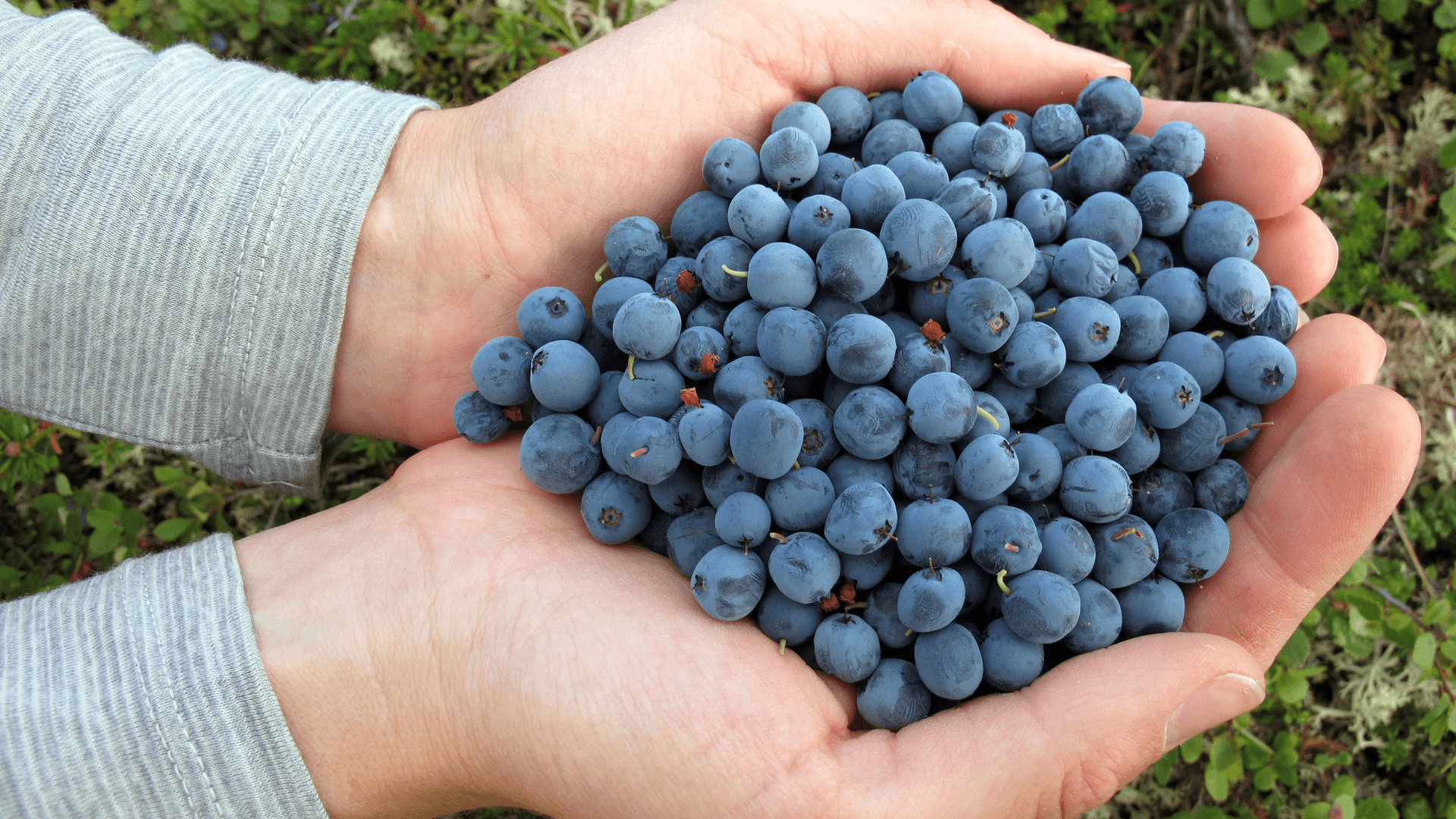
Hero image: A generous handful of blueberries, U.S. National Park Service photo, public domain. Via Wikimedia Commons.
Take our professional IQ test
Want to know your IQ? Try the first ever professional online IQ test.