Chocolate and Intelligence: Does Eating Chocolate Raise IQ?
Chocolate and intelligence: no good evidence shows chocolate raises IQ. The largest cocoa flavanol trials found effects near zero on adult cognitive tests.
Dr. Russell T. WarneChief Scientist
Share
There is no good evidence that eating chocolate makes anyone more intelligent. The largest randomized trials of cocoa flavanols, the plant compounds behind most health claims about chocolate, found effects on adult cognitive test scores of roughly 0.03 standard deviations or less, which is under half an IQ point on the familiar 15-point scale.
The idea has a real scientific seed. Small trials, some of them funded by a chocolate maker, reported better scores on specific tests after weeks of high-flavanol cocoa, and a tongue-in-cheek 2012 paper linked national chocolate consumption with Nobel Prizes. This article covers what the large trials found, how to convert their results into IQ points, why the Nobel chart is a lesson in confounding, and what the observational studies can and cannot tell you.
What the large randomized trials found
The strongest evidence comes from COSMOS (the COcoa Supplement and Multivitamin Outcomes Study), a large US trial in adults aged 60 and older. Participants took capsules with 500 mg of cocoa flavanols a day or a placebo, and three separate cognitive studies were run inside it.
• COSMOS-Mind (telephone testing, 3 years): among 2,262 older adults, cocoa extract "had no effect on global cognition", with a mean difference of 0.03 standard deviations (95% CI -0.02 to 0.08). The same trial found a small benefit for a daily multivitamin, which shows the test battery could detect a change (Baker et al., 2023).
• COSMOS-Clinic (in-person testing, 2 years): among 573 participants given 11 detailed neuropsychological tests, the cocoa group did no better than placebo, with a difference of -0.01 standard deviations (95% CI -0.08 to 0.05) in global cognition (Vyas et al., 2024).
• COSMOS-Web (online testing, 3 years): among 3,562 participants, the prespecified primary outcome, a word-list memory test after one year, did not differ between groups. The standardized effect was d = 0.025 (Brickman et al., 2023).
COSMOS-Web did find a hint of something narrower. Participants in the lowest third for baseline diet quality remembered slightly more words on the flavanol supplement (d = 0.086 across follow-up), and the effect was larger in those with the lowest urinary flavanol levels (d = 0.14). The authors framed this as "depletion-repletion": cocoa flavanols may help memory only in people whose usual diet contains very little of them. The COSMOS-Clinic team also saw possible benefits in people with poorer diets, though they noted these subgroup analyses were not corrected for multiple testing. That idea is closer to fixing a shortfall than to raising intelligence, and it still needs confirmation.
How big is that in IQ points?
None of these trials used an IQ test, but their outcomes are standardized, so they can be put on the IQ scale by multiplying by 15 (the IQ standard deviation). This gives a rough sense of size, with the caveat that a memory or composite score is not the same thing as full-scale IQ.
• COSMOS-Mind: 0.03 × 15 is about 0.5 points, with a confidence interval running from about -0.3 to +1.2 points.
• COSMOS-Clinic: -0.01 × 15 is about -0.2 points, with an interval from about -1.2 to +0.8 points.
• COSMOS-Web, poorer-diet subgroup: 0.086 × 15 is about 1.3 points on one memory test, in a subgroup rather than the whole sample.
Put plainly, the best trials rule out any large effect of cocoa flavanols on cognition in older adults. A gain of even one IQ point would sit at the upper edge of what the COSMOS confidence intervals allow.
The smaller trials behind the headlines
Most of the "chocolate boosts your brain" coverage traces back to small studies.
• Brickman et al. (2014): 37 healthy adults aged 50 to 69 who completed a 3-month trial. Those given 900 mg of cocoa flavanols a day were faster on a new memory task designed to tap the dentate gyrus, a part of the hippocampus (Cohen's d = 0.82, P = .038). They did not differ on a second memory measure. The study was supported in part by an unrestricted grant from Mars, Inc. When the same research group ran COSMOS-Web, they described this task as "psychometrically suboptimal" for older people because it produced near-chance performance in later analyses.
• Mastroiacovo et al. (2015): 90 older Italians drank cocoa with high, intermediate or low flavanol content for 8 weeks. The higher-flavanol groups got faster on the Trail Making Test (for example, 16.5 seconds quicker on part B versus 1.1 seconds for the low group) and named more words on a fluency test, but scores on the Mini-Mental State Examination did not differ. The low-flavanol drink was made from highly processed, alkalized cocoa, and the study was funded by Mars, which supplied the drinks.
• Sorond et al. (2008): in 34 healthy older volunteers, two weeks of flavanol-rich cocoa increased blood flow velocity in a major brain artery by about 8 to 10%. This is a plausible mechanism, but it did not measure intelligence.
A 2026 meta-analysis of 16 randomized trials (2,847 participants) found chronic cocoa or dark chocolate intake improved Trail Making and verbal fluency scores, while results for memory were inconsistent and MMSE scores showed no benefit (Arabpour et al., 2026). Small, short trials tend to report bigger effects than large, long ones, and when the two disagree, the large trials deserve more weight. Industry links run through this whole field: the cocoa extract in COSMOS was also supplied by Mars Edge, which part-funded COSMOS-Web, and the trial still found no overall benefit.
The chocolate-Nobel chart: a lesson in confounding
In 2012 the cardiologist Franz Messerli published a short note in the New England Journal of Medicine plotting chocolate consumption per person against Nobel laureates per 10 million people in 23 countries. The correlation was r = .79, with Switzerland top on both measures. Messerli used Nobel Prizes as a stand-in for a country's "cognitive function", since no comparable national data existed.
This is an "ecological correlation", meaning one measured between countries rather than between people. It cannot tell you whether any individual laureate ate more chocolate, and national wealth is an obvious candidate third variable, since richer countries can afford both more chocolate and more research. Maurage, Heeren and Pesenti (2013) showed that the chocolate interpretation falls apart once other flavanol-rich foods are considered, and that Nobel counts also correlate highly with assorted unrelated national measures. The chart is now a standard classroom example of a striking correlation with no causal meaning.
What observational studies show, and the confounds
A cross-sectional analysis of 968 adults aged 23 to 98 in the Maine-Syracuse Longitudinal Study found that people who ate chocolate more often scored better on a global cognitive composite and on several specific tests (Crichton et al., 2016). Most of these associations held after statistical control for cardiovascular, lifestyle and dietary factors. Prospective analyses found no association between cognitive function and chocolate intake measured up to 18 years later. The authors themselves called for intervention trials to test causation, and the COSMOS trials that followed found little.
Correlations like this are hard to interpret for several reasons.
• Education and income: both are linked to diet and to test scores, and adjusting for them with a few survey questions rarely removes their influence completely.
• Health: people with diabetes or heart disease, conditions that can affect cognition, may cut back on sweets, so low chocolate intake can partly be a marker of illness.
• Age: older adults score lower on many timed tests and may eat differently, so any age-diet link can create a spurious association.
• What "chocolate" means: trials use standardized extracts or specially made high-flavanol cocoa. In the CoCoA trial the low-flavanol control drink was made from highly processed, alkalized cocoa, a reminder that flavanol content depends heavily on processing, so even a real flavanol effect would not translate directly to a candy bar.
Chocolate also contains caffeine and the related compound theobromine, although a 2019 review concluded that theobromine's effects on cognition remain underexplored (Cova et al., 2019). Short-term alertness is a separate question from intelligence, and our article on caffeine and IQ explains why a stimulant that speeds reaction time and alertness does not raise IQ. For the bigger picture on food, see whether diet or nutrition affects IQ.
Frequently asked questions
Does eating chocolate make you smarter?
No good evidence says so. The largest randomized trials of cocoa flavanols found effects on cognitive tests near zero, equivalent to less than one IQ point.
Is dark chocolate good for your brain?
Dark chocolate has more flavanols than milk chocolate, and small trials found modest gains on specific timed tests in older adults. Large trials did not confirm an overall cognitive benefit, so there is no good reason to eat it as a cognitive treatment.
Why do countries that eat more chocolate win more Nobel Prizes?
Most likely because both track national wealth. The r = .79 correlation is between countries, not people, and it says nothing about whether chocolate affects any individual's intelligence.
Can cocoa flavanol supplements prevent dementia?
In COSMOS-Mind, cocoa extract did not reduce new cases of mild cognitive impairment or dementia over 3 years, although the study had low statistical power for those outcomes (Sachs et al., 2023). Anyone worried about memory changes should see a doctor or neurologist rather than rely on a supplement.
Does chocolate help before an exam?
Its caffeine may make you feel slightly more alert for a short time. Any such effect is small and temporary, and it does not change underlying ability.
The takeaway
Chocolate and intelligence are linked mostly by headlines. Cocoa flavanols have plausible effects on blood flow and may help memory a little in people whose diets lack them, but the large trials show no meaningful benefit for cognition overall, well under one IQ point. The famous Nobel chart is a correlation between countries driven by wealth. Enjoy chocolate for its taste. If you want to know where your reasoning ability actually stands, take a full-length online IQ test designed to measure it directly.
References
1. Arabpour, Z., Arabpour, Z., & Jazayeri, S. (2026). Effect of chronic dark chocolate or cocoa intake on cognitive function: A Grading of Recommendations Assessment, Development, and Evaluation (GRADE)-assessed systematic review and meta-analysis of randomized controlled trials. Nutrition Reviews. Advance online publication. [doi.org/10.1093/nutrit/nuaf286](. doi.org
2. Baker, L. D., Manson, J. E., Rapp, S. R., Sesso, H. D., Gaussoin, S. A., Shumaker, S. A., & Espeland, M. A. (2023). Effects of cocoa extract and a multivitamin on cognitive function: A randomized clinical trial. Alzheimer's & Dementia, 19(4), 1308-1319. [doi.org/10.1002/alz.12767](. doi.org
3. Brickman, A. M., Khan, U. A., Provenzano, F. A., Yeung, L.-K., Suzuki, W., Schroeter, H., Wall, M., Sloan, R. P., & Small, S. A. (2014). Enhancing dentate gyrus function with dietary flavanols improves cognition in older adults. Nature Neuroscience, 17(12), 1798-1803. [doi.org/10.1038/nn.3850](. doi.org
4. Brickman, A. M., Yeung, L.-K., Alschuler, D. M., Ottaviani, J. I., Kuhnle, G. G. C., Sloan, R. P., Luttmann-Gibson, H., Copeland, T., et al. (2023). Dietary flavanols restore hippocampal-dependent memory in older adults with lower diet quality and lower habitual flavanol consumption. Proceedings of the National Academy of Sciences, 120(23), e2216932120. [doi.org/10.1073/pnas.2216932120](. doi.org
5. Cova, I., Leta, V., Mariani, C., Pantoni, L., & Pomati, S. (2019). Exploring cocoa properties: Is theobromine a cognitive modulator? Psychopharmacology, 236(2), 561-572. [doi.org/10.1007/s00213-019-5172-0](. doi.org
6. Crichton, G. E., Elias, M. F., & Alkerwi, A. (2016). Chocolate intake is associated with better cognitive function: The Maine-Syracuse Longitudinal Study. Appetite, 100, 126-132. [doi.org/10.1016/j.appet.2016.02.010](. doi.org
7. Mastroiacovo, D., Kwik-Uribe, C., Grassi, D., Necozione, S., Raffaele, A., Pistacchio, L., Righetti, R., Bocale, R., et al. (2015). Cocoa flavanol consumption improves cognitive function, blood pressure control, and metabolic profile in elderly subjects: The Cocoa, Cognition, and Aging (CoCoA) Study, a randomized controlled trial. The American Journal of Clinical Nutrition, 101(3), 538-548. [doi.org/10.3945/ajcn.114.092189](. doi.org
8. Maurage, P., Heeren, A., & Pesenti, M. (2013). Does chocolate consumption really boost Nobel award chances? The peril of over-interpreting correlations in health studies. The Journal of Nutrition, 143(6), 931-933. [doi.org/10.3945/jn.113.174813](. doi.org
9. Messerli, F. H. (2012). Chocolate consumption, cognitive function, and Nobel laureates. New England Journal of Medicine, 367(16), 1562-1564. [doi.org/10.1056/NEJMon1211064](. doi.org
10. Sachs, B. C., Williams, B. J., Gaussoin, S. A., Baker, L. D., Manson, J. E., Espeland, M. A., Sesso, H. D., Shumaker, S. A., et al. (2023). Impact of multivitamin-mineral and cocoa extract on incidence of mild cognitive impairment and dementia: Results from the COcoa Supplement and Multivitamin Outcomes Study for the Mind (COSMOS-Mind). Alzheimer's & Dementia, 19(11), 4863-4871. [doi.org/10.1002/alz.13078](. doi.org
11. Sorond, F. A., Lipsitz, L. A., Hollenberg, N. K., & Fisher, N. D. (2008). Cerebral blood flow response to flavanol-rich cocoa in healthy elderly humans. Neuropsychiatric Disease and Treatment, 4(2), 433-440. [doi.org/10.2147/ndt.s2310](. doi.org
12. Vyas, C. M., Manson, J. E., Sesso, H. D., Rist, P. M., Weinberg, A., Kim, E., Moorthy, M. V., Cook, N. R., et al. (2024). Effect of cocoa extract supplementation on cognitive function: Results from the clinic subcohort of the COSMOS trial. The American Journal of Clinical Nutrition, 119(1), 39-48. [doi.org/10.1016/j.ajcnut.2023.10.031](. doi.org
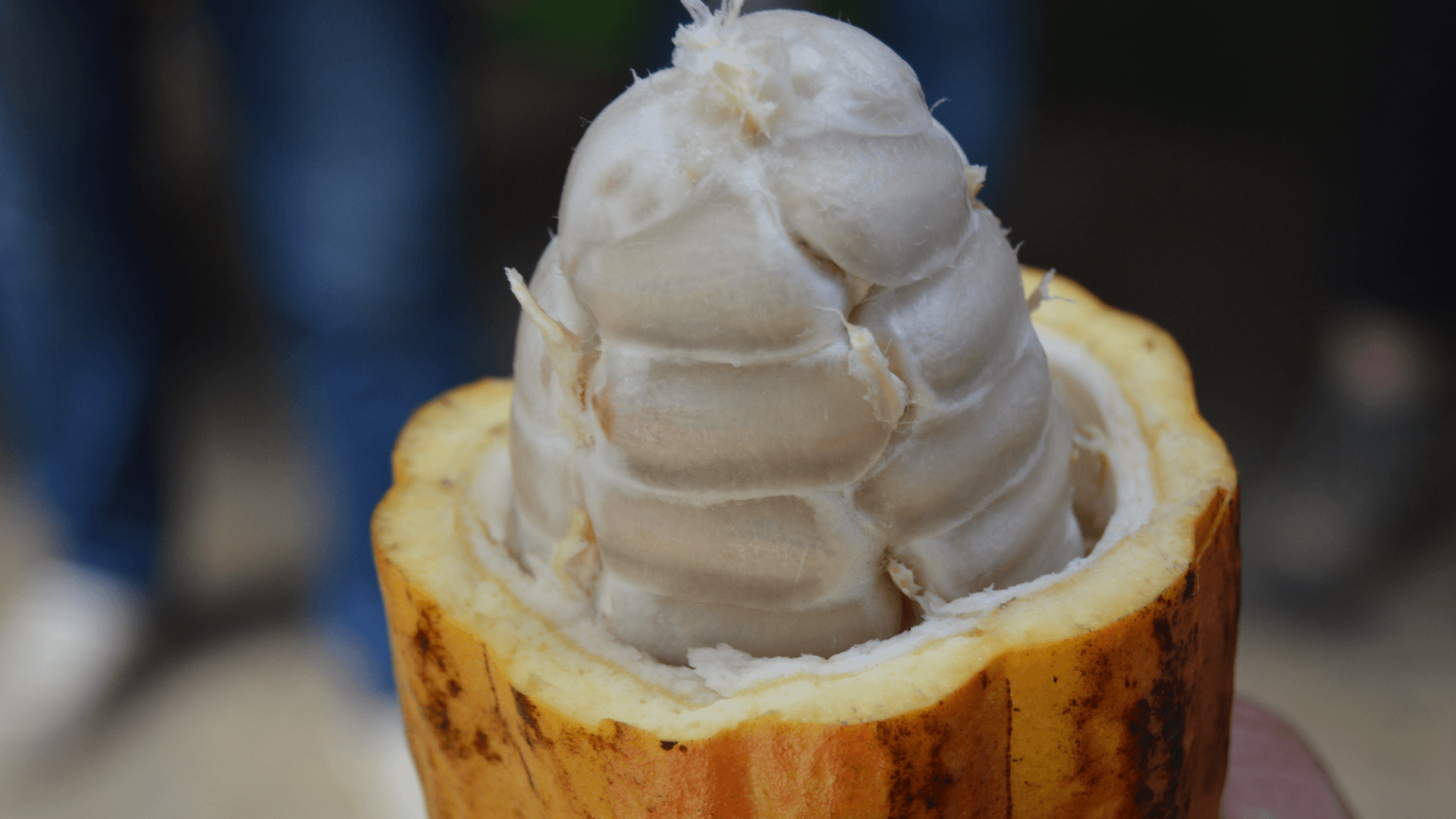
Hero image: Cocoa beans in cocoa pod at El Trapiche, Costa Rica, by Aude, CC BY-SA 3.0. Via Wikimedia Commons.
Take our professional IQ test
Want to know your IQ? Try the first ever professional online IQ test.