Talking Fast and Intelligence: Do Smart People Talk Faster? | Riot IQ
Oct 15, 2026·Advanced Topics & Research
Talking Fast and Intelligence: Do Smart People Talk Faster?
Talking fast and intelligence have no proven link. Listeners rate fast talkers as more competent, but no large study shows that speaking rate tracks measured IQ.
Dr. Russell T. WarneChief Scientist
Share
There is no good evidence that people who talk fast are more intelligent. What research does show is that listeners judge fast talkers as more competent: when recorded voices were sped up by as much as 50%, competence ratings rose in a straight line, even though the speakers and their words were exactly the same.
So the link between talking fast and intelligence lives mostly in the ear of the listener. This page looks at what studies of speaking rate actually measure, why faster speech sounds smarter, how real mental speed relates to IQ, what "verbal fluency" tests show, and when very fast speech is a sign of a speech disorder instead.
Do smart people talk faster? What the evidence shows
I could not find a large, representative study that measured people's natural speaking rate and correlated it with a full-scale IQ score. That gap matters. Most claims that "smart people talk fast" rest on impressions, on famous fast talkers, or on research about a different kind of speed.
The closest evidence comes from studies of "zero-acquaintance" judgments, where strangers watch or hear a short clip of someone and guess their intelligence, and researchers compare those guesses with the person's measured IQ. Peter Borkenau and Anette Liebler found in 1993 that strangers' ratings of intelligence were related to targets' measured intelligence, provided the judges saw a sound film of the person. In a follow-up with 50 pairs of acquaintances, they found that strangers inferred intelligence from both visual and acoustic attributes, but only the acoustic cues explained why those inferences were accurate.
A larger study by Borkenau and colleagues collected intelligence tests and 15 videotaped episodes for 600 participants. Judges' inferences of intelligence from these "thin slices" of behavior strongly predicted intelligence test scores. The single most useful episode was how people read short sentences aloud, a task in which pacing and fluency are on display together. The separate question of whether fast readers are smarter has its own body of evidence.
D'Arcy Reynolds and Robert Gifford ran a lens-model study of 13 auditory and visual cues. Five cues together accounted for nearly half the variance in measured intelligence, and measured intelligence was much more strongly associated with auditory cues than visual ones. Observers were more accurate when they only heard people than when they could also see them.
None of these studies shows that sheer speed is the cue doing the work. In a study by Nora Murphy, Judith Hall and Randall Colvin, the behaviors that mediated accurate intelligence judgments were responsiveness to the conversation partner, eye gaze and looking at the partner while speaking. How a person speaks carries information about intelligence. Whether talking quickly is part of that signal has not been pinned down.
Why fast talkers sound smarter
The person-perception research is much clearer, and it explains where the belief comes from. In a 1975 experiment, Bruce Smith and colleagues used a computer to create 54 versions of six speakers' voices, speeding each one up or slowing it down by 12.5% to 50%. Ratings of competence rose as rate increased and fell as rate decreased, in a linear fashion. Ratings of "benevolence," meaning warmth and kindness, peaked at the normal rate and dropped when speech was either faster or slower.
Other experiments point the same way:
• Slowed-down speakers: William Apple, Lynn Streeter and Robert Krauss compressed or expanded recorded interview answers by 30%. Slow-talking speakers were judged less truthful, less fluent and less persuasive, and were seen as more passive.
• Similarity to the listener: Richard Street, Robert Brady and William Putman measured listeners' own speaking rates first. A speaker with moderate to relatively faster rates was rated more competent and more socially attractive than a slower speaker, and listeners preferred rates similar to or marginally faster than their own.
The pattern is consistent: faster speech, within a normal range, earns higher marks for competence. Those marks are perceptions of a voice. In the Smith experiment the speakers literally did not change, so the higher ratings could not reflect higher intelligence. Listeners seem to read a brisk pace as confidence and command of the material, and a slow pace as hesitation.
Processing speed is the real link between speed and IQ
Speed does matter for intelligence, in a specific and measurable form. "Processing speed," how quickly a person can take in simple information and respond to it, is one of the oldest correlates of IQ in psychology. Geoff Der and Ian Deary studied 2,196 adults in three population-representative Scottish cohorts aged 30, 50 and 69. Mean four-choice reaction time correlated -.44, -.47 and -.53 with scores on a general intelligence test in those three groups, and simple reaction time correlated -.27 to -.32. The negative signs mean that faster responders scored higher. A correlation of about -.5 means reaction time accounts for roughly a quarter of the variation in test scores, which is substantial for a task as simple as pressing a button.
Speaking rate is a different thing. Everyday speech tempo can plausibly be shaped by many things that have little to do with reasoning ability, such as habit, the language being spoken, nerves and how well a person knows the topic. A reaction-time task is built to strip influences like these away. That is why a well-established link between mental speed and IQ does not transfer automatically to how quickly someone talks at dinner.
Verbal fluency: the lab version of being quick with words
Psychologists do have a test that captures being "quick with words." In a "verbal fluency" task, people name as many words as they can in a fixed time, often a minute, either starting with a given letter or belonging to a category such as animals. It measures retrieval speed and strategy. Conversational tempo is not part of the score.
Fluency scores draw on several abilities at once. In 82 older adults, Zeshu Shao and colleagues found that the number of words produced was predicted by "updating," the ability to keep track of and refresh information in working memory, while the speed of the first response was predicted by vocabulary size. In 235 healthy adults, Julia Amunts and colleagues found that cognitive flexibility, inhibition and processing speed were the strongest predictors of fluency performance. Paul Silvia, Roger Beaty and Emily Nusbaum linked broad retrieval ability, the factor that fluency tasks measure, to performance on divergent thinking tasks.
The upshot is that producing words quickly on demand is a real cognitive skill tied to vocabulary and executive control. It still differs from conversational speed. Someone can speak slowly and deliberately while having excellent word retrieval, and someone can talk quickly while repeating familiar phrases.
When fast speech is a problem, and what else shapes speaking rate
Very fast speech is sometimes part of a speech disorder. The American Speech-Language-Hearing Association lists two main types of fluency disorders, stuttering and cluttering. In cluttering, speech is perceived as rapid and/or irregular, and the resulting breakdown in clarity is thought to occur because people who clutter speak at a rate that is too fast for their systems to handle. Many people who clutter are aware that others have trouble understanding them. Cluttering is classed as a fluency disorder, and fast speech of this kind should not be read as a sign of high or low intelligence. A speech-language pathologist is the right professional to assess it.
When comparing fast and slow talkers, keep the usual confounds in mind:
• Age: Der and Deary found that the link between reaction time and intelligence grew stronger with age, and they warned that combining samples of very different ages may overestimate the association.
• Second language and age in reading aloud: in Marc Brysbaert's review of 190 studies, the average adult read English aloud at about 183 words per minute, and reading rates were lower for children, older adults and people reading English as a second language. Speed with words depends on who is speaking and in what language.
• Education: schooling builds vocabulary and also raises test scores, so any raw link between verbal style and IQ partly reflects time spent in a classroom.
Frequently asked questions
Is talking fast a sign of intelligence?
No reliable study shows that it is. Listeners rate faster speakers as more competent, but that rating changed even when the same speakers' recordings were simply sped up.
Do smart people talk slower?
There is no good evidence for that either. Speaking rate is shaped by habit, culture, language and familiarity with the topic, and it has not been shown to track measured IQ in either direction.
Can people tell how intelligent someone is from their voice?
Somewhat. In zero-acquaintance studies, strangers' guesses about intelligence correlated with measured IQ when they could hear the person, and auditory cues carried more information than visual ones.
Is processing speed the same as talking speed?
No. Processing speed is measured with simple timed tasks and correlates with IQ, while talking speed reflects many non-cognitive influences such as habit and nerves.
Why do people talk too fast?
Habit, nerves and comfort with the topic are plausible reasons, and none of them is a measure of intelligence. When fast speech regularly becomes hard to understand, a speech-language pathologist can check for a fluency disorder such as cluttering.
The takeaway
Talking fast and intelligence are not shown to be linked. Fast talkers get rated as more competent, but the best evidence for that comes from experiments in which the same voices were simply sped up. Real mental speed does correlate with IQ, at roughly -.3 to -.5 for reaction time, and voice and reading cues do carry some information about intelligence. Speaking tempo itself remains an unproven signal. If you want to know where your reasoning ability stands, an online IQ test built by psychometricians measures it directly under standard conditions.
References
1. Smith, B. L., Brown, B. L., Strong, W. J., & Rencher, A. C. (1975). Effects of speech rate on personality perception. Language and Speech, 18(2), 145-152. [doi.org/10.1177/002383097501800203](. doi.org
2. Borkenau, P., & Liebler, A. (1993). Convergence of stranger ratings of personality and intelligence with self-ratings, partner ratings, and measured intelligence. Journal of Personality and Social Psychology, 65(3), 546-553. [doi.org/10.1037/0022-3514.65.3.546](. doi.org
3. Borkenau, P., & Liebler, A. (1995). Observable attributes as manifestations and cues of personality and intelligence. Journal of Personality, 63(1), 1-25. [doi.org/10.1111/j.1467-6494.1995.tb00799.x](. doi.org
4. Borkenau, P., Mauer, N., Riemann, R., Spinath, F. M., & Angleitner, A. (2004). Thin slices of behavior as cues of personality and intelligence. Journal of Personality and Social Psychology, 86(4), 599-614. [doi.org/10.1037/0022-3514.86.4.599](. doi.org
5. Reynolds, D. J., & Gifford, R. (2001). The sounds and sights of intelligence: A lens model channel analysis. Personality and Social Psychology Bulletin, 27(2), 187-200. [doi.org/10.1177/0146167201272005](. doi.org
6. Murphy, N. A., Hall, J. A., & Colvin, C. R. (2003). Accurate intelligence assessments in social interactions: Mediators and gender effects. Journal of Personality, 71(3), 465-493. [doi.org/10.1111/1467-6494.7103008](. doi.org
7. Apple, W., Streeter, L. A., & Krauss, R. M. (1979). Effects of pitch and speech rate on personal attributions. Journal of Personality and Social Psychology, 37(5), 715-727. [doi.org/10.1037/0022-3514.37.5.715](. doi.org
8. Street, R. L., Brady, R. M., & Putman, W. B. (1983). The influence of speech rate stereotypes and rate similarity on listeners' evaluations of speakers. Journal of Language and Social Psychology, 2(1), 37-56. [doi.org/10.1177/0261927X8300200103](. doi.org
9. Der, G., & Deary, I. J. (2017). The relationship between intelligence and reaction time varies with age: Results from three representative narrow-age age cohorts at 30, 50 and 69 years. Intelligence, 64, 89-97. [doi.org/10.1016/j.intell.2017.08.001](. doi.org
10. Shao, Z., Janse, E., Visser, K., & Meyer, A. S. (2014). What do verbal fluency tasks measure? Predictors of verbal fluency performance in older adults. Frontiers in Psychology, 5, 772. [doi.org/10.3389/fpsyg.2014.00772](. doi.org
11. Amunts, J., Camilleri, J. A., Eickhoff, S. B., Heim, S., & Weis, S. (2020). Executive functions predict verbal fluency scores in healthy participants. Scientific Reports, 10, 11141. [doi.org/10.1038/s41598-020-65525-9](. doi.org
12. Silvia, P. J., Beaty, R. E., & Nusbaum, E. C. (2013). Verbal fluency and creativity: General and specific contributions of broad retrieval ability (Gr) factors to divergent thinking. Intelligence, 41(5), 328-340. [doi.org/10.1016/j.intell.2013.05.004](. doi.org
13. Brysbaert, M. (2019). How many words do we read per minute? A review and meta-analysis of reading rate. Journal of Memory and Language, 109, 104047. [doi.org/10.1016/j.jml.2019.104047](. doi.org
14. American Speech-Language-Hearing Association. (n.d.). Stuttering, cluttering, and fluency [Practice portal]. [asha.org](. asha.org
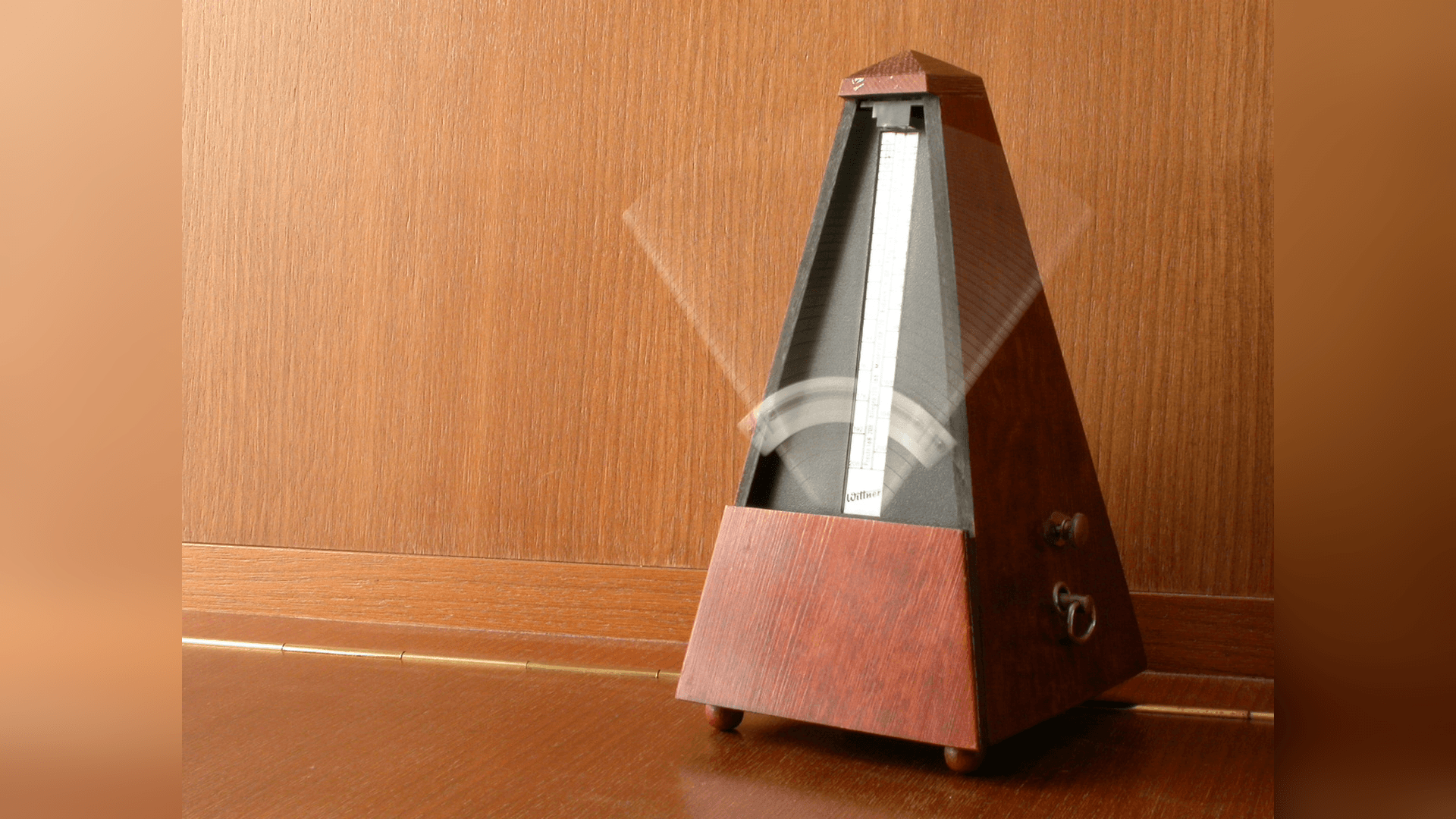
Hero image: Wittner metronome, by Paco from Badajoz, España, CC BY 2.0. Via Wikimedia Commons.
Take our professional IQ test
Want to know your IQ? Try the first ever professional online IQ test.