Gut Microbiome and IQ: Can Your Gut Bacteria Make You Smarter? | Riot IQ
Oct 15, 2026·Advanced Topics & Research
Gut Microbiome and IQ: Can Your Gut Bacteria Make You Smarter?
Gut microbiome and IQ: no study shows gut bacteria set adult IQ. Infant cohorts find 5-point test gaps, and probiotic trials show small, uncertain gains.
Dr. Russell T. WarneChief Scientist
Share
No study has shown that the bacteria in your gut set or change your IQ. The best human evidence is a handful of infant cohorts that link gut bacteria at age one to differences of roughly 5 points on developmental tests a year later, plus probiotic trials that report small, low-certainty gains, mostly in older or cognitively impaired adults, while healthy young adults show no measurable benefit.
The "gut-brain axis" (the two-way traffic of nerve signals, hormones and immune molecules between the intestines and the brain) is a real and active research field. This page covers what the animal studies found, what the infant cohorts show, what the supplement trials show, and why the headlines run ahead of the data. It describes research findings and is not medical or dietary advice.
Where the gut-brain idea comes from: germ-free mice
The modern interest started with "germ-free" mice, animals raised in sterile isolators so that they carry no microbes at all. In a 2011 study in PNAS, Rochellys Diaz Heijtz and colleagues found that germ-free mice were more active and less anxious than mice with a normal gut flora, with altered activity of genes involved in signalling and synaptic plasticity in the brain. When germ-free mice were colonised with gut bacteria early in life, they came to resemble normal mice, which pointed to a sensitive period in development.
Memory came next. Mélanie Gareau and colleagues reported in the journal Gut that germ-free mice performed worse on a memory task than conventionally raised mice, and that infected mice placed under stress developed memory problems that daily probiotics prevented.
These are striking results, but a germ-free mouse is an extreme case. No human lives without gut bacteria, and anxiety-like behaviour and object recognition in mice are a long way from reasoning, vocabulary or any other ability measured by an IQ test. The mouse work shows that microbes can influence brain development. It does not tell us whether ordinary differences between people's gut bacteria matter for intelligence.
What the infant studies show
The human evidence on intelligence-like outcomes comes mainly from infants, because the gut flora changes fastest in the first years of life, when the brain is also developing rapidly.
• The North Carolina study: Alexander Carlson and colleagues sequenced stool samples from 89 typically developing one-year-olds and tested 69 of them a year later with the Mullen Scales of Early Learning, whose composite score the authors describe as similar to an IQ score. Infants grouped into three bacterial profiles, and the group with a high abundance of Bacteroides scored highest at age two. Counterintuitively, higher "alpha diversity" (more kinds of bacteria in one gut) went with lower scores, the opposite of what the authors had predicted.
• The Canadian CHILD cohort: Sukhpreet Tamana and colleagues studied 405 infants. Compared with infants whose gut flora at 12 months was dominated by Proteobacteria, those with a Bacteroidetes-dominated profile scored 4.8 points higher on the Bayley cognitive scale at age two after adjustment for covariates, and the link was concentrated in boys. Gut bacteria at four months showed no link to later scores.
The Bayley cognitive scale has a mean of 100 and a standard deviation of 15, the same metric as IQ, so the CHILD gap is about a third of a standard deviation. That sounds meaningful, but two cautions apply. Both studies are observational, so they cannot show that the bacteria caused the difference. And the two studies do not agree on the role of diversity, which is what you would expect from a young field with small samples.
Do probiotics or prebiotics raise intelligence?
"Probiotics" are live bacteria taken as a supplement or in fermented food; "prebiotics" are fibres that feed the bacteria already in the gut. Trials of both have measured cognition, with mixed results.
• Healthy young adults: in a randomised, placebo-controlled crossover trial, John Kelly and colleagues gave 29 healthy men a probiotic strain that had reduced stress-related behaviour in mice. After eight weeks, it did no better than placebo on memory, attention switching or rapid information processing.
• The 2021 systematic review: Jessica Eastwood and colleagues at the University of Reading reviewed 30 human studies. They concluded that probiotics might help cognition in clinical groups where cognitive problems are already present, but that the small number of studies and their quality made the data hard to interpret.
• The 2025 meta-analysis: pooling 34 randomised trials with 2,390 adults, Nancy Calzada-Gonzales and colleagues found gains on dementia screening tests after 12 weeks, such as 4.23 points on the 30-point Mini-Mental State Examination and 1.21 points on the 30-point Montreal Cognitive Assessment. They rated the certainty of this evidence as low to very low.
• The twin trial in older adults: in the PROMOTe trial, Mary Ni Lochlainn and colleagues randomised 36 pairs of twins aged 60 and over, giving one twin a daily prebiotic fibre and the other a placebo for 12 weeks. The prebiotic group improved more on a composite cognitive score, by about half a standard deviation. The only single test that improved was a visual memory test, Paired Associates Learning, and the study was small.
• The 2026 older-adult meta-analysis: Birns, Murshed and Ni Lochlainn pooled trials of probiotics, prebiotics and synbiotics in people aged 60 and over and found a mean improvement of 1.28 points in global cognition scores.
Put together, the trials that report benefits mostly involve older adults or people with mild cognitive impairment or dementia, and they use screening tests built to detect decline rather than IQ tests built to measure ability across the normal range. A few points on a dementia screen is a different thing from a few IQ points. The one controlled test in healthy young adults found nothing. The supplement story looks a lot like the one for fish oil and IQ: a plausible mechanism, encouraging animal work, and small or null effects in well-nourished, healthy people.
Why the claim spreads, and the confounds that complicate it
Microbiome research generates eye-catching headlines because the mechanism is easy to picture and the products are easy to sell. A finding that one bacterial group goes with higher scores in 69 toddlers can turn into "gut bacteria make babies smarter" within a news cycle. Consumer stool-testing kits add to this when they present a microbiome profile as if it said something about mental performance. We are not aware of any kit that has been validated against an IQ test, and the published associations are group averages that cannot predict an individual's score.
The bigger scientific problem is confounding. Gut bacteria respond quickly to what people eat: in a study published in Nature, Lawrence David and colleagues showed that switching volunteers to an all-animal or all-plant diet changed their gut bacteria within days. Diet, in turn, tracks family income, parental education and breastfeeding, all of which also predict children's test scores. Mode of birth and early antibiotics shape the infant gut as well. The infant studies adjusted for several of these factors, but neither measured the parents' IQ, one of the strongest predictors of a child's IQ. How diet and nutrition relate to intelligence more broadly is covered in our article on whether diet or nutrition affects IQ.
Reverse causation is also possible. Children who differ in development may also differ in what and how they eat, which would change their gut bacteria rather than the other way around. Only randomised trials can separate these explanations, and none so far has tested whether changing an infant's or a healthy adult's gut bacteria raises IQ.
Frequently asked questions
Can gut bacteria affect intelligence?
In animals, yes: germ-free mice show altered brain development and poorer memory. In humans there is no direct evidence that gut bacteria change IQ, only small observational links in infants and modest, uncertain effects of supplements on screening tests in older adults.
Do probiotics make you smarter?
There is no good evidence that they raise intelligence in healthy people. A placebo-controlled trial in healthy young men found no cognitive benefit, and the positive meta-analyses mostly involve older or cognitively impaired adults and are rated low certainty.
Is a diverse gut microbiome linked to higher IQ?
Not consistently. In one infant study higher diversity at age one went with lower developmental scores at age two, and other work points to particular bacterial groups rather than diversity as such.
Can a gut microbiome test tell me my IQ?
No. No consumer stool test has been validated against an IQ test, and research associations are averages across groups that cannot predict one person's score.
Should I take probiotics to protect my memory as I age?
That is a question for your doctor or a dietitian, who can weigh your health and medications. Current trials are small and the certainty of the evidence is low.
The takeaway
The gut-brain axis is real biology, and the early studies are interesting. Germ-free mice show that microbes can shape a developing brain, a few infant cohorts find score gaps of about 5 points linked to particular bacterial profiles, and supplement trials hint at small benefits in older adults with declining memory. None of this adds up to evidence that gut bacteria set adult intelligence or that a probiotic will raise anyone's IQ, and confounding by diet and family background remains the biggest unanswered question. If you want a measurement of your reasoning ability instead of a guess from a stool sample, take an online IQ test built by psychometricians.
References
1. Diaz Heijtz, R., Wang, S., Anuar, F., Qian, Y., Björkholm, B., Samuelsson, A., Hibberd, M. L., Forssberg, H., & Pettersson, S. (2011). Normal gut microbiota modulates brain development and behavior. Proceedings of the National Academy of Sciences, 108(7), 3047-3052. [doi.org/10.1073/pnas.1010529108](. doi.org
2. Gareau, M. G., Wine, E., Rodrigues, D. M., Cho, J. H., Whary, M. T., Philpott, D. J., MacQueen, G., & Sherman, P. M. (2011). Bacterial infection causes stress-induced memory dysfunction in mice. Gut, 60(3), 307-317. [doi.org/10.1136/gut.2009.202515](. doi.org
3. Carlson, A. L., Xia, K., Azcarate-Peril, M. A., Goldman, B. D., Ahn, M., Styner, M. A., Thompson, A. L., Geng, X., Gilmore, J. H., & Knickmeyer, R. C. (2018). Infant gut microbiome associated with cognitive development. Biological Psychiatry, 83(2), 148-159. [doi.org/10.1016/j.biopsych.2017.06.021](. doi.org
4. Tamana, S. K., Tun, H. M., Konya, T., Chari, R. S., Field, C. J., Guttman, D. S., Becker, A. B., Moraes, T. J., Turvey, S. E., Subbarao, P., Sears, M. R., Pei, J., Scott, J. A., Mandhane, P. J., & Kozyrskyj, A. L. (2021). Bacteroides-dominant gut microbiome of late infancy is associated with enhanced neurodevelopment. Gut Microbes, 13(1), 1930875. [doi.org/10.1080/19490976.2021.1930875](. doi.org
5. Kelly, J. R., Allen, A. P., Temko, A., Hutch, W., Kennedy, P. J., Farid, N., Murphy, E., Boylan, G., Bienenstock, J., Cryan, J. F., Clarke, G., & Dinan, T. G. (2017). Lost in translation? The potential psychobiotic Lactobacillus rhamnosus (JB-1) fails to modulate stress or cognitive performance in healthy male subjects. Brain, Behavior, and Immunity, 61, 50-59. [doi.org/10.1016/j.bbi.2016.11.018](. doi.org
6. Eastwood, J., Walton, G., Van Hemert, S., Williams, C., & Lamport, D. (2021). The effect of probiotics on cognitive function across the human lifespan: A systematic review. Neuroscience and Biobehavioral Reviews, 128, 311-327. [doi.org/10.1016/j.neubiorev.2021.06.032](. doi.org
7. Calzada-Gonzales, N., Moreno-Colina, I., Chu-Fuentes, L., Andrade-Girón, D., Tito-Chura, H. E., Quispe-Vicuña, C., Torres-Balarezo, P. I., Bautista-Pariona, A., & Barboza, J. J. (2025). Efficacy and safety of probiotic supplements on cognitive function: A systematic review and meta-analysis of randomized clinical trials. BMC Complementary Medicine and Therapies, 25, 432. [doi.org/10.1186/s12906-025-05149-6](. doi.org
8. Ni Lochlainn, M., Bowyer, R. C. E., Moll, J. M., García, M. P., Wadge, S., Baleanu, A.-F., Nessa, A., Sheedy, A., Akdag, G., Hart, D., Raffaele, G., Seed, P. T., Murphy, C., Harridge, S. D. R., Welch, A. A., Greig, C., Whelan, K., & Steves, C. J. (2024). Effect of gut microbiome modulation on muscle function and cognition: The PROMOTe randomised controlled trial. Nature Communications, 15, 1859. [doi.org/10.1038/s41467-024-46116-y](. doi.org
9. Birns, B., Murshed, S., & Ni Lochlainn, M. (2026). Gut microbiome modulation can improve cognitive function in older adults: A systematic review and meta-analysis. Age and Ageing, 55(9), afag287. [doi.org/10.1093/ageing/afag287](. doi.org
10. David, L. A., Maurice, C. F., Carmody, R. N., Gootenberg, D. B., Button, J. E., Wolfe, B. E., Ling, A. V., Devlin, A. S., Varma, Y., Fischbach, M. A., Biddinger, S. B., Dutton, R. J., & Turnbaugh, P. J. (2014). Diet rapidly and reproducibly alters the human gut microbiome. Nature, 505(7484), 559-563. [doi.org/10.1038/nature12820](. doi.org
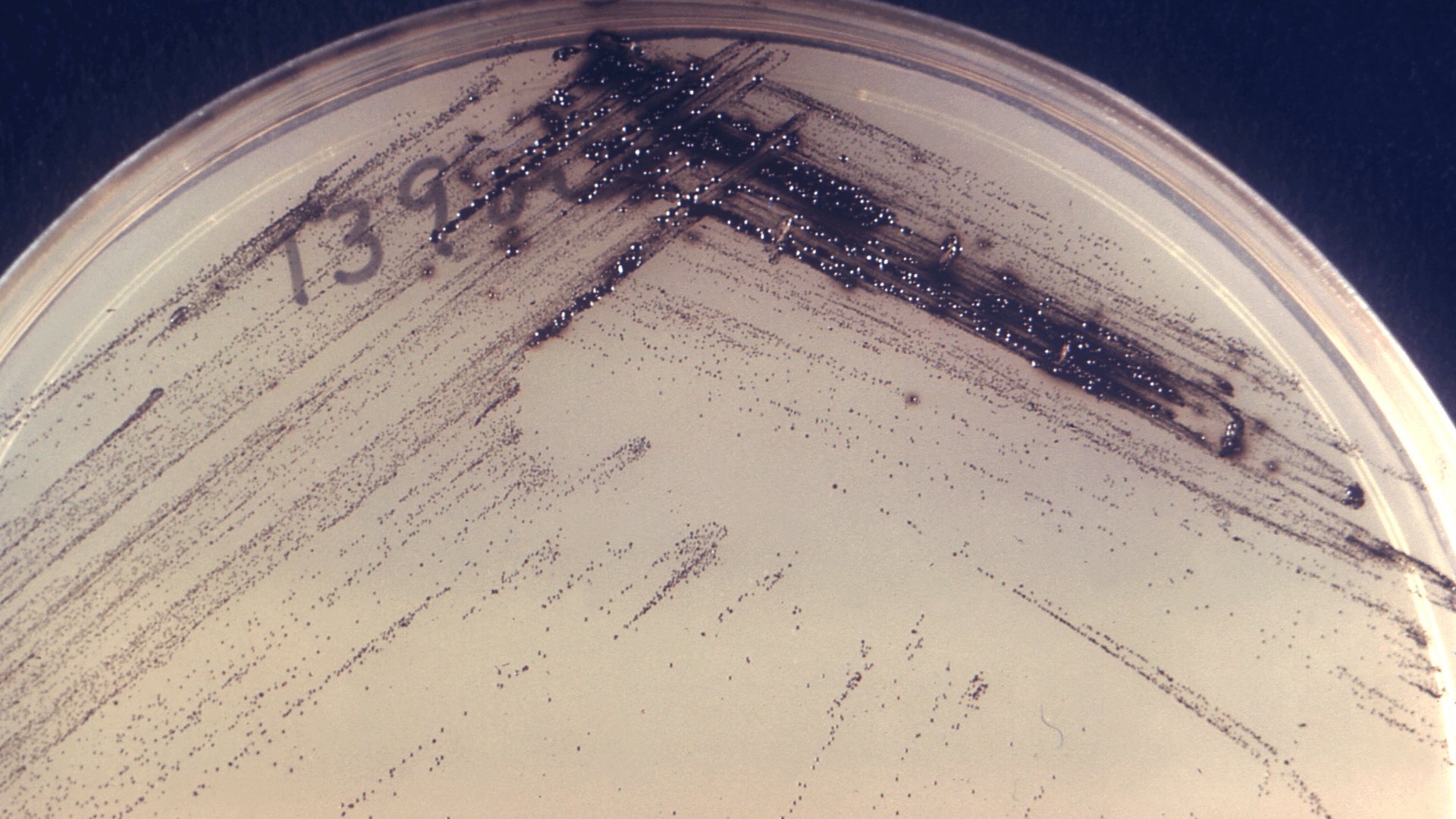
Hero image: CDC 16561 (1970), bacterial colonies on an agar plate, CDC Public Health Image Library, public domain. Via Wikimedia Commons.
Take our professional IQ test
Want to know your IQ? Try the first ever professional online IQ test.