Does Zinc Make You Smarter? Zinc, Deficiency and IQ | Riot IQ
Oct 15, 2026·Advanced Topics & Research
Does Zinc Make You Smarter? Zinc, Deficiency and IQ
Does zinc make you smarter? Not in trials so far. Zinc supplements given to children had no measurable effect on intelligence or mental development scores.
Dr. Russell T. WarneChief Scientist
Share
Zinc does not make you smarter, as far as the trials can tell. A Cochrane review of zinc supplementation in young children found that zinc-treated and placebo groups differed by half a point on a standard mental development index scored like IQ, with a confidence interval running from about 2 points lower to 1 point higher.
Zinc is essential for the brain, and severe deficiency causes real harm to children's growth and health. The question is whether extra zinc lifts intelligence in people who are marginally low or not deficient at all, and so far the answer is no. This page covers what zinc does, who becomes deficient, what the trials in children and older adults found, where the "nootropic" claims come from, and the confounds. It describes research and is not medical advice.
What zinc does and who runs low
Zinc is a trace mineral that hundreds of enzymes and transcription factors need in order to work. Ananda Prasad, whose work helped establish in 1963 that zinc is essential for humans, described the original case: a 21-year-old Iranian man who looked like a 10-year-old boy, was severely anaemic, sexually immature and mentally lethargic, and ate almost nothing but whole-wheat bread. In later studies in Egypt, zinc supplements produced 12.7 to 15.2 cm of growth in a year. In his 2013 review he counts cognitive impairment among the major clinical problems of deficiency, alongside stunted growth and weakened immunity.
The commonest cause worldwide is a diet high in "phytate", a compound in cereals and legumes that binds zinc and blocks its absorption. Using national food supply data, Wessells and Brown estimated that 17.3% of the world's population is at risk of inadequate zinc intake, with the highest risk in Sub-Saharan Africa and South Asia. Countries with more inadequate intake also had more childhood stunting (r = 0.48). Deficiency can also follow from illness, including malabsorption, liver disease, chronic kidney disease and sickle cell disease.
Diagnosing deficiency in an individual is harder than it sounds. A review panel led by Janet King concluded that blood (plasma) zinc concentration is useful but limited: it shifts with recent meals, time of day, inflammation and some drugs and hormones. In children, the most useful functional sign is growth, which is why zinc research is so closely tied to stunting.
Zinc supplementation trials in children
In 1998, Maureen Black proposed that zinc deficiency might hold back children's cognitive development indirectly, through effects on activity, motor development and attention, and she stressed that the human evidence was limited. Since then, randomised trials have tested the idea directly. Their pooled results are consistently null.
• Cochrane review: Gogia and Sachdev identified 13 placebo-controlled trials in children under five. Eight reported the Bayley Scales of Infant Development for 2,134 children. The Bayley Mental Development Index uses a mean of 100 and a standard deviation of 15, the same metric as IQ, so the pooled difference of -0.50 points (95% CI -2.06 to 1.06) translates directly. Motor scores also showed no significant effect, and no trial reported IQ itself.
• Infant meta-analysis: Nissensohn and colleagues pooled five randomised trials and found no association between zinc intake and mental or motor development in infants. The results varied with dose, duration and risk of bias, which is a sign of how uneven the trials are.
• Children and adults: Warthon-Medina and colleagues reviewed 18 studies, 12 of them randomised trials. Pooling the six trials in children gave a standardised effect on intelligence of essentially zero (less than 0.001, 95% CI -0.12 to 0.13). The upper limit of that interval equals about 2 IQ points. They saw small hints of improvement in executive function and motor skills, which did not reach significance.
One frequently cited positive trial shows why the details matter. Sandstead and colleagues gave 740 low-income first graders in three Chinese cities zinc alone, zinc with other micronutrients, or the micronutrients alone for 10 weeks. Neuropsychological performance and growth improved most in the group given zinc together with other micronutrients. The authors read this as evidence that the children lacked several nutrients at once, which is common wherever diets are poor. It does not show that zinc on its own raises intelligence.
Zinc in older adults and the nootropic claims
For older adults the question is whether zinc protects memory and attention. The largest trial is ZENITH, in which Maylor and colleagues randomised 387 healthy adults aged 55 to 87 to zinc at one of two doses or placebo for six months, then tested them on a computerised battery measuring visual memory, working memory, attention and reaction time. Of eight outcomes, two showed effects. Both doses improved one measure of spatial working memory at three months but not at six, and the lower dose worsened one measure of attention. That is close to what chance alone would produce in a set of eight outcomes.
Zinc also appears in "nootropic" stacks and brain-health supplements, usually on the strength of its role in brain chemistry. The nearest real evidence is in attention-deficit/hyperactivity disorder (ADHD). Talebi and colleagues pooled six randomised trials with 489 children and found a moderate improvement in total ADHD symptom ratings (standardised mean difference -0.62), but the confidence interval almost touched zero, separate inattention and hyperactivity scores did not improve, and the certainty of the evidence was rated moderate to very low. Symptom ratings are also a different outcome from IQ.
More zinc is not harmless. Excess zinc blocks copper absorption, and Willis and colleagues described three adults with zinc-induced copper deficiency who developed anaemia and very low white blood cell counts; two also had a progressive nerve disorder (peripheral neuropathy). Anyone considering long-term supplements should discuss them with a doctor or pharmacist first.
The confounds behind zinc and intelligence
Observational links between zinc status and test scores are hard to interpret. Zinc deficiency clusters with poverty, stunting, frequent infections, iron deficiency and low parental education, and every one of those predicts lower test scores on its own. A child who is short of zinc is often short of several other things, which is the same lesson the Chinese trial taught.
That is why randomised trials carry most of the weight here, and why their null results matter. Contrast this with iron, where trials in deficient children have produced measurable gains, as covered in our page on iron deficiency and IQ, or with the evidence on iodine and IQ. Zinc remains vital for growth and immunity, and treating deficiency is worthwhile for those reasons. The trials simply do not show an IQ payoff.
Two gaps remain. Few trials have followed children long enough to give them a full IQ test, and the most severely deficient children are rarely studied with placebos, for ethical reasons. Small benefits in specific groups cannot be ruled out.
Frequently asked questions
Does zinc make you smarter?
No trial has shown that zinc raises intelligence. Meta-analyses of trials in children found differences close to zero on mental development and intelligence scores, and a six-month trial in older adults found no consistent cognitive benefit.
Can zinc deficiency lower IQ?
Severe deficiency harms growth and immunity and may affect development, but direct evidence for lasting IQ loss is limited. Deficiency usually occurs alongside poverty and other nutrient shortages, which makes its own effect hard to isolate.
Does zinc help with ADHD?
A meta-analysis of six small trials found a modest improvement in total symptom ratings, with low certainty and no improvement in separate attention scores. A child's doctor is the right person to discuss any supplement alongside ADHD care.
Can you take too much zinc?
Yes. Long-term excess zinc can cause copper deficiency, which has led to anaemia, low white blood cell counts and nerve damage in reported cases.
Who should I see if I think I am low on zinc?
A GP or family doctor, who can review your diet, health conditions and medicines. Blood zinc levels are affected by meals, time of day and inflammation, so results need professional interpretation.
The takeaway
Zinc matters for the brain and body, and severe deficiency is a real public-health problem in parts of the world. That has not translated into an IQ effect: trials in children and older adults find that extra zinc does not measurably improve intelligence or cognition, and the strongest positive results come from multi-nutrient mixes given to children who were short of several nutrients at once. If you want a reliable measure of your reasoning ability, take a full-length online IQ test.
References
1. Gogia, S., & Sachdev, H. S. (2012). Zinc supplementation for mental and motor development in children. Cochrane Database of Systematic Reviews, 12, CD007991. [doi.org/10.1002/14651858.CD007991.pub2](. doi.org
2. Prasad, A. S. (2013). Discovery of human zinc deficiency: Its impact on human health and disease. Advances in Nutrition, 4(2), 176-190. [doi.org/10.3945/an.112.003210](. doi.org
3. Wessells, K. R., & Brown, K. H. (2012). Estimating the global prevalence of zinc deficiency: Results based on zinc availability in national food supplies and the prevalence of stunting. PLOS ONE, 7(11), e50568. [doi.org/10.1371/journal.pone.0050568](. doi.org
4. King, J. C., Brown, K. H., Gibson, R. S., Krebs, N. F., Lowe, N. M., Siekmann, J. H., & Raiten, D. J. (2016). Biomarkers of Nutrition for Development (BOND): Zinc review. The Journal of Nutrition, 146(4), 858S-885S. [doi.org/10.3945/jn.115.220079](. doi.org
5. Black, M. M. (1998). Zinc deficiency and child development. The American Journal of Clinical Nutrition, 68(2), 464S-469S. [doi.org/10.1093/ajcn/68.2.464S](. doi.org
6. Nissensohn, M., Sánchez-Villegas, A., Fuentes Lugo, D., Henríquez Sánchez, P., Doreste Alonso, J., Skinner, A. L., Medina, M. W., & Lowe, N. M. (2013). Effect of zinc intake on mental and motor development in infants: A meta-analysis. International Journal for Vitamin and Nutrition Research, 83(4), 203-215. [doi.org/10.1024/0300-9831/a000161](. doi.org
7. Warthon-Medina, M., Moran, V. H., Stammers, A. L., Dillon, S., Qualter, P., Nissensohn, M., Serra-Majem, L., & Lowe, N. M. (2015). Zinc intake, status and indices of cognitive function in adults and children: A systematic review and meta-analysis. European Journal of Clinical Nutrition, 69(6), 649-661. [doi.org/10.1038/ejcn.2015.60](. doi.org
8. Sandstead, H. H., Penland, J. G., Alcock, N. W., Dayal, H. H., Chen, X. C., Li, J. S., Zhao, F., & Yang, J. J. (1998). Effects of repletion with zinc and other micronutrients on neuropsychologic performance and growth of Chinese children. The American Journal of Clinical Nutrition, 68(2), 470S-475S. [doi.org/10.1093/ajcn/68.2.470S](. doi.org
9. Maylor, E. A., Simpson, E. E., Secker, D. L., Meunier, N., Andriollo-Sanchez, M., Polito, A., Stewart-Knox, B., McConville, C., O'Connor, J. M., & Coudray, C. (2006). Effects of zinc supplementation on cognitive function in healthy middle-aged and older adults: The ZENITH study. British Journal of Nutrition, 96(4), 752-760. [pubmed.ncbi.nlm.nih.gov/17010236](. pubmed.ncbi.nlm.nih.gov
10. Talebi, S., Miraghajani, M., Ghavami, A., & Mohammadi, H. (2022). The effect of zinc supplementation in children with attention deficit hyperactivity disorder: A systematic review and dose-response meta-analysis of randomized clinical trials. Critical Reviews in Food Science and Nutrition, 62(32), 9093-9102. [doi.org/10.1080/10408398.2021.1940833](. doi.org
11. Willis, M. S., Monaghan, S. A., Miller, M. L., McKenna, R. W., Perkins, W. D., Levinson, B. S., Bhushan, V., & Kroft, S. H. (2005). Zinc-induced copper deficiency: A report of three cases initially recognized on bone marrow examination. American Journal of Clinical Pathology, 123(1), 125-131. [doi.org/10.1309/V6GVYW2QTYD5C5PJ](. doi.org
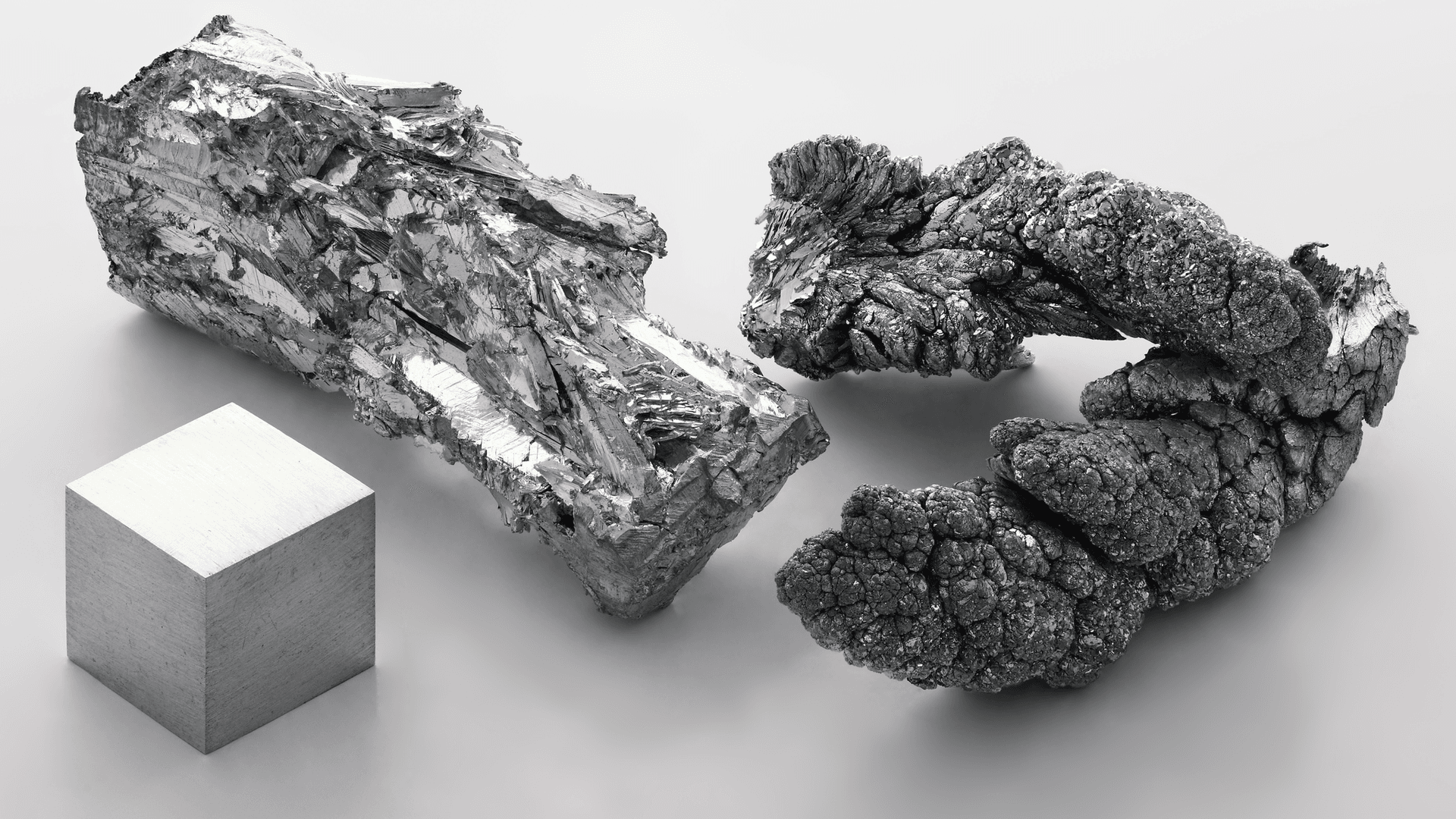
Hero image: Zinc fragment sublimed and 1cm3 cube, by Alchemist-hp (www.pse-mendelejew.de), Free Art License. Via Wikimedia Commons.
Take our professional IQ test
Want to know your IQ? Try the first ever professional online IQ test.