Does Olive Oil Make You Smarter? What the Research Shows for IQ
Does olive oil make you smarter? No trial shows it raises IQ. PREDIMED hinted at slower decline in older adults, but newer, cleaner diet trials were null.
Dr. Russell T. WarneChief Scientist
Share
Olive oil does not make you smarter: no trial has shown that it raises IQ, and I found none that tested it in young people. The best evidence comes from older Spanish adults in the PREDIMED trial, where a Mediterranean diet with a litre of extra-virgin olive oil a week was linked to slower decline on memory and thinking tests, but that trial had randomization problems, and a newer three-year American diet trial that supplied olive oil found no cognitive benefit (a difference of about 0.04 standard deviations).
This page covers what PREDIMED found, why its main report was retracted and republished in 2018 and what that means for the cognition results, what other diet trials and large cohorts show, and where the laboratory claims about olive oil compounds come from. It describes research and is not medical or dietary advice.
What PREDIMED found for olive oil and cognition
PREDIMED ("Prevención con Dieta Mediterránea") enrolled 7,447 Spanish adults aged 55 to 80 who were at high cardiovascular risk. They were assigned to a Mediterranean diet with free extra-virgin olive oil, a Mediterranean diet with free mixed nuts, or a control diet with advice to reduce fat. The main outcome was heart attack, stroke and cardiovascular death. Cognition was studied in two smaller offshoots.
• The Barcelona cognition sub-study: Valls-Pedret and colleagues gave cognitive tests at entry to 447 participants at the Barcelona site (average age about 67) and retested 334 of them after a median of 4.1 years. The olive oil group received a litre a week. Compared with the control group, it scored better on two of six tests (a word-list memory test and a trail-making test of executive function) and no differently on the rest, including the Digit Span subtest of the Wechsler Adult Intelligence Scale. On a global cognition composite, the olive oil group changed by +0.05 standard units over the study and the control group by −0.38.
• The Navarra sub-study: Martínez-Lapiscina and colleagues tested 522 participants after about 6.5 years on the diets. The olive oil group scored 0.62 points higher on the Mini-Mental State Examination, a 30-point dementia screening test, and 0.51 points higher on a clock-drawing test than the control group. These tests were given at the end of the intervention, so the comparison depends on the groups having been similar at the start.
The Barcelona gap looks large on paper. Converted naively, 0.43 standard units would be about 6 IQ points (0.43 × 15). Almost all of it comes from the control group, which declined by more than a third of a standard deviation in about four years, a steep drop for cognitively healthy volunteers. The composite also was built from memory and executive tests rather than an IQ battery. The mixed-nut arm of the same trial is covered on our page about walnuts and other nuts.
The 2018 retraction and what it means
In June 2018 the New England Journal of Medicine retracted the 2013 PREDIMED report and published a revised version. The investigators had found protocol deviations: household members of participants had been enrolled into the same group without being randomized, participants at one of the 11 sites had been assigned to groups without randomization, and another site appeared to have used its randomization tables inconsistently.
The revised analysis did not assume that everyone had been randomized. It adjusted for baseline differences, and it was repeated after dropping the 1,588 participants whose assignments were known or suspected to have departed from the protocol. The headline result held: compared with the control diet, the hazard ratio for major cardiovascular events was 0.69 for the olive oil diet and 0.72 for the nut diet.
The cognition paper by Valls-Pedret and colleagues was corrected in November 2018, with reanalyses addressing the same deviations, and the PREDIMED principal investigator described the corrections to the derivative studies in an accompanying article. That paper was not retracted, and it is legitimate to cite. What the episode means in practice is that PREDIMED is weaker evidence than a clean randomized trial, because some of the comparison rests on statistical adjustment. It also tested a whole diet. The olive oil groups received dietary counselling as well as oil, so the results cannot be credited to the oil alone.
What other diet trials show
Trials run since PREDIMED have been cleaner in design and less encouraging.
• The MIND diet trial: Barnes and colleagues randomized 604 older Americans without cognitive impairment, all with a family history of dementia and overweight, to the MIND diet (a hybrid of the Mediterranean and DASH diets) or a control diet, both with mild calorie restriction, for three years. The MIND group received extra-virgin olive oil (14 tablespoons a week), mixed nuts and blueberries. Global cognition improved in both groups, by 0.205 standard units with MIND and 0.170 with the control diet, a difference of 0.035 that was not statistically significant. That is about half an IQ-point equivalent. Brain MRI changes were also similar. Blueberry claims have their own page, on blueberries and IQ.
• The MedLey trial: Knight and colleagues assigned 137 healthy Australians with an average age of 72 to a Mediterranean diet or their usual diet for six months. The Mediterranean group did not score significantly better on executive function, processing speed, memory, visual-spatial ability or overall cognitive performance.
• The meta-analysis: Loughrey and colleagues pooled 15 cohort studies of 41,492 older adults and found that closer adherence to a Mediterranean diet was associated with global cognition at a correlation of r = 0.05, which is very small. The randomized evidence then available amounted to two trials, and they showed gains on some tests but not most.
Olive oil, dementia and the mouse studies
The most cited recent study is observational. Tessier and colleagues followed 92,383 American nurses and health professionals for 28 years, during which 4,751 died with dementia. Those who consumed more than 7 grams of olive oil a day (about half a tablespoon) had a 28% lower risk of dementia-related death than those who rarely or never used it (hazard ratio 0.72). Replacing 5 grams a day of margarine or mayonnaise with olive oil was associated with an 8% to 14% lower risk. The outcome was dementia recorded on death records, and the participants chose their own diets, so the result cannot separate olive oil from the habits, income and health of people who used it in the United States from 1990 onward, even after adjustment for socioeconomic status and genetics. For the separate question of how intelligence relates to dementia risk, see whether IQ is correlated with dementia.
Much of the "brain food" marketing for extra-virgin olive oil leans on "oleocanthal", a compound in the oil. In one study, Abuznait and colleagues gave oleocanthal to mice and found faster clearance of injected beta-amyloid from the brain (a brain efflux index of 79.9% versus 62.0% in controls). Beta-amyloid is a protein that accumulates in Alzheimer's disease. These were mice and cell cultures, with a purified compound, and the result is a possible mechanism for protecting against disease. It says nothing about intelligence in healthy people.
There is also no evidence on children. I found no trial or substantial cohort linking olive oil intake to IQ in children or young adults. For what diet in general can and cannot do for intelligence across the lifespan, see our overview of whether diet or nutrition affects IQ.
Frequently asked questions
Does olive oil make you smarter?
No study has shown that olive oil raises IQ. The best trial evidence, from older adults in PREDIMED, concerns slower decline on memory and thinking tests, and later diet trials have been null.
Was the PREDIMED trial retracted?
The main 2013 report in the New England Journal of Medicine was retracted in 2018 because some participants had not been properly randomized, and a revised analysis with similar results was published the same day. The Barcelona cognition paper was corrected, not retracted.
Is extra-virgin olive oil better for the brain than regular olive oil?
PREDIMED used extra-virgin oil, and the oleocanthal research concerns compounds found mainly in extra-virgin oil. No trial has compared the two grades on cognitive outcomes in people.
Can olive oil prevent dementia?
A large cohort linked regular olive oil use to fewer dementia-related deaths, but that design cannot prove cause and effect. Anyone concerned about memory changes should talk to a doctor.
How much olive oil did the studies use?
PREDIMED provided one litre a week and the MIND trial 14 tablespoons a week. In the Harvard cohort, the top group used more than 7 grams a day, about half a tablespoon.
The takeaway
Olive oil is a sensible fat to cook with, and there are hints that a Mediterranean diet rich in it may slow cognitive decline in older adults at high risk. It does not make anyone smarter. The positive trial evidence comes from a trial with documented randomization problems, and the cleaner trials since then found differences near zero. If you want an accurate measure of your reasoning ability, take a full-length online IQ test.
References
1. Estruch, R., Ros, E., Salas-Salvadó, J., Covas, M. I., Corella, D., Arós, F., ... Martínez-González, M. A. (2018). Primary prevention of cardiovascular disease with a Mediterranean diet supplemented with extra-virgin olive oil or nuts. New England Journal of Medicine, 378(25), e34. [doi.org/10.1056/NEJMoa1800389](. doi.org
2. Estruch, R., Ros, E., Salas-Salvadó, J., Covas, M. I., Corella, D., Arós, F., ... Martínez-González, M. A. (2018). Retraction and republication: Primary prevention of cardiovascular disease with a Mediterranean diet. N Engl J Med 2013;368:1279-90. New England Journal of Medicine, 378(25), 2441-2442. [doi.org/10.1056/NEJMc1806491](. doi.org
3. Valls-Pedret, C., Sala-Vila, A., Serra-Mir, M., Corella, D., de la Torre, R., Martínez-González, M. Á., ... Ros, E. (2015; corrected 2018). Mediterranean diet and age-related cognitive decline: A randomized clinical trial. JAMA Internal Medicine, 175(7), 1094-1103. [doi.org/10.1001/jamainternmed.2015.1668](. doi.org
4. Martínez-González, M. A. (2018). Protocol deviations, reanalyses, and corrections to derivative studies of the PREDIMED trial. JAMA Internal Medicine, 178(12), 1730-1731. [doi.org/10.1001/jamainternmed.2018.6456](. doi.org
5. Martínez-Lapiscina, E. H., Clavero, P., Toledo, E., Estruch, R., Salas-Salvadó, J., San Julián, B., Sanchez-Tainta, A., Ros, E., Valls-Pedret, C., & Martínez-González, M. Á. (2013). Mediterranean diet improves cognition: The PREDIMED-NAVARRA randomised trial. Journal of Neurology, Neurosurgery & Psychiatry, 84(12), 1318-1325. [doi.org/10.1136/jnnp-2012-304792](. doi.org
6. Barnes, L. L., Dhana, K., Liu, X., Carey, V. J., Ventrelle, J., Johnson, K., ... Sacks, F. M. (2023). Trial of the MIND diet for prevention of cognitive decline in older persons. New England Journal of Medicine, 389(7), 602-611. [doi.org/10.1056/NEJMoa2302368](. doi.org
7. Knight, A., Bryan, J., Wilson, C., Hodgson, J. M., Davis, C. R., & Murphy, K. J. (2016). The Mediterranean diet and cognitive function among healthy older adults in a 6-month randomised controlled trial: The MedLey study. Nutrients, 8(9), 579. [doi.org/10.3390/nu8090579](. doi.org
8. Loughrey, D. G., Lavecchia, S., Brennan, S., Lawlor, B. A., & Kelly, M. E. (2017). The impact of the Mediterranean diet on the cognitive functioning of healthy older adults: A systematic review and meta-analysis. Advances in Nutrition, 8(4), 571-586. [doi.org/10.3945/an.117.015495](. doi.org
9. Tessier, A. J., Cortese, M., Yuan, C., Bjornevik, K., Ascherio, A., Wang, D. D., ... Guasch-Ferré, M. (2024). Consumption of olive oil and diet quality and risk of dementia-related death. JAMA Network Open, 7(5), e2410021. [doi.org/10.1001/jamanetworkopen.2024.10021](. doi.org
10. Abuznait, A. H., Qosa, H., Busnena, B. A., El Sayed, K. A., & Kaddoumi, A. (2013). Olive-oil-derived oleocanthal enhances β-amyloid clearance as a potential neuroprotective mechanism against Alzheimer's disease: In vitro and in vivo studies. ACS Chemical Neuroscience, 4(6), 973-982. [doi.org/10.1021/cn400024q](. doi.org
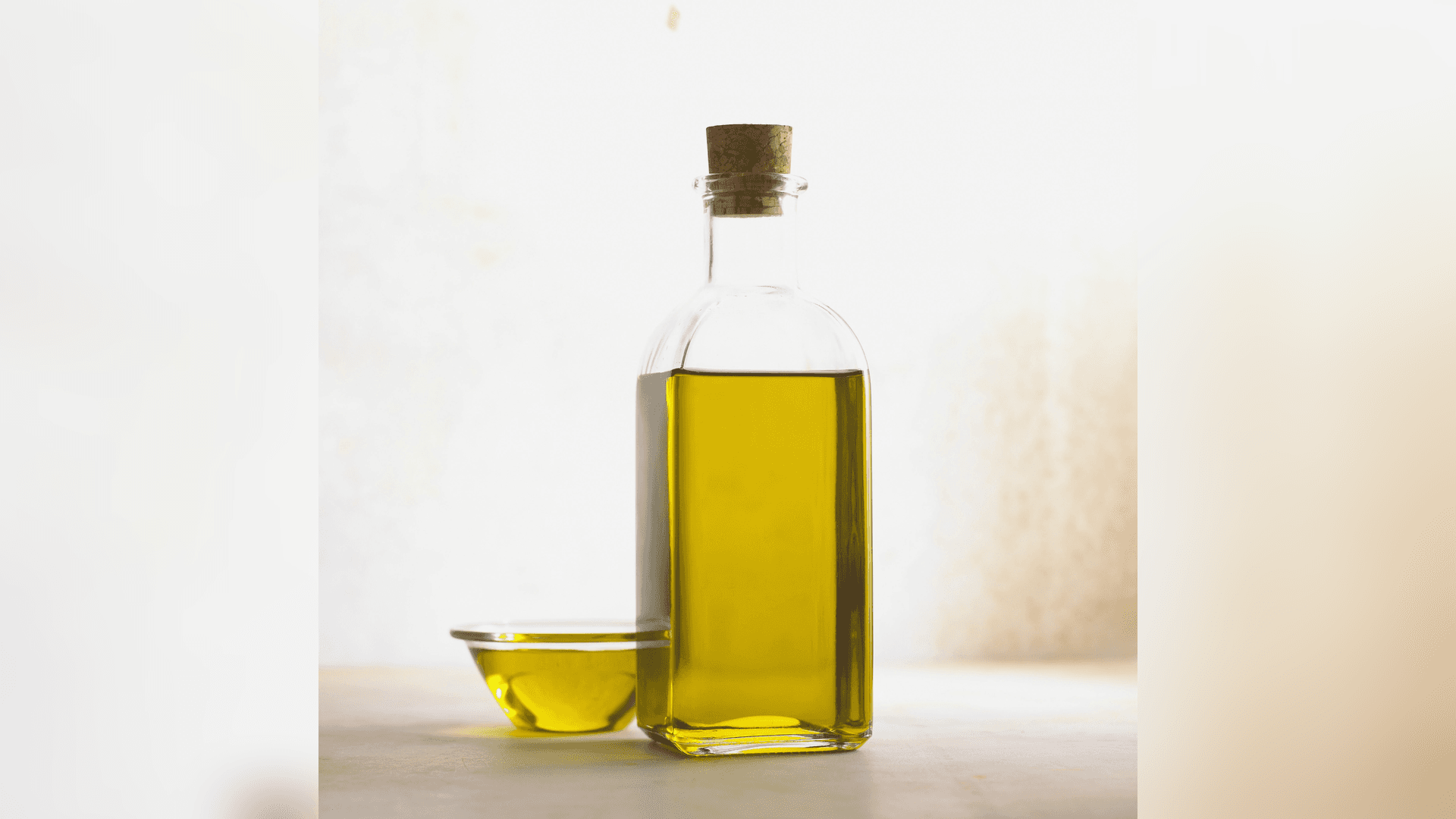
Hero image: Bottle of olive oil, by margenauer (Pixabay), CC0. Via Wikimedia Commons.
Take our professional IQ test
Want to know your IQ? Try the first ever professional online IQ test.