Does Poker Make You Smarter? What the Research on Card Games Shows
Does poker make you smarter? No study shows poker raises IQ. Poker skill is real, but in one study it barely tracked reasoning scores (r = .13).
Dr. Russell T. WarneChief Scientist
Share
There is no evidence that playing poker raises intelligence, because no trial has tested it. Poker is a real skill, and skilled players win money over time, but in a study of 100 players that measured both, poker performance barely tracked reasoning scores (a correlation of r = .13), and the benefits linked to card games in older adults are small and observational.
Poker attracts the claim because it mixes probability, memory, reading opponents and emotional control. This article covers whether poker is a game of skill, what separates good players from poor ones, whether card-game training transfers to other abilities, what long-running studies of older adults show, and the risks that come with playing for money.
Poker is a game of skill in the long run
Whether poker rewards skill or luck has been argued in courts, and two studies give useful answers.
• The World Series of Poker: Steven Levitt and Thomas Miles identified a group of players as highly skilled before the 2010 World Series of Poker began, then tracked their results. Those players earned an average return on investment of over 30%, while all other players averaged about −15%. Over many hands and tournaments, skill clearly shows.
• The fixed-deal experiment: Gerhard Meyer and colleagues seated 300 players, half experts and half average players, at six-player tables for 60 hands of Texas Hold'em. They rigged the deal so that each kind of player got good, average or bad cards. Over those 60 hands the experts did not end with more money than the average players. The cards decided the outcome, although experts lost less when they were dealt bad hands.
The two findings fit together. In the short run, luck dominates. Over thousands of hands, better decisions add up. That makes poker a skill worth studying, but a skill that can be learned is a different thing from a change in general intelligence.
What makes someone good at poker?
If poker were mostly an intelligence test, smarter people would be much better at it. The evidence suggests intelligence plays a modest part.
• Reasoning barely predicted results: Carrie Leonard and Robert Williams tested 100 students and community members on a wide battery, then had each play 30 hands of no-limit Hold'em against computer opponents. Scores on a matrix reasoning test correlated only r = .13 with poker performance, which was not statistically significant. Poker experience (r = .26), resistance to gambling fallacies (r = .26) and skill at reading social information (r = .27) mattered somewhat more. Good players were also more likely to be male and less averse to financial risk.
• The caveat: Thirty hands is a noisy measure of skill, and the authors suspected many more hands were needed. A noisy measure weakens every correlation, so the true link between reasoning and poker skill may be larger. The four best players in the sample did all score above average on intelligence.
• Expert thinking: Joseph St. Germain and Gershon Tenenbaum asked 45 expert, intermediate and novice players to think aloud through 60 hands. Experts and intermediates made better decisions, especially late in a hand, and paid attention to cues that mattered rather than to irrelevant ones. That is what expertise looks like in any domain: knowledge of the game, built through practice.
Taken together, good poker players seem to combine experience, knowledge of probabilities, calm under losses and a feel for opponents. Patience helps too, since folding weak hands means waiting, a trait discussed in the article on patience and IQ.
Does playing card games transfer to other abilities?
Nobody has run a randomized trial of poker with an IQ test as the outcome. The closest evidence comes from other games and from purpose-built card-game training.
Chess is the best-studied case. Meta-analyses by Giovanni Sala and Fernand Gobet found that chess, music and working memory training produce little "far transfer," meaning improvement on abilities unrelated to the trained task, once studies use proper control groups. The full story is in the article on whether chess makes you smarter, and there is no reason to expect poker to behave differently. The same pattern runs through other skills sold as mental workouts, such as learning to code.
A small randomized trial in Taiwan gives the nearest test. Chun-Yu Kuo and colleagues designed a set of card games specifically to exercise "executive functions," the mental control skills used for planning, switching and holding information in mind. They randomly assigned 46 healthy older adults to the card-game program or to a group that played commercial board games, and added 23 people on a waiting list. The card-game group improved on untrained executive-control tests compared with both control groups. It did not outperform them on a reasoning test or on a delayed memory test. Even games built to train thinking improved the processes they were built around and left reasoning unchanged.
Card games and the ageing brain
Most of the research on card games involves older adults and the risk of cognitive decline, and all of it is observational.
• The French PAQUID cohort: Jean-François Dartigues and colleagues followed 3,675 people aged 65 or older, free of dementia at the start, for 20 years. Their "board games" category included card games, bingo, chess and draughts. Regular players had a 15% lower risk of dementia after adjusting for age, sex and education (hazard ratio 0.85). The link disappeared once the researchers also adjusted for baseline cognitive scores and depression (hazard ratio 0.96), although players showed slightly less decline on a screening test over time.
• The Lothian Birth Cohort: Drew Altschul and Ian Deary studied 1,091 Scots born in 1936 who had taken an intelligence test at age 11. People who played games such as cards, chess, bingo or crosswords more often had higher cognitive scores at 70, even after controlling for their age-11 scores, education and social class. The standardized effect was about 0.09, a tenth of a standard deviation, or under 2 IQ points' worth. Frequent players also declined a little less between 70 and 79. The analysis was preregistered, which strengthens it.
These studies cannot separate cause from effect. People who stay sharp are more able to keep playing cards with friends, and card games come bundled with social contact, which may matter in its own right. Neither study looked at poker separately, and neither tested whether starting to play raises intelligence.
Poker, gambling and thinking errors
Poker is usually played for money, and that brings risks the other games on this list do not. People with gambling problems score much higher than other people on measures of "cognitive distortions," such as the gambler's fallacy (believing a loss makes a win more likely next time) and the illusion of control. A meta-analysis by Adam Goodie and Erica Fortune found large differences between people with gambling disorder and others on every published measure of these errors. Resistance to the gambler's fallacy was one of the traits that predicted better poker play in the Leonard and Williams study.
If gambling stops feeling like a game, a doctor, a counsellor or a national gambling helpline is the right first contact. In the United States, the National Problem Gambling Helpline can be reached by call or text at 1-800-MY-RESET.
Frequently asked questions
Does poker make you smarter?
No study shows that poker raises intelligence. Playing builds poker skill, and in older adults card and board games are linked with slightly less cognitive decline, but those studies cannot show cause and effect.
Are poker players smart?
Many are, but reasoning ability is only a modest part of poker skill. In one study, matrix reasoning correlated r = .13 with poker results, while experience and resistance to gambling fallacies mattered more.
Is poker a game of skill or luck?
Both. Skilled players earned over 30% returns at the 2010 World Series of Poker, but over 60 rigged hands in an experiment, the cards decided who won.
Do card games help prevent dementia?
People who play card and board games have somewhat lower dementia risk in observational studies. In the largest French study, the link disappeared after adjusting for baseline mental ability and depression.
Is poker better for the brain than chess?
There is no evidence either way. Neither game has been shown to raise IQ, and both mainly improve skill at the game itself.
The takeaway
Poker rewards skill, and good players think carefully about probability, opponents and their own mistakes. That skill is learned at the table, and it does not appear to spill over into higher intelligence. The link between card games and slower cognitive decline in later life is small and may reflect who keeps playing. If you are curious how your own reasoning ability measures up, take the RIOT IQ test.
References
1. Levitt, S. D., & Miles, T. J. (2014). The role of skill versus luck in poker: Evidence from the World Series of Poker. Journal of Sports Economics, 15(1), 31-44. [doi.org/10.1177/1527002512449471](. doi.org
2. Meyer, G., von Meduna, M., Brosowski, T., & Hayer, T. (2013). Is poker a game of skill or chance? A quasi-experimental study. Journal of Gambling Studies, 29(3), 535-550. [doi.org/10.1007/s10899-012-9327-8](. doi.org
3. Leonard, C. A., & Williams, R. J. (2015). Characteristics of good poker players. Journal of Gambling Issues, 31, 45-68. [doi.org/10.4309/jgi.2015.31.5](. doi.org
4. St. Germain, J., & Tenenbaum, G. (2011). Decision-making and thought processes among poker players. High Ability Studies, 22(1), 3-17. [doi.org/10.1080/13598139.2011.576084](. doi.org
5. Sala, G., & Gobet, F. (2017). Does far transfer exist? Negative evidence from chess, music, and working memory training. Current Directions in Psychological Science, 26(6), 515-520. [doi.org/10.1177/0963721417712760](. doi.org
6. Kuo, C.-Y., Huang, Y.-M., & Yeh, Y.-Y. (2018). Let's play cards: Multi-component cognitive training with social engagement enhances executive control in older adults. Frontiers in Psychology, 9, 2482. [doi.org/10.3389/fpsyg.2018.02482](. doi.org
7. Dartigues, J.-F., Foubert-Samier, A., Le Goff, M., Viltard, M., Amieva, H., Orgogozo, J.-M., Barberger-Gateau, P., & Helmer, C. (2013). Playing board games, cognitive decline and dementia: A French population-based cohort study. BMJ Open, 3(8), e002998. [doi.org/10.1136/bmjopen-2013-002998](. doi.org
8. Altschul, D. M., & Deary, I. J. (2020). Playing analog games is associated with reduced declines in cognitive function: A 68-year longitudinal cohort study. The Journals of Gerontology: Series B, 75(3), 474-482. [doi.org/10.1093/geronb/gbz149](. doi.org
9. Goodie, A. S., & Fortune, E. E. (2013). Measuring cognitive distortions in pathological gambling: Review and meta-analyses. Psychology of Addictive Behaviors, 27(3), 730-743. [doi.org/10.1037/a0031892](. doi.org
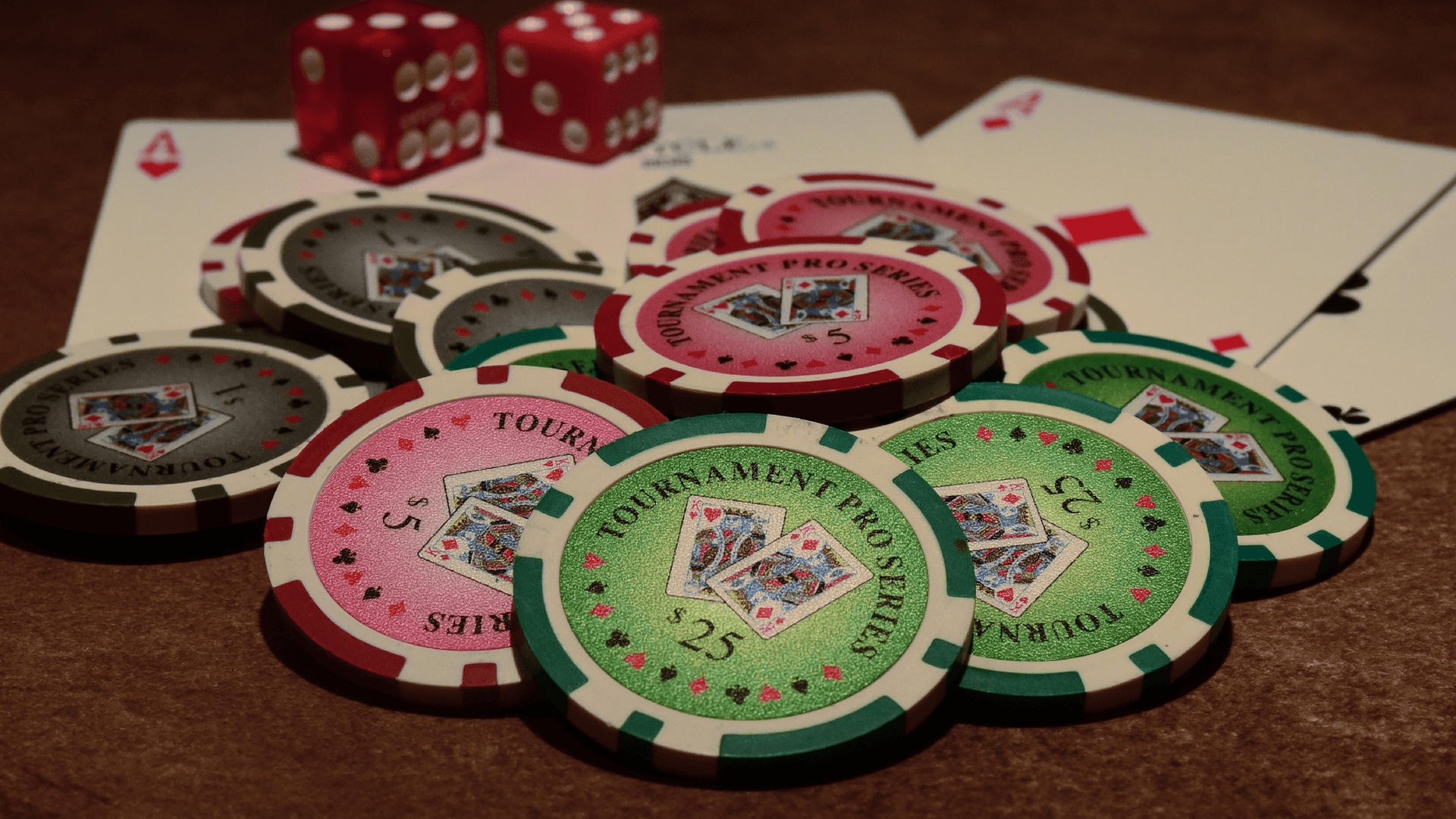
Hero image: Poker Chips with Cards and Dice, by slgckgc, CC BY 2.0. Via Wikimedia Commons.
Take our professional IQ test
Want to know your IQ? Try the first ever professional online IQ test.