Does Green Tea Make You Smarter? Tea, EGCG, L-Theanine and IQ
Does green tea make you smarter? Not lastingly. Its caffeine and L-theanine sharpen attention for an hour or two, but no trial shows a rise in IQ.
Dr. Russell T. WarneChief Scientist
Share
Green tea does not make you smarter in any lasting way. Its caffeine and L-theanine produce moderate, short-lived gains in alertness and attention switching in the first two hours after a dose, and the longest matcha trial, 12 months in 99 older adults, found no change in its main measures of cognition.
The idea that green tea is a brain food rests on positive short-term experiments and on Japanese studies in which older tea drinkers had less cognitive impairment. None of that adds up to a higher IQ. This page covers what is in the cup, what the short-term trials show, what the long-term cohort studies can and cannot tell us, and what happened when researchers tested the green tea compound EGCG in adults with Down syndrome. It describes research and is not medical advice.
What is in green tea?
Green tea comes from the leaves of Camellia sinensis, processed without fermentation so that its polyphenols stay largely unoxidised. Three components get most of the attention in brain research:
• Caffeine: The same stimulant found in coffee. Its effects on alertness and test scores are covered in detail on our caffeine and IQ page.
• L-theanine: An amino acid found naturally in tea and studied for possible calming effects.
• EGCG: Epigallocatechin gallate, the most abundant of the "catechins", a family of polyphenols. According to the European Food Safety Authority (EFSA), adults in the EU who drink green tea take in roughly 90 to 300 mg of EGCG a day, while supplements provide anywhere from 5 to 1,000 mg.
In a 2017 systematic review, Mancini and colleagues assessed 21 human studies of green tea, its extracts, L-theanine and EGCG: 4 randomised controlled trials, 12 crossover studies, 4 cross-sectional studies and one cohort study. They concluded that green tea affects anxiety, memory, attention and brain activity, and that the effects cannot be pinned on any single compound. The benefits for cognition appeared mainly when caffeine and L-theanine were taken together.
Short-term effects: caffeine plus L-theanine
The clearest evidence comes from acute laboratory studies, where people take a measured dose and are tested over the next few hours.
In a placebo-controlled crossover study by Crystal Haskell and colleagues, participants took 250 mg of L-theanine, 150 mg of caffeine, both, or placebo on separate days. L-theanine alone did not help: it increased "headache" ratings and reduced the number of correct serial subtractions. Caffeine alone sped up vigilance responses and improved accuracy on a rapid information-processing task. The combination did those things and also produced faster simple reaction times, faster numeric working memory responses and better sentence verification accuracy.
Camfield and colleagues pooled 11 placebo-controlled studies of tea constituents. They found moderate effect sizes in favour of combined caffeine and L-theanine for self-rated alertness and attention switching accuracy in the first two hours after a dose, with smaller effects on some other attention tasks. Changing the caffeine dose made more difference than changing the L-theanine dose.
These are real but temporary changes in state, of the kind you would expect from a mild stimulant. They tell us nothing about whether regular tea drinking changes a person's underlying reasoning ability, which is what IQ tests are built to measure.
Long-term green tea drinking and cognitive decline
The case for green tea as a long-term brain protector comes mostly from observational studies of older adults in Japan, where green tea is a common daily drink.
• Tsurugaya Project: Kuriyama and colleagues surveyed 1,003 Japanese adults aged 70 or older. After adjusting for potential confounders, those who drank two or more cups of green tea a day had lower odds of cognitive impairment on the Mini-Mental State Examination than those drinking three cups a week or less (odds ratio 0.46, 95% CI 0.30 to 0.72). Black or oolong tea and coffee showed no significant association.
• Ohsaki Cohort: Tomata and colleagues followed 13,645 adults aged 65 or older for 5.7 years. People drinking five or more cups a day had a lower risk of incident dementia than those drinking less than one cup (hazard ratio 0.73, 95% CI 0.61 to 0.87). The pattern held when they excluded people who already reported memory problems at the start.
These are interesting associations, and the coffee comparison suggests caffeine alone does not explain them. They are still associations. Heavy tea drinkers may differ from light drinkers in diet and general health, and people whose memory is beginning to slip may change their habits before they are diagnosed. The Tsurugaya study was cross-sectional, so it cannot show which came first. Neither study measured IQ, and lower dementia risk in old age is a different outcome from higher intelligence in a healthy adult.
What do the green tea and matcha trials show?
Randomised trials of green tea itself are small, and their results are modest.
• Matcha, single dose: Dietz and colleagues gave 23 adults 4 g of matcha as a drink or a snack bar in a single-blind study. Compared with placebo, the main improvements were in basic attention and psychomotor speed. The authors described the effects as slight and "barely present" on most other tasks.
• Matcha, 12 months: Uchida and colleagues randomised 99 older adults with subjective cognitive decline or mild cognitive impairment to 2 g of matcha or placebo daily. The primary outcomes, the Montreal Cognitive Assessment and a daily-living scale, showed no significant change. The one significant cognitive finding was in recognising facial emotions.
• EGCG in Down syndrome: The TESDAD trial tested whether a green tea extract containing EGCG would add to cognitive training in 84 young adults with Down syndrome over 12 months. Groups did not differ on 13 of 15 cognitive tests or 8 of 9 adaptive skill scales. The EGCG group did better on visual recognition memory, inhibitory control and one adaptive behaviour score, with effect sizes around d = 0.3 to 0.4. The authors called for larger phase 3 trials. The trial did not report an IQ outcome, and the broader picture of cognition in this condition is on our page on IQ and Down syndrome.
Why the "smart drink" claim persists, and a safety note
Green tea carries a strong health halo, helped by laboratory studies of EGCG in cells and animals and by the genuine alertness boost of caffeine with L-theanine. Marketing for matcha and green tea extracts often merges these into a single claim about brain power, skipping over the gap between an hour of sharper attention and a change in intelligence. The same leap is common across nootropic supplements generally.
More is not always better with concentrated extracts. EFSA concluded that green tea infusions prepared traditionally are generally safe, although rare cases of liver injury have been reported. It also found that EGCG taken as a supplement at 800 mg a day or more caused a significant rise in liver enzymes in clinical trials. Anyone with liver disease, or anyone considering a green tea extract alongside other medicines, should talk to their doctor or pharmacist.
Frequently asked questions
Does green tea improve memory?
Short-term laboratory studies show small gains in attention and some memory tasks, mostly when caffeine and L-theanine are taken together. Longer trials, including a 12-month matcha study, have not shown improvements on their main cognitive measures.
Is matcha better for the brain than regular green tea?
Matcha is green tea ground into a fine powder and whisked into water. The trials so far show slight short-term effects on attention and no clear long-term cognitive benefit.
Does L-theanine make you smarter?
On its own, L-theanine did not improve test performance in the Haskell study. Its effects on attention appear mainly in combination with caffeine and are short-lived.
Does green tea prevent dementia?
Japanese cohort studies link regular green tea drinking to lower rates of cognitive impairment and dementia, but they cannot rule out confounding or reverse causation. I am not aware of any randomised trial showing that green tea prevents dementia.
Can green tea extract help people with Down syndrome?
One phase 2 trial found modest gains on a few tests when EGCG was combined with cognitive training, with no difference on most measures. Families should discuss any supplement with the person's doctor.
The takeaway
Green tea can make you a little more alert for an hour or two, mostly thanks to caffeine working alongside L-theanine. Older Japanese adults who drink a lot of it have lower rates of cognitive impairment, but those studies cannot show cause, and controlled trials of matcha and EGCG find modest or null results on their main outcomes. Nothing in this research shows that green tea raises IQ. To see where your reasoning ability actually stands, take a full-length online IQ test.
References
1. Camfield, D. A., Stough, C., Farrimond, J., & Scholey, A. B. (2014). Acute effects of tea constituents L-theanine, caffeine, and epigallocatechin gallate on cognitive function and mood: A systematic review and meta-analysis. Nutrition Reviews, 72(8), 507-522. [doi.org/10.1111/nure.12120](. doi.org
2. Uchida, K., Meno, K., Korenaga, T., Liu, S., Suzuki, H., Baba, Y., Tagata, C., Araki, Y., Tsunemi, S., Aso, K., Inagaki, S., Nakagawa, S., Kobayashi, M., Kakuma, T., Asada, T., Ota, M., Takihara, T., & Arai, T. (2024). Effect of matcha green tea on cognitive functions and sleep quality in older adults with cognitive decline: A randomized controlled study over 12 months. PLOS ONE, 19(8), e0309287. [doi.org/10.1371/journal.pone.0309287](. doi.org
3. EFSA Panel on Food Additives and Nutrient Sources added to Food. (2018). Scientific opinion on the safety of green tea catechins. EFSA Journal, 16(4), e05239. [doi.org/10.2903/j.efsa.2018.5239](. doi.org
4. Mancini, E., Beglinger, C., Drewe, J., Zanchi, D., Lang, U. E., & Borgwardt, S. (2017). Green tea effects on cognition, mood and human brain function: A systematic review. Phytomedicine, 34, 26-37. [doi.org/10.1016/j.phymed.2017.07.008](. doi.org
5. Haskell, C. F., Kennedy, D. O., Milne, A. L., Wesnes, K. A., & Scholey, A. B. (2008). The effects of L-theanine, caffeine and their combination on cognition and mood. Biological Psychology, 77(2), 113-122. [doi.org/10.1016/j.biopsycho.2007.09.008](. doi.org
6. Kuriyama, S., Hozawa, A., Ohmori, K., Shimazu, T., Matsui, T., Ebihara, S., Awata, S., Nagatomi, R., Arai, H., & Tsuji, I. (2006). Green tea consumption and cognitive function: A cross-sectional study from the Tsurugaya Project. The American Journal of Clinical Nutrition, 83(2), 355-361. [doi.org/10.1093/ajcn/83.2.355](. doi.org
7. Tomata, Y., Sugiyama, K., Kaiho, Y., Honkura, K., Watanabe, T., Zhang, S., Sugawara, Y., & Tsuji, I. (2016). Green tea consumption and the risk of incident dementia in elderly Japanese: The Ohsaki Cohort 2006 Study. The American Journal of Geriatric Psychiatry, 24(10), 881-889. [doi.org/10.1016/j.jagp.2016.07.009](. doi.org
8. Dietz, C., Dekker, M., & Piqueras-Fiszman, B. (2017). An intervention study on the effect of matcha tea, in drink and snack bar formats, on mood and cognitive performance. Food Research International, 99, 72-83. [doi.org/10.1016/j.foodres.2017.05.002](. doi.org
9. de la Torre, R., de Sola, S., Hernandez, G., Farré, M., Pujol, J., Rodriguez, J., Espadaler, J. M., Langohr, K., Cuenca-Royo, A., Principe, A., Xicota, L., Janel, N., Catuara-Solarz, S., Sanchez-Benavides, G., Bléhaut, H., Dueñas-Espín, I., del Hoyo, L., Benejam, B., Blanco-Hinojo, L., . . . Dierssen, M. (2016). Safety and efficacy of cognitive training plus epigallocatechin-3-gallate in young adults with Down's syndrome (TESDAD): A double-blind, randomised, placebo-controlled, phase 2 trial. The Lancet Neurology, 15(8), 801-810. [doi.org/10.1016/S1474-4422%2816%2930034-5](. doi.org
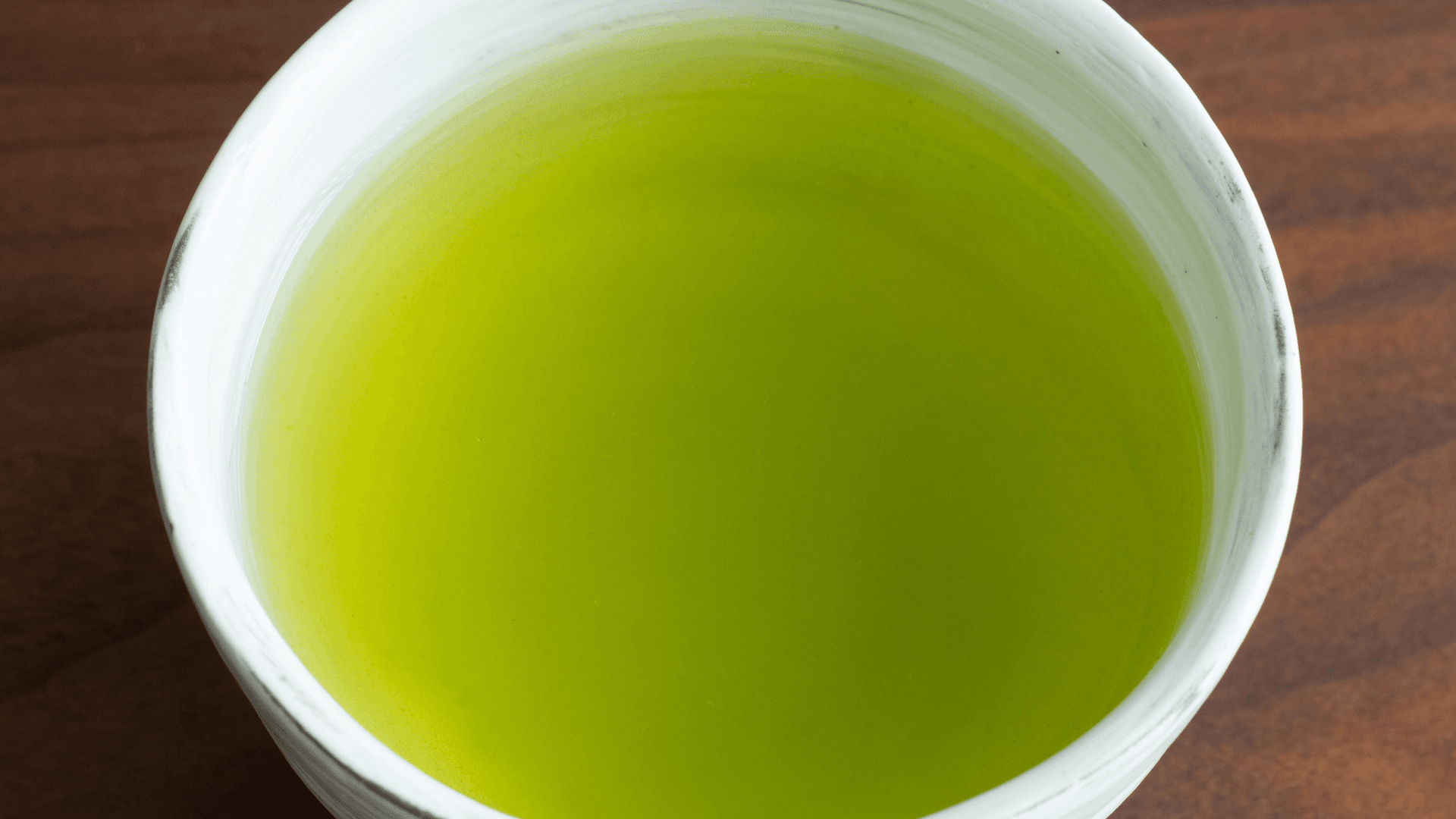
Hero image: 2017 Kagoshima sencha - second infusion, by Difference engine, CC BY-SA 4.0. Via Wikimedia Commons.
Take our professional IQ test
Want to know your IQ? Try the first ever professional online IQ test.