Psychedelics and IQ: Do They Make You Smarter? | Riot IQ
Oct 16, 2026·Advanced Topics & Research
Psychedelics and IQ: Do They Make You Smarter?
Psychedelics and IQ: controlled trials find no lasting change in cognitive scores from psilocybin, and microdosing performs no better than a placebo.
Dr. Russell T. WarneChief Scientist
Share
Psychedelics do not raise IQ: in a randomised trial of 89 healthy adults, a single dose of psilocybin left cognitive test scores no different from placebo one and four weeks later, and in the largest placebo-controlled microdosing study, 191 people performed the same on six cognitive tasks whether they took a microdose or a dummy capsule. The lasting change researchers have measured is in personality, a modest rise in "openness," a trait that correlates with intelligence at only about r = .20.
This page covers what happens to thinking during a full psychedelic dose, what placebo-controlled microdosing trials found, why the "smarter on psychedelics" idea is so popular, and why MDMA is a separate question. It describes research and does not recommend using any drug. If you are thinking about psychedelics for a mental health condition, the people to talk to are your doctor or a psychiatrist.
What counts as a psychedelic, and their legal status
The "classic psychedelics" are psilocybin (the active compound in so-called magic mushrooms), LSD and mescaline (found in peyote). They act mainly on the serotonin 2A receptor and produce strong changes in perception, mood and sense of self. MDMA (ecstasy) is often grouped with them but has a different pharmacology and its own evidence base.
In the United States, psilocybin, LSD, mescaline and MDMA are all listed in Schedule I of the federal Controlled Substances Act, the most restrictive category. Some states have changed their own laws. Oregon, for example, has licensed and regulated psilocybin service centres since 2023 under Ballot Measure 109. Rules differ widely between countries and continue to change, so the legal position depends on where you live.
What happens to thinking during a full dose
During the drug's effects, a full dose of psilocybin impairs several abilities that IQ tests rely on. In a double-blind study by Frederick Barrett and colleagues, 20 experienced hallucinogen users took three doses of psilocybin, a high dose of dextromethorphan and a placebo in separate sessions. Psilocybin produced orderly, dose-dependent impairment of psychomotor speed, working memory, episodic memory, associative learning and visual perception. A brief screening test for global confusion showed no impairment at any dose. Anyone taking an IQ test during a psychedelic experience would be expected to score lower on those kinds of tasks.
The more interesting question is what remains after the drug wears off.
• The largest psilocybin trial in healthy people: James Rucker and colleagues randomly assigned 89 healthy adults to 10 mg or 25 mg of psilocybin or a placebo. On a computerised battery of attention and memory tests given one and four weeks later, there were no clinically relevant differences between the groups. The drug did not lower scores, and it did not raise them.
• Long-term ceremonial use: John Halpern and colleagues compared 61 Navajo members of the Native American Church, who use peyote regularly in religious ceremonies, with 79 Navajo people who used few substances. Across ten tests of memory, attention and executive function, the peyote users showed no deficits, and lifetime peyote use did not predict scores. The authors cautioned that the findings may not apply to illicit recreational users.
So the best evidence suggests that a full dose of a classic psychedelic temporarily disrupts thinking and leaves measured ability where it was.
Microdosing: what placebo-controlled trials found
"Microdosing" means regularly taking doses of a psychedelic meant to be too small to cause a trip. Anecdotal reports claim it improves mood and thinking. Controlled trials have tested those claims directly.
• The Chicago LSD study: Anya Bershad and colleagues gave 20 healthy young adults placebo or 6.5, 13 or 26 micrograms of LSD on separate days. Participants felt dose-related subjective effects, but cognitive task performance was unaffected.
• The older-adult LSD trial: Neiloufar Family and colleagues gave 48 healthy adults with an average age of 63 a placebo or 5, 10 or 20 micrograms of LSD every fourth day, six times. Tests of cognition, balance and body position showed no impairment.
• The self-blinding study: Balázs Szigeti and colleagues had people who already microdosed prepare their own capsules, some with their usual microdose and some empty, so that neither they nor the researchers knew which was which. Among the 191 who completed it, well-being improved in both groups, and a combined score from six cognitive tasks did not differ between microdose and placebo. Small differences on mood scales were explained by participants correctly guessing what they had taken.
• The Argentinian mushroom study: Federico Cavanna and colleagues gave 34 people who were starting to microdose either 0.5 grams of dried psilocybin mushrooms or a placebo. They found no improvement in creativity, cognition or well-being, and a few small changes in the direction of impairment.
Across these trials the pattern is consistent. Microdosing produces noticeable effects in some people, and the benefits users report track what they believe they took more closely than what was in the capsule.
Why people believe psychedelics make you smarter
The popular claim draws on several real findings that measure something other than intelligence.
The most cited is personality change. Katherine MacLean, Matthew Johnson and Roland Griffiths pooled data from 52 healthy volunteers who received a high dose of psilocybin and found that openness, a personality trait covering imagination, curiosity and appreciation of art and ideas, increased afterwards. In people who had what the researchers called a "complete mystical experience," openness remained more than 4 T-score points higher (about 0.4 standard deviations) more than a year later. Openness is measured with a self-report questionnaire, not an ability test, and its link to intelligence is modest. A meta-analysis of 162,636 people by Jeromy Anglim and colleagues found a correlation of .20 between openness and intelligence, stronger for knowledge-based (crystallized) than reasoning (fluid) ability. People who feel more curious and open-minded can easily experience that as feeling smarter. Our article on whether a high IQ makes a person more creative explains why creativity and IQ are separate.
Small clinical studies add to the impression. In an open-label study of 24 patients with depression, Manoj Doss and colleagues found improved cognitive flexibility on a set-shifting task for at least four weeks after psilocybin therapy. With no control group, that result cannot separate the drug from practice effects or recovery from depression.
The most sweeping version is the "stoned ape" hypothesis, popularised by the writer Terence McKenna in his 1992 book Food of the Gods, which proposes that early humans eating psilocybin mushrooms drove the evolution of the human brain. It is a speculative idea, not a tested scientific finding.
MDMA is a different question
MDMA has been studied more as a possible cause of harm than of improvement. A meta-analysis by Ari Kalechstein and colleagues found that ecstasy users scored lower than non-users on attention, learning and memory, psychomotor speed and executive function, with small to medium effect sizes. Those comparisons are hard to interpret, because ecstasy users often use other drugs and may differ before they start. When John Halpern and colleagues compared 52 ecstasy users with minimal use of other drugs against 59 non-users from the same rave scene, they found little evidence of poorer cognitive performance, apart from weaker strategic self-regulation that might predate drug use. The same problem of telling cause from selection runs through research on cannabis and IQ.
Frequently asked questions
Do psychedelics increase IQ?
No controlled study has shown it. A randomised trial of 89 healthy adults found no difference in cognitive scores between psilocybin and placebo one and four weeks after dosing.
Does microdosing make you smarter?
Placebo-controlled trials say no. In the largest, 191 people performed the same on six cognitive tasks whether their capsules held a microdose or nothing.
Do psychedelics lower IQ or damage the brain?
Studies of healthy volunteers and of long-term ceremonial peyote users found no lasting cognitive deficits. Performance does drop during the drug's effects, and MDMA has a more mixed record.
Do psychedelics change your personality?
In one pooled analysis, openness rose after a high dose of psilocybin and stayed higher for over a year in people who had a strong mystical experience. Openness is a personality trait, and its correlation with intelligence is about .20.
Are psychedelics legal?
In the United States, psilocybin, LSD, mescaline and MDMA are Schedule I controlled substances under federal law, though Oregon runs a licensed psilocybin program. Laws vary by country and change often.
The takeaway
Psychedelics change perception, mood and, in some studies, personality, but controlled trials find no lasting change in measured cognitive ability, and microdosing performs no better than a placebo on cognitive tasks. The sense of being sharper or more insightful is real as an experience and has not shown up on objective tests. If you want to know where your reasoning ability actually stands, test sober and rested with an online IQ test built by psychometricians.
References
1. Legal Information Institute. (n.d.). 21 CFR § 1308.11 - Schedule I. Cornell Law School. [law.cornell.edu](. law.cornell.edu
2. Oregon Health Authority. (n.d.). Oregon Psilocybin Services. [oregon.gov](. oregon.gov
3. Barrett, F. S., Carbonaro, T. M., Hurwitz, E., Johnson, M. W., & Griffiths, R. R. (2018). Double-blind comparison of the two hallucinogens psilocybin and dextromethorphan: Effects on cognition. Psychopharmacology, 235(10), 2915-2927. [doi.org/10.1007/s00213-018-4981-x](. doi.org
4. Rucker, J. J., Marwood, L., Ajantaival, R. L. J., Bird, C., Eriksson, H., Harrison, J., Lennard-Jones, M., Mistry, S., Saldarini, F., Stansfield, S., Tai, S. J., Williams, S., Weston, N., Malievskaia, E., & Young, A. H. (2022). The effects of psilocybin on cognitive and emotional functions in healthy participants: Results from a phase 1, randomised, placebo-controlled trial involving simultaneous psilocybin administration and preparation. Journal of Psychopharmacology, 36(1), 114-125. [doi.org/10.1177/02698811211064720](. doi.org
5. Halpern, J. H., Sherwood, A. R., Hudson, J. I., Yurgelun-Todd, D., & Pope, H. G. (2005). Psychological and cognitive effects of long-term peyote use among Native Americans. Biological Psychiatry, 58(8), 624-631. [doi.org/10.1016/j.biopsych.2005.06.038](. doi.org
6. Bershad, A. K., Schepers, S. T., Bremmer, M. P., Lee, R., & de Wit, H. (2019). Acute subjective and behavioral effects of microdoses of lysergic acid diethylamide in healthy human volunteers. Biological Psychiatry, 86(10), 792-800. [doi.org/10.1016/j.biopsych.2019.05.019](. doi.org
7. Family, N., Maillet, E. L., Williams, L. T. J., Krediet, E., Carhart-Harris, R. L., Williams, T. M., Nichols, C. D., Goble, D. J., & Raz, S. (2020). Safety, tolerability, pharmacokinetics, and pharmacodynamics of low dose lysergic acid diethylamide (LSD) in healthy older volunteers. Psychopharmacology, 237(3), 841-853. [doi.org/10.1007/s00213-019-05417-7](. doi.org
8. Szigeti, B., Kartner, L., Blemings, A., Rosas, F., Feilding, A., Nutt, D. J., Carhart-Harris, R. L., & Erritzoe, D. (2021). Self-blinding citizen science to explore psychedelic microdosing. eLife, 10, e62878. [doi.org/10.7554/eLife.62878](. doi.org
9. Cavanna, F., Muller, S., de la Fuente, L. A., Zamberlan, F., Palmucci, M., Janeckova, L., Kuchar, M., Pallavicini, C., & Tagliazucchi, E. (2022). Microdosing with psilocybin mushrooms: A double-blind placebo-controlled study. Translational Psychiatry, 12, 307. [doi.org/10.1038/s41398-022-02039-0](. doi.org
10. MacLean, K. A., Johnson, M. W., & Griffiths, R. R. (2011). Mystical experiences occasioned by the hallucinogen psilocybin lead to increases in the personality domain of openness. Journal of Psychopharmacology, 25(11), 1453-1461. [doi.org/10.1177/0269881111420188](. doi.org
11. Anglim, J., Dunlop, P. D., Wee, S., Horwood, S., Wood, J. K., & Marty, A. (2022). Personality and intelligence: A meta-analysis. Psychological Bulletin, 148(5-6), 301-336. [doi.org/10.1037/bul0000373](. doi.org
12. Doss, M. K., Považan, M., Rosenberg, M. D., Sepeda, N. D., Davis, A. K., Finan, P. H., Smith, G. S., Pekar, J. J., Barker, P. B., Griffiths, R. R., & Barrett, F. S. (2021). Psilocybin therapy increases cognitive and neural flexibility in patients with major depressive disorder. Translational Psychiatry, 11, 574. [doi.org/10.1038/s41398-021-01706-y](. doi.org
13. Kalechstein, A. D., De La Garza, R., Mahoney, J. J., Fantegrossi, W. E., & Newton, T. F. (2007). MDMA use and neurocognition: A meta-analytic review. Psychopharmacology, 189(4), 531-537. [doi.org/10.1007/s00213-006-0601-2](. doi.org
14. Halpern, J. H., Sherwood, A. R., Hudson, J. I., Gruber, S., Kozin, D., & Pope, H. G. (2011). Residual neurocognitive features of long-term ecstasy users with minimal exposure to other drugs. Addiction, 106(4), 777-786. [doi.org/10.1111/j.1360-0443.2010.03252.x](. doi.org
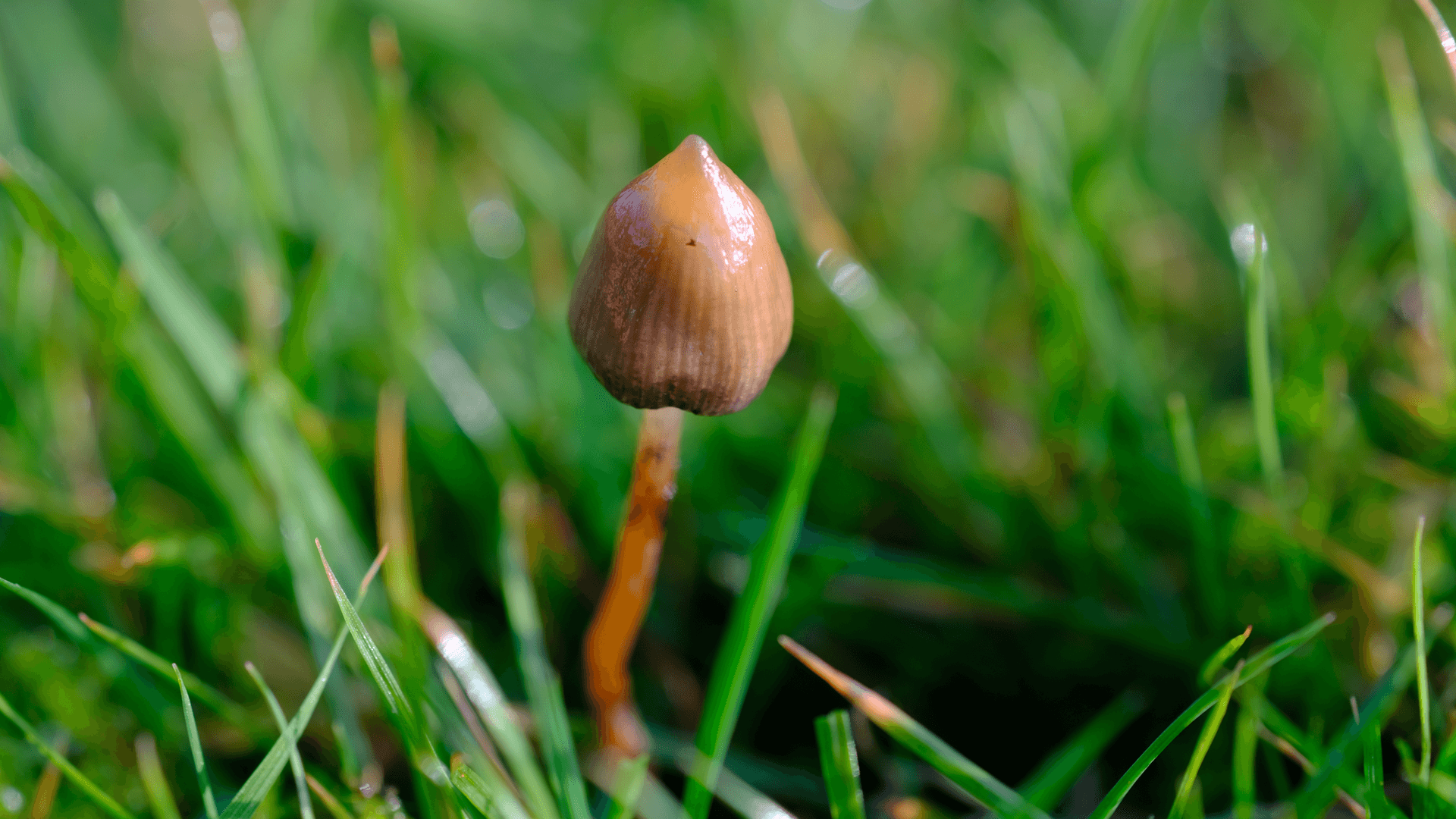
Hero image: Psilocybe semilanceata (49152848998), by Lukas from London, England, CC BY-SA 2.0. Via Wikimedia Commons.
Take our professional IQ test
Want to know your IQ? Try the first ever professional online IQ test.