Does Beetroot Make You Smarter? What Nitrate Research Shows for IQ
Does beetroot make you smarter? No good evidence says so. A meta-analysis of 13 nitrate trials found no effect on cognition, and none measured IQ.
Dr. Russell T. WarneChief Scientist
Share
Beetroot does not make you smarter in any way that controlled research has shown. A meta-analysis of 13 randomized trials of dietary nitrate, the compound that gives beetroot its reputation, found an average effect on cognitive test scores of 0.06 standard deviations, too small to tell apart from zero and equal to less than 1 point on the IQ scale, and no trial has measured IQ itself.
Beetroot juice does lower blood pressure a little and can help some athletes, and one small brain-scan study from 2010 is still cited as proof that it feeds the brain. This page covers why beetroot came to be called a brain food, what the trials in young adults, athletes and older people found, and what the long-term cohort studies can and cannot show. It describes research and is not medical or dietary advice.
Why beetroot got a brain-food reputation
The story starts with nitrate. Beetroot has a very high nitrate content (more than 250 milligrams per 100 grams of fresh weight), and leafy greens such as spinach, rocket and lettuce can contain as much or more. Researchers favour beetroot juice mainly because it is palatable and easy to give in a measured dose. Bacteria on the tongue convert nitrate to nitrite, and the body converts some of that nitrite to "nitric oxide", a molecule that widens blood vessels.
That pathway has real effects outside the brain. A meta-analysis of 16 short trials by Siervo and colleagues found that nitrate or beetroot juice lowered systolic blood pressure by about 4.4 mmHg. In sport, beetroot juice became a popular supplement after studies showed it can reduce the oxygen cost of moderate exercise and improve endurance and sprint performance in some settings.
The brain link came from a 2010 study at Wake Forest University. Presley and colleagues fed 14 adults in their seventies a high-nitrate diet that included 500 ml of beetroot juice, or a low-nitrate diet, and scanned their brains with MRI. Total blood flow to the brain did not change. A voxel-by-voxel analysis found more blood flow in frontal-lobe white matter, near areas involved in "executive function" (planning, self-control and mental flexibility). The study measured no cognitive outcomes at all. The step from "more blood to the frontal lobes" to "beetroot makes you smarter" is the leap the brain-food claim rests on, and the trials since then were designed to test it.
What the randomized trials found
Since 2010, researchers have run a series of small trials that give beetroot juice or nitrate and then test memory, attention or reaction time. The results are mostly null, with occasional positive findings on a single task.
• The meta-analysis: Clifford and colleagues pooled 13 randomized trials with 297 adults (a median of 23 per trial). Nitrate or nitrite had no measurable effect on cognitive function (standardized mean difference +0.06, 95% confidence interval −0.06 to 0.18) or on resting blood flow to the brain. Converted to the IQ metric (0.06 × 15), the point estimate is about 0.9 points, but the outcomes were short cognitive tasks and not IQ tests.
• Young adults: Wightman and colleagues gave 40 healthy adults either 450 ml of beetroot juice or a placebo. Ninety minutes later, the beetroot group did better on one of three tasks (serial subtraction by threes) and showed changes in frontal blood flow during testing. One positive task out of three in a sample of 40 is a modest signal that needs replication.
• Athletes: Thompson and colleagues gave 16 male team-sport players a week of nitrate-rich or nitrate-depleted beetroot juice before an 80-minute sprint test on a bike. Reaction times in the second half were about 30 milliseconds faster with nitrate, with no difference in accuracy. A 2024 study of 15 female team-sport athletes found no effect of a single large dose on cognitive flexibility.
• Older adults: Kelly and colleagues gave 12 healthy adults aged 60 to 70 three days of concentrated beetroot juice. Blood pressure fell, but cognitive function was not altered. Babateen and colleagues ran a longer test: 62 overweight or obese adults aged 60 to 75 were randomized to one of three doses of beetroot juice or a placebo for 13 weeks. Neither cognitive scores nor frontal blood flow changed at any dose. A 2026 pilot trial in 22 older adults with metabolic syndrome also found no effect on cognition after four weeks.
• Teenagers: A Swedish crossover trial in 60 adolescents aged 13 to 15 compared breakfast with a beetroot juice shot, a regular breakfast and no breakfast. Working memory improved in every condition, with no effect of the nitrate.
A few recent trials report positive results, and they share features worth noting. An Italian crossover trial of 44 adults found better word-list recall 90 minutes after chewable beetroot tablets, but one author worked for a supplement company and commercial firms supplied the tablets. A 14-day trial in 29 overweight adults on a calorie-restricted diet found better Trail Making Test B scores with added beetroot juice, but the comparison group received no placebo juice. A 2026 Chinese trial in 70 patients with alcohol use disorder reported better spatial memory, a clinical group whose results may not apply to healthy people.
Short-term trials versus long-term diet
Every trial above lasted between 90 minutes and 13 weeks. If nitrate helps the brain, it might do so by keeping blood vessels healthy over decades, which no trial has tested.
Cohort studies try to answer that longer question. In the Danish Diet, Cancer and Health study, Bondonno and colleagues followed 54,804 adults for about 27 years. People in the top fifth for nitrate from plant foods had about a 10% lower rate of dementia than those in the bottom fifth (hazard ratio 0.90, 95% CI 0.83 to 0.98). Nitrate from animal foods, cured meat and tap water was linked to higher risk. The study estimated intake from food questionnaires, and it measured dementia, a diagnosis, not intelligence.
The usual caution applies. People who eat plenty of vegetables also tend to differ in education, income, smoking and exercise, and those factors predict dementia on their own. Statistical adjustment reduces this problem without removing it. Lower dementia risk is also a separate question from higher intelligence, as our page on whether IQ is correlated with dementia explains. A 2025 review by Kimble and Shannon, two researchers who study nitrate, concluded that beetroot is a promising candidate for brain health but that findings are inconsistent and most trials are small and short.
How to read the beetroot evidence
It helps to separate three claims that often get blended.
• Beetroot changes blood flow: Probably, a little, in some studies. Brain imaging results are mixed, and the meta-analysis found no overall effect on resting blood flow to the brain.
• Beetroot sharpens performance on a task, briefly: Occasionally, in small studies, on one task out of several. When the trials are pooled, the average effect is close to zero.
• Beetroot makes you smarter: No study supports this. None has measured IQ, and the cognitive batteries that have been used show no reliable change.
IQ scores are among the most stable traits psychologists measure in adults. A food that raised them would need to show repeated effects in large, preregistered trials using full cognitive batteries. The nitrate trials are small, use many different tasks and doses, and often report only one or two positive results among many outcomes, a pattern that tends to shrink as samples grow. The same story runs through most single-food claims, which our overview of whether diet or nutrition affects IQ covers. Correcting a real deficiency or preventing disease is the area where nutrition matters most for cognition. Supplements sold as brain boosters, such as lion's mane mushroom, face the same test.
Frequently asked questions
Does beetroot make you smarter?
No good evidence says it does. A meta-analysis of 13 randomized nitrate trials found no effect on cognitive test scores, and no trial has measured IQ.
Does beetroot juice increase blood flow to the brain?
One 2010 study of 14 older adults found more blood flow in part of the frontal lobe after a high-nitrate diet, with no change in total brain blood flow. Later trials gave mixed results, and a meta-analysis found no overall effect on resting blood flow to the brain.
Is beetroot good for memory?
A few small trials report better scores on one memory task, but larger and longer trials, including a 13-week trial in older adults, found no change. The evidence does not support beetroot as a memory treatment.
Can beetroot help prevent dementia?
A large Danish cohort found that people who ate the most nitrate from vegetables had a slightly lower dementia rate, but that kind of study cannot show cause and effect. Anyone worried about memory changes should speak with a doctor.
Why do athletes drink beetroot juice?
Nitrate can lower the oxygen cost of exercise and improve endurance and sprint performance in some settings. Those effects on muscle do not mean the juice raises intelligence.
The takeaway
Beetroot is a nutritious vegetable that lowers blood pressure a little and can help athletes, but it does not make you smarter. Pooled trials show an effect on cognitive tests close to zero, and the positive findings come from small studies that measured many tasks. If you want an accurate measure of your reasoning ability, take a full-length online IQ test.
References
1. Clifford, T., Babateen, A., Shannon, O. M., Capper, T., Ashor, A., Stephan, B., ... Siervo, M. (2019). Effects of inorganic nitrate and nitrite consumption on cognitive function and cerebral blood flow: A systematic review and meta-analysis of randomized clinical trials. Critical Reviews in Food Science and Nutrition, 59(15), 2400-2410. [doi.org/10.1080/10408398.2018.1453779](. doi.org
2. Presley, T. D., Morgan, A. R., Bechtold, E., Clodfelter, W., Dove, R. W., Jennings, J. M., ... Miller, G. D. (2011). Acute effect of a high nitrate diet on brain perfusion in older adults. Nitric Oxide, 24(1), 34-42. [doi.org/10.1016/j.niox.2010.10.002](. doi.org
3. Wightman, E. L., Haskell-Ramsay, C. F., Thompson, K. G., Blackwell, J. R., Winyard, P. G., Forster, J., Jones, A. M., & Kennedy, D. O. (2015). Dietary nitrate modulates cerebral blood flow parameters and cognitive performance in humans: A double-blind, placebo-controlled, crossover investigation. Physiology & Behavior, 149, 149-158. [doi.org/10.1016/j.physbeh.2015.05.035](. doi.org
4. Thompson, C., Wylie, L. J., Fulford, J., Kelly, J., Black, M. I., McDonagh, S. T., ... Jones, A. M. (2015). Dietary nitrate improves sprint performance and cognitive function during prolonged intermittent exercise. European Journal of Applied Physiology, 115(9), 1825-1834. [doi.org/10.1007/s00421-015-3166-0](. doi.org
5. Kelly, J., Fulford, J., Vanhatalo, A., Blackwell, J. R., French, O., Bailey, S. J., ... Jones, A. M. (2013). Effects of short-term dietary nitrate supplementation on blood pressure, O2 uptake kinetics, and muscle and cognitive function in older adults. American Journal of Physiology: Regulatory, Integrative and Comparative Physiology, 304(2), R73-R83. [doi.org/10.1152/ajpregu.00406.2012](. doi.org
6. Babateen, A. M., Shannon, O. M., O'Brien, G. M., Okello, E., Smith, E., Olgacer, D., ... Siervo, M. (2022). Incremental doses of nitrate-rich beetroot juice do not modify cognitive function and cerebral blood flow in overweight and obese older adults: A 13-week pilot randomised clinical trial. Nutrients, 14(5), 1052. [doi.org/10.3390/nu14051052](. doi.org
7. Gosalia, J., Spicuzza, J. M., Bowlus, C., Brinkerhoff, A., Baker, S. R., Qiu, J. J., ... Proctor, D. N. (2026). A pilot randomized controlled trial of the effects of dietary nitrate supplementation on dynamic cerebral autoregulation in older adults with metabolic syndrome. Physiological Reports, 14(16), e71073. [doi.org/10.14814/phy2.71073](. doi.org
8. Tan, R., Merrill, C., Riley, C. F., Hammer, M. A., Kenney, R. T., Riley, A. A., ... Pennell, A. (2024). Acute inorganic nitrate ingestion does not impact oral microbial composition, cognitive function, or high-intensity exercise performance in female team-sport athletes. European Journal of Applied Physiology, 124(12), 3511-3525. [doi.org/10.1007/s00421-024-05552-w](. doi.org
9. Heiland, E. G., Lindh, F., Regan, C., Ekblom, Ö., Kjellenberg, K., Larsen, F. J., ... Helgadóttir, B. (2024). A randomised crossover trial of nitrate and breakfast on prefrontal cognitive and haemodynamic response functions. npj Science of Food, 8, 64. [doi.org/10.1038/s41538-024-00308-4](. doi.org
10. Vaccaro, M. G., Innocenti, B., Cione, E., Gallelli, L., De Sarro, G., Bonilla, D. A., & Cannataro, R. (2024). Acute effects of a chewable beetroot-based supplement on cognitive performance: A double-blind randomized placebo-controlled crossover clinical trial. European Journal of Nutrition, 63(1), 303-321. [doi.org/10.1007/s00394-023-03265-y](. doi.org
11. Alharbi, M., Chiurazzi, M., Nasti, G., Muscariello, E., Mastantuono, T., Koechl, C., ... Siervo, M. (2023). Caloric restriction (CR) plus high-nitrate beetroot juice does not amplify CR-induced metabolic adaptation and improves vascular and cognitive functions in overweight adults: A 14-day pilot randomised trial. Nutrients, 15(4), 890. [doi.org/10.3390/nu15040890](. doi.org
12. Li, X., Zhao, K., Chen, J., Ni, Z., Li, L., Chen, Y., ... Sun, H. (2026). The cognitive benefits of nitrate in patients with alcohol use disorder: Unraveling the oral microbiome ectopic colonization pathway. Molecular Psychiatry, 31(8), 4815-4827. [doi.org/10.1038/s41380-026-03597-1](. doi.org
13. Bondonno, C. P., Pokharel, P., Erichsen, D. W., Zhong, L., Schullehner, J., Kyrø, C., ... Bondonno, N. P. (2025). Source-specific nitrate intake and incident dementia in the Danish Diet, Cancer and Health Study. Alzheimer's & Dementia, 21(12), e70995. [doi.org/10.1002/alz.70995](. doi.org
14. Kimble, R., & Shannon, O. M. (2025). Can beetroot (Beta vulgaris) support brain health? A perspective review on Alzheimer's disease. Nutrients, 17(23), 3790. [doi.org/10.3390/nu17233790](. doi.org
15. Siervo, M., Lara, J., Ogbonmwan, I., & Mathers, J. C. (2013). Inorganic nitrate and beetroot juice supplementation reduces blood pressure in adults: A systematic review and meta-analysis. The Journal of Nutrition, 143(6), 818-826. [doi.org/10.3945/jn.112.170233](. doi.org
16. Jones, A. M., Thompson, C., Wylie, L. J., & Vanhatalo, A. (2018). Dietary nitrate and physical performance. Annual Review of Nutrition, 38, 303-328. [doi.org/10.1146/annurev-nutr-082117-051622](. doi.org
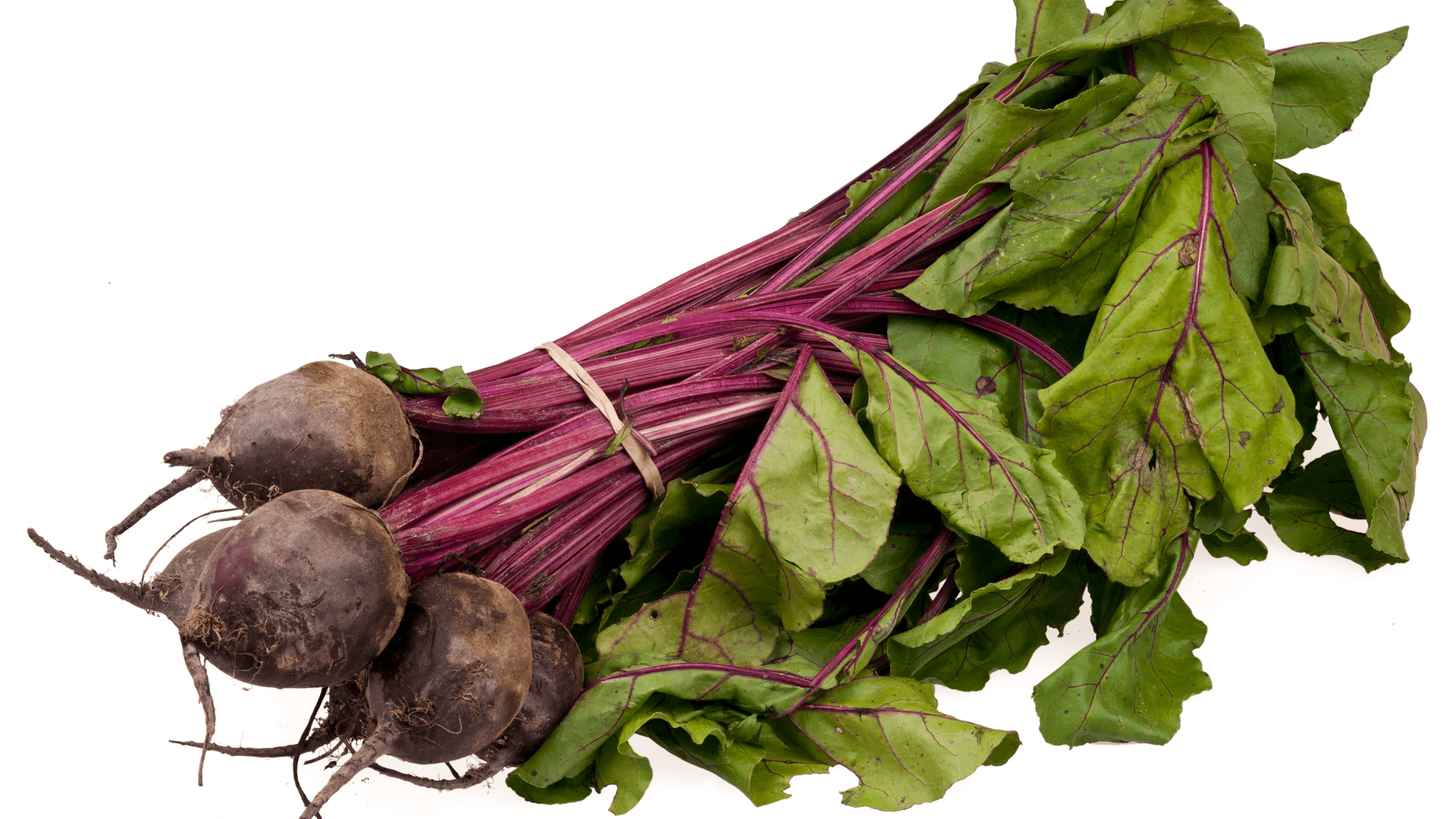
Hero image: Beets-Bundle, by Evan-Amos, CC0. Via Wikimedia Commons.
Take our professional IQ test
Want to know your IQ? Try the first ever professional online IQ test.