Does Dancing Make You Smarter? What the Research Shows
Does dancing make you smarter? No trial shows it raises IQ. In older adults, dance gives small gains on memory and screening tests, similar to other exercise.
Dr. Russell T. WarneChief Scientist
Share
Dancing does not make you smarter in the sense of raising your IQ: no randomized trial has shown a gain in general intelligence from dance lessons. In older adults, dance programs produce small improvements on memory tasks and brief screening tests, roughly 1.5 points on a 30-point screening scale, and about the same benefits as other structured exercise.
Dance has a reputation as the ideal brain workout because it mixes aerobic activity, music, memorized steps and a partner. This page covers what the randomized trials show, why learning choreography is different from becoming more intelligent, the famous dementia study behind many headlines, and why lifelong dancers often look sharper than their peers.
What randomized trials of dance show
Most dance research has been done with adults over 55, often in people with "mild cognitive impairment" (MCI), a stage of measurable memory or thinking problems that falls short of dementia. The outcomes are cognitive tests of memory, attention and planning, or short screening tools. None of the trials I could find measured full-scale IQ before and after dance training.
• Healthy and MCI older adults: Hewston and colleagues pooled 11 randomized trials with 1,412 participants. Dance improved scores on the Mini-Mental State Examination (MMSE), a 30-point screening test for dementia, by an average of 1.58 points (95% confidence interval 0.21 to 2.95), which they rated as moderate-certainty evidence. Results on the Trail Making Tests of attention and mental flexibility had confidence intervals that included zero, and the authors said trials comparing dance with other exercise were still needed.
• Mild cognitive impairment: Chan and colleagues pooled five trials (358 patients) and found a "standardized mean difference" of 0.48 for global cognition. A standardized mean difference expresses the gap between groups in standard deviation units. If the outcome were an IQ test, 0.48 would be about 7 points, but these outcomes were screening and memory tests, so the IQ comparison is only a rough sense of scale. Five small trials also leave plenty of room for the true effect to be smaller.
• Dance against other exercise: Fong Yan and colleagues reviewed 27 studies (1,392 participants of all ages) that compared dance with another structured exercise program. Dance was generally as effective as the alternatives, with preliminary evidence of an advantage on some aspects of memory and a disadvantage on language fluency.
• A head-to-head trial: In the Dancing Mind trial in Australia, Merom and colleagues randomized 115 healthy adults (mean age 69.5) to ballroom dancing twice a week for eight months or to a walking program. The intention-to-treat analysis, which keeps everyone in the group they were assigned to, showed no difference between groups. Among those who finished, dance had a small edge on a visual memory test (effect sizes 0.29 and 0.34), neither of which reached statistical significance.
• Children: The evidence is thinner. In a Dutch cluster-randomized trial of 512 children aged 9 to 12, a daily 10-minute classroom break spent copying dance videos for nine weeks had no effect on tests of attention, inhibition or memory retrieval.
The pattern is familiar from the wider exercise literature. Moving more seems good for the ageing brain, and dance is one pleasant way to do it. Our article on whether exercise can affect your IQ score covers that broader evidence, including why short-term boosts after a workout fade quickly.
Getting better at dancing is not getting smarter
Learning a tango or a hip-hop routine makes demands on memory, timing, attention and spatial awareness, so it is natural to assume that dancers are training their minds. The question is whether those gains spread beyond the dance floor.
Psychologists separate "near transfer" (improvement on tasks similar to the trained one) from "far transfer" (improvement on different tasks, including intelligence tests). Sala and Gobet's meta-analyses of chess, music and working memory training found small apparent effects that shrank as study designs improved, especially when the comparison group did some other active task. They concluded that far transfer rarely occurs.
Dance research fits this picture. The one domain where the Dancing Mind trial found a hint of benefit was visuospatial memory, which the authors noted is the kind of memory needed to learn dance steps. That looks like near transfer. When dance was compared with walking or general fitness training rather than with doing nothing, the differences mostly disappeared.
Brain imaging studies are often cited as evidence that dance is special. Rehfeld and colleagues assigned older adults to 18 months of dance or fitness training and found that the hippocampus (a brain region involved in memory) grew in both groups, with some additional subregions growing in the dancers. Only 14 dancers and 12 fitness participants completed the study, and a change in brain volume is not a change in measured intelligence. The same caution applies to brain-scan studies of juggling, another motor skill that has been linked to changes in brain structure.
The dementia study behind the headlines
Many articles on dancing and the brain cite one statistic: dancing was linked to a 76% lower risk of dementia. It comes from the Bronx Aging Study, published in the New England Journal of Medicine by Verghese and colleagues in 2003.
The researchers asked 469 adults over 75 how often they took part in various leisure activities and followed them for a median of 5.1 years, during which 124 developed dementia. Reading, board games, playing a musical instrument and dancing were each linked to lower risk. For frequent dancing, the hazard ratio was 0.24, which is where the 76% figure comes from.
There are three reasons to treat that number with caution.
• The confidence interval is very wide: It ran from 0.06 to 0.99. The data are compatible with dancing being linked to almost no reduction in risk or a very large one, which usually means the estimate rests on a small number of people.
• Physical activity as a whole did not predict dementia: On the study's combined physical-activity scale, the hazard ratio was 1.00. The protective association was found for the cognitive-activity scale, and the authors called for controlled trials.
• Reverse causation: Dementia develops for years before diagnosis. People whose thinking is already slipping may stop going to dance halls, which would make dancing look protective even if it had no effect.
Childhood intelligence and education also predict dementia risk decades later, and both influence which hobbies people take up. Our page on whether IQ is correlated with dementia explains that link and the idea of "cognitive reserve."
Why dancers often look sharper
Studies comparing long-time dancers with non-dancers often find the dancers ahead. Kattenstroth and colleagues compared 24 amateur dancers in their late sixties to eighties, who had danced for an average of 16.5 years, with 38 non-dancers of similar age and schooling. The dancers did better on posture, reaction time, touch and cognitive tests, including a 30-item version of Raven's Progressive Matrices, a reasoning test that measures fluid intelligence (about 19.6 items correct against 15.4). Their best performers were no better than the best controls. The difference came from the control group having more people who performed poorly.
That is what you would expect from either a protective effect or simple selection. People who stay healthy, mobile and mentally sharp are the ones who keep dancing into their seventies and eighties, while people with failing balance, joint pain or early memory problems drop out. A comparison at a single point in time cannot tell these explanations apart.
A second study from Verghese's own group shows how much depends on who is being compared. When 24 older social dancers were matched to 84 non-dancers on age, sex, education and other leisure activities, the dancers had better balance and gait, but their cognitive test scores did not differ.
Other confounds are common in this research:
• Education and income: Lessons, studio fees and social clubs are easier to access for people with more education and money, both of which correlate with test scores.
• Baseline fitness: Fitter people find dancing easier and more enjoyable, and fitness has its own links to cognition.
• Dropout: In the Dancing Mind trial, the people who left the dance group had lower executive-function scores at the start than those who stayed. Studies that analyse only finishers can end up comparing the sharpest dancers with everyone else.
None of this means dancing is useless for the brain. As people move into later life, how IQ changes as a person ages depends on many factors, and staying active and socially connected is a reasonable part of healthy ageing. The evidence simply does not support the stronger claim that dancing raises intelligence.
Frequently asked questions
Does dancing increase IQ?
No study has shown that it does. Trials of dance measure memory, attention and screening scores, mostly in older adults, and the gains are small and similar to those from other exercise.
Is dancing good for the brain?
For older adults, dance programs produce modest improvements on memory and screening tests, especially in people with mild cognitive impairment. Walking and general fitness training produce similar benefits in head-to-head trials.
Does dancing prevent dementia?
That has not been shown. The well-known 2003 study linking frequent dancing to lower dementia risk was observational, and its estimate for dancing had a very wide confidence interval.
Are dancers smarter than other people?
Long-time older dancers often score better than non-dancers, but people who stay healthy and sharp are more likely to keep dancing. When dancers were matched carefully to non-dancers, their cognitive scores did not differ.
Which type of dance is best for the brain?
No style has been shown to be better than others. Trials have used ballroom, Latin, aerobic and folk dance, and the reviews found too few studies to compare them.
The takeaway
Dance is a sociable, enjoyable form of exercise, and in older adults it brings small benefits on memory and screening tests that are about the same as those from walking or fitness classes. Learning steps makes you a better dancer and may sharpen the kind of spatial memory that dancing uses, but there is no evidence that it raises general intelligence. If you want an accurate picture of your reasoning ability today, take a full-length online IQ test.
References
1. Hewston, P., Kennedy, C. C., Borhan, S., Merom, D., Santaguida, P., Ioannidis, G., Marr, S., Santesso, N., Thabane, L., Bray, S., & Papaioannou, A. (2021). Effects of dance on cognitive function in older adults: A systematic review and meta-analysis. Age and Ageing, 50(4), 1084-1092. [doi.org/10.1093/ageing/afaa270](. doi.org
2. Chan, J. S. Y., Wu, J., Deng, K., & Yan, J. H. (2020). The effectiveness of dance interventions on cognition in patients with mild cognitive impairment: A meta-analysis of randomized controlled trials. Neuroscience & Biobehavioral Reviews, 118, 80-88. [doi.org/10.1016/j.neubiorev.2020.07.017](. doi.org
3. Fong Yan, A., Nicholson, L. L., Ward, R. E., Hiller, C. E., Dovey, K., Parker, H. M., Low, L.-F., Moyle, G., & Chan, C. (2024). The effectiveness of dance interventions on psychological and cognitive health outcomes compared with other forms of physical activity: A systematic review with meta-analysis. Sports Medicine, 54(5), 1179-1205. [doi.org/10.1007/s40279-023-01990-2](. doi.org
4. Merom, D., Grunseit, A., Eramudugolla, R., Jefferis, B., Mcneill, J., & Anstey, K. J. (2016). Cognitive benefits of social dancing and walking in old age: The Dancing Mind randomized controlled trial. Frontiers in Aging Neuroscience, 8, 26. [doi.org/10.3389/fnagi.2016.00026](. doi.org
5. van den Berg, V., Saliasi, E., de Groot, R. H. M., Chinapaw, M. J. M., & Singh, A. S. (2019). Improving cognitive performance of 9-12 years old children: Just dance? A randomized controlled trial. Frontiers in Psychology, 10, 174. [doi.org/10.3389/fpsyg.2019.00174](. doi.org
6. Sala, G., & Gobet, F. (2017). Does far transfer exist? Negative evidence from chess, music, and working memory training. Current Directions in Psychological Science, 26(6), 515-520. [doi.org/10.1177/0963721417712760](. doi.org
7. Rehfeld, K., Müller, P., Aye, N., Schmicker, M., Dordevic, M., Kaufmann, J., Hökelmann, A., & Müller, N. G. (2017). Dancing or fitness sport? The effects of two training programs on hippocampal plasticity and balance abilities in healthy seniors. Frontiers in Human Neuroscience, 11, 305. [doi.org/10.3389/fnhum.2017.00305](. doi.org
8. Verghese, J., Lipton, R. B., Katz, M. J., Hall, C. B., Derby, C. A., Kuslansky, G., Ambrose, A. F., Sliwinski, M., & Buschke, H. (2003). Leisure activities and the risk of dementia in the elderly. New England Journal of Medicine, 348(25), 2508-2516. [doi.org/10.1056/NEJMoa022252](. doi.org
9. Kattenstroth, J.-C., Kolankowska, I., Kalisch, T., & Dinse, H. R. (2010). Superior sensory, motor, and cognitive performance in elderly individuals with multi-year dancing activities. Frontiers in Aging Neuroscience, 2, 31. [doi.org/10.3389/fnagi.2010.00031](. doi.org
10. Verghese, J. (2006). Cognitive and mobility profile of older social dancers. Journal of the American Geriatrics Society, 54(8), 1241-1244. [doi.org/10.1111/j.1532-5415.2006.00808.x](. doi.org
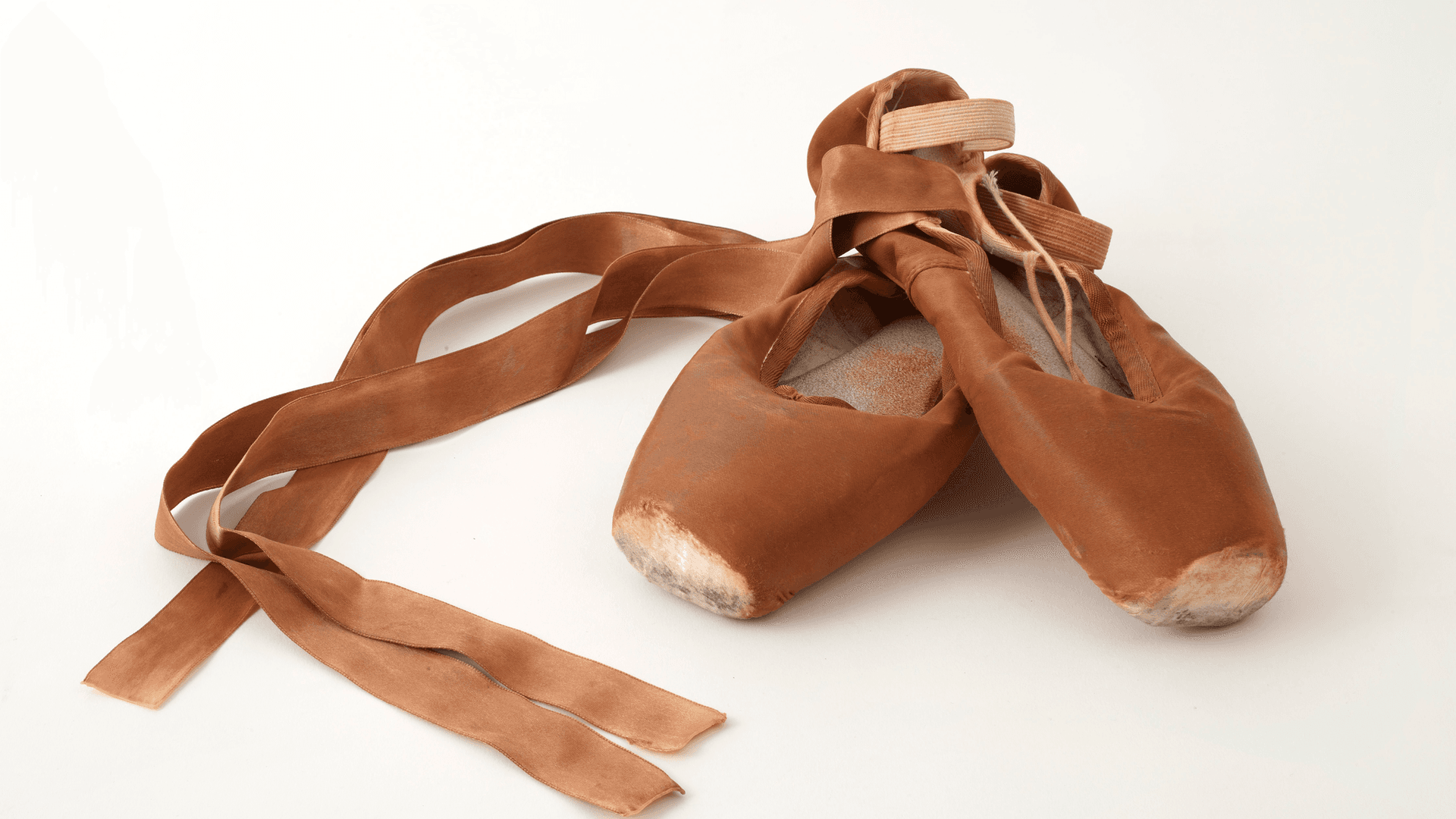
Hero image: Ballet pointe shoes (Bloch), Science History Institute, public domain. Via Wikimedia Commons.
Take our professional IQ test
Want to know your IQ? Try the first ever professional online IQ test.