Does Sunlight Make You Smarter? What the Research Shows
Does sunlight make you smarter? No study shows it raises IQ. Older adults score a little lower on cognitive tests in winter, and bright light helps slightly.
Dr. Russell T. WarneChief Scientist
Share
Sunlight has not been shown to make anyone smarter: no study has found that more sun exposure raises IQ. The nearest evidence is much narrower, with older adults scoring slightly lower on memory and thinking tests in winter and spring than in summer and autumn (a seasonal swing of about 0.14 standard deviations), and brighter indoor lighting in care homes slowing cognitive decline by just under 1 point on a 30-point screening test.
Light does change how people feel and how alert they are, largely through the body clock. This page covers where the "sunshine boosts brainpower" idea comes from, what the seasonal studies and light-therapy trials found, the industry-funded research on daylight in classrooms, and how outdoor time and short-sightedness create a correlation with intelligence that runs in a direction most people would not guess.
Where the "sunlight boosts brainpower" idea comes from
Three strands of research feed the idea. The first is vitamin D, which the skin makes when exposed to sunlight; our page on vitamin D and IQ covers that evidence and concludes that low levels track poor health more than they cause low scores.
The second is a widely shared animal study. Zhu and colleagues reported in Cell that moderate ultraviolet exposure raised blood levels of a compound called urocanic acid in mice, which crossed into the brain and was converted into the neurotransmitter glutamate. The mice then did better at learning to stay on a rotating rod and at recognising objects. It is an interesting mechanism, but it was shown in mice, and no study has tested it against human intelligence.
The third is the effect of light on alertness. Souman and colleagues reviewed 68 studies that changed the intensity or colour of light. Brighter white light raised people's ratings of how alert they felt in most studies, though many found no effect. Far fewer studies measured alertness with reaction-time tasks, and very few of those found a significant effect. The authors noted that most studies were small. Feeling more awake under bright light is a real experience, but it shows up much more weakly on objective tests.
Seasons, sunshine and test scores
The strongest evidence that the time of year affects thinking comes from Lim and colleagues, who analysed 3,353 older adults from five cohort studies in the United States, Canada and France. Average scores on a composite of memory and thinking tests were higher in summer and autumn than in winter and spring. The size of the seasonal swing was 0.14 standard deviations by the authors' measure, and they calculated that the summer-to-winter difference was equivalent to 4.8 years of age-related decline. The odds of meeting criteria for mild cognitive impairment or dementia were about 1.3 times higher in winter and spring. The pattern held after adjusting for depressive symptoms, sleep, physical activity and thyroid function. Season is not the same as sunlight, though, and temperature, illness and daily routines also change through the year.
Kent and colleagues tested sunlight more directly in 16,800 adults aged 45 and over from the REGARDS cohort, using satellite measurements of the sunlight reaching each person's area on the day of testing and over the previous two weeks. Among participants with depression, lower sunlight was linked to higher odds of scoring in the impaired range on a six-item cognitive screening test (odds ratio 2.58). Among participants without depression, no such link appeared. This was a cross-sectional study using a short screen for impairment, so it says nothing about IQ in healthy adults. The link with depression fits what is known about seasonal mood changes, which our page on the link between IQ and depression discusses.
Weather may matter in a narrower way. Across three studies with 605 participants, Keller and colleagues found that pleasant spring weather was linked to better mood and better memory, but only in people who spent more time outdoors, and an experiment that assigned people to go outside confirmed the pattern. In summer, hotter weather was linked to lower mood.
Bright light therapy and cognition
The best trial of light and thinking was done in Dutch care homes. Riemersma-van der Lek and colleagues randomized 12 group-care facilities to whole-day bright lighting (about 1,000 lux) or dimmer standard lighting (about 300 lux), with 189 residents, most of whom had dementia, followed for an average of 15 months. Bright light slowed the decline on the Mini-Mental State Examination (MMSE), a 30-point dementia screening test, by 0.9 points, a relative difference of 5%. It also reduced depressive symptoms. The researchers chose light because it is one of the main signals that sets the body's internal clock, which governs sleep; our page on how sleep affects IQ and cognitive performance explains why that clock matters for thinking.
The wider evidence is less encouraging. A Cochrane review by Forbes and colleagues of 11 randomized trials (8 with usable data) found no effect of light therapy on cognitive function in people with dementia. Light therapy is used clinically for seasonal depression, and anyone considering it for low mood or memory problems should talk to a doctor first.
Daylight in classrooms
The most quoted figures on sunlight and learning come from a 1999 study by the Heschong Mahone Group, a lighting-design consultancy, supported by a California energy-efficiency board and administered by the Pacific Gas and Electric Company. The team rated more than 2,000 classrooms in three school districts on a 0-to-5 daylight scale and analysed test scores for more than 21,000 elementary students. In the Capistrano district in California, students in the classrooms with the most daylight progressed 20% to 26% faster on maths and reading tests over the school year than those with the least. These were conference and industry reports, later summarised in a lighting-engineering journal.
The group's own follow-up was less flattering. In more than 8,000 students in 450 classrooms in Fresno, the daylight rating did not predict test progress. When window details were added, daylight even became a negative factor. A better view out of the window was linked to faster learning, while glare and direct sun hitting desks were linked to slower learning.
A later peer-reviewed study by Barrett and colleagues of 3,766 pupils in 153 primary-school classrooms found that seven design features, including light, temperature and air quality, together explained 16% of the variation in pupils' academic progress over a year. All of this work is observational and concerns school test progress, not IQ.
Outdoor time, short sight and a misleading correlation
Time outdoors, where children get far more light, does protect one thing: their eyesight. In a cluster randomized trial in Guangzhou, China, adding a 40-minute outdoor class to each school day cut the three-year rate of new short-sightedness (myopia) from 39.5% to 30.4%.
Myopia, in turn, is more common in children with higher IQ scores. In 1,204 schoolchildren in Singapore, those in the top quarter of nonverbal IQ had 2.4 times the odds of being myopic compared with those in the bottom quarter, after adjusting for reading, parental myopia and other factors. A Mendelian randomization study of UK adults, which uses genetic variants as natural experiments, found that more years of education cause more myopia, while myopia had no detectable effect on education.
Put together, these studies suggest that time spent indoors on schoolwork goes with both more short sight and higher scores, while time in the sun goes with healthier eyes. A naive reading of the data would suggest that sunlight makes children less smart, an inference no better supported than the popular one. The same caution applies to adults: healthy, active people spend more time outdoors, and illness keeps people inside, so sun exposure tracks health more than it shapes intelligence.
Frequently asked questions
Does sunlight increase IQ?
No study has shown that sunlight raises IQ. The evidence covers narrower outcomes, such as seasonal changes in older adults' memory and thinking scores and small effects of bright light in people with dementia.
Do people think better in summer?
Older adults in one large analysis scored slightly higher on memory and thinking tests in summer and autumn than in winter and spring. The swing was small, and season brings many changes besides sunlight.
Does vitamin D from sunlight make you smarter?
Low vitamin D is linked to lower cognitive scores, but supplement trials have not shown that raising vitamin D improves intelligence. The link mostly reflects general health.
Do classrooms with more daylight produce better test scores?
An industry-funded 1999 study found faster progress in the most daylit classrooms, but a larger follow-up in Fresno did not replicate it. Views, glare and other room features seem to matter as much as the amount of daylight.
Can bright light therapy improve memory?
One long trial in care homes found that bright lighting slowed decline on a dementia screening test slightly, but a Cochrane review of 11 trials found no effect on cognition overall. Anyone worried about memory changes should speak with a doctor.
The takeaway
Sunlight does not make you smarter in any sense that an IQ test would detect. Light affects mood and the body clock, and older adults' cognitive scores dip slightly in winter, but those effects are small, and much of the link between sun exposure and thinking reflects health, education and depression. If you want a reliable measure of your reasoning ability, try an online IQ test built by psychometricians.
References
1. Zhu, H., Wang, N., Yao, L., Chen, Q., Zhang, R., Qian, J., Hou, Y., Guo, W., Fan, S., Liu, S., Zhao, Q., Du, F., Zuo, X., Guo, Y., Xu, Y., Li, J., Li, J., Xue, T., Zhong, K., ... Xiong, W. (2018). Moderate UV exposure enhances learning and memory by promoting a novel glutamate biosynthetic pathway in the brain. Cell, 173(7), 1716-1727. [doi.org/10.1016/j.cell.2018.04.014](. doi.org
2. Souman, J. L., Tinga, A. M., Te Pas, S. F., van Ee, R., & Vlaskamp, B. N. S. (2018). Acute alerting effects of light: A systematic literature review. Behavioural Brain Research, 337, 228-239. [doi.org/10.1016/j.bbr.2017.09.016](. doi.org
3. Lim, A. S. P., Gaiteri, C., Yu, L., Sohail, S., Swardfager, W., Tasaki, S., Schneider, J. A., Paquet, C., Stuss, D. T., Masellis, M., Black, S. E., Hugon, J., Buchman, A. S., Barnes, L. L., Bennett, D. A., & De Jager, P. L. (2018). Seasonal plasticity of cognition and related biological measures in adults with and without Alzheimer disease: Analysis of multiple cohorts. PLoS Medicine, 15(9), e1002647. [doi.org/10.1371/journal.pmed.1002647](. doi.org
4. Kent, S. T., McClure, L. A., Crosson, W. L., Arnett, D. K., Wadley, V. G., & Sathiakumar, N. (2009). Effect of sunlight exposure on cognitive function among depressed and non-depressed participants: A REGARDS cross-sectional study. Environmental Health, 8, 34. [doi.org/10.1186/1476-069X-8-34](. doi.org
5. Keller, M. C., Fredrickson, B. L., Ybarra, O., Côté, S., Johnson, K., Mikels, J., Conway, A., & Wager, T. (2005). A warm heart and a clear head: The contingent effects of weather on mood and cognition. Psychological Science, 16(9), 724-731. [doi.org/10.1111/j.1467-9280.2005.01602.x](. doi.org
6. Riemersma-van der Lek, R. F., Swaab, D. F., Twisk, J., Hol, E. M., Hoogendijk, W. J. G., & Van Someren, E. J. W. (2008). Effect of bright light and melatonin on cognitive and noncognitive function in elderly residents of group care facilities: A randomized controlled trial. JAMA, 299(22), 2642-2655. [doi.org/10.1001/jama.299.22.2642](. doi.org
7. Forbes, D., Blake, C. M., Thiessen, E. J., Peacock, S., & Hawranik, P. (2014). Light therapy for improving cognition, activities of daily living, sleep, challenging behaviour, and psychiatric disturbances in dementia. Cochrane Database of Systematic Reviews, 2014(2), CD003946. [doi.org/10.1002/14651858.CD003946.pub4](. doi.org
8. Heschong, L., Wright, R. L., & Okura, S. (2000). Daylighting and productivity: Elementary school studies. Proceedings of the 2000 ACEEE Summer Study on Energy Efficiency in Buildings, Panel 8. American Council for an Energy-Efficient Economy. [eceee.org](. eceee.org
9. Heschong, L., Wright, R. L., & Okura, S. (2002). Daylighting impacts on human performance in school. Journal of the Illuminating Engineering Society, 31(2), 101-114. [doi.org/10.1080/00994480.2002.10748396](. doi.org
10. Aumann, D., Heschong, L., Wright, R., & Peet, R. (2004). Windows and classrooms: Student performance and the indoor environment. Proceedings of the 2004 ACEEE Summer Study on Energy Efficiency in Buildings, Panel 7. American Council for an Energy-Efficient Economy. [aceee.org](. aceee.org
11. Barrett, P., Davies, F., Zhang, Y., & Barrett, L. (2015). The impact of classroom design on pupils' learning: Final results of a holistic, multi-level analysis. Building and Environment, 89, 118-133. [doi.org/10.1016/j.buildenv.2015.02.013](. doi.org
12. He, M., Xiang, F., Zeng, Y., Mai, J., Chen, Q., Zhang, J., Smith, W., Rose, K., & Morgan, I. G. (2015). Effect of time spent outdoors at school on the development of myopia among children in China: A randomized clinical trial. JAMA, 314(11), 1142-1148. [doi.org/10.1001/jama.2015.10803](. doi.org
13. Saw, S.-M., Tan, S.-B., Fung, D., Chia, K.-S., Koh, D., Tan, D. T. H., & Stone, R. A. (2004). IQ and the association with myopia in children. Investigative Ophthalmology & Visual Science, 45(9), 2943-2948. [doi.org/10.1167/iovs.03-1296](. doi.org
14. Mountjoy, E., Davies, N. M., Plotnikov, D., Smith, G. D., Rodriguez, S., Williams, C. E., Guggenheim, J. A., & Atan, D. (2018). Education and myopia: Assessing the direction of causality by mendelian randomisation. BMJ, 361, k2022. [doi.org/10.1136/bmj.k2022](. doi.org
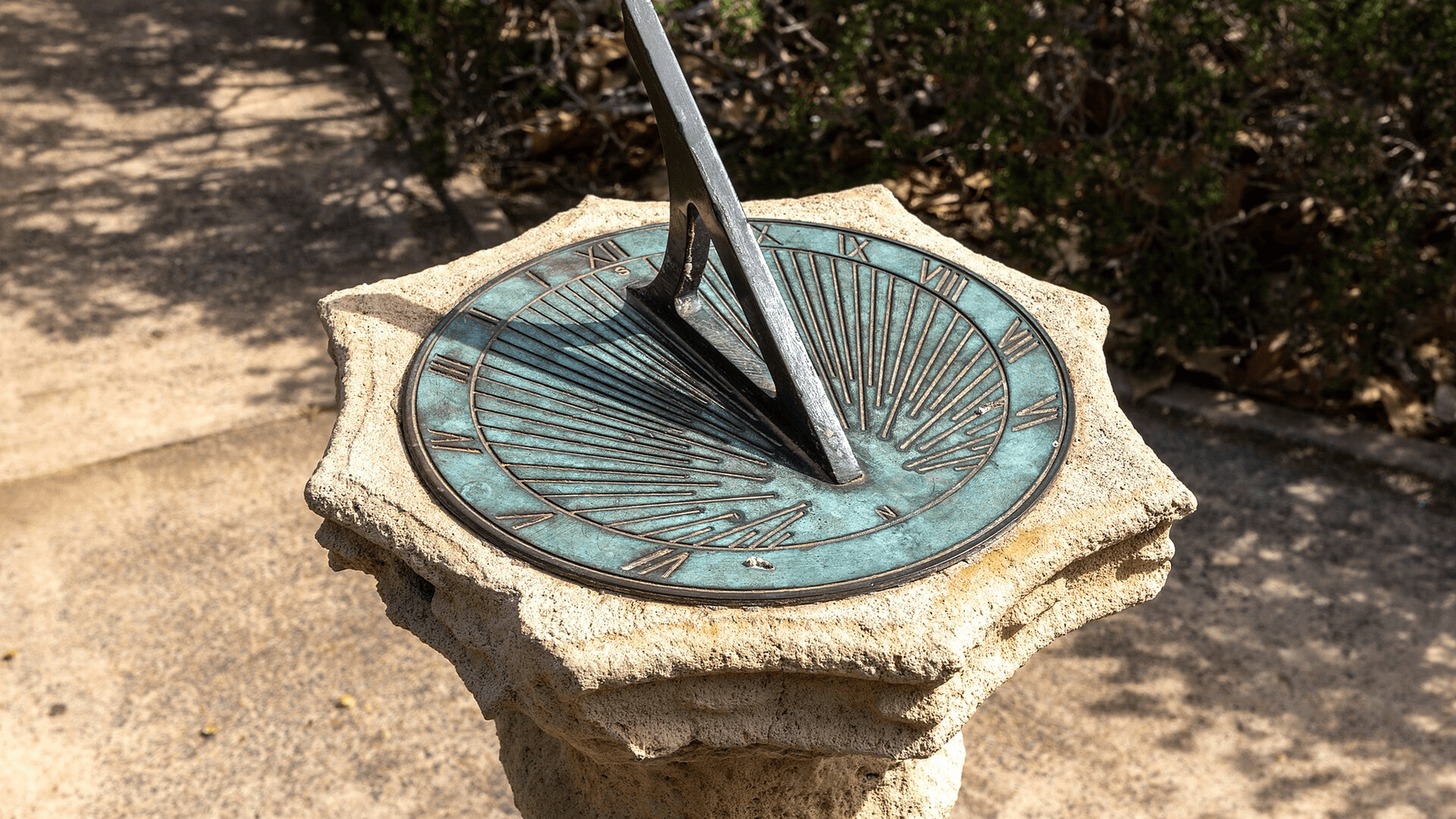
Hero image: Canberra (AU), Albert Hall, Sundial, by Dietmar Rabich, CC BY-SA 4.0. Via Wikimedia Commons.
Take our professional IQ test
Want to know your IQ? Try the first ever professional online IQ test.