Does Tennis Make You Smarter? What the Research Shows for IQ | Riot IQ
Oct 29, 2026·Advanced Topics & Research
Does Tennis Make You Smarter? What the Research Shows for IQ
Does tennis make you smarter? No study shows an IQ gain. Skilled players read the game better, but gains on general cognitive tests are small.
Dr. Russell T. WarneChief Scientist
Share
Tennis has not been shown to make anyone smarter: no study has measured IQ before and after taking up the sport. Skilled athletes in fast ball sports do score better than less skilled ones on cognitive tests, but a 2021 meta-analysis found the gap was largest on sport-like decision tasks (about 0.8 of a standard deviation) and smaller on general tests (about 0.4), and none of these designs can show that playing caused the difference.
What tennis clearly builds is tennis skill, including the ability to read an opponent's serve before the ball is struck. This page covers where the idea comes from, what expert players are actually better at, what the few training studies found, and why the people who play tennis may differ from those who do not before they ever pick up a racket.
Why people think tennis sharpens the mind
Tennis looks like a thinking sport. A first serve can cross the court in well under a second, so players have to predict where the ball is going from the server's body before it is hit and choose a reply almost at once. Those demands overlap with "executive functions", the mental skills used to plan, inhibit a first impulse and switch between tasks, and with fast reaction times.
Health headlines add to the impression. In the Copenhagen City Heart Study, which followed 8,577 adults for up to 25 years, tennis players lived an estimated 9.7 years longer than sedentary people after adjusting for confounders, the largest gain of any sport studied (the figure for cycling was 3.7 years). A pooled British cohort of 80,306 adults found that people who played racket sports had a 47% lower risk of death during follow-up (hazard ratio 0.53). Both studies measured death, not thinking ability, and both were observational. The Copenhagen authors noted that the sports with the most social interaction were linked to the longest lives, which points to who plays as much as to what the game does.
What expert players are actually better at
The clearest finding in this area is that expert players are better at perceiving their own sport.
• Reading the serve: Williams and colleagues showed tennis players realistic film of opponents' strokes. The 8 skilled players were faster than the 8 less skilled players at anticipating which way each shot would go, partly because they searched the scene more effectively with their eyes. Recreational players who then received perceptual training improved on laboratory and on-court tests of anticipation compared with placebo and control groups. This is the skill that tennis practice builds.
• Experts across sports: Mann and colleagues' 2007 meta-analysis of 42 studies found that experts in many sports picked up perceptual cues more accurately and faster than non-experts, and looked at a scene with fewer, longer fixations. The effects depended on the sport and on how closely the test resembled the real game.
• General cognitive tests: Kalén and colleagues pooled 142 studies with 8,860 athletes. Higher-skilled athletes outscored lower-skilled ones overall (Hedges' g = 0.59). The gap was largest on cognitive decision-making tasks (g = 0.77), smaller on tests of basic cognitive functions (g = 0.39) and higher cognitive functions (g = 0.44), and larger when the test used sport-specific images. An earlier meta-analysis by Voss and colleagues reported that athletes from interceptive sports, the group that includes tennis, showed the largest advantages on laboratory tests of processing speed and attention.
These figures are cognitive-test differences between groups of athletes, not IQ scores and not training effects. A g of 0.4 would be about 6 points if it were on an IQ scale (multiplying by the 15-point standard deviation), but these tests are narrow and are not scored that way.
The best-known studies of elite athletes did not include tennis players. Faubert trained 308 people on a computer task that required tracking several moving balls in 3D. Professional soccer, ice hockey and rugby players learned the task much faster than elite amateurs, who in turn learned faster than university students. Vestberg and colleagues found that 57 Swedish soccer players scored above test norms on a design fluency test of executive function, and that scores predicted goals and assists two seasons later. Both are the nearest evidence for tennis, and both compare people who have already reached the top of a sport. Kalén's review found only 11 prospective studies and judged the evidence too thin to say whether general cognitive tests predict who will succeed.
Does playing tennis improve thinking?
Training studies are few and small. In 106 junior tennis players aged 6 to 15, Ishihara and colleagues found that those who played more often had better working memory, after allowing for age, gender, body mass index and years of experience. That study was cross-sectional. A follow-up allocated 32 children who already played once a week either to keep that schedule or to play four times a week for 12 months. The high-dose group (13 children) improved more on working memory than the low-dose group (19 children). That is an encouraging result in a very small sample, and working memory is one part of what an IQ test measures, not IQ itself.
Table tennis has more trials, mostly in older adults. A 2026 meta-analysis of 14 randomized trials with 1,565 participants reported a pooled effect on cognitive function of 2.05 standard deviations. Taken at face value that would be about 30 points on an IQ scale, which no exercise programme has ever been shown to produce. The authors themselves noted considerable heterogeneity and methodological limitations, and an effect that size usually reflects small, uneven trials more than a real change in ability.
The wider exercise literature gives a better sense of scale. An umbrella review of randomized trials found an average benefit of exercise on cognition of d = 0.22, which fell to 0.13 after accounting for active control groups and baseline differences, and to 0.05 after correcting for publication bias. Our page on whether exercise can affect your IQ score covers that literature in full. Tennis is good exercise, and there is no sign that it is a special case.
Near transfer, far transfer and who picks up a racket
Psychologists separate "near transfer" (getting better at the trained skill and things very like it) from "far transfer" (gains in broad abilities such as general intelligence). The tennis research fits the near-transfer pattern well: players get better at reading tennis, and the advantage shrinks as the test moves further from the court. Sala and Gobet's meta-analyses of chess, music and working-memory training found that far-transfer effects fade as study quality improves, the same conclusion reached in our analysis of whether chess makes you smarter.
Speed is a related case. Experienced players react quickly to a tennis ball, and reaction time on laboratory tasks does correlate modestly with IQ: a review of 172 studies by Sheppard and Vernon found an average correlation of about r = -0.24, with faster responders scoring higher. Our page on the correlation between IQ and reaction time covers that research. Fast returns on court come mostly from anticipation learned through practice, so they do not show faster general processing.
Selection matters at least as much. Tennis needs courts and coaching, so the children who play regularly come disproportionately from families with more money and more educated parents, both of which predict higher test scores. Players who stay in the sport into adulthood tend to be healthier and more socially active, which also predicts better cognitive ageing. People who are already quick to learn complex visual tasks may also be the ones who rise to an elite level. Any comparison of tennis players with non-players inherits those differences.
Frequently asked questions
Does tennis make you smarter?
No study has shown that tennis raises IQ. Skilled players are better at reading the game, and the small training studies that exist found gains on narrow tests such as working memory.
Is tennis good for the brain?
Tennis is aerobic exercise with high mental demands, and regular exercise is linked to modest benefits on some cognitive tests. Observational studies also link racket sports to longer life, though they cannot show the sport is the cause.
Are tennis players more intelligent than other people?
There are no good data comparing the IQ of tennis players with that of non-players. Studies of athletes show advantages on sport-related tasks and smaller ones on general tests, and they cannot separate the effect of playing from who chooses to play.
Does tennis improve reaction time?
Practice makes players faster at responding to a tennis ball, mostly because they learn to anticipate where it is going. That skill is specific to the sport and is not the same as faster general processing speed.
Is table tennis better for the brain than tennis?
No trial has compared the two directly. Table tennis has more trials in older adults, but they are small and varied, and anyone worried about memory changes should talk to a doctor.
The takeaway
Tennis is a demanding, sociable form of exercise that makes people very good at reading tennis. There is no evidence that it makes you smarter in the sense of raising IQ, and most of what makes elite players look sharp on cognitive tests is either specific to their sport or present before they started. If you want an accurate measure of your reasoning ability, try an online IQ test built by psychometricians.
References
1. Schnohr, P., O'Keefe, J. H., Holtermann, A., Lavie, C. J., Lange, P., Jensen, G. B., & Marott, J. L. (2018). Various leisure-time physical activities associated with widely divergent life expectancies: The Copenhagen City Heart Study. Mayo Clinic Proceedings, 93(12), 1775-1785. [doi.org/10.1016/j.mayocp.2018.06.025](. doi.org
2. Oja, P., Kelly, P., Pedisic, Z., Titze, S., Bauman, A., Foster, C., ... Stamatakis, E. (2017). Associations of specific types of sports and exercise with all-cause and cardiovascular-disease mortality: A cohort study of 80 306 British adults. British Journal of Sports Medicine, 51(10), 812-817. [doi.org/10.1136/bjsports-2016-096822](. doi.org
3. Williams, A. M., Ward, P., Knowles, J. M., & Smeeton, N. J. (2002). Anticipation skill in a real-world task: Measurement, training, and transfer in tennis. Journal of Experimental Psychology: Applied, 8(4), 259-270. [doi.org/10.1037/1076-898X.8.4.259](. doi.org
4. Mann, D. T. Y., Williams, A. M., Ward, P., & Janelle, C. M. (2007). Perceptual-cognitive expertise in sport: A meta-analysis. Journal of Sport and Exercise Psychology, 29(4), 457-478. [doi.org/10.1123/jsep.29.4.457](. doi.org
5. Kalén, A., Bisagno, E., Musculus, L., Raab, M., Pérez-Ferreirós, A., Williams, A. M., Araújo, D., Lindwall, M., & Ivarsson, A. (2021). The role of domain-specific and domain-general cognitive functions and skills in sports performance: A meta-analysis. Psychological Bulletin, 147(12), 1290-1308. [doi.org/10.1037/bul0000355](. doi.org
6. Voss, M. W., Kramer, A. F., Basak, C., Prakash, R. S., & Roberts, B. (2010). Are expert athletes 'expert' in the cognitive laboratory? A meta-analytic review of cognition and sport expertise. Applied Cognitive Psychology, 24(6), 812-826. [doi.org/10.1002/acp.1588](. doi.org
7. Faubert, J. (2013). Professional athletes have extraordinary skills for rapidly learning complex and neutral dynamic visual scenes. Scientific Reports, 3, 1154. [doi.org/10.1038/srep01154](. doi.org
8. Vestberg, T., Gustafson, R., Maurex, L., Ingvar, M., & Petrovic, P. (2012). Executive functions predict the success of top-soccer players. PLOS ONE, 7(4), e34731. [doi.org/10.1371/journal.pone.0034731](. doi.org
9. Ishihara, T., Sugasawa, S., Matsuda, Y., & Mizuno, M. (2017). Relationship of tennis play to executive function in children and adolescents. European Journal of Sport Science, 17(8), 1074-1083. [doi.org/10.1080/17461391.2017.1334831](. doi.org
10. Ishihara, T., & Mizuno, M. (2018). Effects of tennis play on executive function in 6-11-year-old children: A 12-month longitudinal study. European Journal of Sport Science, 18(5), 741-752. [doi.org/10.1080/17461391.2018.1444792](. doi.org
11. Li, H., Ahn, H., & Shin, M. (2026). Table tennis as a sustainable health intervention: A meta-analysis of its effects on balance and cognitive functions. Healthcare, 14(5), 675. [doi.org/10.3390/healthcare14050675](. doi.org
12. Ciria, L. F., Román-Caballero, R., Vadillo, M. A., Holgado, D., Luque-Casado, A., Perakakis, P., & Sanabria, D. (2023; corrected 2026). An umbrella review of randomized control trials on the effects of physical exercise on cognition. Nature Human Behaviour, 7(6), 928-941. [doi.org/10.1038/s41562-023-01554-4](. doi.org
13. Sala, G., & Gobet, F. (2017). Does far transfer exist? Negative evidence from chess, music, and working memory training. Current Directions in Psychological Science, 26(6), 515-520. [doi.org/10.1177/0963721417712760](. doi.org
14. Sheppard, L. D., & Vernon, P. A. (2008). Intelligence and speed of information-processing: A review of 50 years of research. Personality and Individual Differences, 44(3), 535-551. [doi.org/10.1016/j.paid.2007.09.015](. doi.org
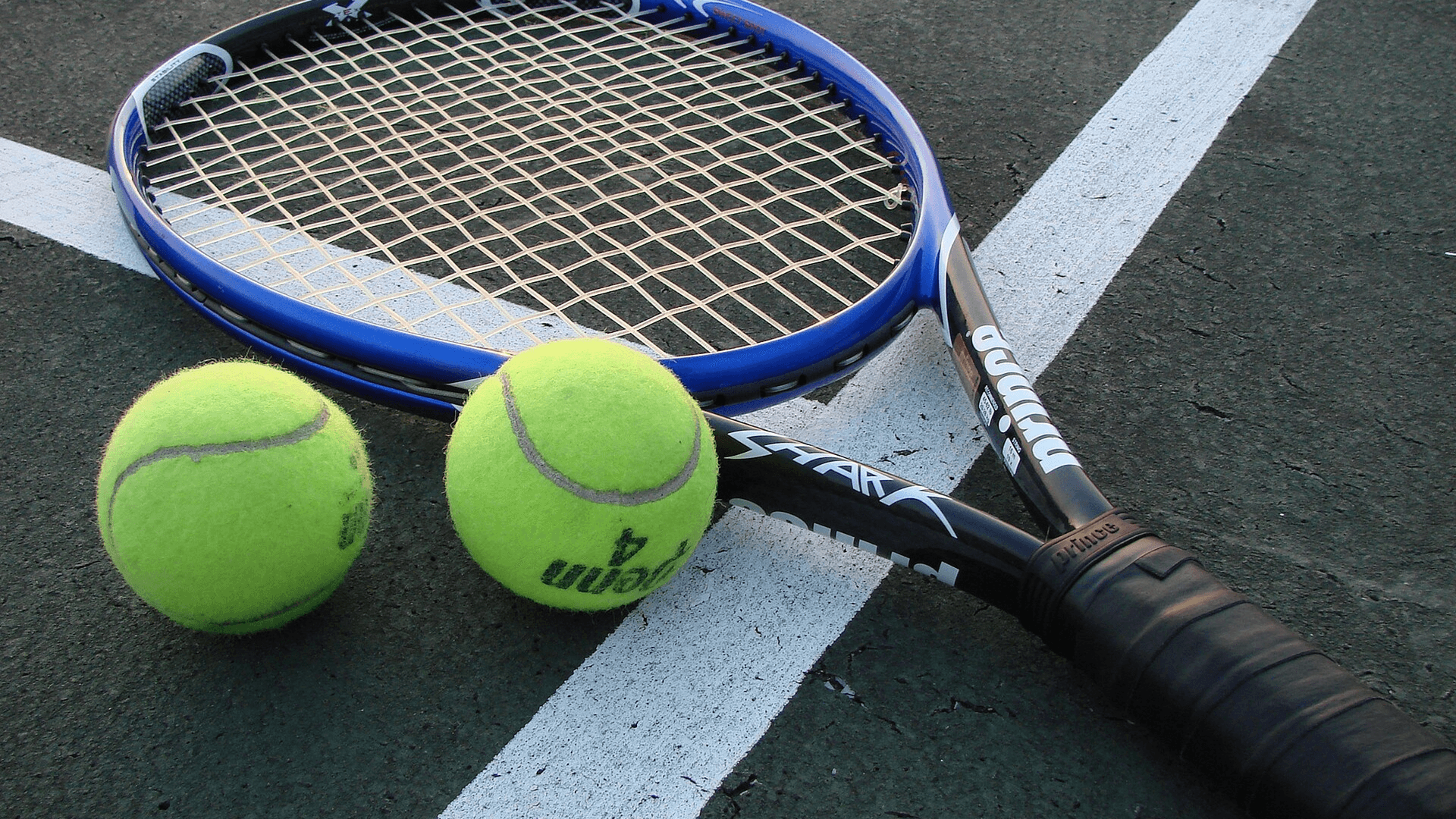
Hero image: Tennis Racket and Balls, by Vladsinger, CC BY-SA 3.0. Via Wikimedia Commons.
Take our professional IQ test
Want to know your IQ? Try the first ever professional online IQ test.