Does Watching Documentaries Make You Smarter? What the Research Shows | Riot IQ
Oct 30, 2026·Advanced Topics & Research
Does Watching Documentaries Make You Smarter? What the Research Shows
Does watching documentaries make you smarter? They raise knowledge of the topic, but no study shows an IQ gain, and viewers often overrate what they learned.
Dr. Russell T. WarneChief Scientist
Share
Watching documentaries makes you more knowledgeable about the topics they cover, but no study has shown that it raises IQ. The nearest evidence is a meta-analysis of 105 randomized trials of educational video, which found knowledge gains of about 0.28 of a standard deviation when video replaced other teaching and 0.80 when it was added to existing teaching; those were scores on course tests, not on intelligence tests.
That distinction runs through this page. Below I cover what viewers actually take away from a documentary, why the feeling of having learned a lot can outrun the real gain, how knowledge differs from the reasoning ability an IQ test measures, and why the people who choose documentaries may differ from other viewers before they press play.
What viewers learn from a documentary
I could not find any study that measured IQ before and after a period of documentary viewing. What researchers have measured is whether viewers know more about the film's subject afterwards, and the answer is usually yes.
• An Inconvenient Truth: Jessica Nolan ran two studies, one with community moviegoers and one with students. Watching the film increased knowledge about the causes of global warming, as well as concern about it. In the student study, viewers' stated willingness to act did not translate into action a month later.
• Blue Planet II: Dunn and colleagues ran randomized trials of the BBC nature series and measured real plastic-buying choices afterwards. Viewers' environmental knowledge rose, but their plastic consumption did not change.
• Educational video in general: Michael Noetel and colleagues pooled 105 randomized trials with 7,776 university students. Swapping video in for existing teaching led to small improvements in learning (Hedges' g = 0.28), and adding video to existing teaching led to large ones (g = 0.80). The authors cautioned that some of the results may reflect experimental and publication biases.
These studies tell a consistent story. A well-made film can teach facts, and those facts can be measured. Converted to an IQ-style scale, a g of 0.28 would be about 4 points (0.28 multiplied by the 15-point standard deviation), but that conversion is only an illustration. The outcomes were tests of the material that had just been taught, which is a much narrower thing than general intelligence. University courses also come with assignments and exams, which a documentary watched on a sofa does not.
Why it can feel like more learning than it is
Documentaries are built to be easy to follow. Smooth narration and striking images make the content feel understood, and research on video learning shows that this feeling is an unreliable guide.
• Fluent presenters: Shana Carpenter and colleagues showed students one of two short videos of the same scientific explanation. In one the instructor stood upright and spoke fluidly without notes; in the other the instructor slumped and spoke haltingly from notes. Students rated the fluent video as more effective and predicted they would remember more, yet the two groups learned the same amount.
• Overconfidence after video: Karl Szpunar, Helen Jing and Daniel Schacter found that students watching recorded lectures tended to be overconfident about how much they had learned, and that short tests inserted during the video brought their predictions closer to their actual performance.
• The illusion of explanatory depth: Leonid Rozenblit and Frank Keil showed that people believe they understand how things work in far more detail than they do. The illusion was strongest for explanations of mechanisms, which is the kind of content many science documentaries specialise in.
There is an older idea in the same direction. In Gavriel Salomon's 1984 study of 124 sixth graders, children saw television as the "easy" medium and print as the "tough" one, and he argued that this perception affects how much mental effort viewers invest. Documentaries still teach real facts. The sense of having become cleverer after a good film is simply weak evidence that anything durable has changed.
Knowledge is not the same as a higher IQ
Psychologists separate "crystallized intelligence", the store of knowledge and vocabulary a person has built up, from "fluid intelligence", the ability to reason about new problems. Our explainer on what crystallized intelligence is covers the distinction in detail. Documentaries feed the first kind directly. Some IQ tests include general-knowledge and vocabulary sections, so a person who watched hundreds of documentaries might answer a few more of those items correctly. That would be a gain in measured knowledge, and it would not show up on the reasoning and spatial sections that make up much of a full-scale IQ score.
The house frame for questions like this is "near transfer" versus "far transfer". Near transfer means getting better at the thing you practised and things very like it. Far transfer means gains in broad abilities such as general intelligence. Giovanni Sala and Fernand Gobet's meta-analyses of chess, music and working-memory training found that far-transfer effects shrink toward zero as study quality improves. A documentary about volcanoes will make you better at questions about volcanoes, and there is no evidence that it improves reasoning about unrelated problems.
The one experience with solid evidence of raising IQ scores is schooling. Stuart Ritchie and Elliot Tucker-Drob's meta-analysis of 42 data sets found that each additional year of education raised IQ by about 1 to 5 points. Schooling involves years of structured instruction with regular practice and exams. Nobody has tested whether years of informal documentary viewing produce anything comparable, and it would be a mistake to assume they do.
Who chooses to watch documentaries?
People who watch a lot of documentaries are not a random sample of viewers, and that matters for any comparison between them and everyone else.
• Taste for factual content: In Jason Rentfrow and colleagues' study of entertainment preferences in more than 3,000 people, documentary film belonged to a "Cerebral" cluster that also included news and educational television. Preference for that cluster was linked to describing oneself as intellectual and enterprising, yet it was essentially unrelated to scores on a short reasoning test (r = −.03 in a community sample of 599).
• A twist in the same data: Documentary film also loaded almost as strongly on an "Aesthetic" cluster that included foreign films and poetry, and preference for that cluster correlated about .29 with the reasoning test. Which documentaries a person watches, and alongside what else, may matter more than the label.
• Education and curiosity: Viewers with more years of schooling and a stronger appetite for ideas are more likely to seek out factual programmes. Both are themselves related to intellect. Sophie von Stumm and Phillip Ackerman's meta-analysis of 112 studies found that "investment traits" such as intellectual curiosity correlate on average about .30 with markers of adult intellect, including crystallized intelligence and acquired knowledge. A raw correlation between documentary viewing and test scores would therefore mostly reflect who watches.
Television viewing as a whole, including the debate over educational programmes for young children, is covered on our page about IQ and watching TV. For listening rather than watching, see our analysis of whether podcasts make you smarter, which reaches a similar conclusion.
Frequently asked questions
Does watching documentaries make you smarter?
Documentaries reliably increase knowledge about their subject, but no study has shown that they raise IQ. The gains measured so far are on tests of the material in the film.
Are documentaries better for learning than reading?
No study has compared documentaries with books on the same topic in adults. Meta-analytic evidence suggests that video works well alongside other teaching, and experiments show that smooth video can make people overconfident about what they have learned.
Do people who watch documentaries have higher IQs?
There is no direct study. In one large survey, a taste for factual programmes was essentially unrelated to reasoning-test scores, while a taste for arts-oriented films and books showed a modest positive correlation.
How can I remember more from a documentary?
Testing yourself helps. In experiments with recorded lectures, short quizzes during the video improved how well students judged their own learning, and explaining what you watched in your own words exposes gaps that fluent narration hides.
Is watching documentaries better than other TV for your brain?
Documentaries teach more facts than most entertainment, but there is no evidence that they protect or raise general cognitive ability more than other kinds of television.
The takeaway
Watching documentaries is a good way to learn about the world, and the research shows real knowledge gains on the topics covered. It does not show any increase in IQ, and the confident, polished style of a good documentary can make viewers feel they understand more than they do. If you want an accurate measure of your reasoning ability, rather than your general knowledge, take a full-length online IQ test.
References
1. Noetel, M., Griffith, S., Delaney, O., Sanders, T., Parker, P., del Pozo Cruz, B., & Lonsdale, C. (2021). Video improves learning in higher education: A systematic review. Review of Educational Research, 91(2), 204-236. [doi.org/10.3102/0034654321990713](. doi.org
2. Nolan, J. M. (2010). "An Inconvenient Truth" increases knowledge, concern, and willingness to reduce greenhouse gases. Environment and Behavior, 42(5), 643-658. [doi.org/10.1177/0013916509357696](. doi.org
3. Dunn, M. E., Mills, M., & Veríssimo, D. (2020). Evaluating the impact of the documentary series Blue Planet II on viewers' plastic consumption behaviors. Conservation Science and Practice, 2(10), e280. [doi.org/10.1111/csp2.280](. doi.org
4. Carpenter, S. K., Wilford, M. M., Kornell, N., & Mullaney, K. M. (2013). Appearances can be deceiving: Instructor fluency increases perceptions of learning without increasing actual learning. Psychonomic Bulletin & Review, 20(6), 1350-1356. [doi.org/10.3758/s13423-013-0442-z](. doi.org
5. Szpunar, K. K., Jing, H. G., & Schacter, D. L. (2014). Overcoming overconfidence in learning from video-recorded lectures: Implications of interpolated testing for online education. Journal of Applied Research in Memory and Cognition, 3(3), 161-164. [doi.org/10.1016/j.jarmac.2014.02.001](. doi.org
6. Rozenblit, L., & Keil, F. (2002). The misunderstood limits of folk science: An illusion of explanatory depth. Cognitive Science, 26(5), 521-562. [doi.org/10.1207/s15516709cog2605_1](. doi.org
7. Salomon, G. (1984). Television is "easy" and print is "tough": The differential investment of mental effort in learning as a function of perceptions and attributions. Journal of Educational Psychology, 76(4), 647-658. [doi.org/10.1037/0022-0663.76.4.647](. doi.org
8. Sala, G., & Gobet, F. (2017). Does far transfer exist? Negative evidence from chess, music, and working memory training. Current Directions in Psychological Science, 26(6), 515-520. [doi.org/10.1177/0963721417712760](. doi.org
9. Ritchie, S. J., & Tucker-Drob, E. M. (2018). How much does education improve intelligence? A meta-analysis. Psychological Science, 29(8), 1358-1369. [doi.org/10.1177/0956797618774253](. doi.org
10. Rentfrow, P. J., Goldberg, L. R., & Zilca, R. (2011). Listening, watching, and reading: The structure and correlates of entertainment preferences. Journal of Personality, 79(2), 223-258. [doi.org/10.1111/j.1467-6494.2010.00662.x](. doi.org
11. von Stumm, S., & Ackerman, P. L. (2013). Investment and intellect: A review and meta-analysis. Psychological Bulletin, 139(4), 841-869. [doi.org/10.1037/a0030746](. doi.org
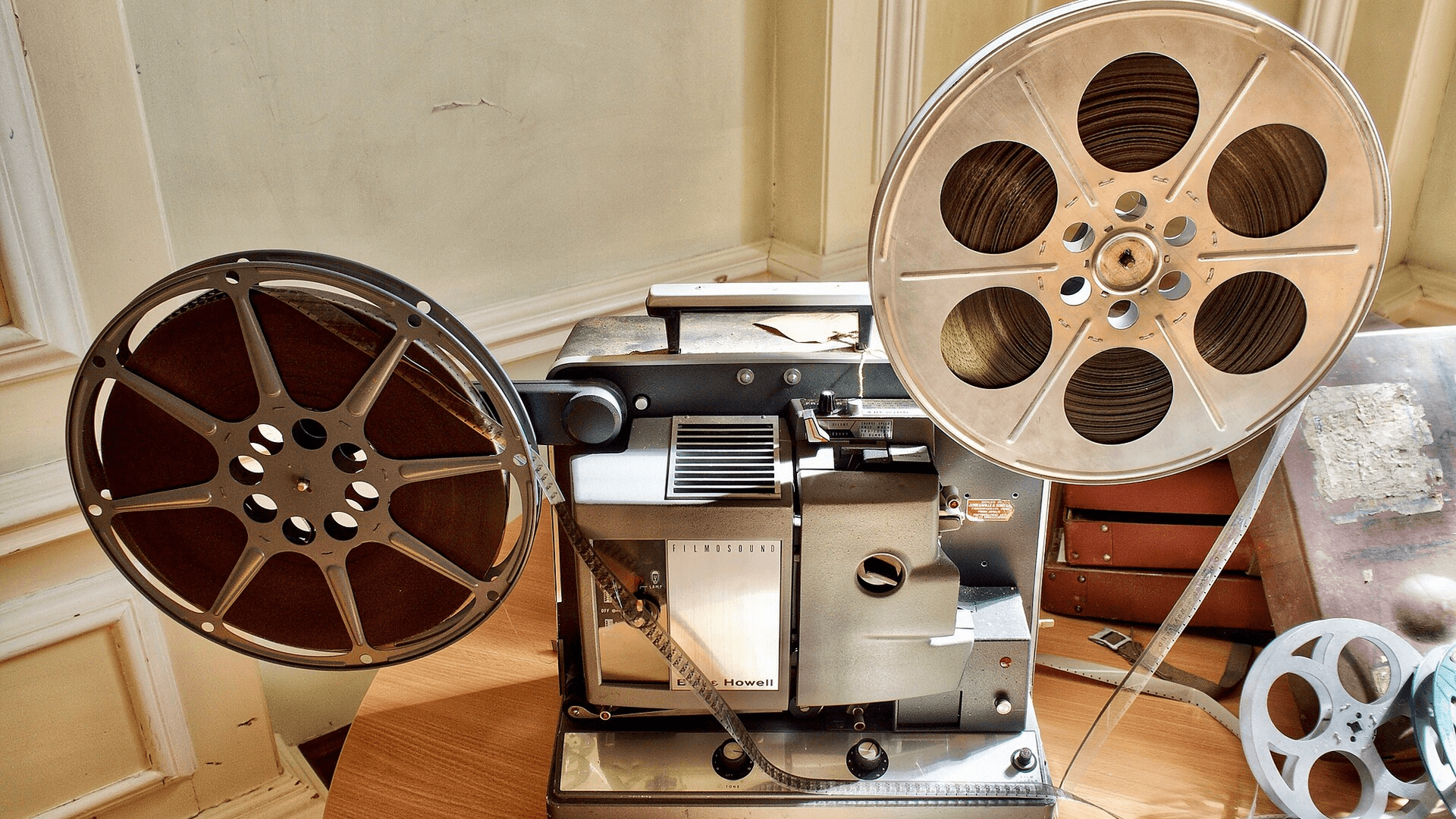
Hero image: Bell & Howell film projector, Recreation Hall, The Retreat Hospital, by Malcolmxl5, CC0. Via Wikimedia Commons.
Take our professional IQ test
Want to know your IQ? Try the first ever professional online IQ test.