Does Rosemary Make You Smarter? What the Research Shows for IQ | Riot IQ
Oct 29, 2026·Advanced Topics & Research
Does Rosemary Make You Smarter? What the Research Shows for IQ
Does rosemary make you smarter? No study has tested it on IQ. Small trials of rosemary aroma and drinks report modest, short-lived gains on memory tasks.
Dr. Russell T. WarneChief Scientist
Share
Rosemary does not make you smarter, and no study has ever measured its effect on IQ. A handful of small trials report that smelling rosemary oil or drinking rosemary water produced small, short-term gains on some memory tasks, alongside losses on others, and none of these results has been tested in a large, independent, preregistered trial.
Rosemary has carried a reputation as the herb of remembrance for centuries, and that reputation explains much of the modern interest. This page covers where the idea comes from, what the aroma and ingestion studies actually found, why the results are hard to interpret, and what the animal research adds. It describes research and is not medical advice.
Where the "herb of remembrance" idea comes from
The best-known line is from Hamlet. In Act 4, Scene 5, Ophelia hands out flowers and says, "There's rosemary, that's for remembrance. Pray you, love, remember." The association has outlived its original context, and popular wellness advice now suggests sniffing rosemary oil before an exam or keeping a sprig on a study desk.
The old symbol also affects modern research in one specific way. People who have heard that rosemary helps memory may expect to do better when they smell it, and those expectations can change how hard they try on a test. Any rosemary study that does not hide its purpose from participants has to contend with that problem, as do studies of other popular study aids such as binaural beats.
What the aroma studies found
Most of the human research comes from one group at Northumbria University in England, led by psychologist Mark Moss.
• The 2003 aroma trial: Moss and colleagues randomly assigned 144 healthy adults to complete a computerized test battery in a cubicle scented with rosemary oil, lavender oil, or no odor. Participants were told a cover story so they would not guess the study's aim. The rosemary group scored better on two combined memory factors, "quality of memory" and "secondary memory" (recall of material after a delay), but was slower on the speed-of-memory factor. Lavender worsened working memory and slowed reaction times. The rosemary group also rated themselves as more alert at the end of testing.
• The blood-level study: In a 2012 follow-up, Moss and Oliver had 20 volunteers do mental arithmetic and a visual processing task in a room diffused with rosemary oil, then took a blood sample. People with higher blood levels of 1,8-cineole, one of the main compounds in rosemary oil, tended to perform better on both speed and accuracy. Everyone smelled rosemary, so there was no comparison group, and the result is a correlation in 20 people.
• The context effect: A separate line of work at Lancaster University found that rosemary works well as a memory cue. In word-fragment tests, people who learned and were tested with the same rosemary scent in the room did better than people for whom the scent was switched. The researchers traced the effect to rosemary being distinctive and somewhat unpleasant to their participants, which makes it a strong context marker. On that account, rosemary helps recall the way any distinctive cue present at both study and test can help, with no special action on the brain.
These outcomes are scores on short memory and attention tasks. They are not IQ, and none of the papers reports results on a full intelligence test. If you want to know how those memory tasks relate to broader ability, our page on how memory tests are measured explains the difference between a single memory subtest and a complete cognitive battery.
What happens when people eat or drink rosemary
A smaller set of trials gave rosemary by mouth, which helps separate a drug-like effect from the effect of a pleasant or familiar smell.
• Dried rosemary in older adults: Pengelly and colleagues gave 28 adults with an average age of 75 a placebo or one of four doses of dried rosemary leaf powder, in a double-blind crossover design. The lowest dose, 750 milligrams (close to a normal culinary amount), improved speed of memory compared with placebo. The highest dose, 6,000 milligrams, impaired it, and other measures showed scattered harmful effects. A dose-response curve that turns downward is a reason for caution about "more is better" thinking.
• Rosemary water: In a 2018 trial by the Northumbria group, 80 healthy adults drank 250 milliliters of a commercially available rosemary water or plain mineral water before computerized testing. The authors described several "small" benefits on cognition, in line with their aroma findings.
• Capsules with a nose clip: A University of Georgia trial gave 40 young adults with low energy 1.7 grams of rosemary, black pepper, or a placebo in capsules while they wore nose clips to block smell. Rosemary produced no consistent improvement in sustained attention, and the only differences were small, isolated ones (effect size d = 0.21 for false alarms at one time point).
• A combination extract: A 2018 pilot trial gave 44 healthy adults (average age 61) an extract of sage, rosemary and lemon balm, or a placebo, for two weeks. There was no overall difference in word recall. In the subgroup under 63, delayed recall improved with an effect size of d = 0.92, but that subgroup had only 10 people taking the extract. A d of 0.92 would equal about 14 points if it were on the IQ scale (0.92 × 15), which it is not; it is a word-list score in a tiny subgroup, the kind of result that often shrinks in replication.
An Iranian trial in 68 university students also reported memory benefits after a month of 500 milligram rosemary capsules twice a day, but it relied on a self-report questionnaire about everyday forgetfulness, which is not an objective memory test.
Why the evidence is weaker than the headlines
Taken together, the human studies point in a mildly positive direction for short-term memory performance, with some losses mixed in. Several features keep that from becoming a reason to believe rosemary raises intelligence.
The samples are small, from 20 to 144 people, and much of the positive work comes from a single laboratory. I could not find a meta-analysis of human rosemary trials. Small studies with many outcome measures can produce some significant results by chance, especially when the test battery has six or more scores to compare.
Expectancy is also hard to rule out in aroma research. You cannot give someone a placebo smell that is indistinguishable from rosemary. Psychologist Rachel Herz's 2009 review of aromatherapy research concluded that psychological explanations, such as mood and expectation, accounted for the evidence better than direct drug-like action. In a placebo-controlled trial of lavender, Howard and Hughes found that what women were told to expect about the aroma changed their physiological relaxation, while the aroma itself did not.
Even the positive results describe a few minutes of better performance on specific tasks. Intelligence, as measured by IQ tests, is a broad and stable ability that shows up across many kinds of reasoning. A brief change in recall speed is closer to the effect of being more alert than to becoming smarter, and the same distinction applies to most products sold as cognitive enhancers, from ginseng capsules to turmeric supplements. Our overview of nootropics and IQ covers that wider market.
What the animal studies add
Rodent research is more abundant and more positive. A 2022 meta-analysis by Hussain and colleagues pooled 15 animal studies and found large standardized improvements on memory tasks: an effect size of 1.19 in healthy animals and 0.57 in animals with induced cognitive impairment. The authors also found substantial unexplained variation between studies, and no moderator they tested could explain it.
The Northumbria group has suggested that rosemary compounds may act on the brain's acetylcholine system, which is involved in memory, or on how the brain uses oxygen during demanding tasks. Those ideas are plausible, and they remain hypotheses. They have not been shown to change intelligence in people, and rodent maze performance is a long way from human reasoning. Animal results are a reason to run better human trials.
Frequently asked questions
Does rosemary make you smarter?
No study has shown that rosemary raises IQ or general intelligence. A few small trials found brief improvements on some memory tasks after smelling or drinking rosemary, with impairments on others.
Does smelling rosemary help you remember things for an exam?
One trial of 144 adults found better delayed recall in a rosemary-scented room, but the effect was on a laboratory test and has not been confirmed in large independent studies. A distinctive scent present during both studying and testing may work as a memory cue, and that is true of other odors too.
Is rosemary oil or rosemary water better?
Both have been studied mainly by the same research group, and both produced small effects on computerized tasks. No head-to-head trial has compared them.
Can you take too much rosemary?
In one trial of older adults, the highest dose of dried rosemary (6 grams) made speed of memory worse. Anyone thinking about concentrated rosemary extracts or oils, particularly alongside other medication, should ask a doctor or pharmacist first.
Does rosemary help with dementia?
There is no clinical evidence that rosemary prevents or treats dementia in humans. The supportive findings come from animal studies and small trials in healthy volunteers. Concerns about memory changes should be discussed with a doctor.
The takeaway
Rosemary has a famous literary reputation and a modest research record. The best human studies are small and short, many come from one laboratory, and they report small changes on memory tasks that are not IQ tests. Expectation and alertness could explain some of the findings, and higher doses may hurt rather than help. Rosemary is a good herb for cooking, and it will not change your intelligence. If you want an accurate picture of your reasoning ability, an online IQ test built by psychometricians is a better place to start.
References
1. Shakespeare, W. (n.d.). Hamlet (B. Mowat, P. Werstine, M. Poston, & R. Niles, Eds.), Act 4, Scene 5. Folger Shakespeare Library. [folger.edu](. folger.edu
2. Moss, M., Cook, J., Wesnes, K., & Duckett, P. (2003). Aromas of rosemary and lavender essential oils differentially affect cognition and mood in healthy adults. International Journal of Neuroscience, 113(1), 15-38. [doi.org/10.1080/00207450390161903](. doi.org
3. Moss, M., & Oliver, L. (2012). Plasma 1,8-cineole correlates with cognitive performance following exposure to rosemary essential oil aroma. Therapeutic Advances in Psychopharmacology, 2(3), 103-113. [doi.org/10.1177/2045125312436573](. doi.org
4. Ball, L. J., Shoker, J., & Miles, J. N. V. (2010). Odour-based context reinstatement effects with indirect measures of memory: The curious case of rosemary. British Journal of Psychology, 101(4), 655-678. [doi.org/10.1348/000712609X479663](. doi.org
5. Pengelly, A., Snow, J., Mills, S. Y., Scholey, A., Wesnes, K., & Butler, L. R. (2012). Short-term study on the effects of rosemary on cognitive function in an elderly population. Journal of Medicinal Food, 15(1), 10-17. [doi.org/10.1089/jmf.2011.0005](. doi.org
6. Moss, M., Smith, E., Milner, M., & McCready, J. (2018). Acute ingestion of rosemary water: Evidence of cognitive and cerebrovascular effects in healthy adults. Journal of Psychopharmacology, 32(12), 1319-1329. [doi.org/10.1177/0269881118798339](. doi.org
7. Lindheimer, J. B., Loy, B. D., & O'Connor, P. J. (2013). Short-term effects of black pepper (Piper nigrum) and rosemary (Rosmarinus officinalis and Rosmarinus eriocalyx) on sustained attention and on energy and fatigue mood states in young adults with low energy. Journal of Medicinal Food, 16(8), 765-771. [doi.org/10.1089/jmf.2012.0216](. doi.org
8. Perry, N. S. L., Menzies, R., Hodgson, F., Wedgewood, P., Howes, M.-J. R., Brooker, H. J., Wesnes, K. A., & Perry, E. K. (2018). A randomised double-blind placebo-controlled pilot trial of a combined extract of sage, rosemary and melissa, traditional herbal medicines, on the enhancement of memory in normal healthy subjects, including influence of age. Phytomedicine, 39, 42-48. [doi.org/10.1016/j.phymed.2017.08.015](. doi.org
9. Nematolahi, P., Mehrabani, M., Karami-Mohajeri, S., & Dabaghzadeh, F. (2018). Effects of Rosmarinus officinalis L. on memory performance, anxiety, depression, and sleep quality in university students: A randomized clinical trial. Complementary Therapies in Clinical Practice, 30, 24-28. [doi.org/10.1016/j.ctcp.2017.11.004](. doi.org
10. Herz, R. S. (2009). Aromatherapy facts and fictions: A scientific analysis of olfactory effects on mood, physiology and behavior. International Journal of Neuroscience, 119(2), 263-290. [doi.org/10.1080/00207450802333953](. doi.org
11. Howard, S., & Hughes, B. M. (2008). Expectancies, not aroma, explain impact of lavender aromatherapy on psychophysiological indices of relaxation in young healthy women. British Journal of Health Psychology, 13(4), 603-617. [doi.org/10.1348/135910707X238734](. doi.org
12. Hussain, S. M., Syeda, A. F., Alshammari, M., Alnasser, S., Alenzi, N. D., Alanazi, S. T., & Nandakumar, K. (2022). Cognition enhancing effect of rosemary (Rosmarinus officinalis L.) in lab animal studies: A systematic review and meta-analysis. Brazilian Journal of Medical and Biological Research, 55, e11593. [doi.org/10.1590/1414-431X2021e11593](. doi.org
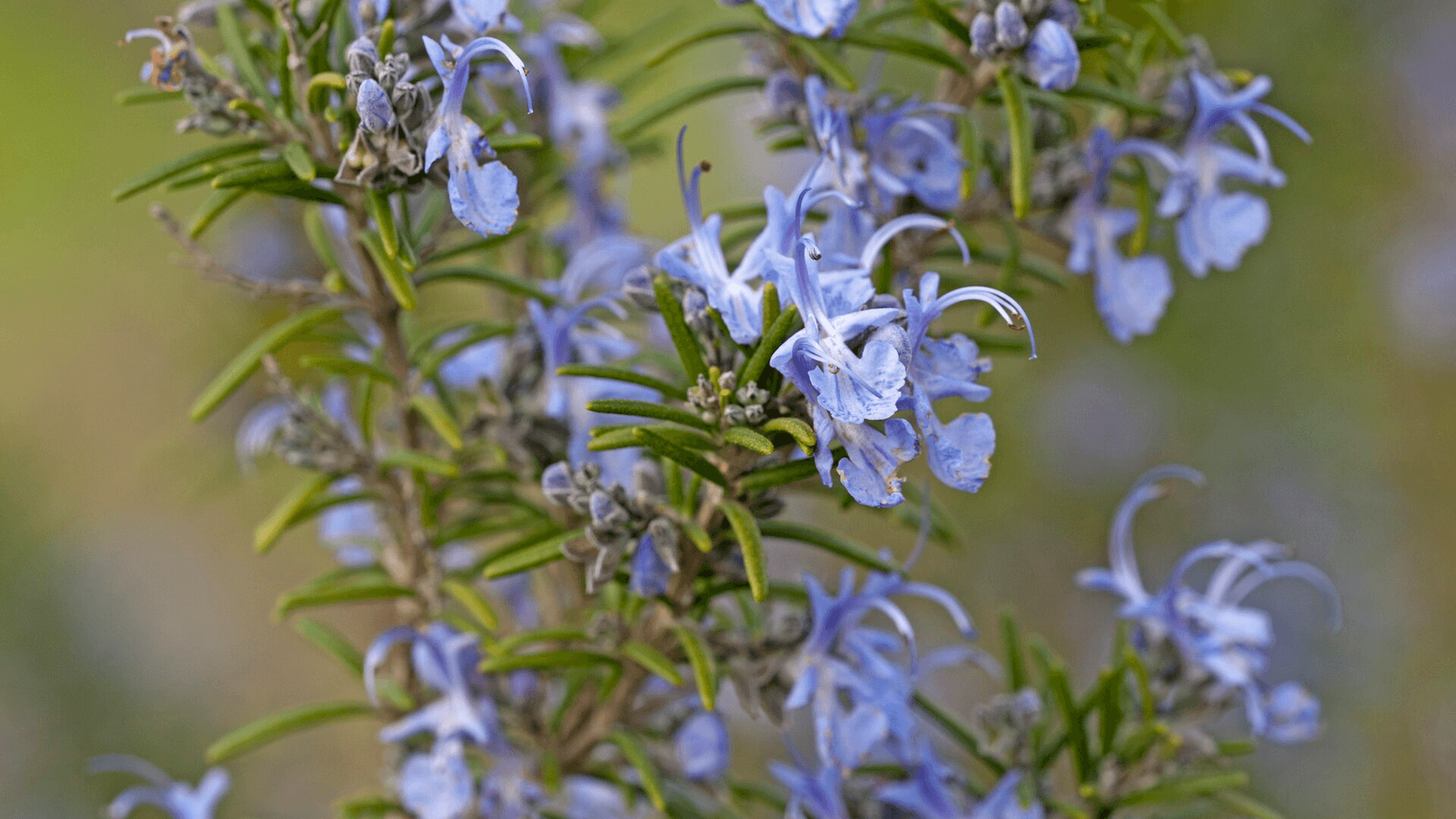
Hero image: Rosmarinus officinalis - Rosemary, by Zeynel Cebeci, CC BY-SA 4.0. Via Wikimedia Commons.
Take our professional IQ test
Want to know your IQ? Try the first ever professional online IQ test.